
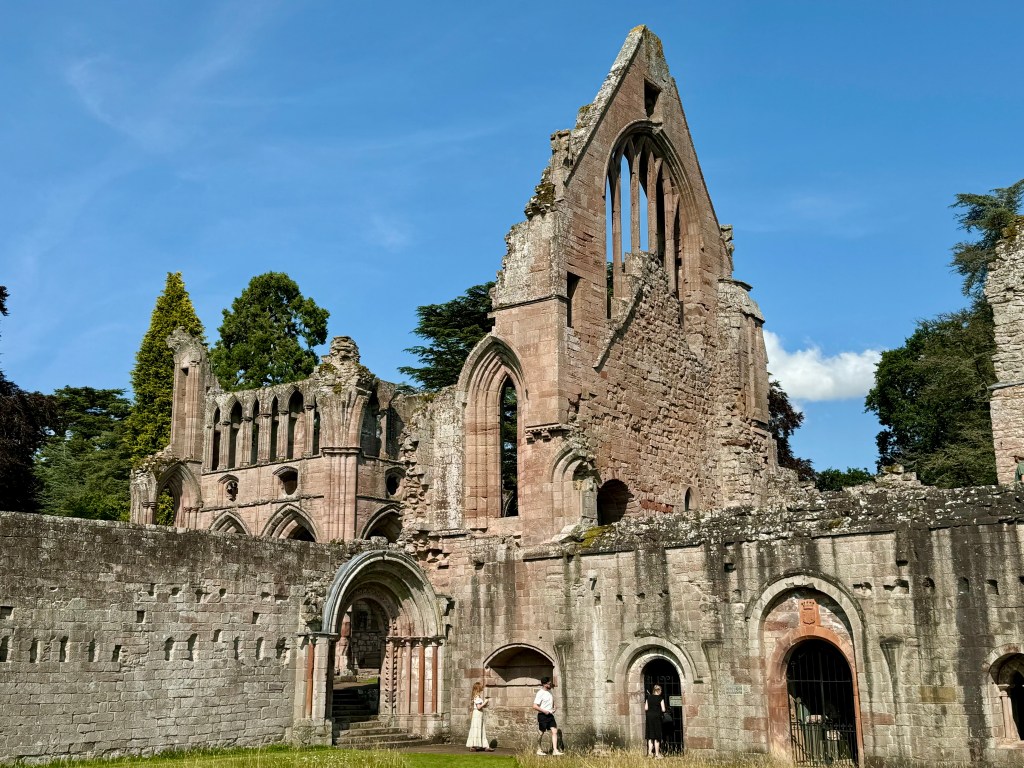
On the banks of the River Tweed, in a wonderfully secluded and picturesque location near St. Boswells in the Scottish Borders, are the ruins of Dryburgh Abbey.
It is one of four such abbeys within a 20-mile (32km) radius of each other, making up a trail known as the Borders Abbey Way (the other three abbeys are at Melrose, Jedburgh and Kelso).
Dryburgh Abbey was founded in 1150 by Premonstratensian canons, an order of monks also known as Norbertines, at the invitation of Hugh de Moreville, Lord of Lauderdale and High Constable of Scotland. Dryburgh became the premier house in Scotland of the French order, which was established by St Norbert of Xanten in 1121 at Prémontré.
De Morville was himself a Norman lord with English roots despite his Scottish titles, which explains the recruitment of English canons. Hugh de Moreville had invited them to this idyllic spot from Alnwick Priory, Northumberland. The exact motivation for founding the abbey is uncertain, but it likely symbolised a significant act of generosity towards his spiritual renewal at a time when religious belief influenced everyday life.
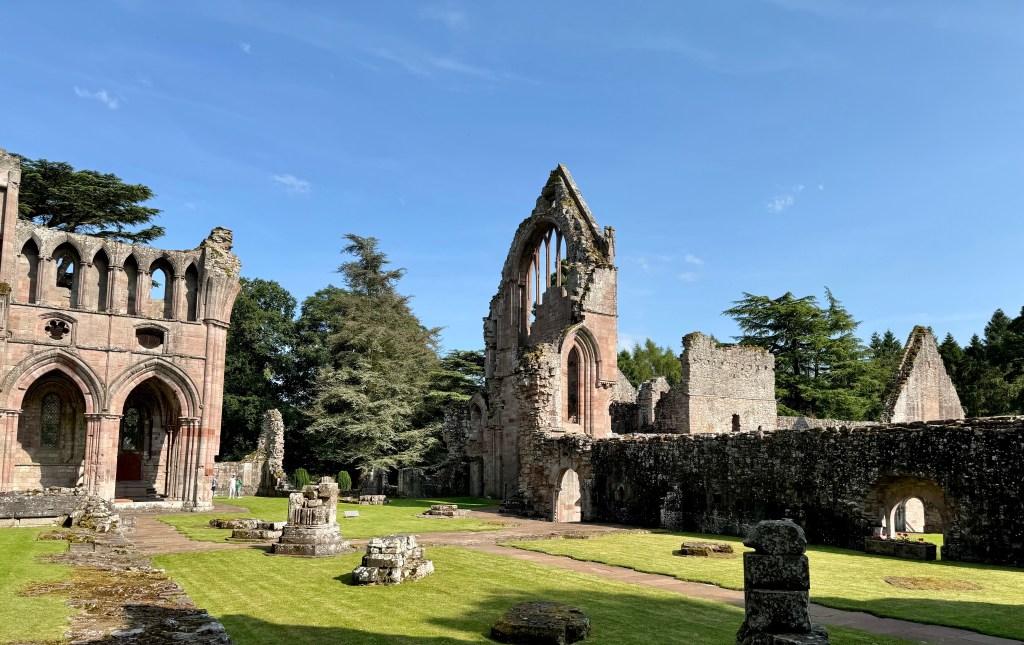
The abbey followed the same architectural principles as other monastic orders, with a cruciform church and surrounding monastic buildings for daily life, work, and worship. It prospered during the medieval period, becoming an important spiritual and economic centre in the Scottish Borders along with nearby Melrose Abbey. Its canons, who wore white habits, were not regular monks, but priests living together in a community. They oversaw agricultural work and managed estates, contributing to the local economy and fostering a close relationship with the surrounding community. However, it was never as wealthy or influential as neighbouring abbeys.
Adam of Dryburgh, also known as Adam Scotus, is the abbey’s most prominent medieval figure. Born around 1140 in the borders, he was an Anglo-Scottish theologian and writer. He joined the abbey as a young canon, was ordained as a priest in 1165, and served under the first two abbots before becoming abbot around 1184. Later, he moved to the stricter Carthusian order and became known as Adam the Carthusian.
Like many religious sites in the Borders region, Dryburgh Abbey suffered during the Wars of Scottish Independence and later Anglo-Scottish conflicts.
After Edward I’s invasion of Scotland and his victory at Dunbar in April 1296, he progressed through southern Scotland collecting oaths of fealty. The abbots of Dryburgh, Jedburgh, Melrose and Kelso all submitted to him at the great parliament held at Berwick on 28 August 1296, the event later known as the Ragman Roll. As a result, Edward restored the abbey’s lands, and it is believed that the community continued to function under English overlordship.
Interestingly, Hugh de Moreville’s great-granddaughter gave birth to John Balliol, the King of Scots (1292 – 96). So the female line of the family that founded Dryburgh Abbey runs, four generations on, straight into the disputed royal succession of the 1290s. This was the very crisis that drew Edward I into Scotland and set off the Wars of Independence.
But Dryburgh was seriously damaged by the English in 1322 when Edward II’s soldiers turned back to set fire to the abbey. Tradition says the English army heard its bells ringing out as they retreated. However, another explanation is that they were looking for provisions, and when none were found, they set fire to the abbey. Afterwards, it was rebuilt with the financial assistance of Robert the Bruce.
Then, despite a subsequent period of relative calm, war returned. This time the abbey was devastated by Richard II’s invasion of Scotland in 1385. Once more, financial assistance for its rebuilding came from another king of Scots, Robert III.
It’s worth noting that the land east of Dryburgh probably came under English influence for more than a century, since they occupied Roxburgh Castle from 1346 to 1460. But how this impacted the abbey is not known.
Later, in 1544, Edward Seymour, the Earl of Hertford and his English troops mounted a cross-border raid as part of the “Rough Wooing“, burning the abbey and nearby Dryburgh village. But the Earl of Hertford wasn’t satisfied and less than a year later he came back to set the abbey on fire again. This wasn’t an isolated act. The same 1545 campaign that finished Dryburgh also badly damaged Kelso, Melrose and Jedburgh, part of a deliberate scorched-earth strategy across the Borders. Neither the village nor Dryburgh Abbey was rebuilt.
A decade and a half later, the Scottish Reformation marked the beginning of the abbey’s decline. Governance had already been drifting into secular hands under the commendator system before the Reformation formally arrived. However, when the celebration of Mass was forbidden in 1560, the Abbey’s commendator, David Erskine, the sub-prior and eight remaining canons accepted the reformed religion and were allowed to stay.
But by 1600, none of the canons remained and shortly afterwards, the abbey was abandoned. Over the centuries, what still stood following the rough wooing fell into ruin.
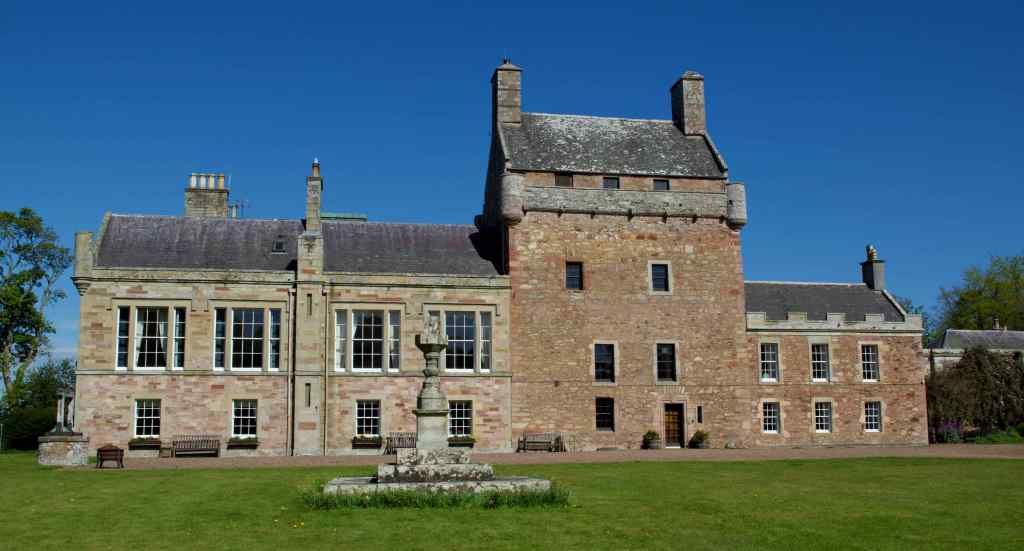
For nearly two centuries, the ruins served mainly as a convenient quarry. Then, in the late 1700s, the ivy-clad ruin attracted the attention of David Erskine, 11th Earl of Buchan and chief founder of the Society of Antiquaries of Scotland. Buchan bought Dryburgh House and set about creating a charming landscape in which the ancient abbey figured prominently. Over the decades, he reshaped the ruins and grounds into a deliberately antiquarian, romantic landscape: repositioning memorial stones, cutting a Latin inscription into a wall, installing busts in the chapter house, planting cedars and yews, and raising a commemorative obelisk to the abbey’s founder. When he died in 1829, he was laid to rest in its sacristy.
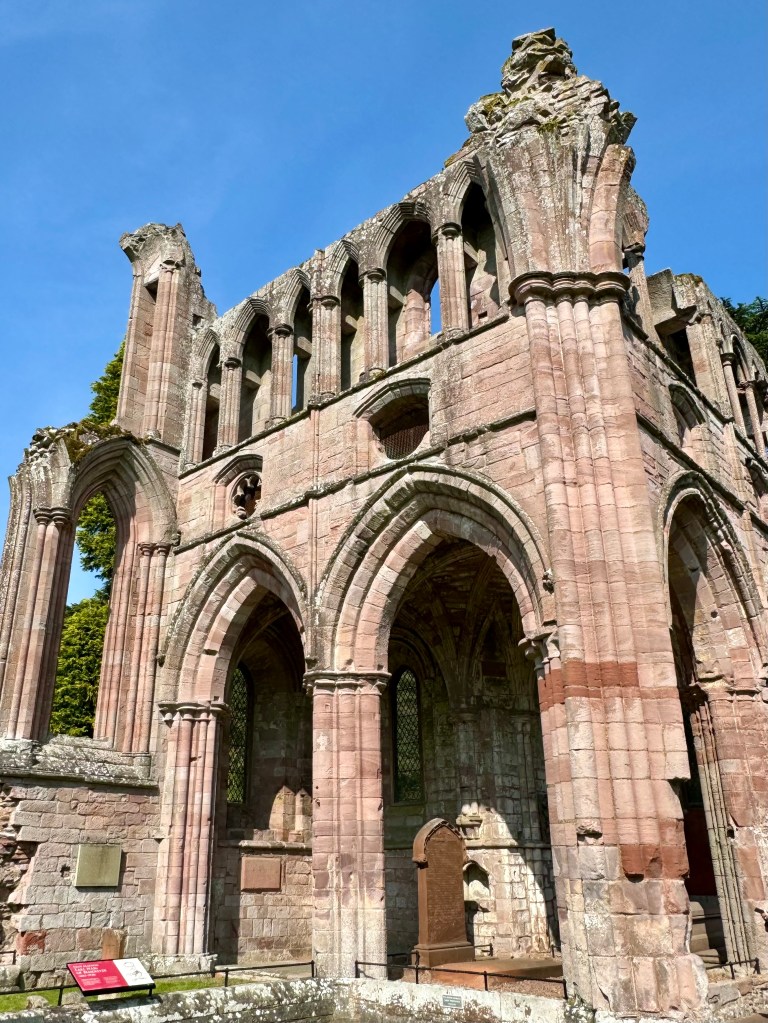
Sir Walter Scott, the famous novelist, was buried here three years later, on 26 September 1832. His tomb is in the north transept (which he called ‘St Mary’s Aisle’).
The abbey’s other well-known burial is Field Marshall Douglas Haig, Commander of British forces on the Western Front in World War 1. He remains one of history’s most controversial commanders, praised for leading the forces that defeated Germany in 1918 but heavily criticised for the devastating human cost of his attrition strategy.
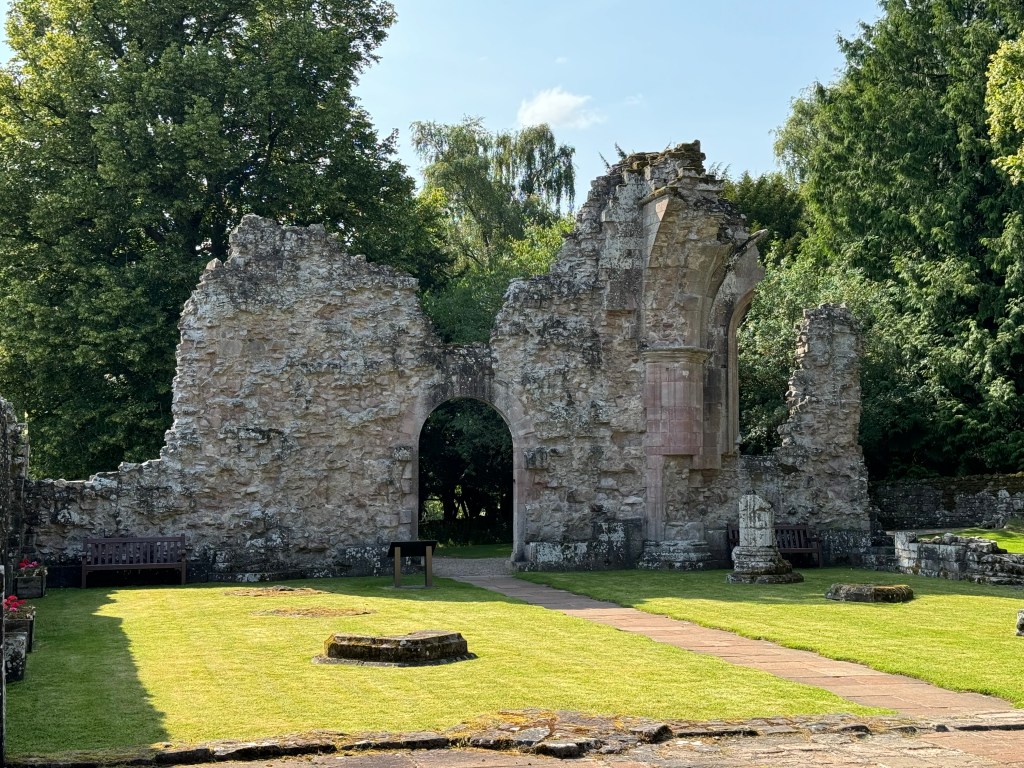
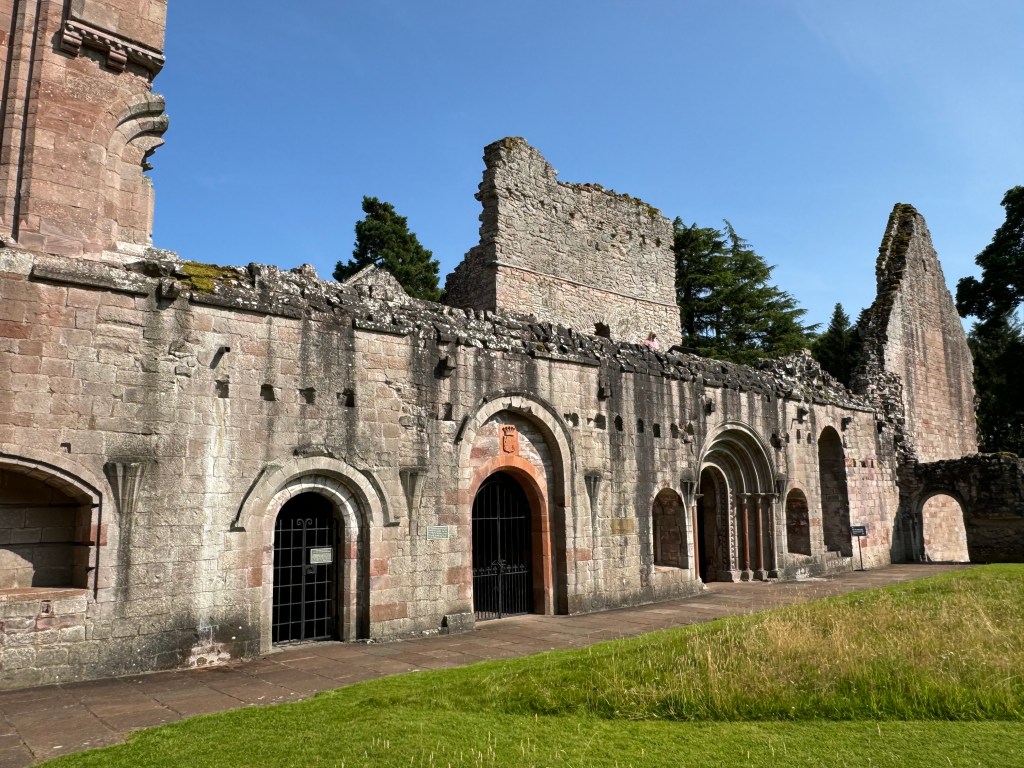
Today, visitors to Dryburgh Abbey will see a collection of structures, some nearly intact and others only partly recognisable.
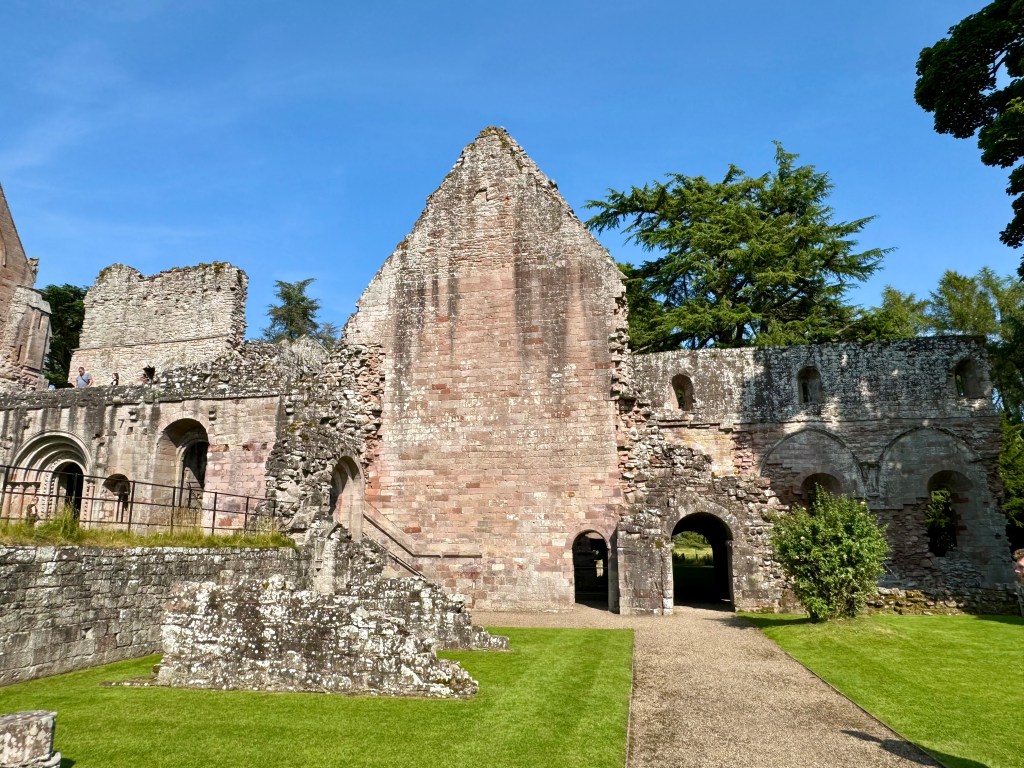
Most of the abbey’s church has been lost to war damage and the repurposing of stones for buildings elsewhere in the area. Originally it consisted of a nave, north and south transepts with chapels protruding from the eastern walls. What remains of the north transept suggests the church was a very fine building in its day.
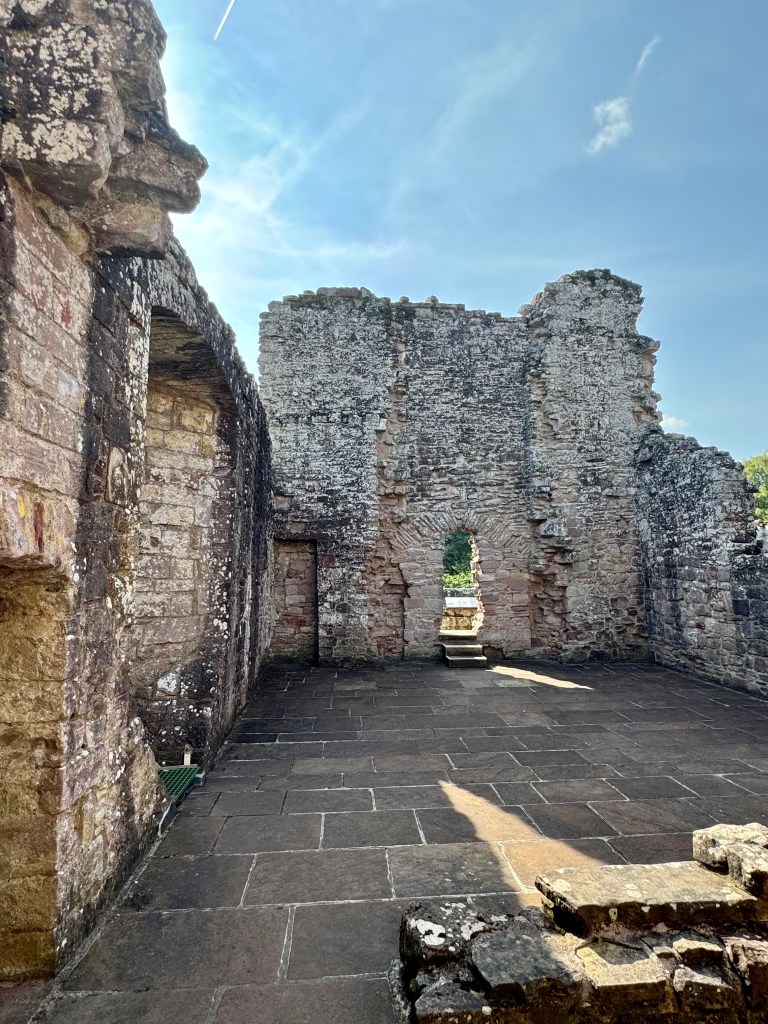
Fortunately, the chapter house and the canons’ dormitories remain in place. The chapter house is a large chamber that would have been used for meetings of the brethren. It is still possible to see the remains of paintwork which may date from the 1100s.
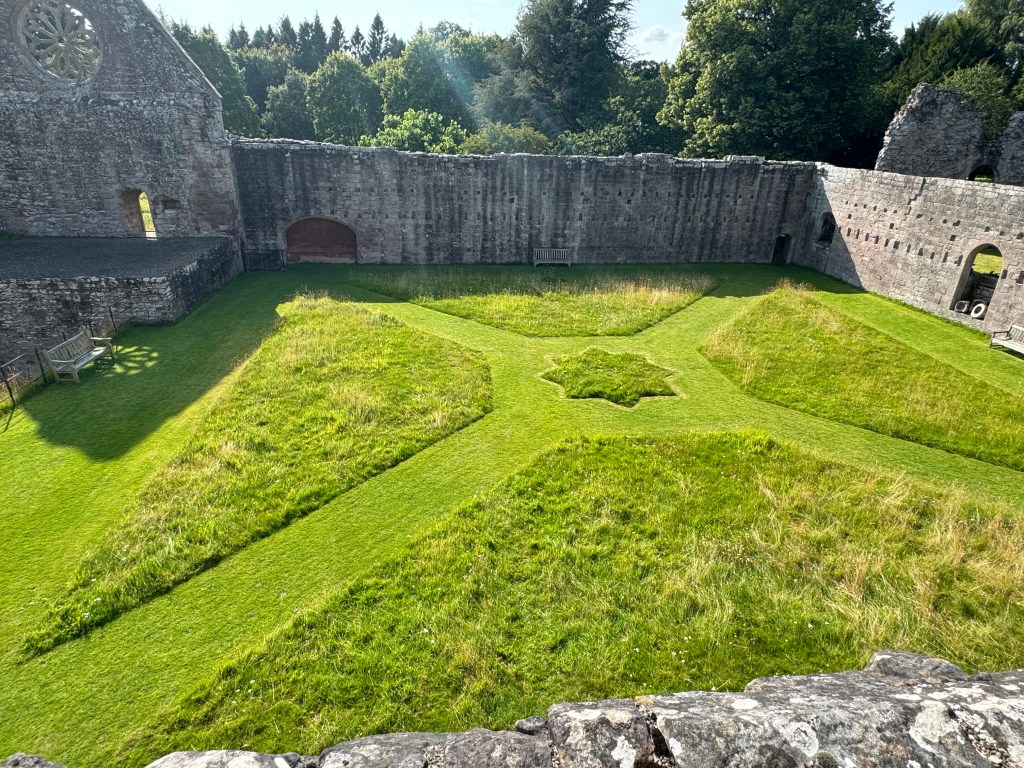
The small room next to the chapter house is the parlour, and was the only place in the abbey where conversation was permitted. The cloister, located on the south side of the church, benefits from a sunny aspect, and was a focal point of the canons’ lives when they were not taking part in church services.
The grounds are home to a collection of very old trees, including a 900-year-old yew tree. Together with the ruins, these are roosts for three species of bats: pipistrelle, daubenton’s and brown long-eared.
Of course, no historic ruin in Scotland is without its myths and legends. At Dryburgh Abbey the spirit of a young woman, the “Grey Lady”, is said to wander the grounds. She had drowned herself in the Tweed after her lover, a monk, was executed when the affair was discovered.
Another story tells of a woman made homeless after the 1745 Jacobite uprising who took up residence in the abbey ruins. She was kept company by a ghost called “fat lips” who used to look after her improvised home whenever she was away.
Today Dryburgh Abbey is managed by Historic Environment Scotland. It is open all year (except for Christmas and the New Year period), and entrance fees apply. With its secluded position, there is no direct access from the main A68 trunk road. It is necessary to drive through St. Boswells on the B6404 and then follow the signposts on the B6356. There is car parking and a shop selling entry tickets, a guidebook and souvenirs.
Walking through the ruins, it is easy to imagine life all those hundreds of years ago. It is peaceful, with just birdsong for company. It is certainly a fitting place for quiet contemplation and, in my opinion, is the most beautiful of all the border abbeys.
Note: This is an update of a previous post about Dryburgh Abbey that has now been deleted.
Dryburgh Abbey: OS National Grid Reference: NT 59158 31703
Further reading:
Historic Environment Scotland, Dryburgh Abbey Official Souvenir Guide
Historic Environment Scotland website
Historic Scotland magazine, Autumn 2024


 Thistle & Time
Leave a comment