
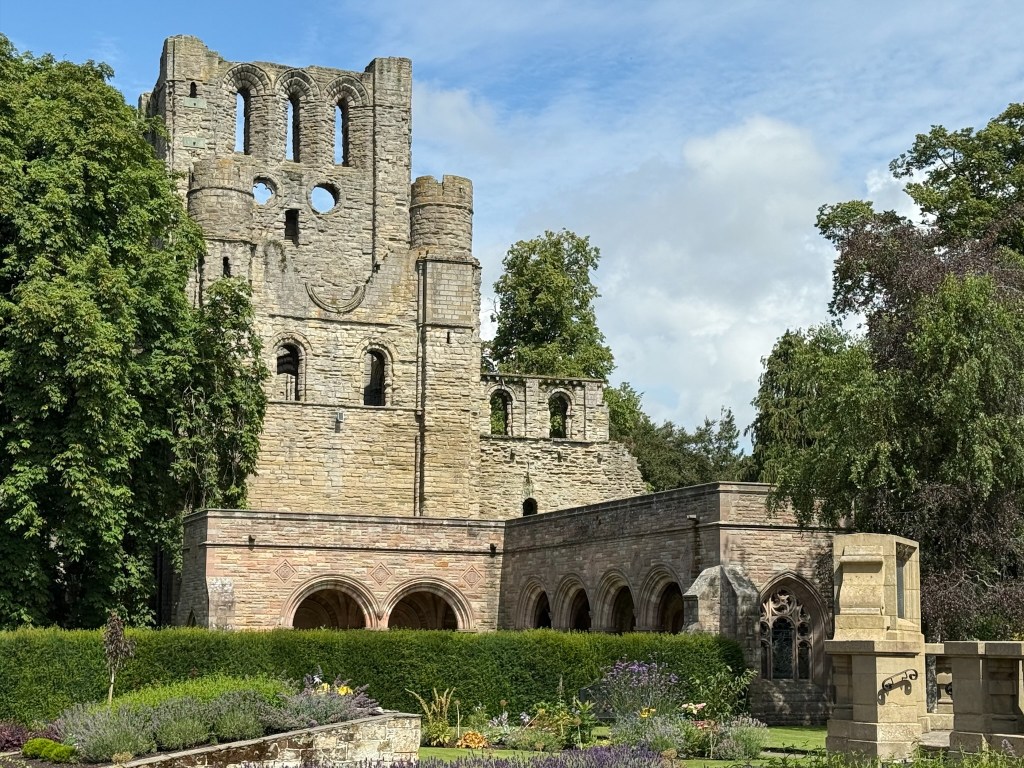
The surviving arches of Kelso Abbey stand at the heart of the modern town, just a stone’s throw from the River Tweed. Its story, however, spans the ambitions of a twelfth-century king and the upheavals of the Scottish Reformation. Along the way, it hosted royal ceremonies, grew into a powerful landowner, and eventually became a stronghold engulfed by war.
The story began at Selkirk around 1113, when, before becoming King of Scots, David I established a small community of thirteen monks from France. These monks belonged to a reformed Benedictine tradition known as Tironensians, and were among the first of the reformed orders to settle in the British Isles.
By 1128, a few years into his reign, David had relocated the community to the banks of the Tweed, near his royal castle at Roxburgh, situated just across the river. This site positioned the abbey close to a key hub of royal administration and trade. At the time, Kelso was little more than a locality next to the town of Roxburgh, though it already hosted a church dedicated to St. Mary. Roxburgh, by contrast, was a thriving new royal burgh.
As was common for the period, David strongly believed in the power of prayer. His charter to the monks states that he founded the abbey for the sake of his soul and the souls of his father and mother, his brothers and sisters, and all his ancestors.
The abbey church was consecrated in May 1128, but completing the church and other buildings took perhaps another 100 years. The stone came from quarries at Hendersyde and Sprouston, and an army of skilled masons, likely recruited from England and beyond, cut and carved it.
David De Benham, Bishop of St. Andrews, eventually dedicated the church in 1243. But this date does not necessarily coincide with the abbey’s completion. According to historian Alistair Moffat, the lack of any discernible change in the abbey’s architectural style suggests it may have been mostly complete by as early as 1175.
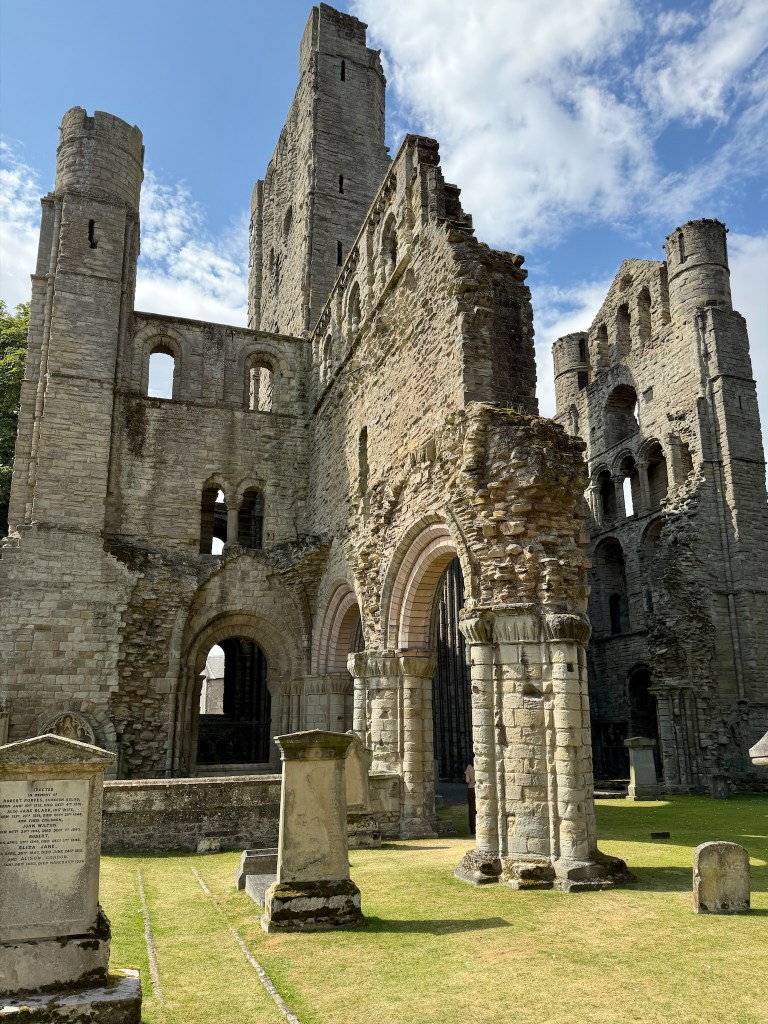
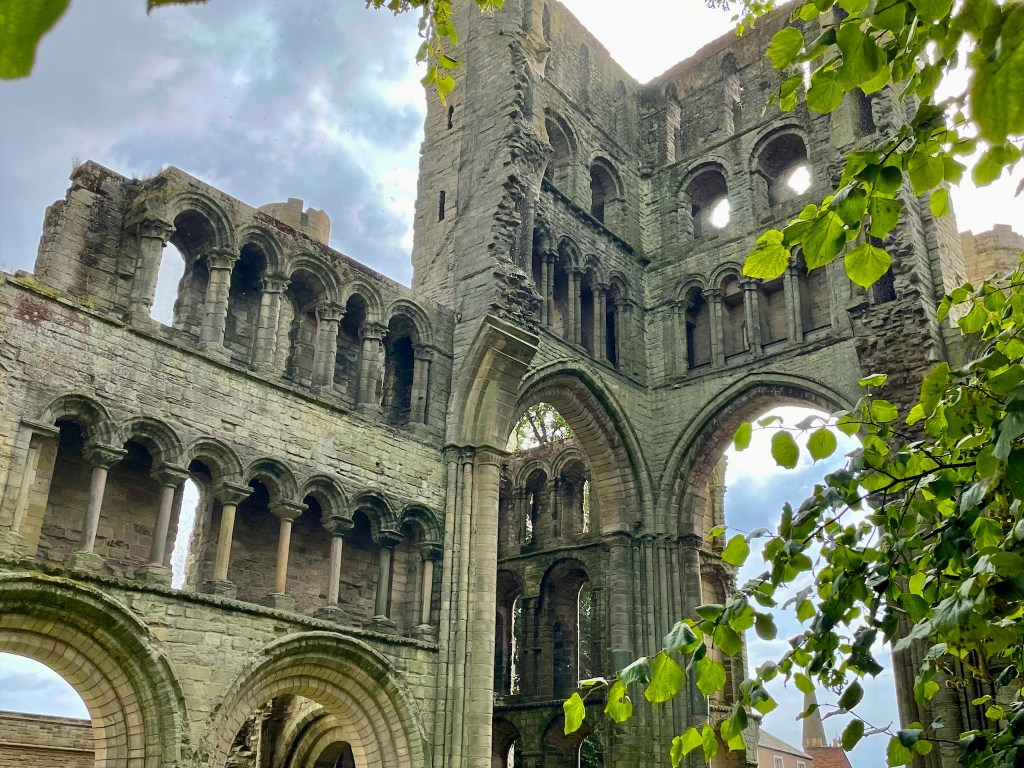
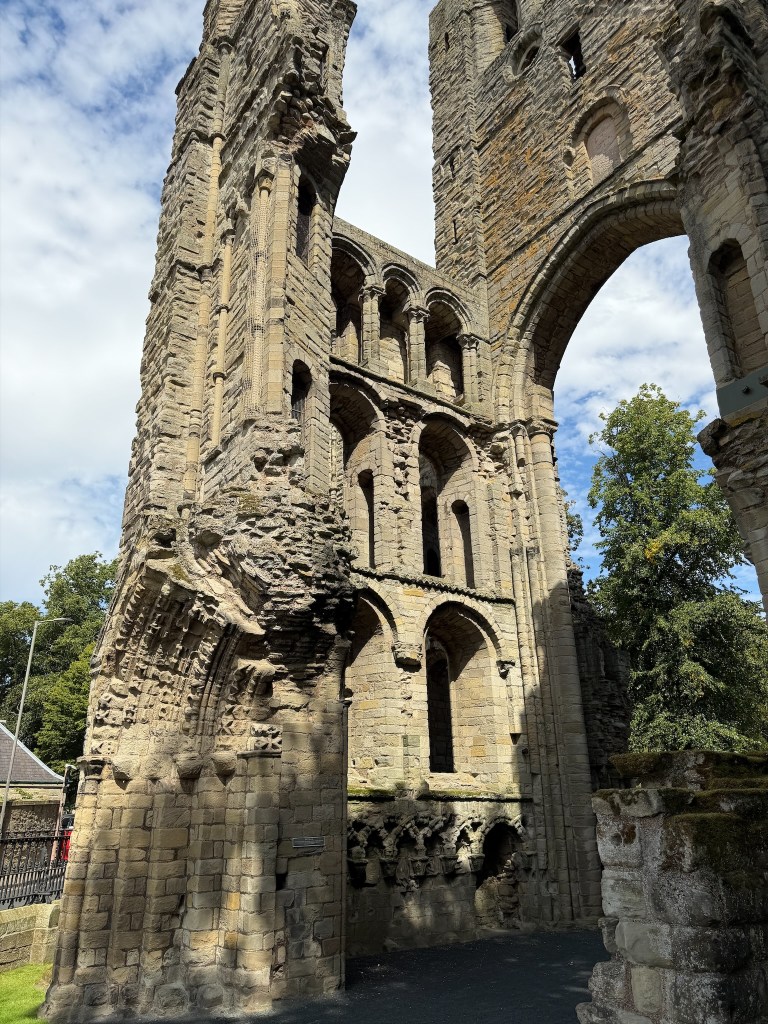
The final build would have been magnificent. But the ruins we see today are mainly the western end of a much larger structure. Its most unusual feature was its double-cross plan: two sets of projecting arms, called transepts, with a tower over each crossing. This arrangement was unique in Scotland. John Duncan, a cleric of Glasgow, writing in the early 16th century, said they were two high chapels on each side, like wings.
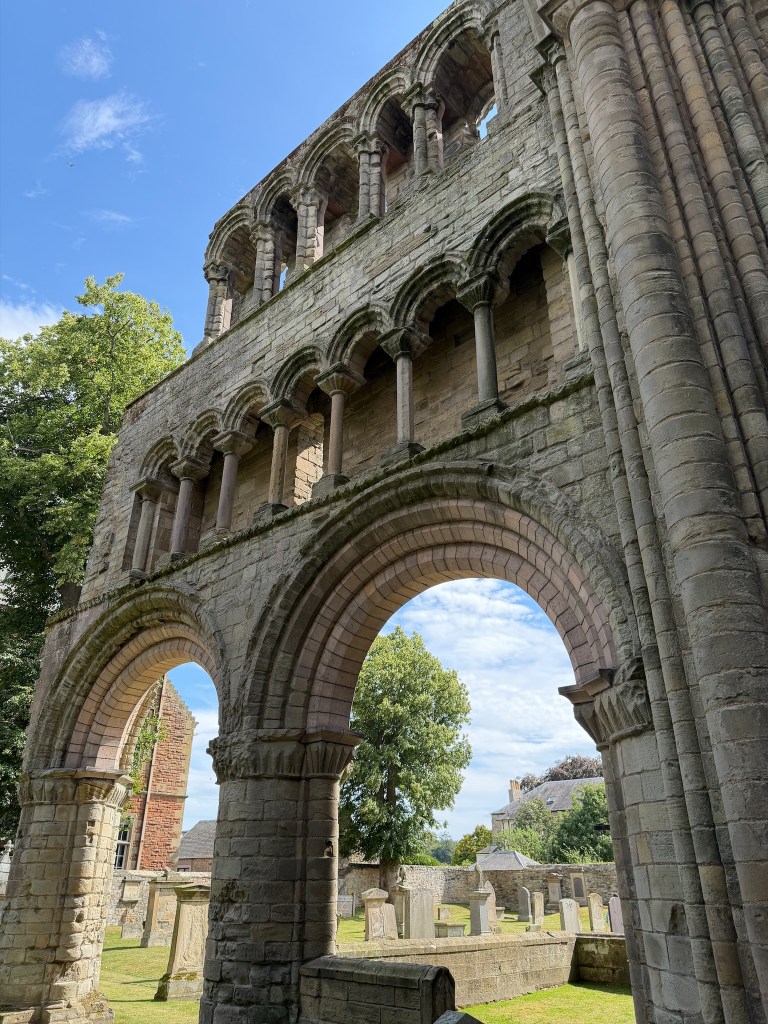
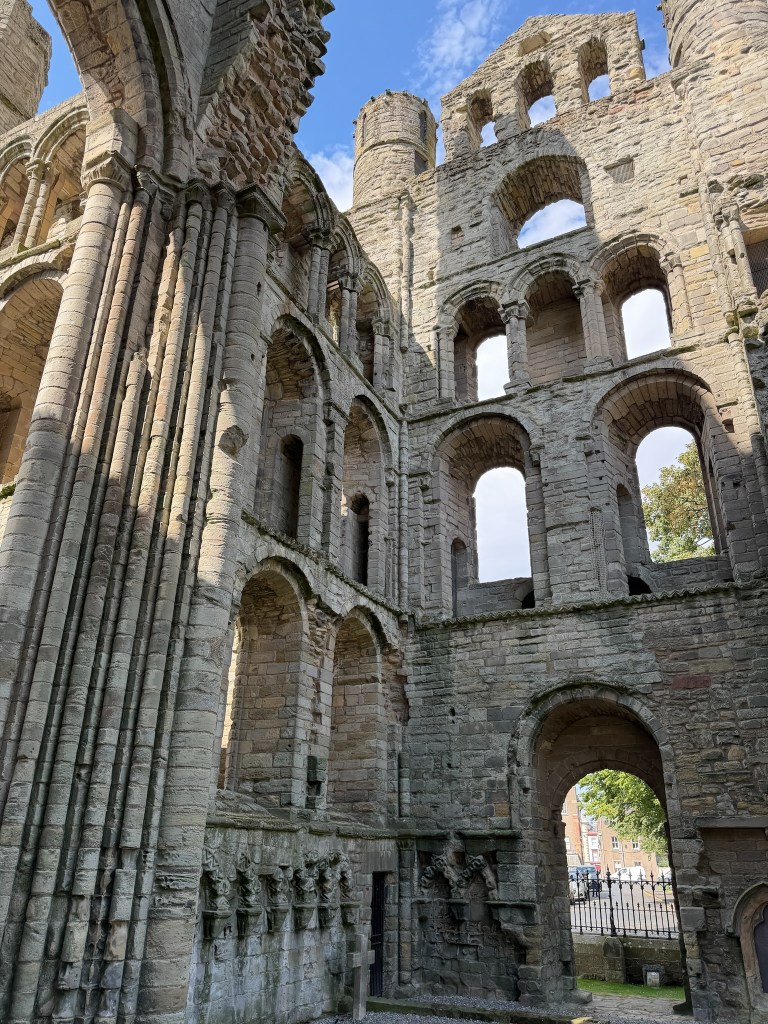
The church remains include part of the nave, the western transept, half of the great west front, and the Galilee porch at the west end. The western tower, featuring three lancet windows, likely served as the model for a series of towers constructed from the late 1400s, such as those at Jedburgh Abbey and Glasgow Cathedral. The surviving great western doorway gives a particularly good impression of its original splendour. Hardly surprising then that Historic Environment Scotland describes the abbey as “One of the most spectacular examples of Romanesque architecture in Scotland.”
Beyond the main abbey buildings stood various other structures that archaeological excavations have since identified as an infirmary and possibly a guest house.
In those early days, the abbey’s importance grew quickly. Roxburgh’s proximity, along with David I’s patronage, meant the abbey became powerful and wealthy. This also benefited the people of Kelso and Roxburgh. The west end of the church was used as a parish church, while the monks ran schools at the abbey and in Roxburgh. The monks established a hospice for the care of the sick and poor southwest of Kelso.
Thanks to David I, Kelso Abbey owned extensive properties in the Borders as well as further afield. Their assets included churches, mills (the Monks were the first people to dam the Tweed), ferries, a salt works, various rights to fishing, peat and wood cutting, as well as a great deal of livestock. On the Cheviot Hills, the monks farmed sheep and, at their height, estimates put the number at some 7000.
Kelso’s Abbot Herbert was appointed Bishop of Glasgow in 1147, and Abbot Arnold in 1160 became Bishop of St. Andrews. In both cases, the Pope directly approved the Scottish church’s elections, bypassing the influence of the English Archbishops of York in the usual appointment process. From a Scottish point of view, it was in the royal interest that English-appointed archbishops did not control the appointment of Scottish bishops. So Kelso Abbey’s monks were at the forefront of Scotland’s push for church independence.
When William the Lion ascended to the throne and later invaded Northumberland, it led to the loss of the Scottish church’s independence. William was captured during the campaign, and according to the Treaty of Falaise, he had to swear fealty to King Henry II of England. Consequently, the Scottish church once more came under the authority of York. Compounding this setback, Roxburgh Castle was ceded to the English and stayed in their control until 1189.
However, the new Abbot, John, seemed relatively unconcerned. The abbey kept flourishing, and he became the first Scottish abbot to receive a mitre. This award, granted by Pope Alexander III, gave him the same authority as Scottish Bishops and made him directly answerable to the Pope. By now Kelso Abbey had extensive holdings making it a major landowner.
But things were about to change.
After Alexander III died in 1286 and his only direct heir, Margaret of Norway, passed away four years later, Scotland faced a succession crisis. Edward I of England was asked to select Scotland’s new king from several claimants, leading to John Balliol’s coronation at Scone in 1292. However, he was forced to recognise Edward I as overlord.
But eventually, in 1295, John Balliol turned against Edward and entered into a treaty with France. In 1296, Edward I invaded Scotland, deposed Balliol, and declared himself ruler. The Wars of Independence had begun, and Kelso Abbey would suffer, in part because of its proximity to the now English-occupied Roxburgh Castle.
To preserve the abbey’s community and property under English rule, Abbot Richard swore fealty to Edward I on 28 August 1296 (as recorded in the Ragman Roll). Five days later, Edward issued letters ordering the restoration of Kelso Abbey’s estates and goods.
By 1299, however, Abbot Richard was accused of supporting Edward’s enemies. Thomas of Durham, an abbey monk, made the accusation and was later elected Richard’s successor with Edward I’s backing.
However, Historic Environment Scotland records an attack on Kelso Abbey by Edward I’s army in 1303. By 1305, the abbey was seeking redress for the burning of its charters and other documents. Losing these records mattered because they established ownership, privileges and rights to income.
By 1316, the abbey and its estates were reportedly so devastated that the monks had to seek food and clothing from other religious houses. But peace, when the Treaty of Northampton finally ended the conflict in 1328, was short-lived.
After Edward III defeated the Scottish army at Halidon Hill, helping Edward Balliol to gain the Scottish crown, he was given control of much of southern Scotland. So from 1334, Kelso Abbey had to contend with the near-continuous English military occupation of Roxburgh Castle for the next 130 years or so. However, Edward III and then Richard II ordered their English subjects to respect the abbey’s landholdings, and so it survived, though weaker and less wealthy.
In 1460, the Scottish army retook Roxburgh Castle, but during the siege, James II lost his life when a cannon exploded. His son James III was later crowned King of Scots at Kelso Abbey, confirming its continued role in Scotland’s royal life.
About 50 years later, in 1513, after the disastrous Battle of Flodden, Dand Ker, laird of Ferniehirst, broke into the abbey and installed his brother, Thomas (known as Tam), as abbot. The Kers were a well-known family of Border Reivers, and this perhaps highlights the chaos that followed Flodden and the lawlessness of the borders.
But the first half of the sixteenth century brought more violence to Kelso Abbey.
In 1523, Lord Dacre’s forces burned Kelso and damaged the abbey during Henry VIII’s wars against Scotland. A contemporary English account, quoted by archaeologist Christopher Lowe, claimed that the attackers destroyed everything in the town that they could burn and brought down the abbey gatehouse. But Alistair Moffat says the damage was much worse: the abbot’s house, the Chapel of the Blessed Virgin, and the monks’ dormitory were all burnt. They also removed the lead from the abbey roof. Tam Ker was involved in the peace-making after the raid.
In 1536, James Stewart, James V’s illegitimate son, was installed as commendator of both Kelso and Melrose Abbeys, a position he held for over twenty years.
Then in 1542, the Duke of Norfolk led a substantial English army into Scotland and burned Kelso, with further destruction across the surrounding district. The abbey was again damaged by fire. Norfolk eventually withdrew because supplies were inadequate and an undefeated Scottish force under the Earl of Huntly threatened his flank.
The decisive assault came in September 1545, during what became known as the Rough Wooing. According to the Earl of Hertford’s reports, about 100 defenders, including twelve monks, held the abbey. Artillery breached the church, and Spanish troops in English service drove the defenders into the tower. Some escaped by ropes overnight; those remaining were reportedly killed when the assault resumed. The buildings were then systematically wrecked. Orders called for the abbey to be broken down, its roofing lead removed, and its towers and strong points undermined. Only the church’s west end survived the onslaught.
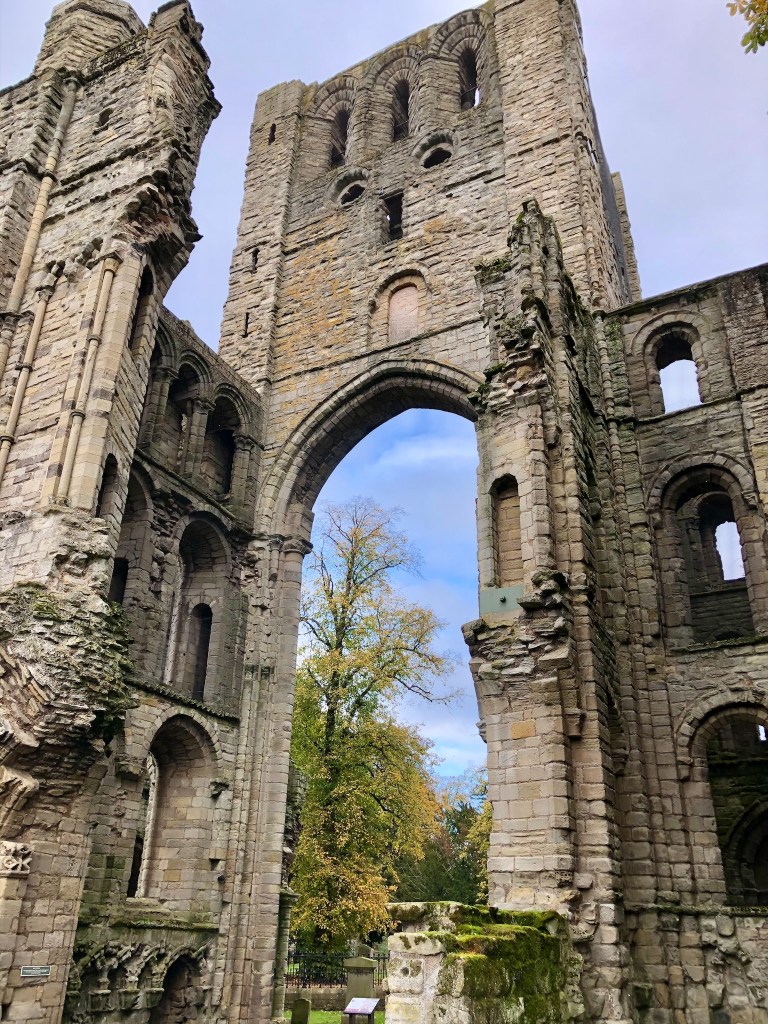
The abbey lay mostly in ruins, though some monks returned. Its final days came after the Reformation in 1560, when Scotland officially became Protestant. Around this time, most remaining monks were driven out of the abbey and its statues and images were destroyed. By 1576, only two monks remained. An Act of Parliament in 1587 declared that the abbey ceased to exist. However, the west end of the abbey’s church remained in use as a parish church until the late 18th century, after which a new church was built nearby.
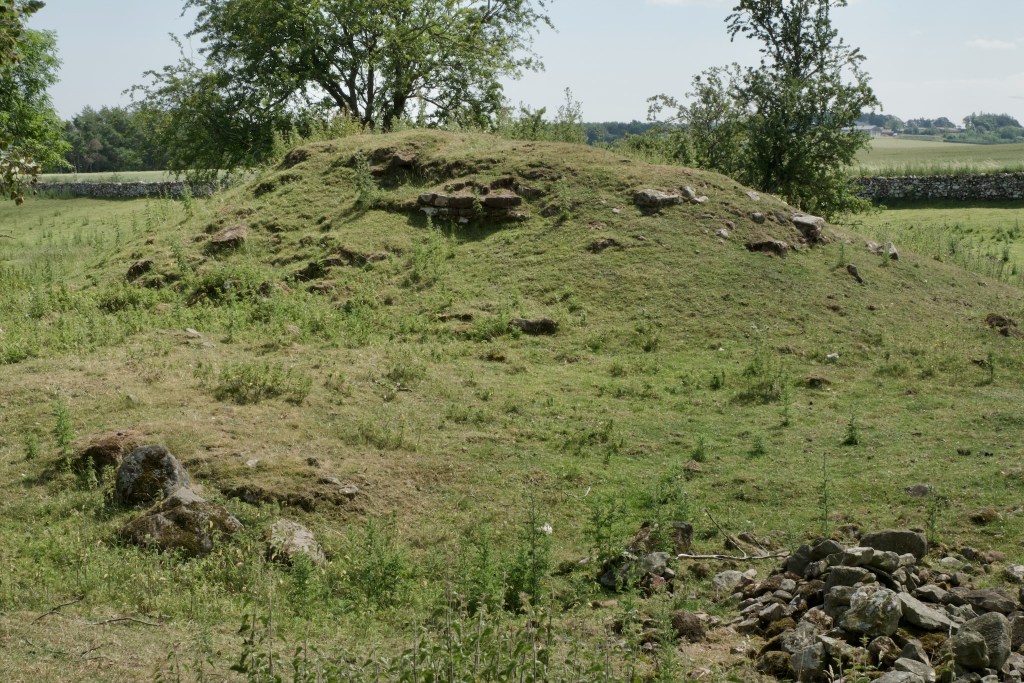
Interestingly, in 1599 James VI gave a large part of the abbey’s property, including all of Kelso, the destroyed castle, and the site where the town of Roxburgh once stood, to Sir Robert Ker of Cessford, who took the title of Lord Roxburgh.
A descendant of his repaired what little remained of the abbey, and the south transept became the family burial ground. In 1933, a memorial in the form of a cloister was built on the south side of the abbey.
Today, Historic Environment Scotland manages the abbey ruins, which are open to the public from 1 April to 31 October.
Kelso Abbey: OS National Grid Ref. NT 72844 33815
Further reading
Christine Henderson, 2014, Kelso Abbey, A Brief History (Friends of Kelso Museum)
Alistair Moffat, 2006, Kelsae, A History of Kelso from Earliest Times (Birlinn)
HES Kelso Abbey Statement of Significance
Richard Fawcett, 2011, A plan of 1545 for the fortification of Kelso Abbey Proc Soc Antiq Scot 141 (2011), 269–278
Christopher Lowe, 2005, New light on Kelso Abbey: archaeological interventions on the Bridge Street Garage Site, 1996–8 Proc Soc Antiq Scot, 135 (2005), 319–342




Leave a Reply