
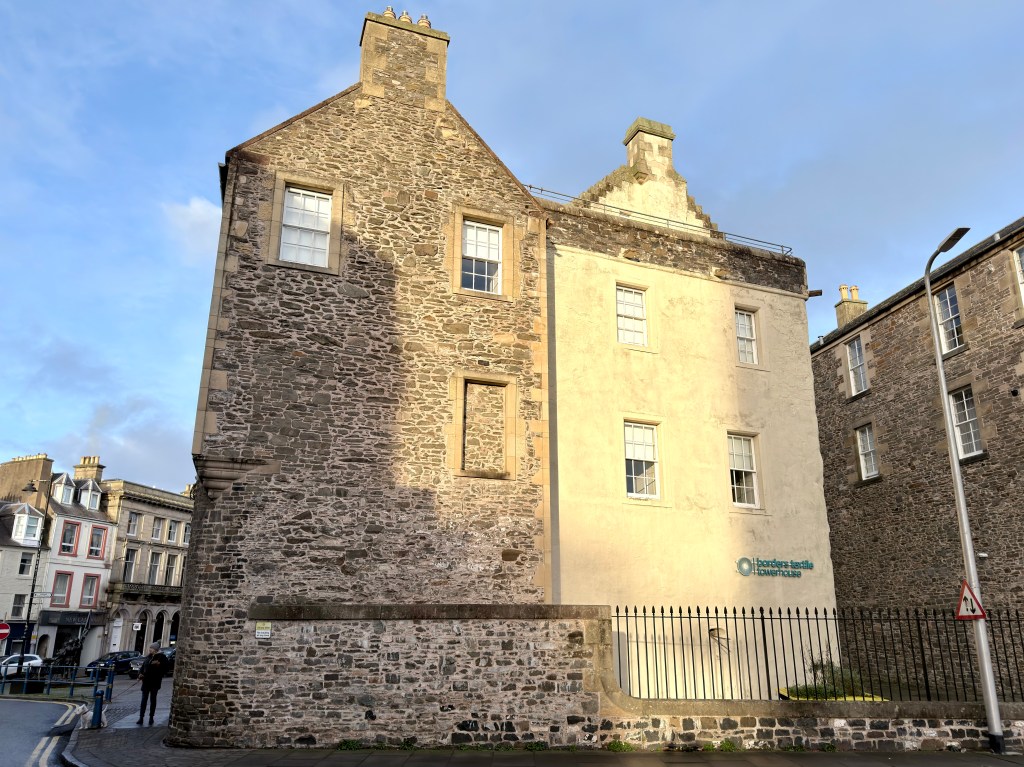
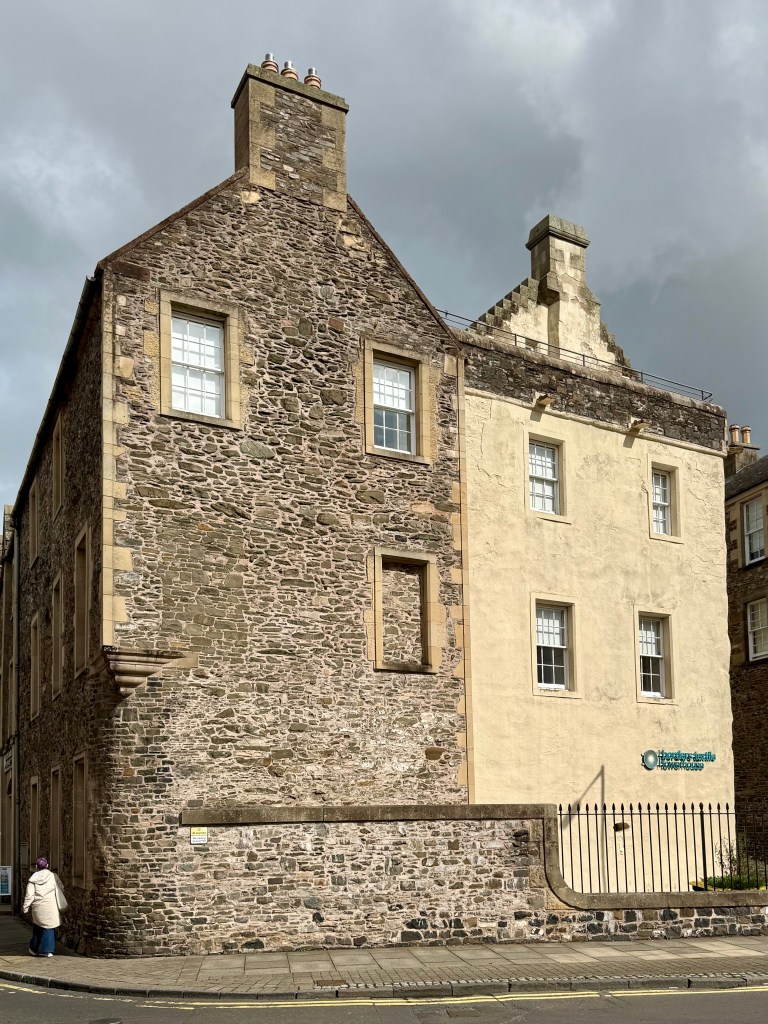
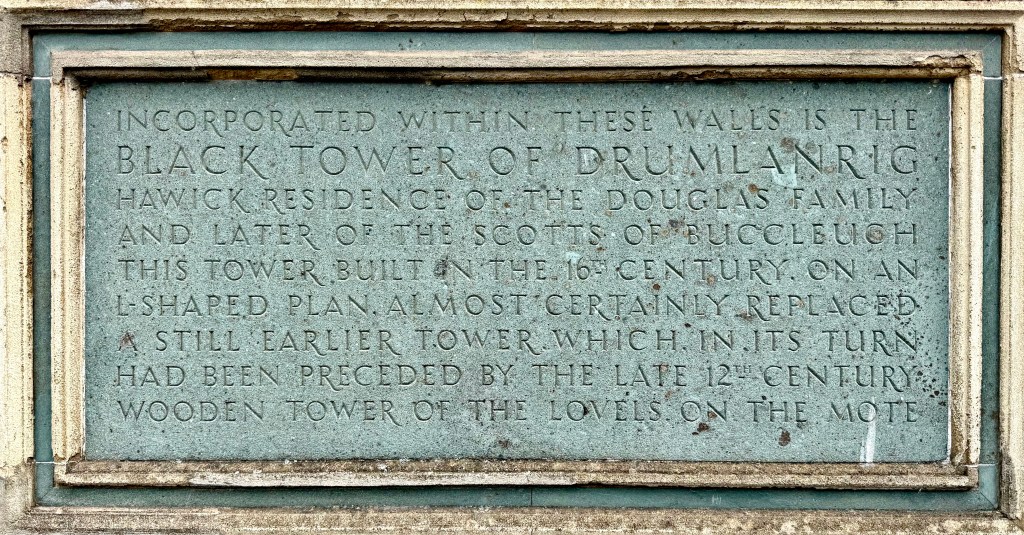
At the south-western corner of Hawick High Street, where Slitrig Water passes under Tower Knowe, is the oldest building in Hawick. Today it houses the Hawick Textiles Museum, but in the 16th century it was an L-plan tower house and home to the Douglases of Drumlanrig. Occupying a strategic position at the heart of old Hawick, it was not only a fortified residence but the administrative centre of the Barony of Hawick.
At some point in the past, Drumlanrig’s Tower also became known as the “black tower”. But this appears to be a traditional name rather than anything official. It may have arisen because it had a sombre appearance, or perhaps it’s because of the soot that covered the building after other buildings in Hawick were burnt, as we shall see later.
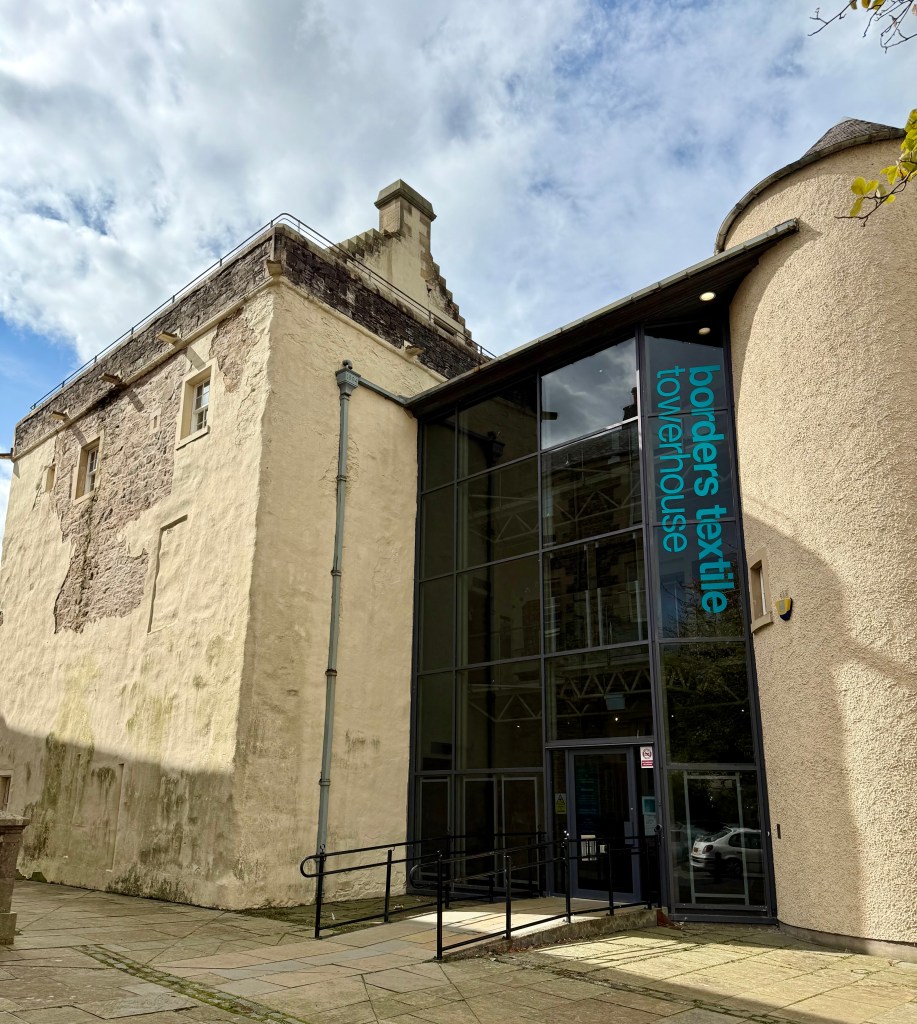
Over the centuries, the tower has changed considerably, and rather than looking like a fortress, it now blends into the urban landscape. Much of the exterior belongs to eighteenth- and nineteenth-century extensions. But inside, the medieval tower survives remarkably intact.
So what stories does it hold about Hawick’s history?
Although the present tower dates from the later sixteenth century, the site itself is considerably older. Archaeological investigations have revealed evidence of a defensive ditch dating from the late twelfth or early thirteenth century, suggesting that the tower replaced an earlier fortification associated with Hawick’s medieval defences. Local tradition links the earliest stronghold on the site to the Norman Lovel family, who were granted lands around Hawick by King David I in the twelfth century.
The Lovels established Hawick Castle as a motte-and-bailey structure during the 12th Century. The motte hill still stands some 500 metres west of the present tower. But sometime in the late 14th or early 15th century, the town’s defensive centre moved to the site on which we find today’s tower.
Drumlanrig’s Tower itself was likely built in the late sixteenth century, but an earlier fortified building likely stood here at the beginning of the 1500s. A royal charter of 1511 granted the Barony of Hawick, with its liberties and privileges, to Sir William Douglas of Drumlanrig. At this time, Hawick was a small burgh living in a dangerous frontier environment of reiving and English raids.
Then, on 9 September 1513, Hawick suffered a profound loss of life, as many of the town’s men were killed at the Battle of Flodden. This left Hawick vulnerable to raiding parties from across the border, a weakness exploited by the English Warden of the March, Thomas Dacre.
One of these raiding parties reached Hornshole, beside the River Teviot, roughly two miles (3.3 km) north-east of Hawick. According to local tradition, news reached the town that an English raiding party had camped at Hornshole.
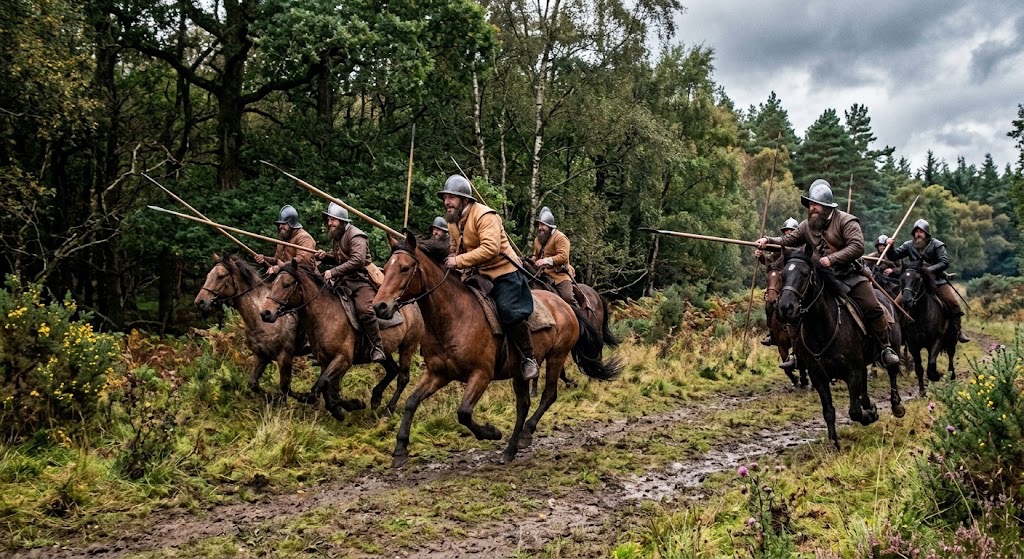
With so many experienced men dead after Flodden, it fell to the “Callants”, the unmarried youths of Hawick, to respond. Armed with whatever weapons they could gather, they rode out to confront the raiders.
Most versions of the story depict a surprise attack, likely at dawn or at night, while the English were resting by the river. The young Scots defeated the raiding party and, importantly, seized its banner (or pennon) before returning victorious to Hawick. That captured banner became the lasting symbol of their triumph.
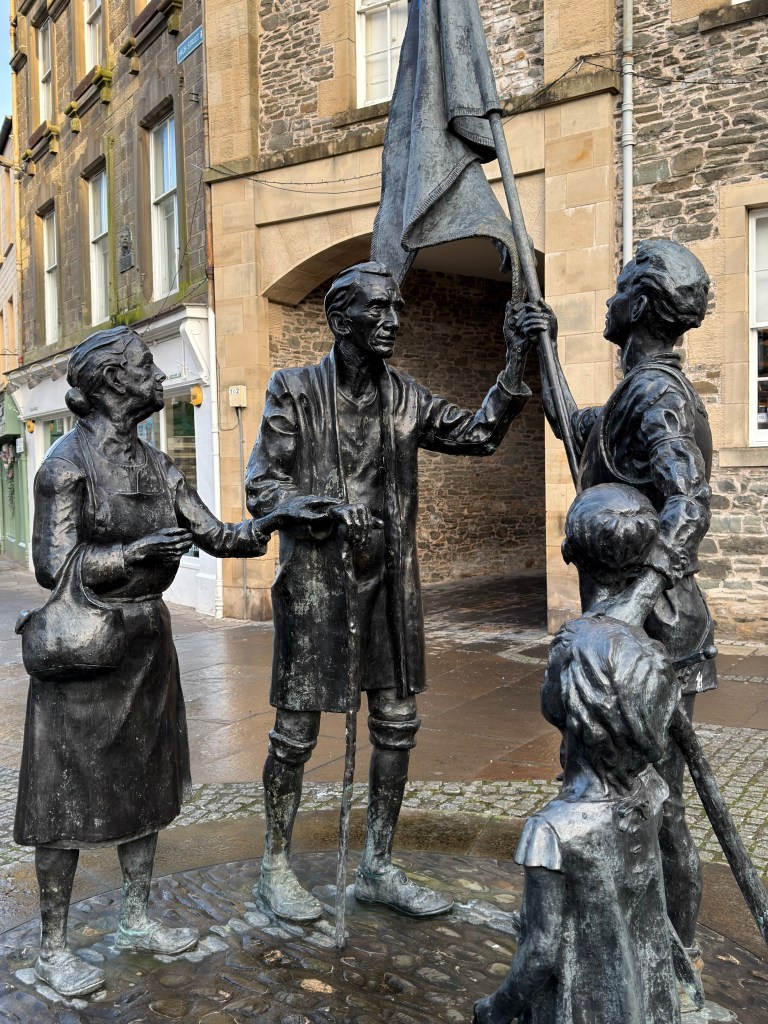
No surviving records verify this event, but a successful skirmish is plausible. Yet the story’s symbolism is still celebrated today at Hawick’s Common Riding. Also, in the centre of Hawick itself, the 1514 Memorial, known locally as “The Horse” depicts the triumphant return of the standard-bearer carrying the captured flag, while another sculpture, outside Drumlanrig’s Tower itself, shows the young lad being welcomed back by children from the town.
But this didn’t stop the violence. Reiving was rife in the 1500s and reached new heights in the mid-century. Raids on Hawick came frequently from across the border and from reiver families in Scotland, so the early fortification would have been an important centre of defence.
In 1548, amid the Wars of the Rough Wooing, English troops burned three towers in Hawick during their extensive Border raids. The earlier fortification was probably damaged at this time.
But as noted earlier, the tower that now forms the museum’s fabric was built later, in the 16th century. The exact construction date is unknown, although in his book on border towers, Alistair Maxwell-Irving says Sir James Douglas began dismantling the old fortification in 1553 to make way for Drumlanrig’s Tower. This dates it after the Rough Wooing and well after Flodden.
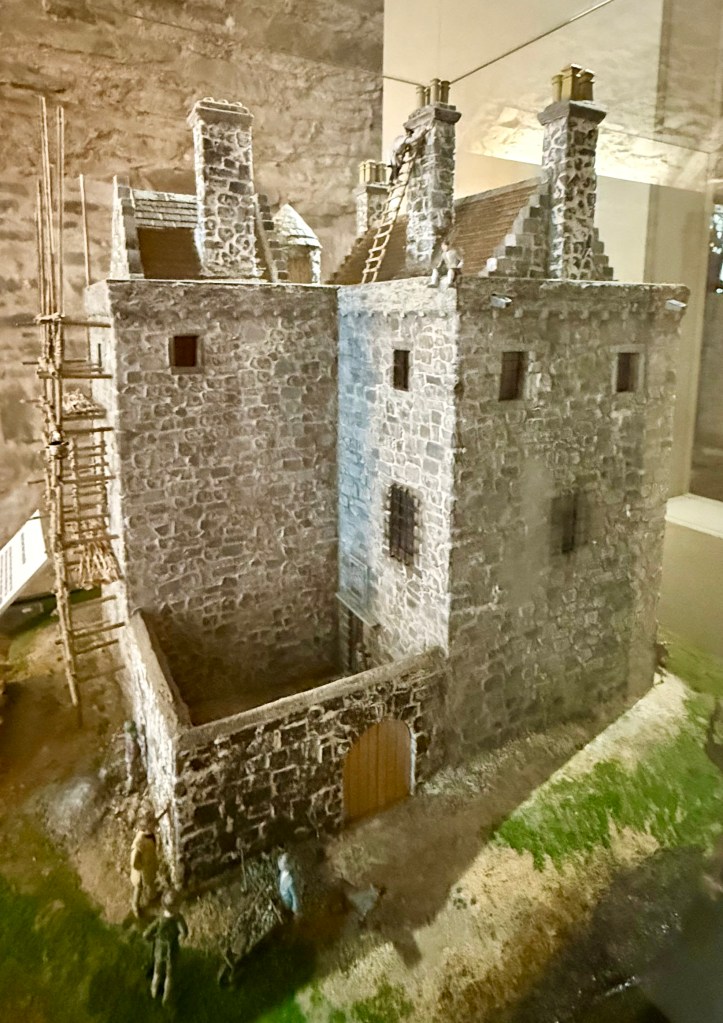
The tower was built of local whin rubble, with sandstone dressings. It was a substantial structure of 3 storeys and a garret. The main block measured 11.9 by 8.6 metres, with walls varying from 1.1 to 2.4 metres thick. The wing measured approximately 6 by 6 metres.
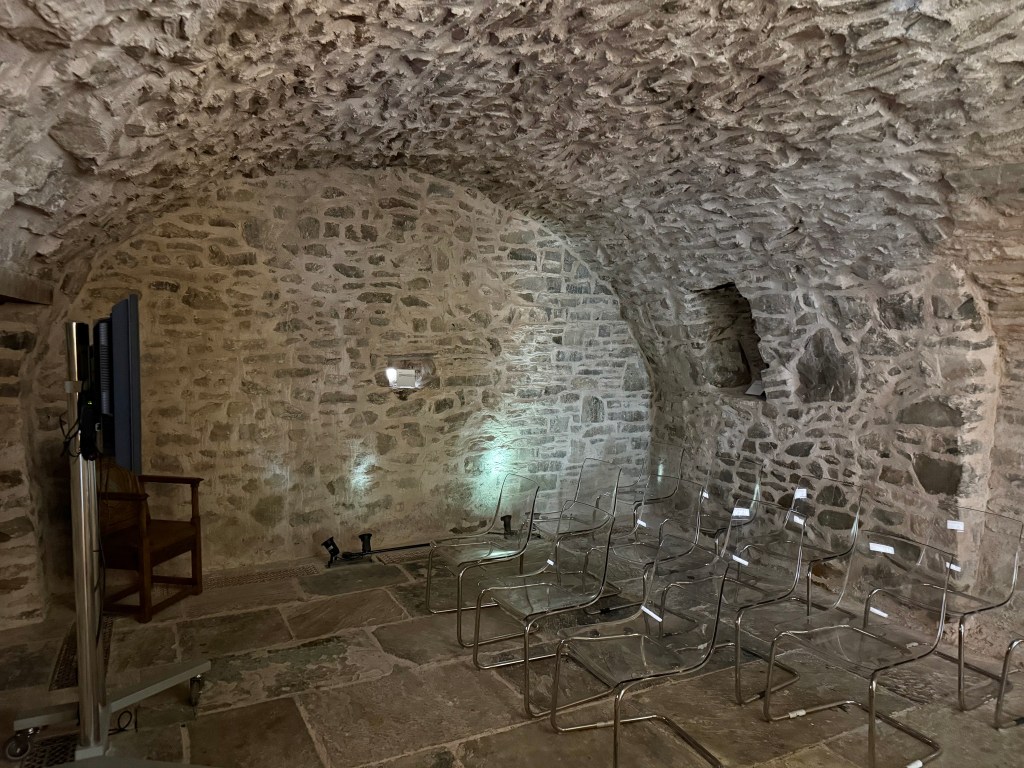
The basements of both blocks were vaulted, one of which is still visible today when visiting the museum. The entrance was in the re-entrant angle, which, instead of leading into the wing, led to a vestibule in the main block. It was protected by gunloops in the adjacent wall and another in the wing. Evidence also shows other gunloops elsewhere that have since been filled in.
The position of the original spiral staircase is unknown because all the walling between the wing and main block was removed long ago.
The first floor of the main block was the hall, which had a large fireplace in the west wall. There was another room in the wing. On the second floor were the sleeping chambers. The garret and parapet walk were rebuilt in the 18th century. Removal of post-medieval roofing at the Tower Hotel revealed mutilated remains of a stepped parapet walk around this L-plan tower.
Given its age, it is perhaps no surprise that Drumlanrig’s Tower appears in some dramatic episodes of Hawick history.
In 1562, a court was reportedly held there that sentenced twenty criminals to be drowned in the Teviot.
Then in 1570 came the Earl of Surrey’s incursion. Surrey’s army devastated Teviotdale as part of England’s intervention in the Marian Civil War. Tradition holds that the Hawick inhabitants removed valuables and set fire to their own thatched houses to deny shelter to the invading army. Remarkably, Drumlanrig’s Tower appears to have survived when much of the surrounding town was destroyed, illustrating the effectiveness of its stone construction.
During this period, Sir James Douglas was seldom in Hawick. Seizing the moment, some accounts suggest that Walter Scott of Buccleuch took control of Drumlanrig’s Tower when Douglas was away. Notably, the same 1570 English incursion led by the Earl of Surrey also saw Buccleuch’s castle at Branxholme attacked. So an empty Drumlanrig’s Tower may have been too good an opportunity to miss, given that Buccleuch’s own tower had been destroyed.
But other reports suggest the transfer from Douglas to Scott occupation was much later, possibly in the last quarter of the 1600s. Either way, the Douglas family did not move back into Drumlanrig’s Tower once it had been occupied by the Scotts.
In June 1679, around 120 Covenanters besieged and stormed the tower, wounding at least one person inside, schoolmaster John Purdom. Government records accused the attackers of seizing arms stored there by loyal landowners and carrying away goods and weapons.
Several local lairds took part, including members of the Turnbull, Scott, Hume and Ker families. One participant, Andrew Hume, was captured after going into hiding and hanged in Edinburgh on 29 December 1682. Later accounts name Thomas Turnbull of Standhill as a leader of the attackers.
Interestingly, this event took place between those at Drumclog (1 June 1679) and Bothwell Bridge (22 June 1679), so the Hawick siege sits squarely within that brief window of open Covenanter militancy following Archbishop Sharp’s murder, rather than being an isolated local flashpoint.
But during the 1600s, Drumlanrig’s Tower was neglected and would eventually fall into ruin. However, in 1675, Anna Scott and her husband, the Duke of Monmouth, bought the barony of Hawick from William Douglas. They didn’t move in, preferring to stay in London. So it was not until 1701 that Anna Scott, by now a widow, returned to Scotland and set about restoring and enlarging the tower to a square plan.
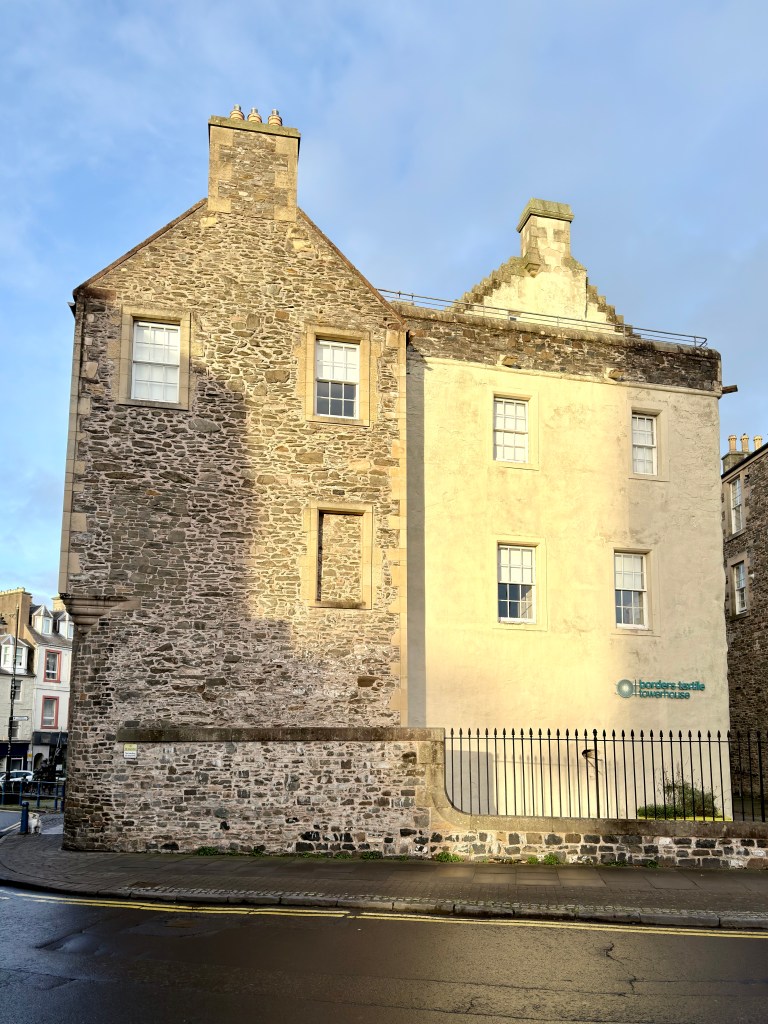
Anna moved out to a new residence at Bowhill in 1750, and Drumlanrig’s Tower was subsequently converted, around 1769, into a coaching house on the main Carlisle to Edinburgh Road. The coaching house became an increasingly substantial hotel, later being known as the Tower Hotel.
It was one of Hawick’s main inns for over two hundred years before closing in 1981. Notable visitors included Sir Walter Scott, William and Dorothy Wordsworth, who stayed there during their well-known Scottish tour in 1803. A plaque commemorates their visit.
During the 1990s, Drumlanrig’s Tower was renovated into a Tourist and Information Centre before opening in 2009 as the Borders Textile Towerhouse, a museum run by the charity Live Borders. It is open from April until October, and is free to visit, although donations are appreciated.
Note. Drumlanrig’s Tower is one of three old tower houses that are home to museums run by Live Borders. The others are Mary, Queen of Scots House in Jedburgh, and Old Gala House in Galashiels.
Drumlanrig’s Tower: OS National Grid Reference NT 50226 14444
Further reading
Alistair Maxwell-Irving, 2014, The Border Towers of Scotland 2 (Maxwell-Irving)
Scottish Covenanter Memorials Association
Bullseye (A Turnbull Clan Publication)


 Thistle & Time
Leave a comment