
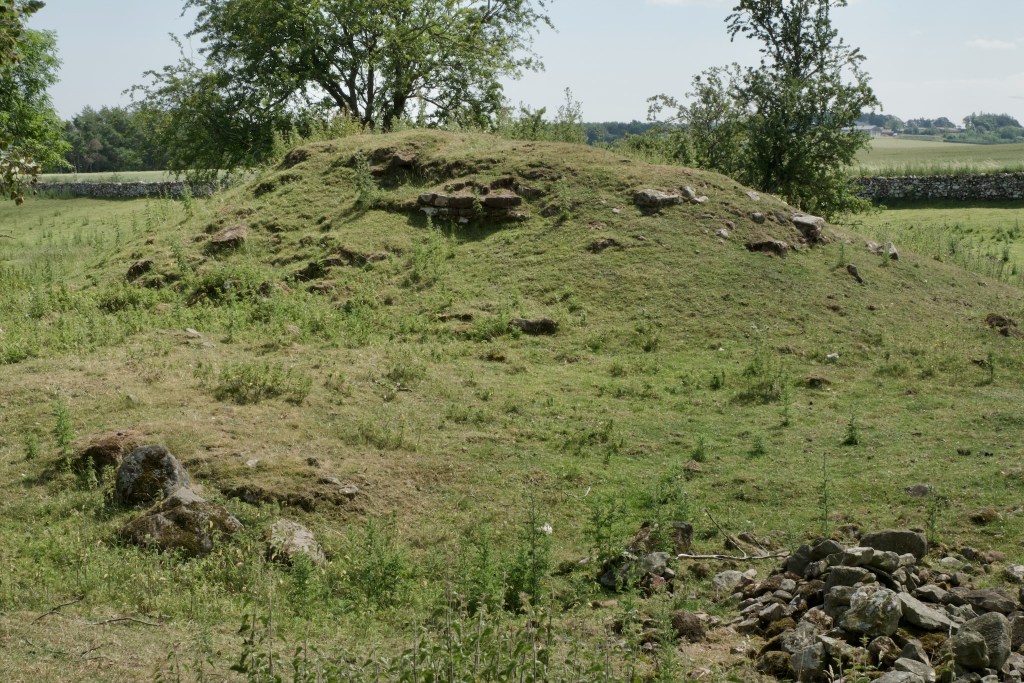
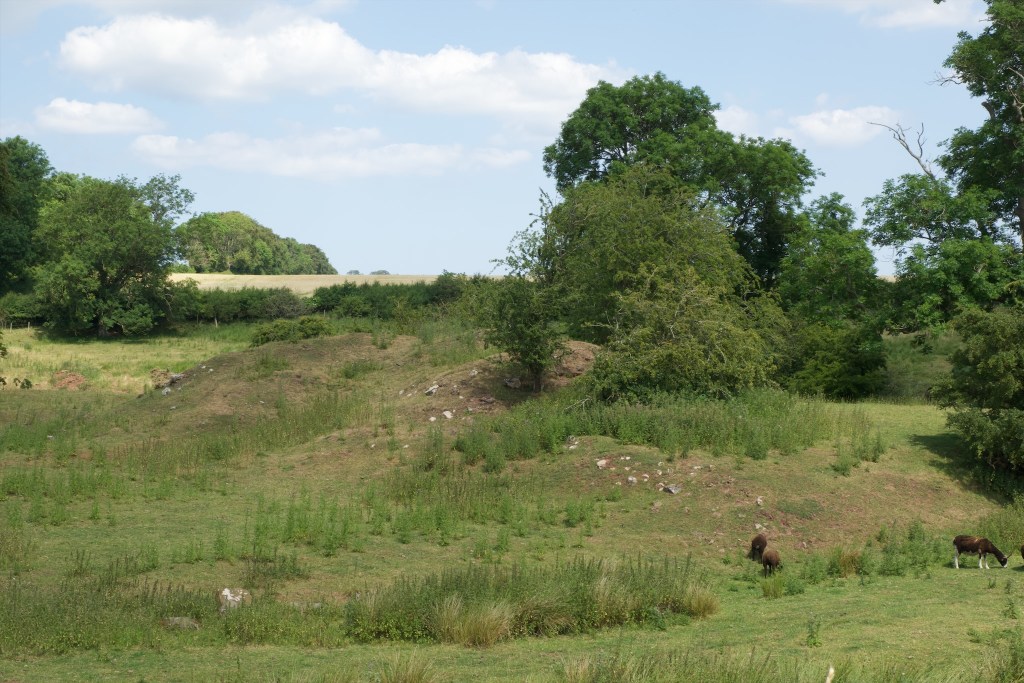
Hidden among the fields north-west of Chirnside in Berwickshire, the remains of Billie Castle are easy to overlook. There is no great tower or curtain wall to announce what once stood here. As the photographs show, the castle survives principally as grassy earthworks, ditches and scattered stones.
Yet Billie was once a substantial fortified residence, standing in a landscape where the border between Scotland and England was anything but secure.
Its history spans from the medieval Dunbars and the influential Douglas earls of Angus, to James V’s efforts to weaken Douglas power, the destructive English invasions during the Rough Wooing, and the ascent of the Rentons of Billie. Through marriage alliances, the Rentons linked themselves to some of the most prominent families and figures of Scotland in the 16th and 17th centuries.
Billie Castle is therefore more than the remains of a forgotten Border stronghold. It is a small window into the violent history of the eastern Scottish March.
A castle built for a dangerous frontier
Billie lies about three miles northwest of Chirnside, close to the old routes running through the Merse towards Berwick-upon-Tweed and the English border.
The surviving archaeological remains reveal that this was no simple tower house.
Historic Environment Scotland describes the site as featuring the remains of a central keep along with extensive defensive and domestic earthworks. The main defensive area measured roughly 41 metres east to west and 31 metres across, enclosed by large ditches. Notably, there is evidence of a water-management system that may have enabled flooding of parts of the defences. Inside the enclosure, there was a gatehouse and a tower. Nearby, additional enclosures and a possible kiln remain.
The surviving keep is now little more than a turf-covered mound about 16 metres square and 2.5 metres high. Originally, however, Billie appears to have been a substantial quadrangular castle, with massive walls and an outer defensive enclosure.
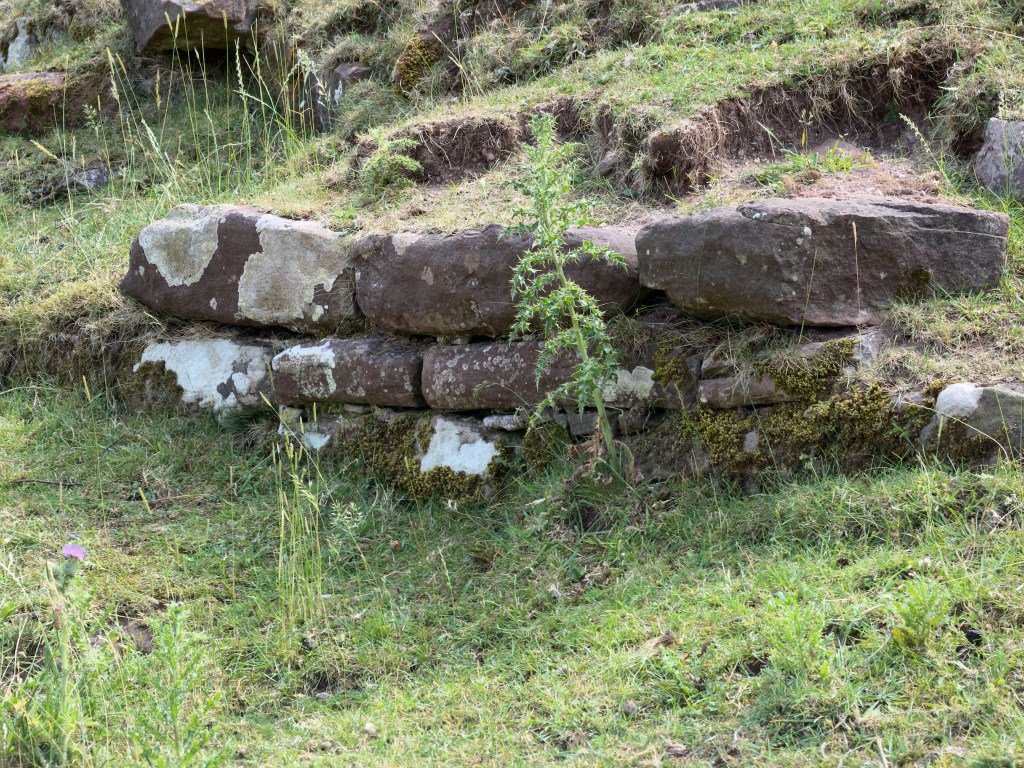
Its precise origins are uncertain. The castle remains visible today are essentially a later medieval structure, and there is no secure evidence for some of the much earlier origins occasionally attributed to the site.
What is much clearer is that by the fifteenth century Billie had become an important stronghold in the hands of one of the most powerful families in the Borders.
The Dunbars of March
Billie’s estate was initially linked to the Dunbars, the Earls of Dunbar and March, who held sway over much of the eastern Borders.
As one of medieval Scotland’s prominent political families, the Dunbars’ castles and estates were key components of the military structure along the eastern March. However, Billie seems to have been a minor possession for them, rather than their main seat.
The rise of the Douglases
In the fifteenth century, the estate passed into the hands of the Douglas family, Earls of Angus. The Douglas acquisition of Billie is traditionally dated to 1435, following the forfeiture of the Dunbar earldom.
The Red Douglases were becoming one of the dominant political forces in Scotland. Their possessions stretched across the south and east of the country, and Billie became part of a formidable network of Douglas estates and strongholds.
It was probably during this period that Billie assumed much of the form represented by its surviving remains. The castle was not merely a comfortable country residence. It was a fortified statement of Douglas authority in a strategically important part of Berwickshire.
And in 1528, Billie became the refuge of one of the most powerful men in Scotland.
Archibald Douglas and James V
The castle’s most dramatic association with the Douglas family came during the struggle between James V and the Douglas faction.
Archibald Douglas, 6th Earl of Angus, had effectively dominated the young king’s government for years. James V eventually escaped from Douglas control in 1528 and began dismantling the family’s political power. James moved against the Douglas stronghold of Tantallon Castle, but the siege was unsuccessful.
Angus himself sought refuge at Billie.
The episode is a reminder that Billie was still a functioning stronghold at a time when Scotland was experiencing a major struggle between the Crown and one of its most powerful aristocratic families.
For James V, however, the Douglas problem was not finished. Over the following years he systematically recovered Douglas lands and reduced the family’s influence. Billie Castle was eventually drawn into that process.
From Douglas stronghold to Renton possession
By 1540 the lands of Billie had been annexed to the Crown, and the Renton family subsequently acquired the estate.
This transition is particularly interesting because the Rentons were not newcomers to the area. The family was an established Berwickshire landed family before their formal acquisition of the estate in 1540.
A particularly useful document survives from 1510. A precept of sasine issued by George Douglas, Master of Angus, identifies “David Renton as apparent heir to David Renton of Billie,” demonstrating that the family was already securely established at Billie during the Douglas period. ([National Records of Scotland Catalogue).
The Rentons of Billie
The Rentons were typical of the lesser landed families who made the Borders work.
They were not as
wealthy or as politically powerful as the Douglases, Homes, or Kerrs, but they held an important position between the great aristocratic families and the ordinary inhabitants of the Marches. They owned land, maintained a fortified residence and, through marriage, established useful connections to the Home, St. Clair and Ctchton families.
But if the Rentons hoped that possession of Billie would bring security, events soon proved otherwise.
The Rough Wooing
Early in 1544, Henry VIII of England undertook what became known as the Rough Wooing, one of the most destructive campaigns ever experienced in the eastern Borders.
In May that year, the English army commanded by Edward Seymour, Earl of Hertford, marched into southern Scotland after burning Edinburgh. Across Berwickshire and the surrounding Borders, castles, towers, villages and farms were attacked or destroyed. The purpose was not simply to win a battle but to devastate the country and make continued resistance more difficult.
Billie Castle was among the Scottish strongholds attacked. The castle was captured and slighted, deliberately damaged so that it could not readily serve again as a Scottish military position.
For the Rentons, their new possession had therefore become a military liability almost immediately.
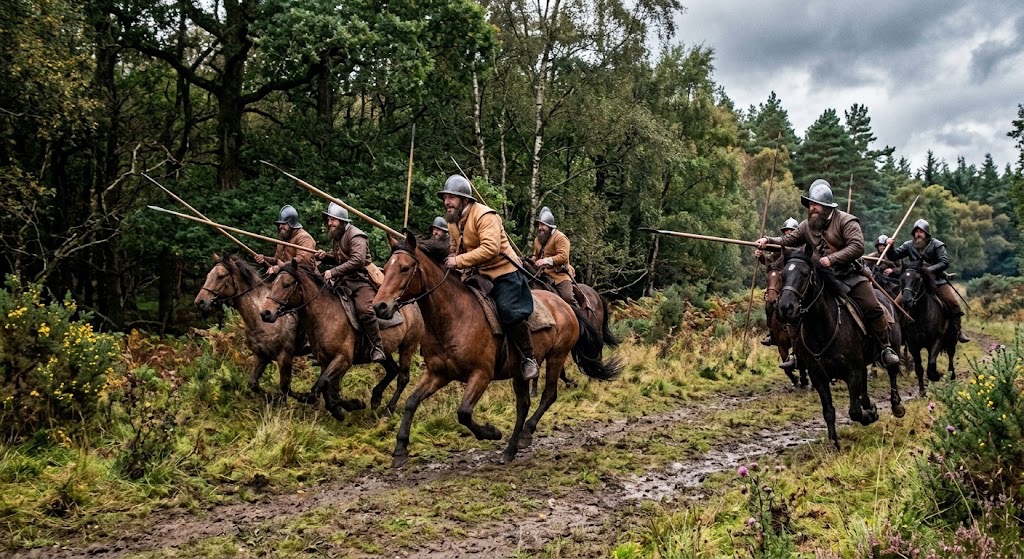
Yet the destruction was not the end of Billie’s military career. It seems that the castle was subsequently occupied by Scottish forces until, in February 1548, the English returned. An English force under Hugh Willoughby, accompanied by Thomas Carlisle and around fifty horsemen, captured what the English sources called “Billie Tower”.
Sources disagree as to whether Billie Castle continued to function as a residence and stronghold after the Rough Wooing. But Martin Coventry, in his book The Castles Of Scotland, says that it was still held by the Rentons in 1686, before being passed later to the Homes of Billie
James VI
One of its most intriguing later episodes occurred in 1596, when King of Scots James VI was hunting near Berwick.
The king stayed for a night at the house of the laird of Billie. His unexpected presence so close to the English garrison at Berwick caused some anxiety on the English side.
It was a fitting episode for a castle whose history had been shaped by the Border’s international politics. By this time, however, the frontier was changing. The Union of the Crowns in 1603, when James VI also became James I of England, transformed the political importance of places like Billie. The border did not become peaceful overnight, but the old Anglo-Scottish military frontier was beginning to disappear.
The Covenanter link
The later history of the Rentons is particularly interesting because of their connections with the religious and political conflicts of seventeenth-century Scotland.
The family had a remarkable connection to a leading figure of the Covenanting era. Around 1610, Agnes Renton of Billie, daughter of David Renton of Billie, married Alexander Leslie. Leslie would become one of the most important Scottish soldiers of the seventeenth century and, in 1641, the 1st Earl of Leven. He became the senior commander of the Scottish Covenanter army during the Bishops’ Wars.
So through Agnes Renton, the family of Billie was connected by marriage to the man who commanded the Scottish army during one of the defining confrontations between the Crown and the Covenanters.
However, there is no firm evidence currently available showing that the lairds of Billie themselves were active Covenanters. There are no records that show they participated in conventicles, joined the armed Covenanter risings, or suffered the sort of persecution recorded for some other Border families.
Of course by the eighteenth century, the world that had created Billie Castle had largely disappeared, and its defensive walls became increasingly redundant. In time, the old castle declined into ruin.
The castle today
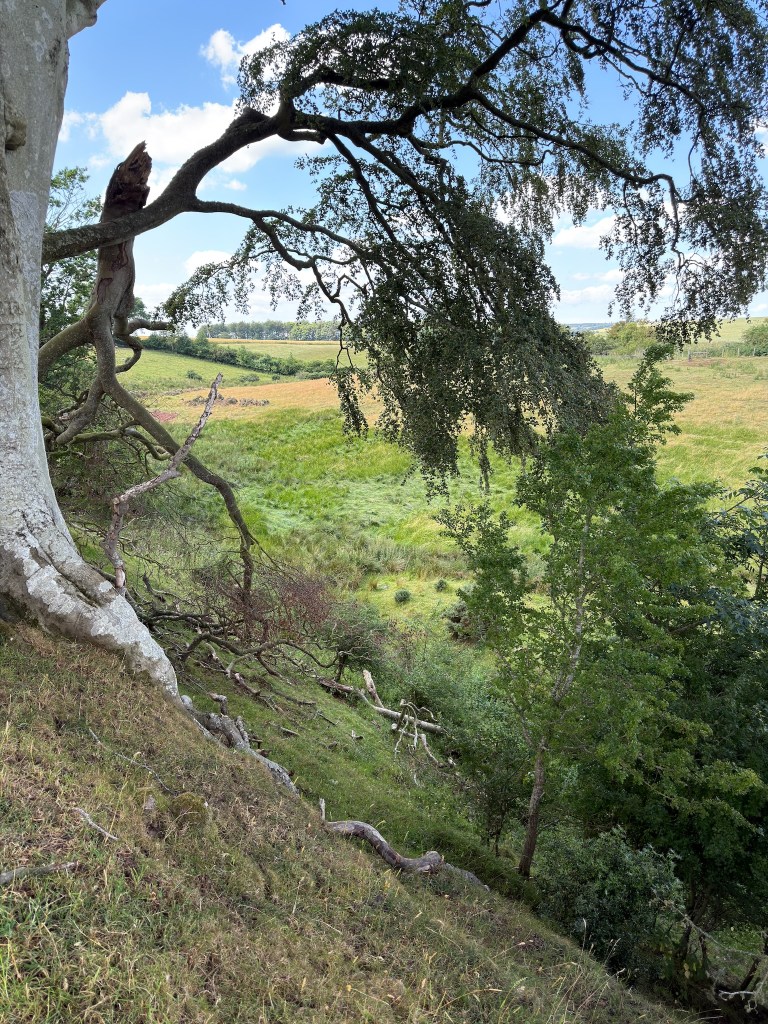
Today, the castle’s remains form part of the modern rural landscape. Visiting requires some determination. It starts with a hike over fields, but then, depending on the approach taken, involves walking through waist-high undergrowth or over marshy land. Either way, you still have a short but steep hill to climb. Afterwards, it’s just a short walk to the earthworks of Billie Castle. If you plan to make the journey, hiking boots and poles are recommended.
It’s easy to underestimate Billie when you see only its remains. However, what has vanished above ground may still be present in the archaeological record. The grass-covered earthworks continue to show the footprint of a site that once served as a medieval and early modern stronghold. And beneath these earthworks lie the remnants of a location that once played a direct role in Scottish history.
Billie Castle OS National Grid Ref: NT 85088 59645
Further reading
Martin Coventry, 2025, The Castles Of Scotland (Goblinshead)




Leave a Reply