

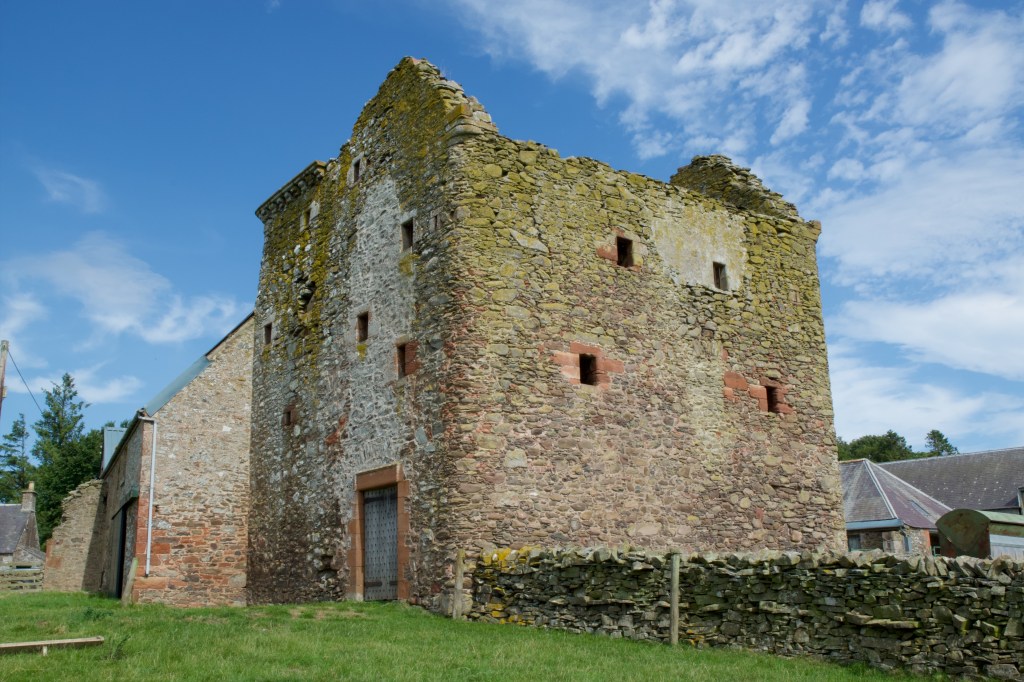
On a grassy hill behind some houses in the small village of Castlehill stands an intriguing ruin. Castlehill Tower, also known as Castle Hill of Manor, was a 15th-century tower house. Its architecture and strategic location, guarding a vital ford, reflect the widespread conflict and lawlessness of the turbulent Border Reivers era. The tower served as a fortified residence for a succession of families, beginning with the Lowis of Manor family, before its eventual abandonment, the date of which is not confirmed.
Overlooking Manor Water, and about 5 kilometres southwest of Peebles in the Scottish Borders, the tower was also part of a beacon signal network to warn of raiders. It had a clear line of sight to Caverhill Tower (of which there are no remains) about 2 km to the north, and possibly Posso Tower, approximately 2 km to the southwest.

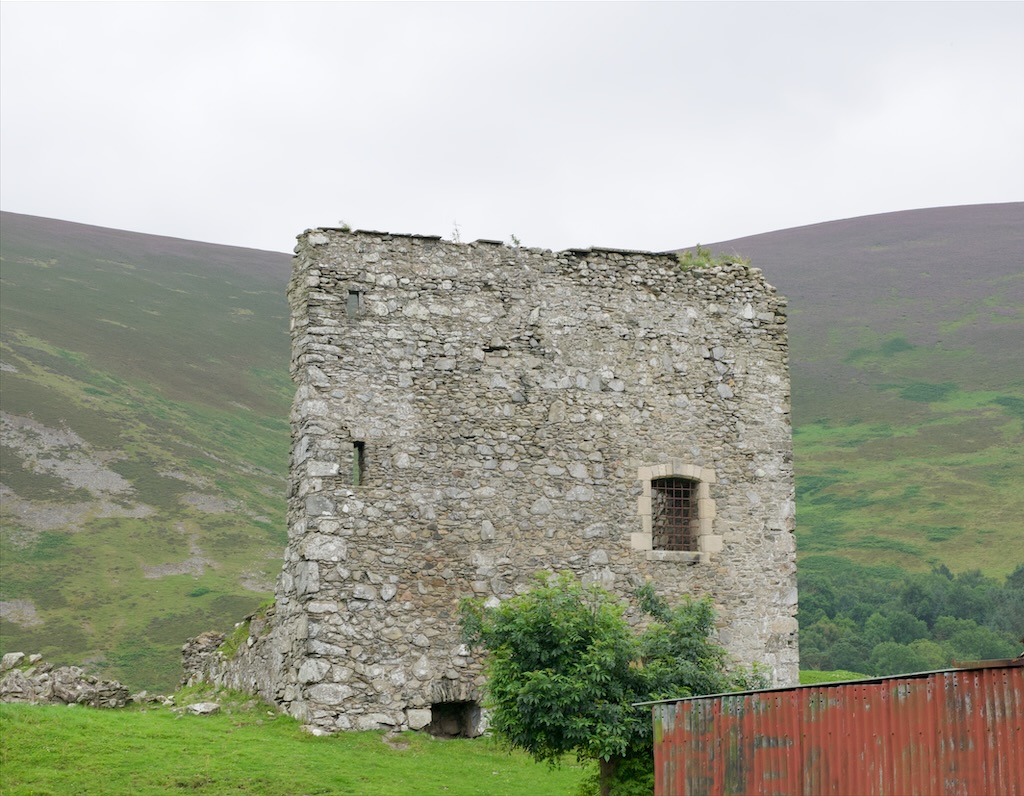
The structure was a typical oblong tower house, characterised by its formidable defensive features, including walls up to 2 metres thick. The eastern flank of the hill on which it stands slopes steeply towards Manor Water. A rock-cut ditch defended the southern and western approaches.
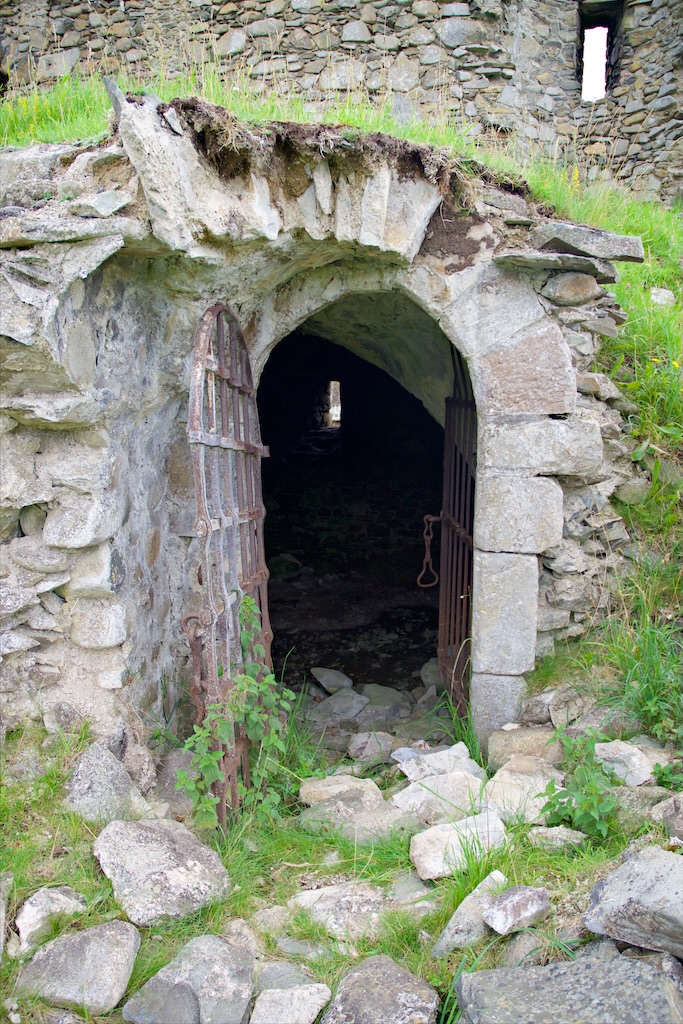
Today, the west wall stands to two storeys of what was likely a three-storey tower plus a garret (attic-level space). The other sides extend no higher than the vaulted basement, which is entered through an arched doorway in the east wall. From here a stair leads to a passage into the hall above. A spiral staircase in the northwest corner gave access to the upper floors. Rubble sandstone with lime mortar is the primary building material, while dressings around openings are of finer ashlar.
The lands of Castlehill, together with other properties in the Manor valley, were acquired by the Lowis of Manor family early in the 15th century. They were most likely minor lairds and would have been called upon to provide armed men during local musters.
But we don’t know whether the Lowis family were reivers. They do not appear to have been linked with any of the larger Border Reiver surnames such as Armstrongs, Elliots, and Kerrs. They do have a minor connection to the Scott family (later the Scotts of Buccleuch), but it was administrative in nature.
Nor is there any evidence suggesting they took part in raids or engaged in blackmail. However, given the era and the Towers’ location, guarding a vital ford on Manor Water, involvement in the reiving economy cannot be ruled out completely.
Gun-loops were later added to the tower at some point. Possibly around the time of the Wars of the Rough Wooing. However, there are no records to indicate that Castlehill was ever attacked by the English, despite the devastation caused to many other towers and other properties in the Scottish Borders during this brutal war. Nor are there records indicating whether the Lowis family became Assured Scots.
In 1637, the Tower was sold to Alexander Veitch. Previously, the Veitch family were active border reivers, and the family name was involved in a feud with the Tweedies. However, Alexander Veitch himself, it appears, kept a low profile, focusing on estate management. By 1645, Alexander had mortgaged the lands to his nephew, Sir John Vietch of Dawyck, an active Covenanter.
In 1643-44, Sir John Vietch served on the Peebleshire county committee that helped administer the Covenanters’ war effort. In 1648, he was appointed to the National Committee of Estates, which governed Covenanter forces and defended the Covenants. Sir John then signed a declaration on 2 May 1650, adhering to the Solemn League and Covenant. However, following the restoration, he was able to return to public life under Charles II without suffering any recorded detriment for his Covenanter activities.
George Baillie of Jerviswood acquired the tower in 1672, and in 1703 it passed to the Earl of March. It was acquired by Burnet of Barns in 1729. In 1838, Thomas Tweedie of Quarter bought Castlehill, but whether the tower was still in use then remains unclear.
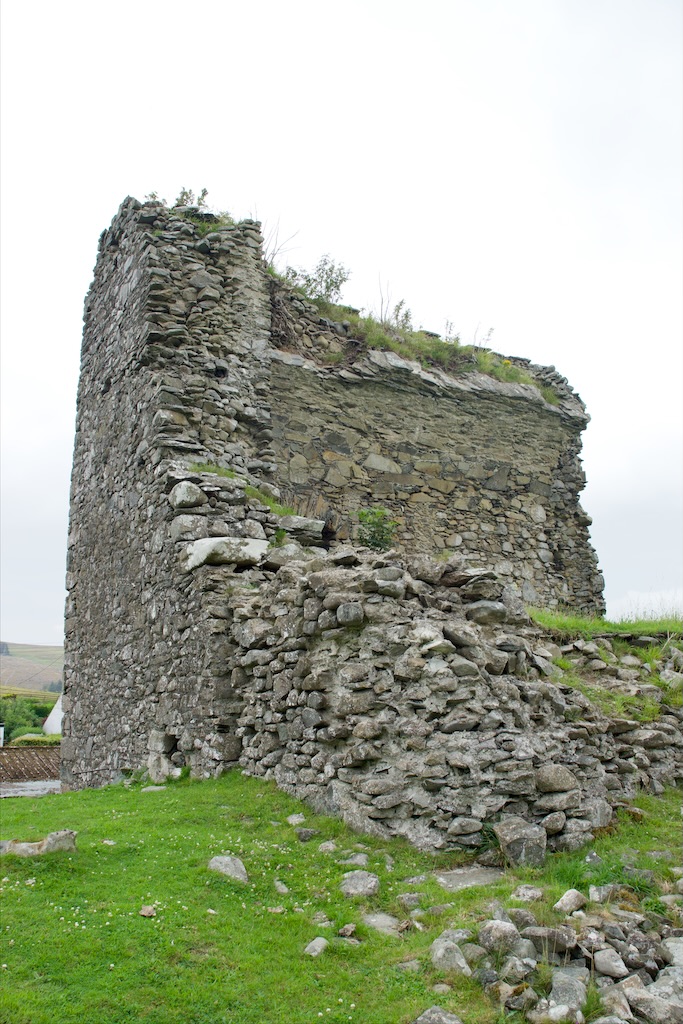
There were some attempts made in 1889 to consolidate the masonry, but the tower continued to sink into a picturesque ruin.
Today, the tower can be accessed from the minor road that runs through the small village of Castlehill, and parallel to Manor Water. There is no official parking, so take care not to block any farm tracks.
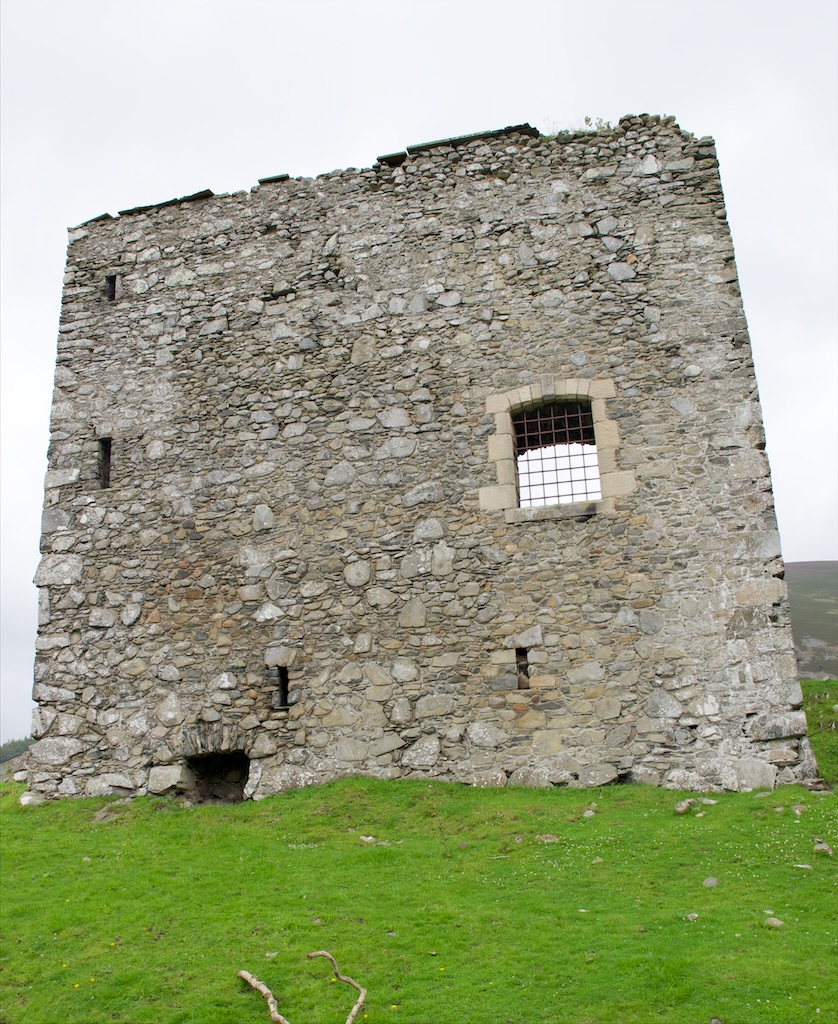
We managed to park on some rough ground just south of the tower. From the road, you can walk through a small field (which may contain horses), remembering to close and secure the gate. Someone was tending to a horse when we visited, so we asked permission before entering. The ground is very uneven around the tower, with many loose stones on the ground. The hill also falls away steeply on the eastern side. Appropriate footwear and due care are needed.
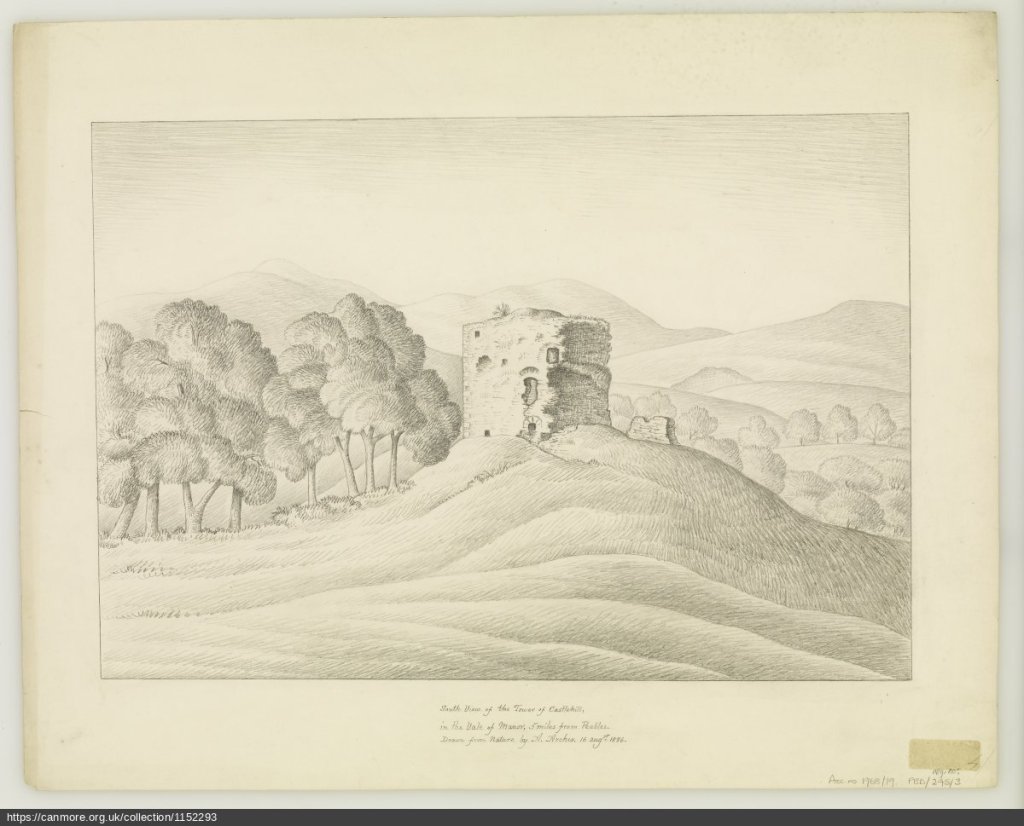
Castlehill Tower: OS National Grid Reference NT 21422 35461
Further reading
Martin Coventry, 2025, The Castles of Scotland (sixth edition), Goblinshead
Alistair Maxwell-Irving, 2014, The Border Towers of Scotland 2 (Maxwell-Irving)




Leave a Reply