
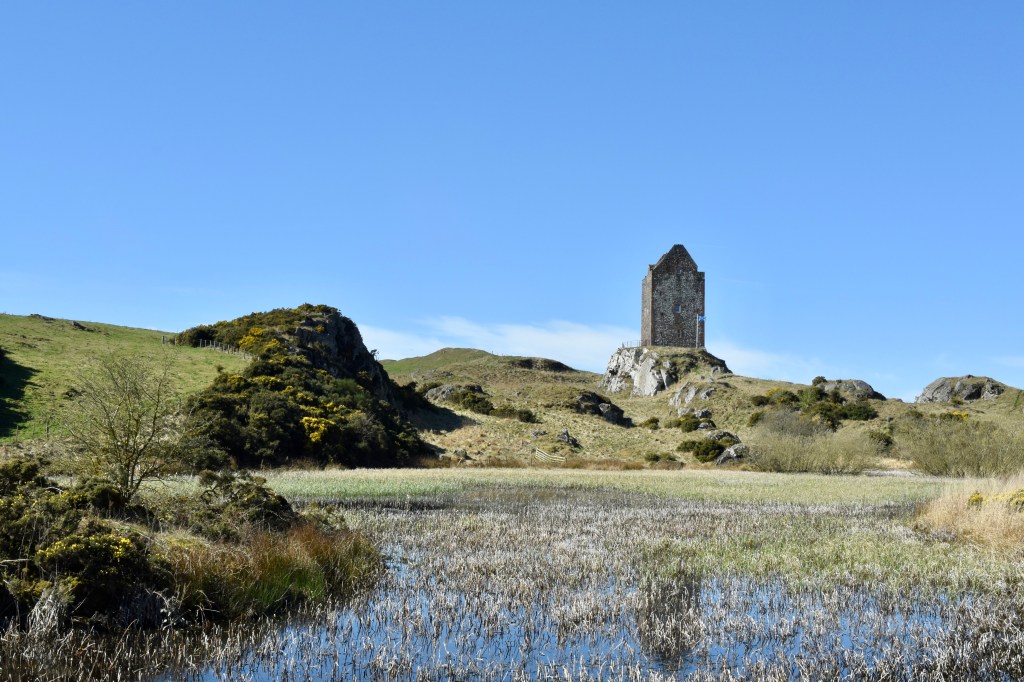
Dotted along the Anglo-Scottish border are relics from a turbulent period in history. Survival meant more than rearing livestock and growing crops — it meant building homes that were defensible. Tower houses, Peels and Bastle houses were the region’s answer to centuries of cross-border raids, family feuds, and political instability.
From the late 13th until the early 17th century, the borders were a no-man’s-land of war and skirmish between England and Scotland. What’s more, the infamous Border Reivers, raiding families loyal to neither crown, added to the tumult. Law and order (as we know it today) was a distant concept.
Wardens, in theory at least, weilded the king’s authority, but in practice, order was based on pledges, blackmail, debt and honour. There was also the custom of the “Hot Trod”. This was when anyone who had been raided had the right to mount a counter-raid including crossing the border to recover their property (usually livestock). It had to proceed with “hound and horn, and hue and cry” and, so it is said, a piece of burning turf (probably peat) on a spear to openly announce their legitimate purpose.
So skirmishes and raids meant that Border residents needed to defend themselves, their families, and their livelihoods. Those that could, built the structures described below.
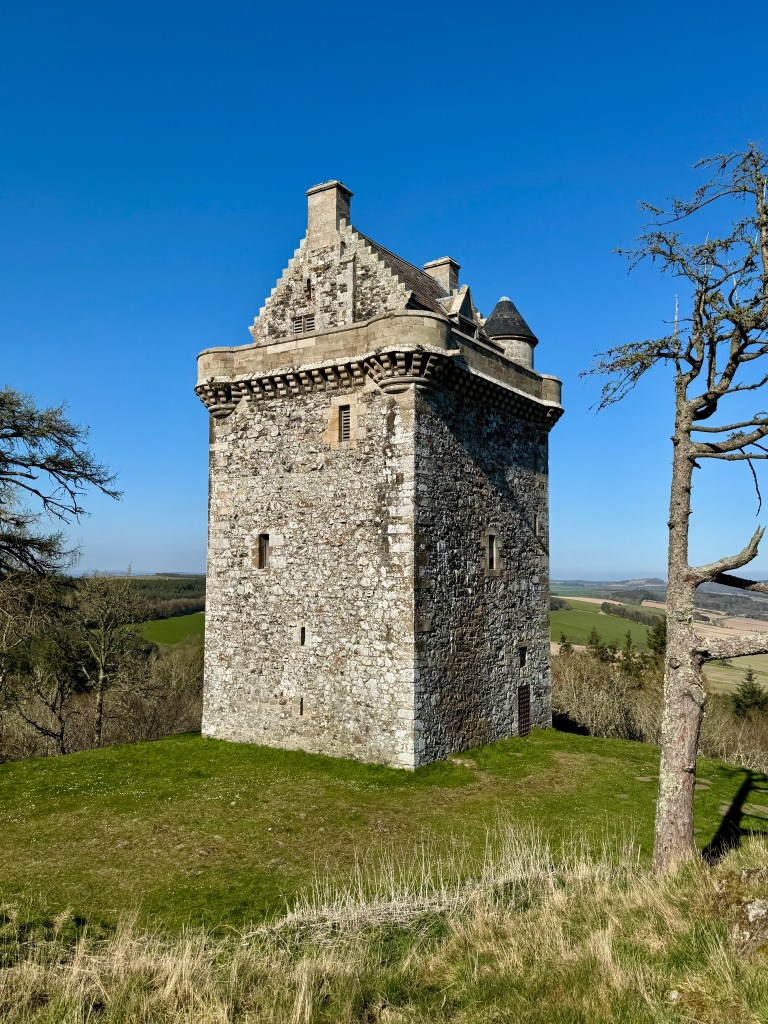
Tower Houses and Peel Towers were tall keeps or castles. They were typically three or more stories high, and acted as both residences and fortresses. Thick stone walls, narrow slit windows, spiral staircases, and battlements made them defensible against both raiders and rival families. Some had adjoining barmkins (walled courtyards) for extra protection of livestock and stores. Some were L-shaped, such as Cardrona Tower; and some were particularly large (such as Neidpath and Cessford castles). Built by the local laird, the family would live on the upper floors. The basement, usually barrel vaulted for extra strength and to help protect against fire, was used for storage or to secure important livestock during times of danger.
Coarse rubble was the primary building material, usually sourced from local stone and held together with a lime mortar. To help protect against the elements, a lime harling (an early form of render) was often added to the outside of Tower Houses.
Many had iron baskets at the top for setting beacon fires, which would be lit to warn neighbouring towers of danger.
Note: Although Peel is often used as another name for a Tower House, some historians make a distinction between the two, describing Peels as smaller. Also, the term Pele is used sometimes to describe a Peel. However, the term Pele is also used to describe a fortified house where the basement was not vaulted (see below).
Bastle houses, on the other hand, were the strongholds of small landholders and tenant farmers. Shorter and squatter than tower houses, they were still built like mini-fortresses with thick walls of stone rubble. The ground floor, usually vaulted and windowless, was used to shelter livestock. At the same time, families lived upstairs, accessible by a removable ladder or external stair (forestair) that could be pulled away or destroyed in an attack.
As mentioned above, the term Pele can also be used for a fortified house, the distinguishing feature being a basement that was not vaulted.
(Note: To confuse matters, Bastles in the Scottish Borders also usually referred to as Towers, so Mervinslaw Tower, for example, is in fact a Bastle or Pele).

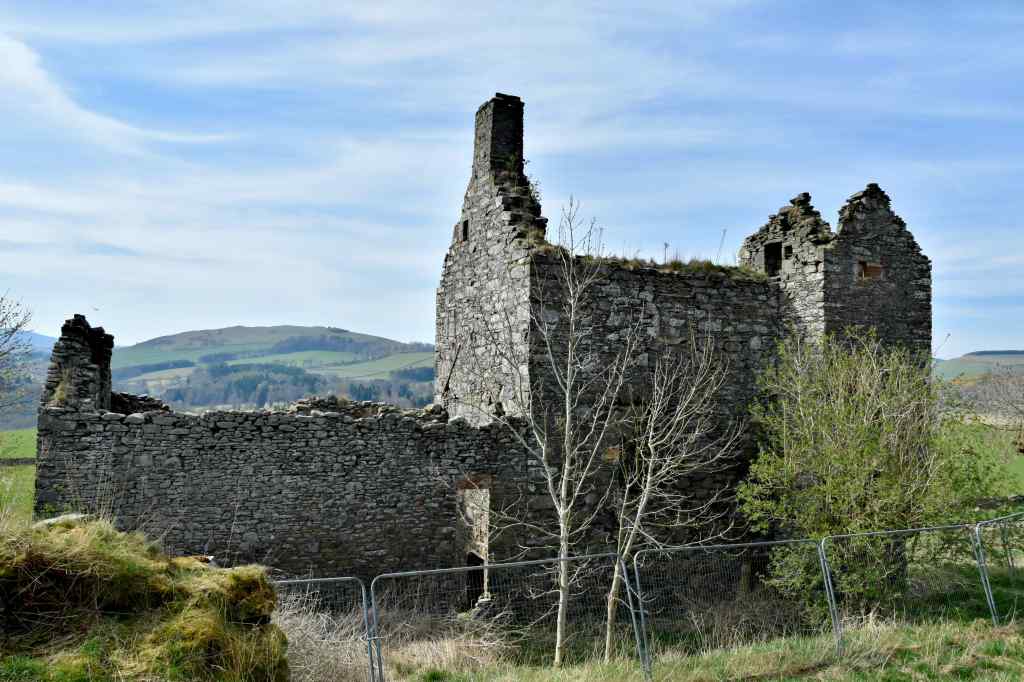
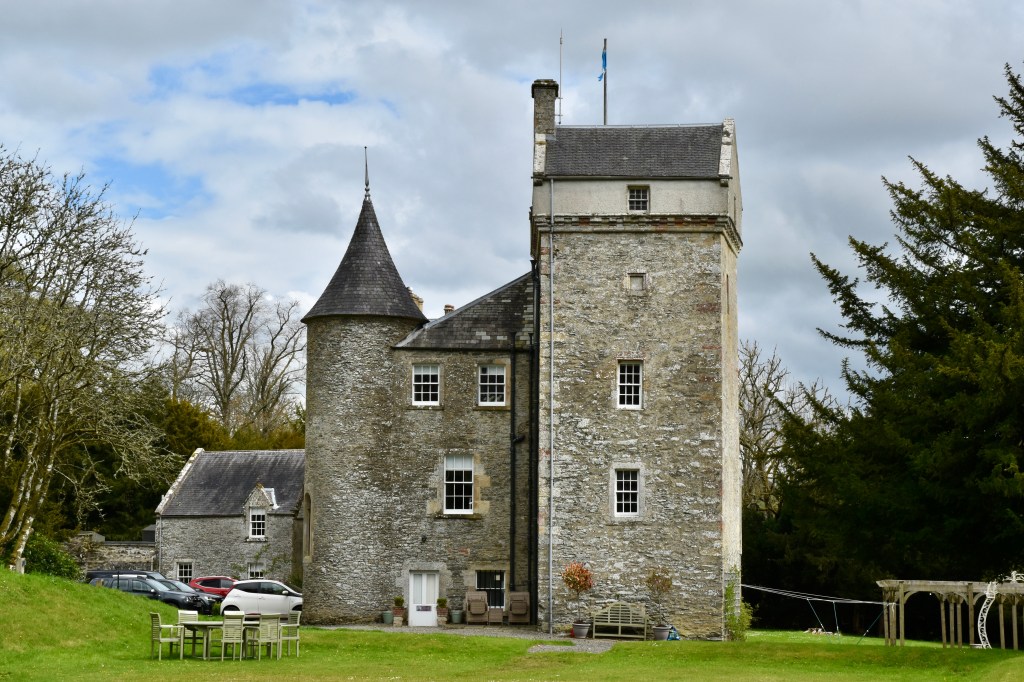
South-east Scotland had a particularly high concentration of these fortresses, and today, crumbling remains can be found throughout the Scottish Borders region. But while most towers and bastles are now ruins, some have been preserved, and others have been repurposed.
I have covered several of these fortified towers/peels and bastles in this blog, and you can read about them by following the links below. (I have also included Hermitage Castle which doesn’t really follow the traditional layout of a tower house. Buts its prominent position on the border makes it worth including in this section of the blog).
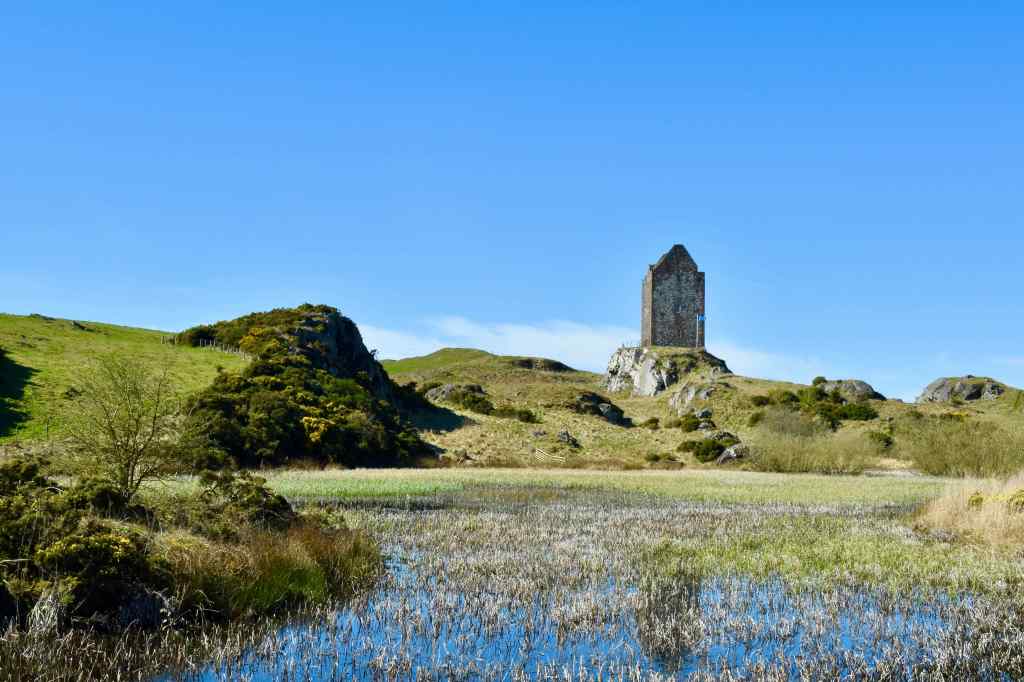
(Featured image, top of page: Smailholm Tower)
More will be added in due course, so please come back later for links to these additions.


 Thistle & Time