
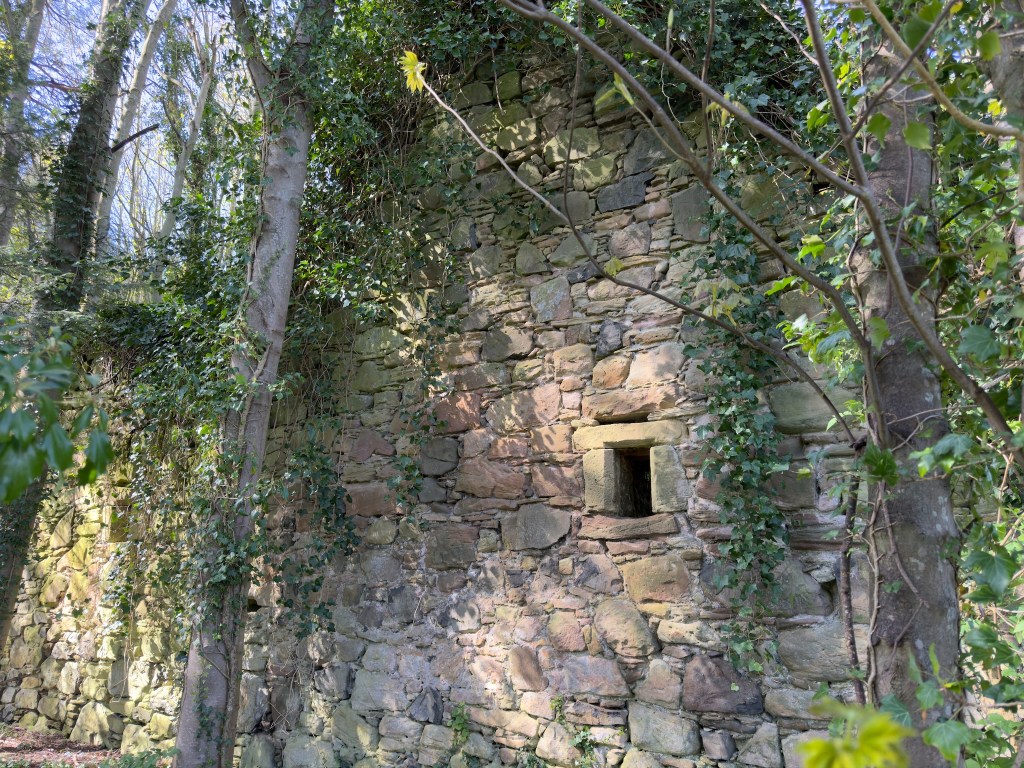
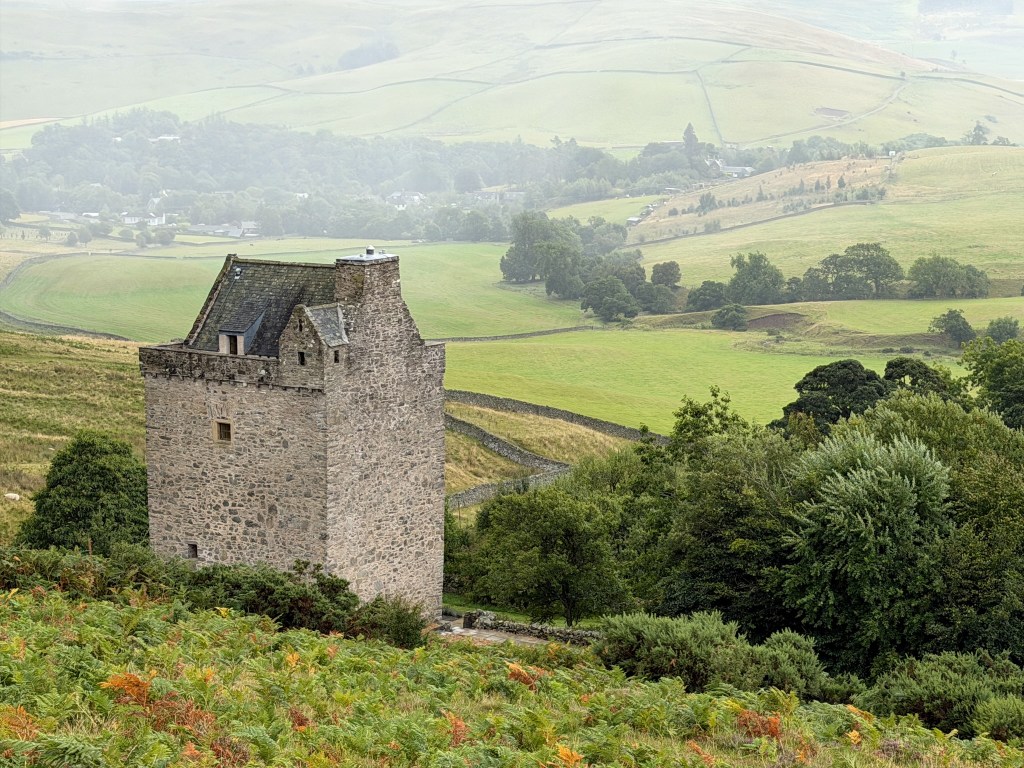
Barnhills Tower, also known as Barnhills Castle, is a small, ruined 16th-century Border tower-house associated with the Turnbull family. It stands beside the Craigend Burn, below Minto Crags and north-east of Denholm. Its history is linked to the Anglo-Scottish wars of the sixteenth century, the feuds and disputed landholdings of the Border reivers, and Sir Walter Scott’s later literary imagination.
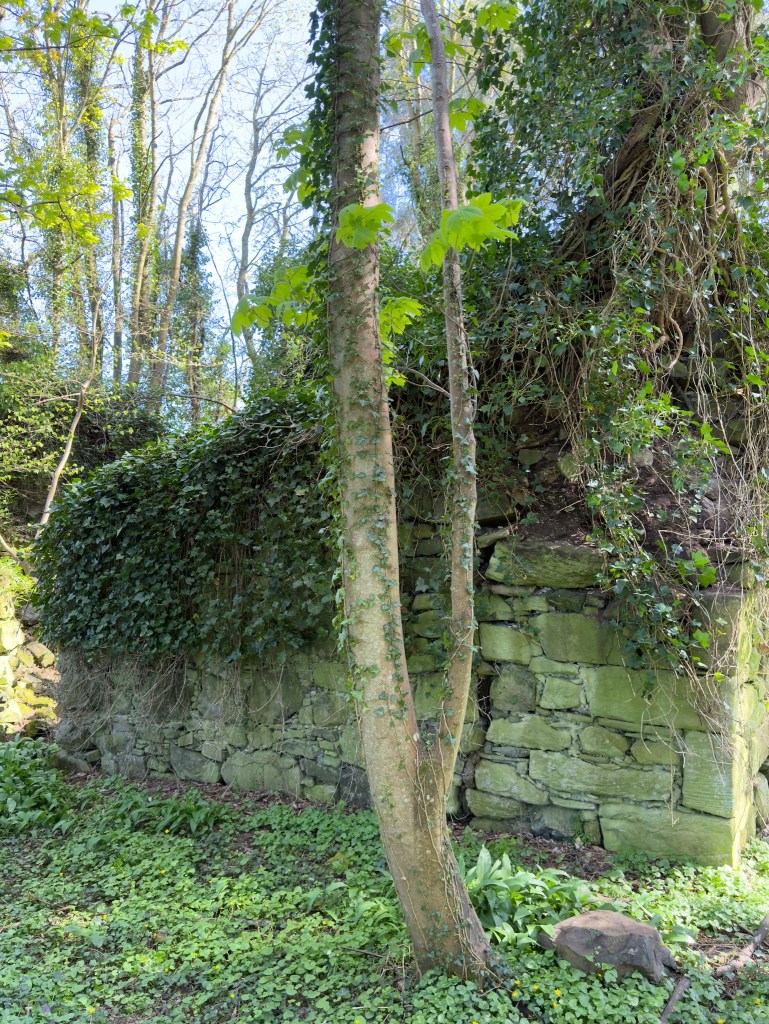
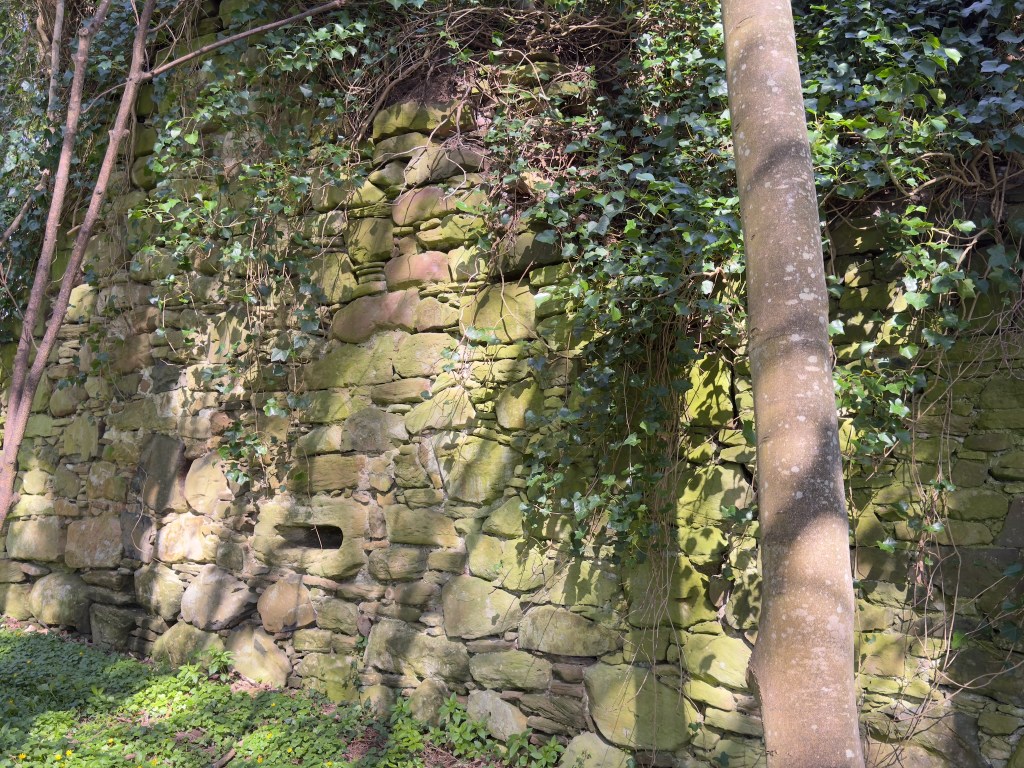
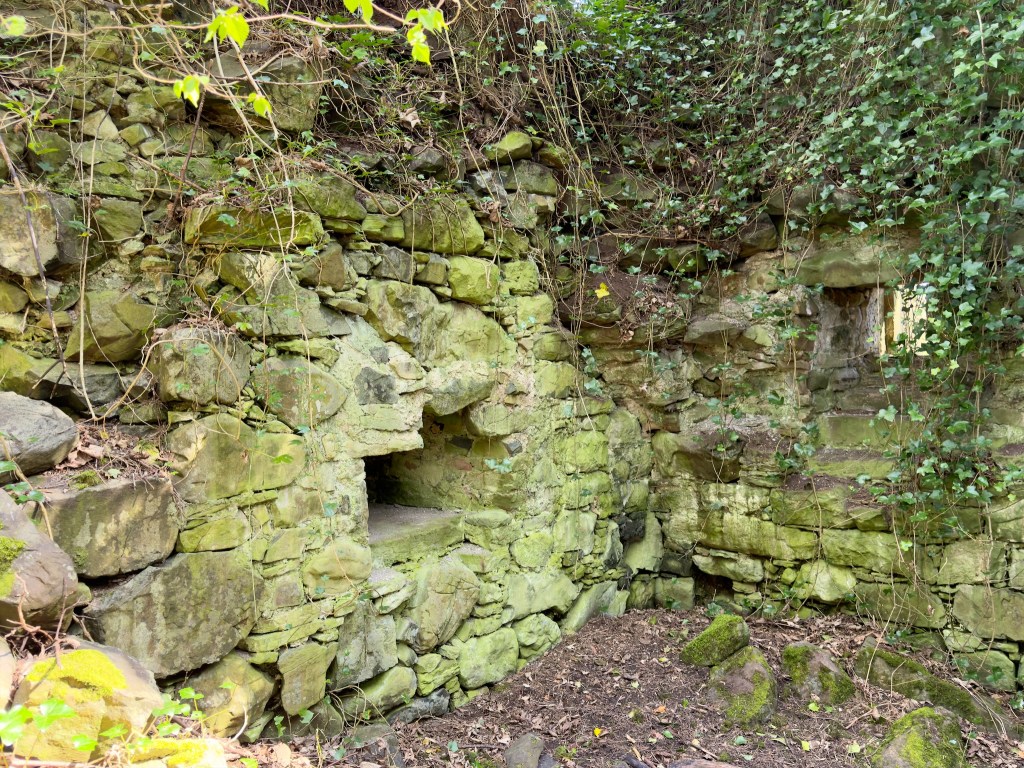
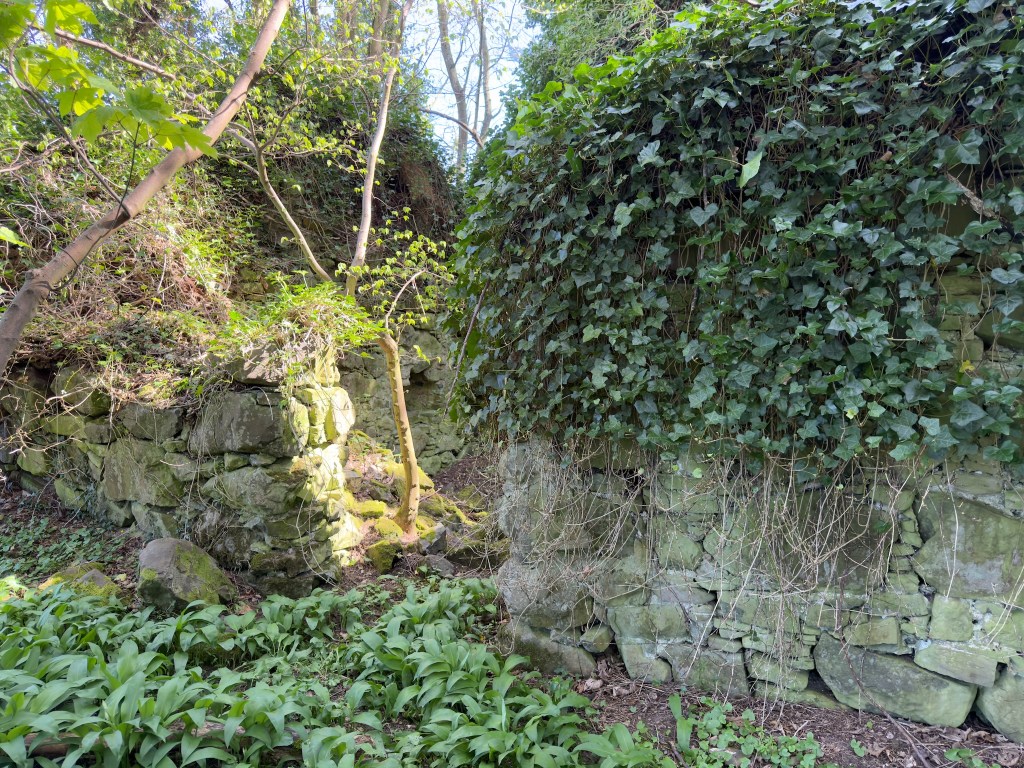
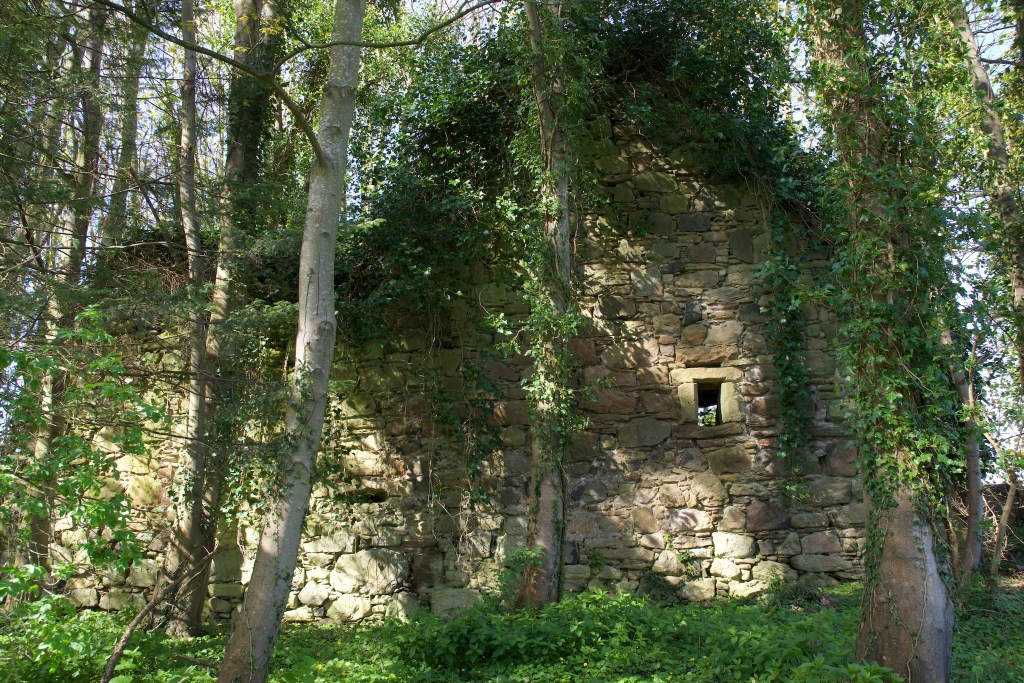
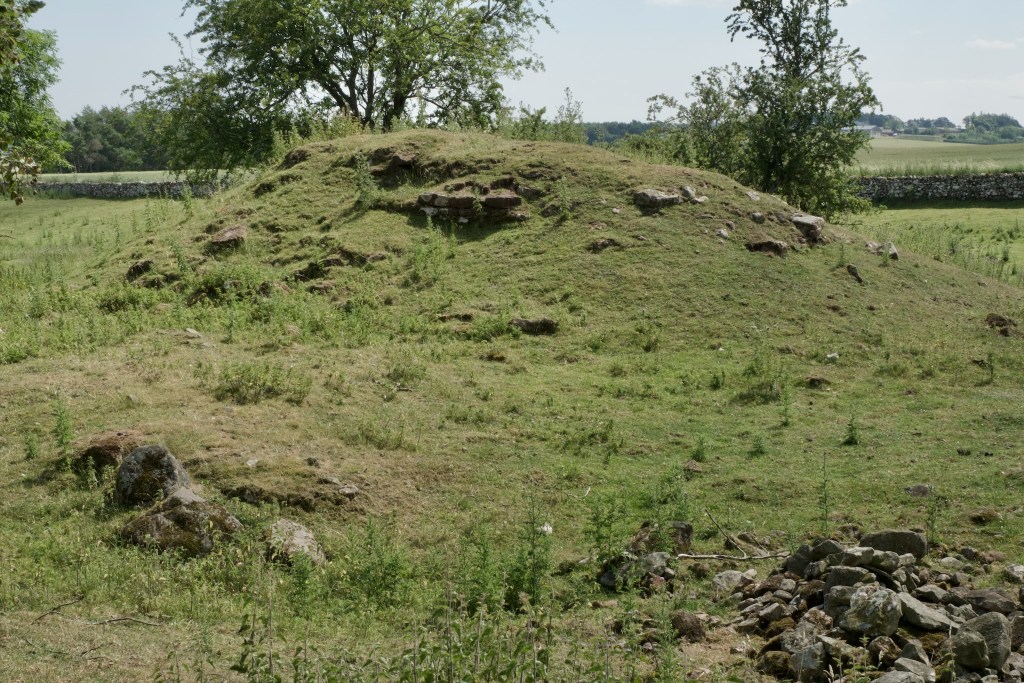
Now reduced to its lowest storey and overgrown with vegetation, the structure was once a rectangular stone tower. It measured approximately 10.5 by 7 metres externally, with thick walls and a vaulted basement. Surviving features include narrow windows, gun-loops, and traces of a staircase in the wall. The original doorway led down steps into the basement, while a staircase provided access to the upper floors, which have since disappeared.
The surviving layout and features are typical of a defensible tower, combining domestic accommodation with protection for its inhabitants and possessions.
But distinguishing events associated with the surviving tower from the wider Barnhills estate isn’t easy. Historical sources refer to both Easter and Wester Barnhills.
The clearest connection with a major national event is the destruction of Easter Barnhills in 1545, during the Earl of Hertford’s devastating invasion of the Borders. This campaign belonged to the Rough Wooing: England’s attempt to force a marriage between the infant Mary, Queen of Scots, and Henry VIII’s son Edward.
Following the Scottish victory at nearby Ancrum Moor in February 1545, Hertford’s September campaign ravaged the region’s settlements, religious houses and fortified residences. This included all the strongholds in the Rule Valley, together with nearby Fatlips Castle located on Minto Crag and a tower at Barnhills.
But was it different from the tower whose ruins still stand today?
Castle historian Simon Forder thinks so: he identifies the surviving ruin as Wester Barnhills and distinguishes it from the burnt Easter Barnhills tower. He proposes construction in the second half of the sixteenth century, noting that Timothy Pont’s map of about 1595 depicts both towers. That is a useful interpretation, but it should not be treated as a construction date proved by a building account or inscription.
Similarly, Alistair Maxwell-Irving, in his book on Border tower houses, says that Barnhills Tower was built to replace an earlier tower burnt by the English in 1545. He goes on to say that the old tower may have been repaired at the time, as suggested by the early RCAHMS report documented on Trove. But he says the present tower was built somewhat later, as indicated by the presence of gun-loops.
Barnhills Tower is associated with the Turnbull family, a well-known border family whose name, legend says, comes from a man named Rule who saved Robert the Bruce from a charging bull. Thereafter, the man was called “Turnebull”.
The family’s connection to Barhills can be traced back to at least 1531. According to Douglas Scott’s historical compilation *A Hawick Word Book*, a Hector Turnbull “of Barnhills” is recorded that year as an official in a land transaction. Then in 1554, Hector Turnbull received a grant of the Barnhills lands, confirmed in 1586. However, we should not assume they were the same person; they may have belonged to different generations of the same family.
Research by Richard Oram and Tom Turpie adds a more complicated picture than a simple succession of Turnbull owners. Their possession may have been interrupted through an owner’s involvement in the rebellion of Francis Stewart, Earl of Bothwell, against James VI in the early 1590s.
This is plausible because in 1595, John Kerr, styled “of Barnhill”, complained to the Privy Council that Dandie Davidson had forcibly reoccupied the property with support from local Turnbull lairds. This may be why an assurance dated 2 May 1595 included the Barnhills Turnbulls among those bound to refrain from harming the Kerrs and their associates.
A “Hector Turnbull” also appears in accounts of the feuds, property disputes, and violence that marked the Borders in the late sixteenth and early seventeenth centuries. Douglas Scott refers to a 1602 conviction for robbing a hunting party and tentatively identifies him as the Hector prosecuted in 1604 for the deaths of six members of the Grahamslaw family. Hector and his fellow accused were declared rebels after failing to appear. It remains unclear whether this Hector belonged to a later generation of the family or an earlier one.
Hector Turnbull became a notorious border outlaw. According to one story, he escaped the governor of Bewcastle’s bloodhounds by cutting his arm and leaving a trail of blood to disrupt the pursuit. He then lured the governor and his men into an enclosed courtyard, where they were killed. Modern local accounts repeat the tale, but no contemporary evidence corroborates it, so it is best treated as Border folklore.
Similarly, the outlaw linked to “Barnhills’ Bed” on Minto Crags appears in a tradition preserved by Sir Walter Scott. Scott’s own note cautiously describes a robber reputed to have lived in the tower below. These stories illuminate Barnhills’ later reputation, but cannot be reliably linked to any one of the historical Hectors.
Interestingly, the network of Turnbull landholdings around Minto and Rulewater, including Barnhills, largely stemmed from their association with the Douglas family. The Douglases owned large estates in the area, where the Turnbull lairds settled their kinsmen.
One event linked to the wider Turnbull family occurred about two months after the Battle of Flodden. Sclaterford was a small Border engagement in November 1513, remembered locally as a Scottish success against English raiders.
The strongest contemporary thread is a letter from Lord Dacre to Henry VIII, dated 13 November 1513, which records his movement through Sclaterford and pursuit by Scottish forces. The account names Dand Kerr of Ferniehirst, the laird of “Bondgedworth” and the sheriff of Teviotdale, among the Scots involved, and reports the laird of Wauchope and Mark Turnbull wounded. A later traditional account credits George Turnbull with rallying 700 Turnbulls, Kerrs, Douglases and Scotts.
The Barnhills lands eventually passed from the Turnbulls to the Bennet family in 1628, but it is unclear when the tower itself was abandoned. Seventeenth-century deeds trace ownership of the estate in some detail, yet their catalogue descriptions do not date the building’s last occupation.
William Bennet sold the lands of Barnhills to the Rutherford family in 1703, and in 1797 the land was bought by Gilbert Elliot, Lord Minto. This brought Barnhills into the wider Minto estate. By the early nineteenth century, Sir Walter Scott was already describing the tower as a ruin.
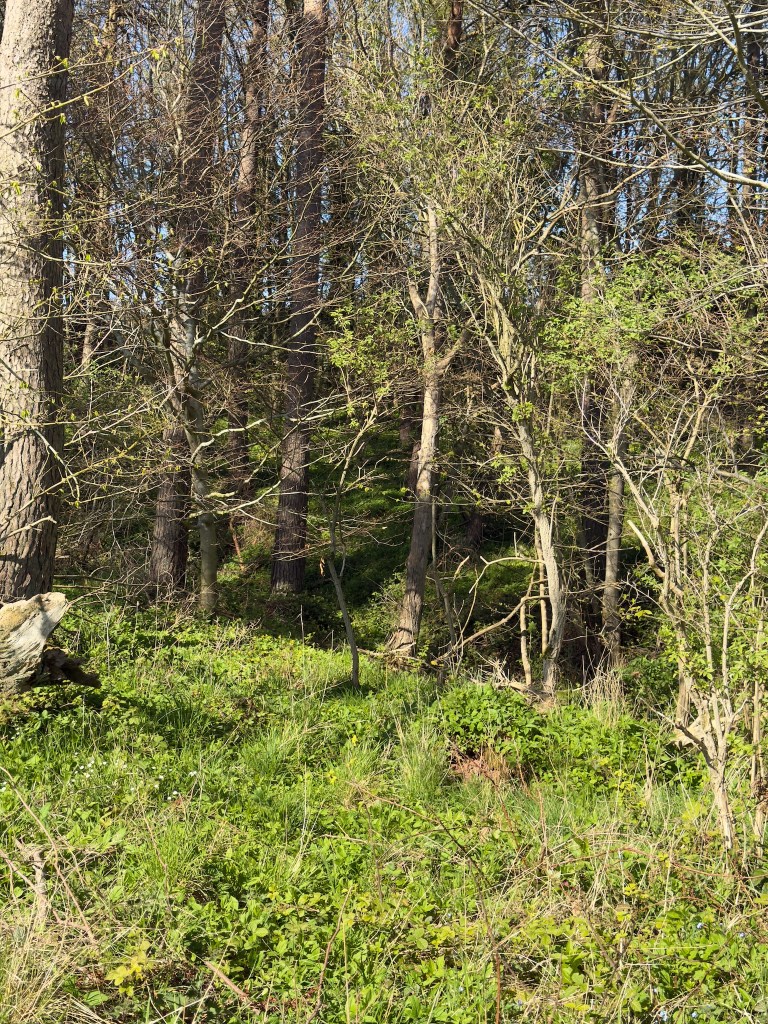
Visiting Barnhills Tower takes some determination. It lies close to the minor road between Denholm and Ancrum, but is well hidden. You can try approaching from the field on the western side, but the terrain isn’t easy once you have negotiated the fence. One of the better routes is to follow the old track beside Craigend Burn for about 120 metres. Then carefully find a safe way across the burn and climb the opposite bank. The ruin sits in dense woodland, about 15 metres from the burn. It is heavily overgrown and easy to miss, so don’t give up. An Ordnance Survey map or mobile app may be helpful.
Barnhills Tower: OS National Grid Reference NT 58910 21184
Further reading
Alistair Maxwell-Irving, 2014, The Border Towers of Scotland 2 (Maxwell-Irving)
Ancrum & District Heritage Society Barnhills Tower
The Castle Guide Barnhills Castle
Barnhills Tower, Roxburghshire Castle Finders
Barnhills Tower, Yet Another Turnbull Stronghold Bullseye Jan-Feb 2024 p7
Douglas Scott, 2026 (draft) A Hawick Word Book
Turnbull Clan Association turnbullclan.com
Skirmish at Scalterford in 1513 The Douglas Archives




Leave a Reply