
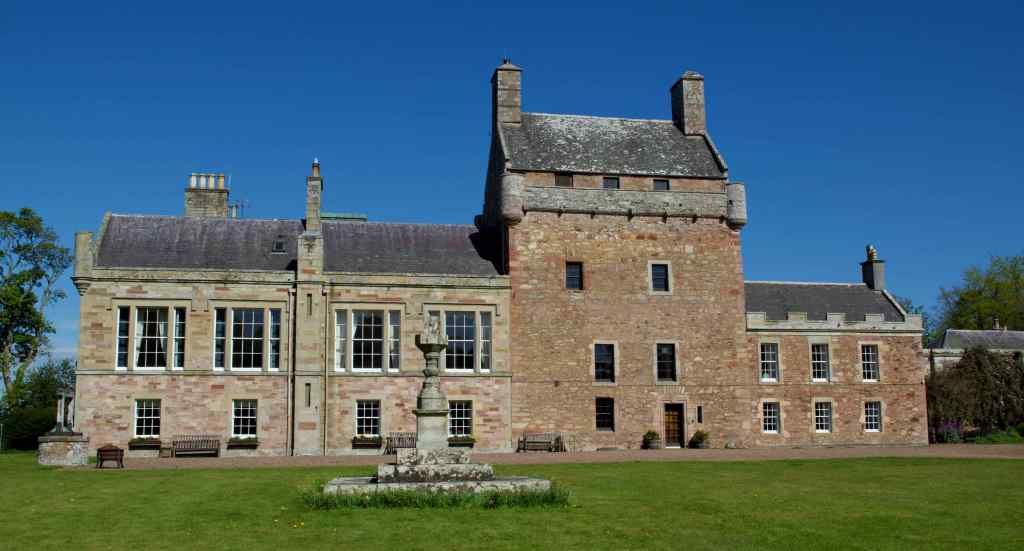
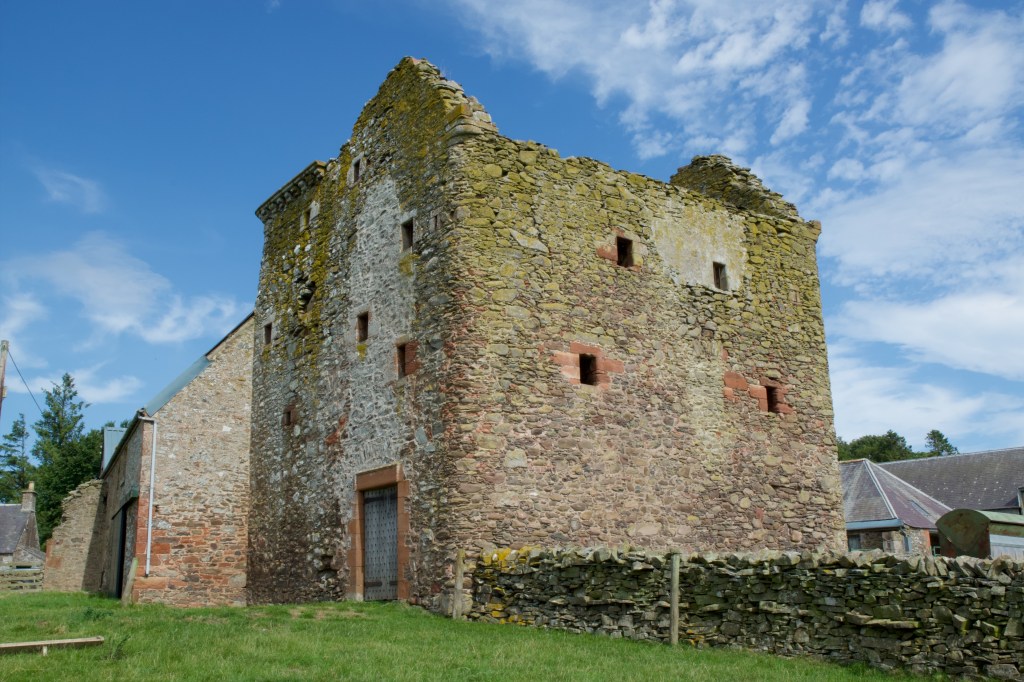
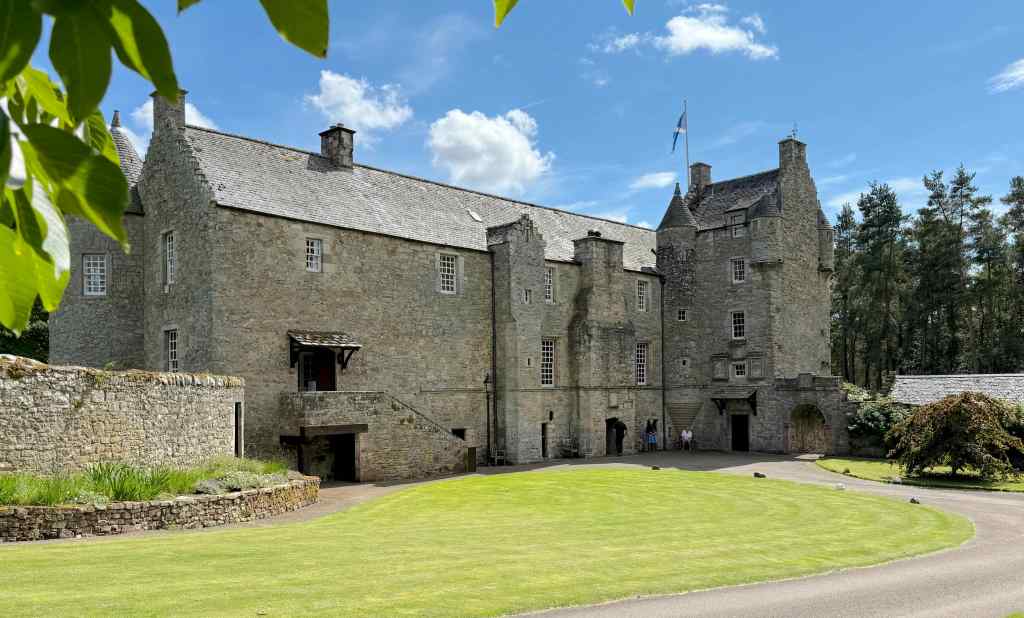
Bemersyde Tower is one of the most important surviving peel-towers in the Scottish Borders: a defensive 16th-century tower that was later absorbed into the larger Bemersyde House. Located above the River Tweed near Melrose, sitting between the Leaderfoot viaduct and the ruins of Dryburgh Abbey, the estate has been home to the Haig family since the 13th century.
Yet the story of Bemersyde begins not with the tower that stands today, but with a Norman knight who crossed into the Scottish Lowlands during the turbulent twelfth century. A charter of 1162 mentions Petrus or Peter de Haga as the owner of the lands and barony of Bemersyd. So it seems likely that the modern family name most likely came from La Hague in Normandy. The name Haig was first used by the 9th laird of Bemersyde, Sir Andrew Haig, who was knighted by Robert III of Scotland in 1390.
The family motto of the Haigs is “Tyde what may”, derived from a 13th-century prophetic poem by Thomas the Rhymer, which stated that the Haigs would always reside at Bemersyde.
In the late thirteenth and early fourteenth centuries, the family was drawn into Scotland’s Wars of Independence. At first, the Haigs of Bemersyde swore fealty to Edward I of England and appear on the Ragman Rolls in 1296. This was far from unusual: the Ragman Roll of that year recorded the submission of a vast swathe of Scottish nobility to the English king following his occupation of Scotland, and for many magnates it was an act of pragmatic survival rather than genuine allegiance.
However, according to later historical accounts, this fealty was short-lived. In 1296, the 5th Laird of Bemersyde fought for Sir William Wallace at the Battle of Stirling Bridge in 1297.
The family’s commitment to Scottish independence was equally conspicuous in the next generation. Peter Haig, the teenage 6th Laird of Bemersyde, fought for Robert the Bruce at the Battle of Bannockburn in 1314. Peter Haig was reportedly only seventeen years old at Bannockburn, making his service all the more striking. He survived the great victory over Edward II, but fell nearly two decades later at Halidon Hill near Berwick, where a large Scottish army was routed by English archers in one of the most decisive English victories of the wars. Another Haig was also slain at the later Battle of Otterburn, the 1388 engagement in which a Scots force under the Earl of Douglas defeated Henry Percy, known as Hotspur. This underlines how consistently the family answered the call to arms across multiple generations of the border conflict.
Some members of the Haig family were also caught up in the political turbulence of the 15th century. In 1449, Gilbert Haig was a commander in the Scottish host that defeated the Earl of Northumberland at the Battle of Sark. He also opposed the rising power of the Douglas family. His son, James Haig, was a supporter of James III of Scotland. When James III was murdered in 1488 by rebel lords, Haig was forced into hiding until he could make peace with the young James IV of Scotland.
Then in the early sixteenth century, Scotland suffered what can only be described as a catastrophe. This was the disastrous Battle of Flodden in 1513, in which James IV and the flower of Scottish nobility were slaughtered by an English army under the Earl of Surrey. Family histories state that William Haig, 13th Laird of Bemersyde, was killed on that day.
Years later, Robert Haig, the fourteenth Laird, avenged his father’s death during the War of the Rough Wooing. At Ancrum Moor in 1544, he captured Lord Evers, the English commander, and carried him in a wounded condition to Bemersyde, where he died a few days later. Haig buried him in Melrose Abbey.
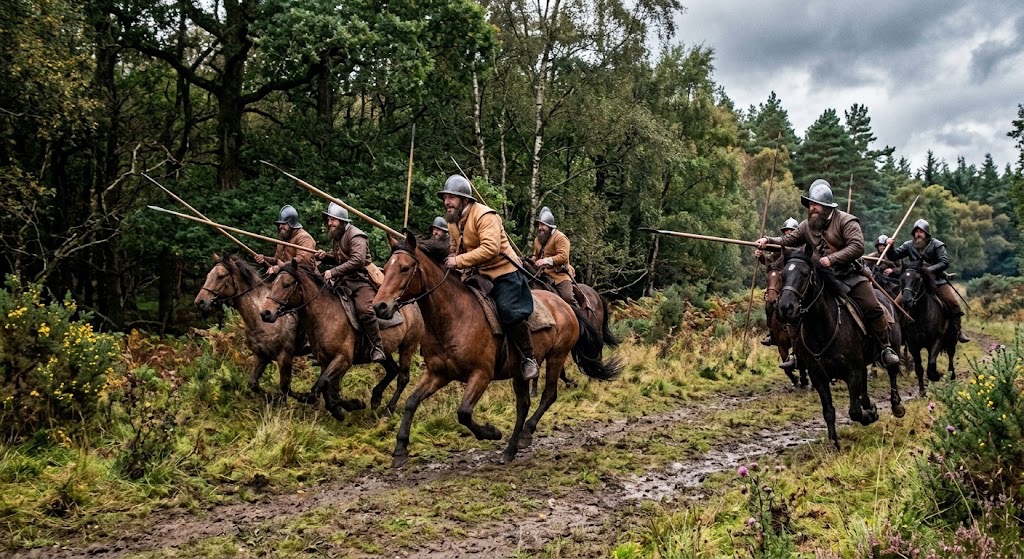
By then, Bermersyde Tower was already standing. Constructed of rubble sandstone in 1535, it was most probably built on the site of an earlier fortification. Like similar tower houses in the Scottish Borders, it was designed to resist cross-border incursions from the English, and raids from Border Reivers. These were the riding families who, in the absence of a strong central authority, put kin before country, stole cattle, took hostages, and engaged in feuds.
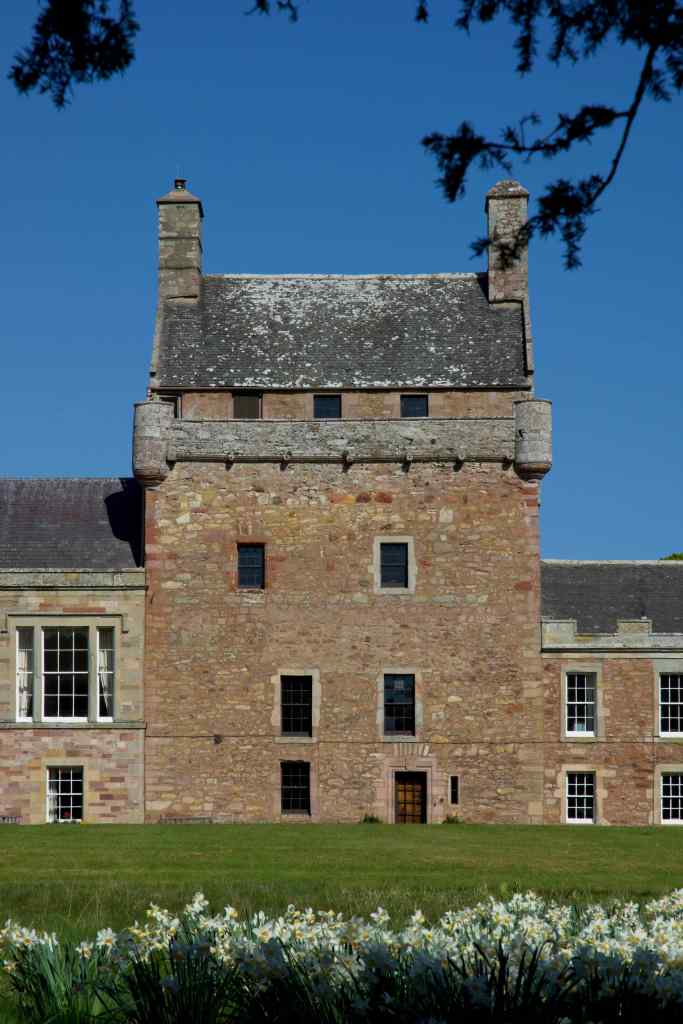
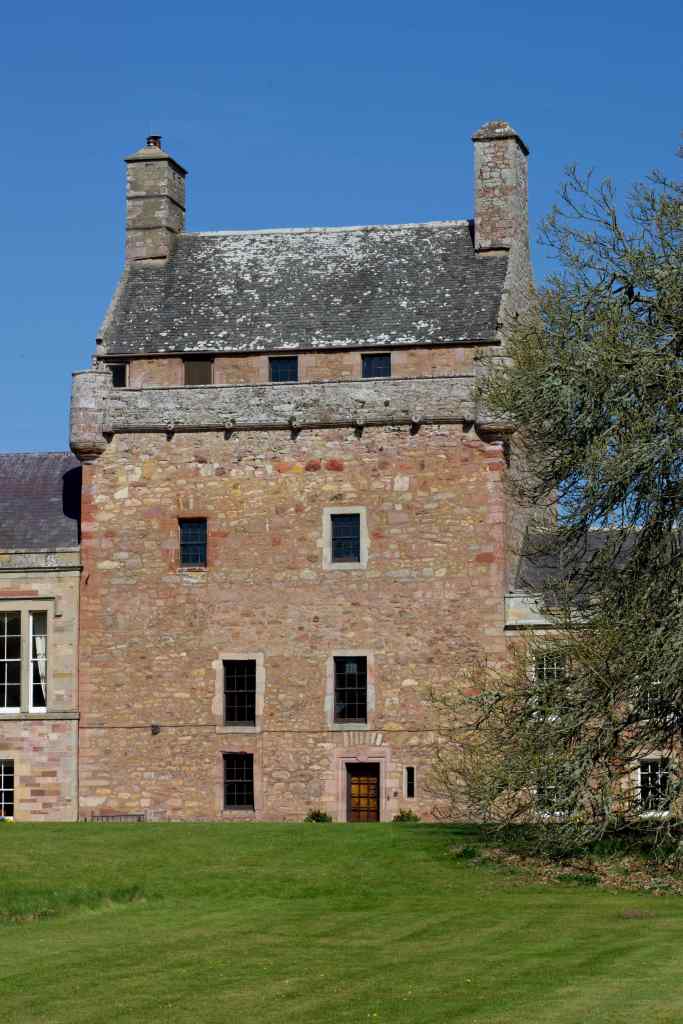
Structurally, the tower was an oblong measuring 11.3 metres by 8.7 metres, with walls up to 3 metres thick. As originally built, the tower had a basement with a pointed barrel-vault. It also had a mezzanine floor and two upper floors.
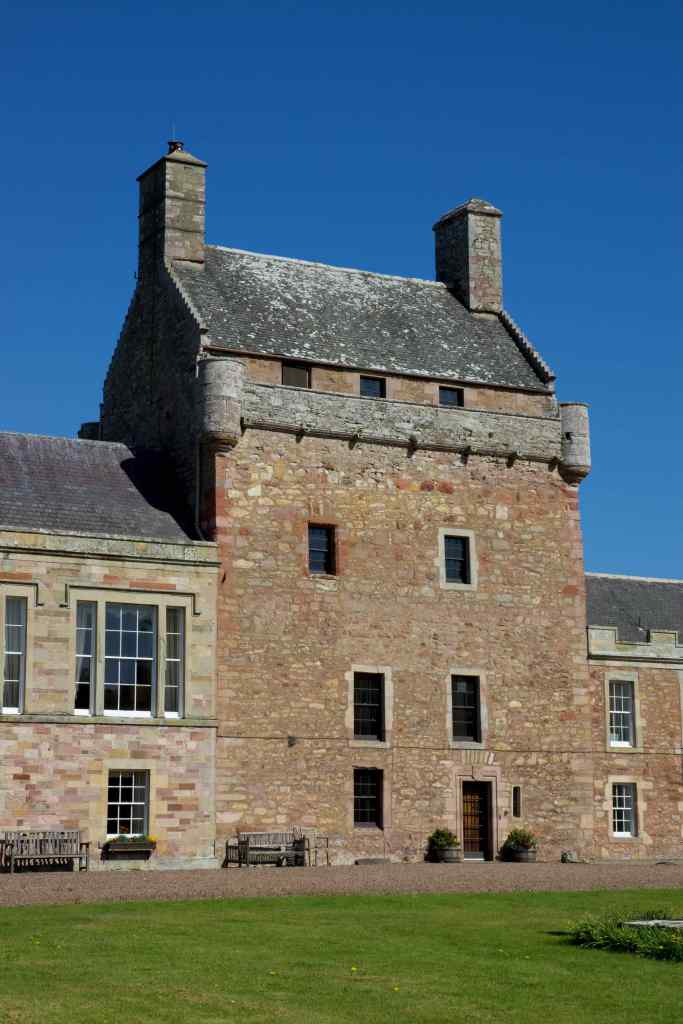
The tower’s entrance was located at ground level on the south side, opening into a small vestibule. From this area, a door provided access to the basement, while a straight staircase on the right led to a spiral staircase in the southeast corner.
Unfortunately, Bemersyde Tower was not immune to the terror of the Rough Wooing. Following the battle of Ancrum Moor, the English swept through the borders, burning anything in their path. Sometime between 1545 and 1547, the tower was attacked and burnt, destroying its internal structures and its probable timber roof.
Robert Haig subsequently became an “Assured Scot”, the pragmatic submission to English protection that many Border lairds accepted during the occupation years. It was a measure of the impossible position in which the family, like many of their neighbours, found themselves during this period.
Throughout this period of the 16th century, Bemersyde served as a watchtower. Perhaps not surprising given that by the middle of the century, reiving was embedded and invading armies were relatively common. Signal fires would be lit to warn others of approaching danger from reivers or an English army.
However, there is no evidence suggesting that the Haigs were directly involved in reiving. But they could hardly ignore the wider world of the reivers. This likely meant forming alliances and perhaps being drawn into feuds. Fortunately, their long continuity at Bemersyde gave the family local standing. So in a society where lineage and armed reputation mattered greatly, the Haigs would have negotiated the reiver era more easily than others.
During this same period, the question of Bemersyde’s connection to Mary, Queen of Scots, and the Marian Civil War (1568–1573) is worth mentioning. The conflict between the Queen’s party and the King’s party, those governing in the name of her infant son James VI, was fought out across Scotland and had deep connections to the Borders, where powerful families were compelled to choose sides.
The surviving Haig records do not specify which faction the Bemersyde’s laird supported during this conflict. But the family’s traditional Royalist sympathies, and the fact that they valued stability and preservation of their estate, suggest their inclinations lay with the King’s party and the Protestant Regent.
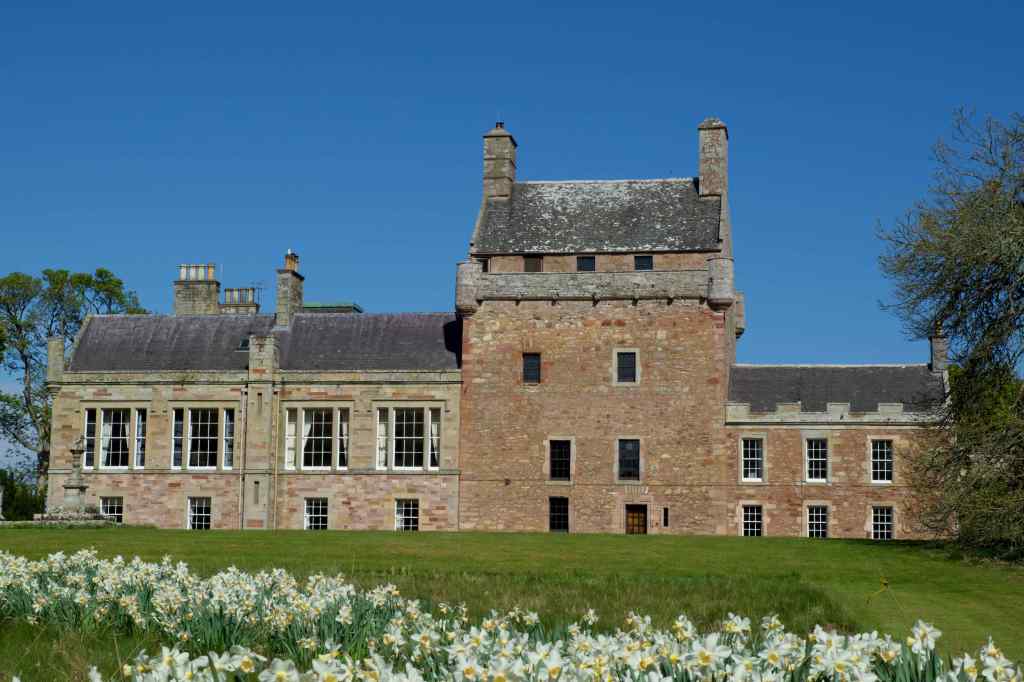
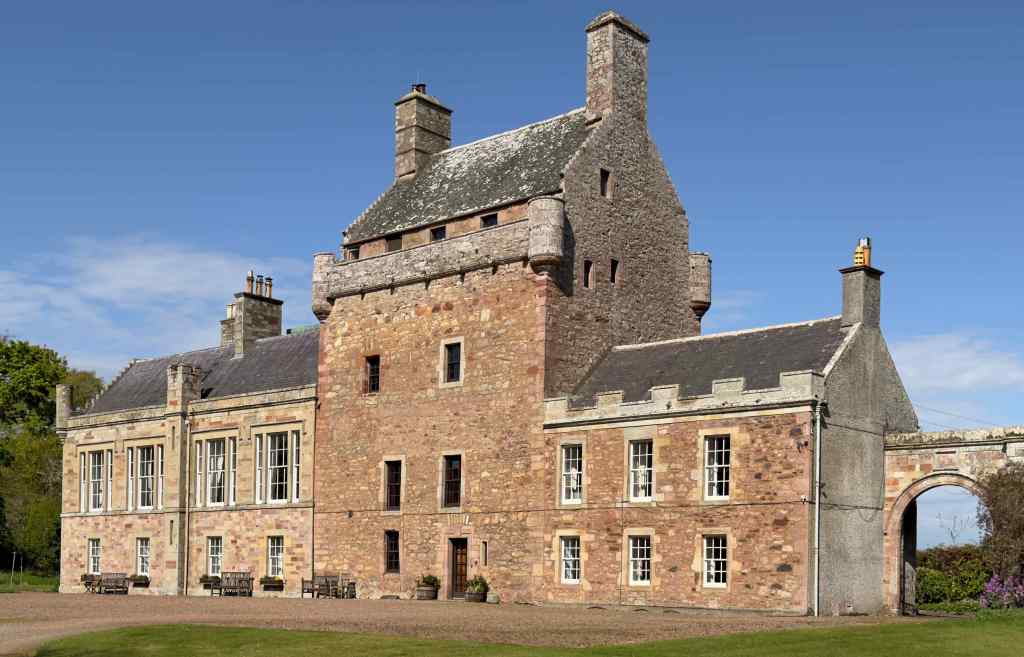
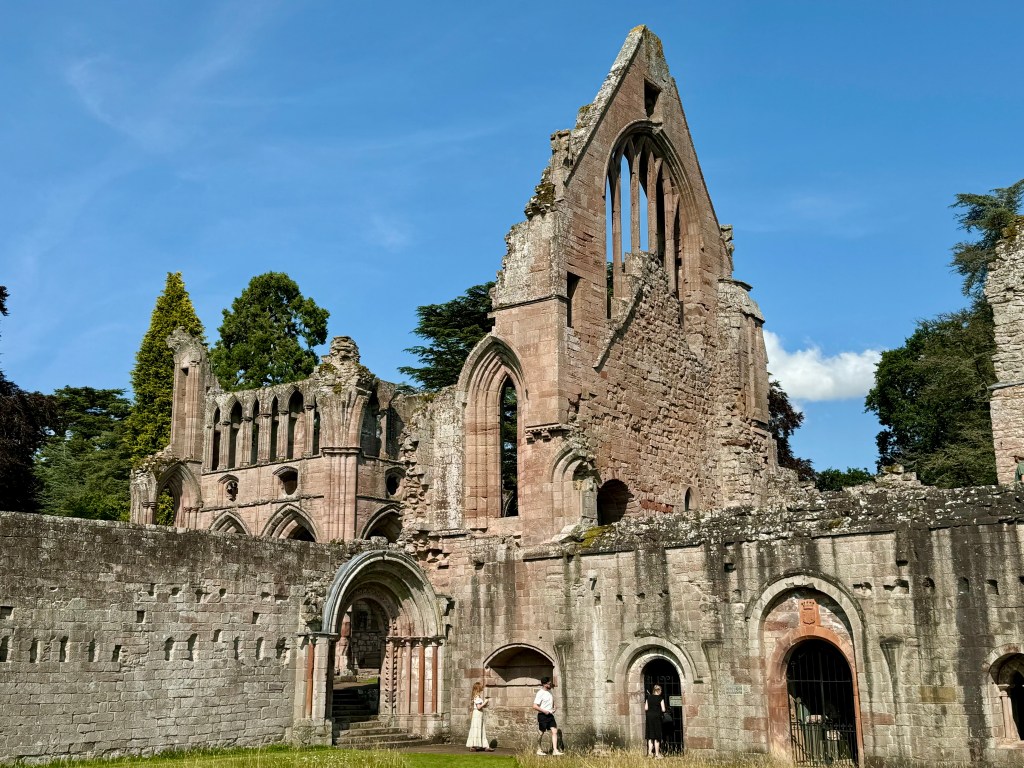
By 1580, the tower had been rebuilt, with its height raised to provide an additional floor. It was probably at this time that an upper vault was added, perhaps as a precaution against fire. Masonry for some of this work was taken from nearby Dryburgh Abbey. The parapet, which dates from 1581, is some 12 metres above the ground. At the end of each parapet walk is a round turret with shot holes to provide flanking cover to the walls.
At this time, a stone engraved with the initials and arms of Andrew Haig and his third wife, Elizabeth McDougall of Makerstoun, was carved. It is now mounted above an archway to the east of the east wing, providing access to the stables courtyard.
The next step in the family’s history takes us to the 1600s. William Haig of Bemersyde was made a royal solicitor. But what happened next differs depending upon the source. Some historians say that he was later “banished and forfeit for treason” in 1633. No further details are forthcoming. But an 1881 family history by John Russell states that William Haig wrote a petition opposing Charles I’s imposition of episcopacy in Scotland. Once uncovered as the author, he subsequently escaped to Holland, was declared a rebel, and assigned the Bemersyde estates to his nephew before dying in exile in 1639. This places him firmly in the tradition of early Covenanting resistance to royal ecclesiastical policy
But perhaps the most significant event of this period concerns Anthony Haig, the 21st Laird. In 1657, amid the Wars of the Three Kingdoms, he became a Quaker. Following the Restoration of the monarchy, he was imprisoned in Edinburgh in 1663 for his religious beliefs and was not released until December 1667, after four years. The Society of Friends (Quakers) faced strong suspicion from both the Restoration government and the Presbyterian Kirk, and Haig’s four-year imprisonment was a direct result of his conscience.
Following his release, Anthony dedicated himself to improving the Bemersyde estate. In 1680, he installed a sundial of Renaissance design in the garden and made internal improvements to make the tower more comfortable.
The next alteration to the house came in 1761. James Haig built the west wing, and then James Zerubabel Haig added the matching east wing in 1796. A friend of Walter Scott and an educated man who had been on a Grand Tour of Europe, James Zerubabel lived during the era known as the Scottish Enlightenment.
Interestingly, by the 1700s, the Haigs’ religious sympathies seem to have shifted. Russell’s family history states that during this time, the family leaned towards Episcopalian beliefs. As such, this would have made Jacobite sympathy natural for a Borders family of their background. However, the precise nature of their support for the 1715 or 1745 Jacobite Risings, whether active, financial, or merely sentimental, has never been established.
By the middle of the 19th century, the Haig family was living in Italy. Then, in the 20th century, Field Marshall, Earl Haig took over the house from his cousin. The property had been purchased as a result of public subscription and presented to the Field Marshall following the victory in World War 1.
Further alterations were carried out in 1923 for the 1st Earl by the architects Alison & Hobkirk, including raising the north range of the stables to two storeys. It is likely that the old arched doorway was enlarged and remodelled at this time.
During World War II, the house was occupied by the Edinburgh Asylum for the Blind and the Women’s Land Army. Then, from 1947, the house became the private home of the 2nd Earl and his family.
Between 1959 and 1961, the west wing was reduced to a height of two storeys by the architect Ian G Lindsay, but remains longer and larger than its 18th-century predecessor.
Today, the privately owned Bemersyde House is used as an historic holiday house, sleeping up to 23 guests. More details can be found on the Estate’s website: https://bemersydeestate.com/
(Note: All photographs were taken with the kind permission of the Bemersyde Estate)
For more information
Alistair Maxwell-Irving, 2014, The Border Towers of Scotland 2 (Maxwell-Irving)
Internet Archive: John Russell “The Haigs of Bermersyde, a family history”




Leave a comment