
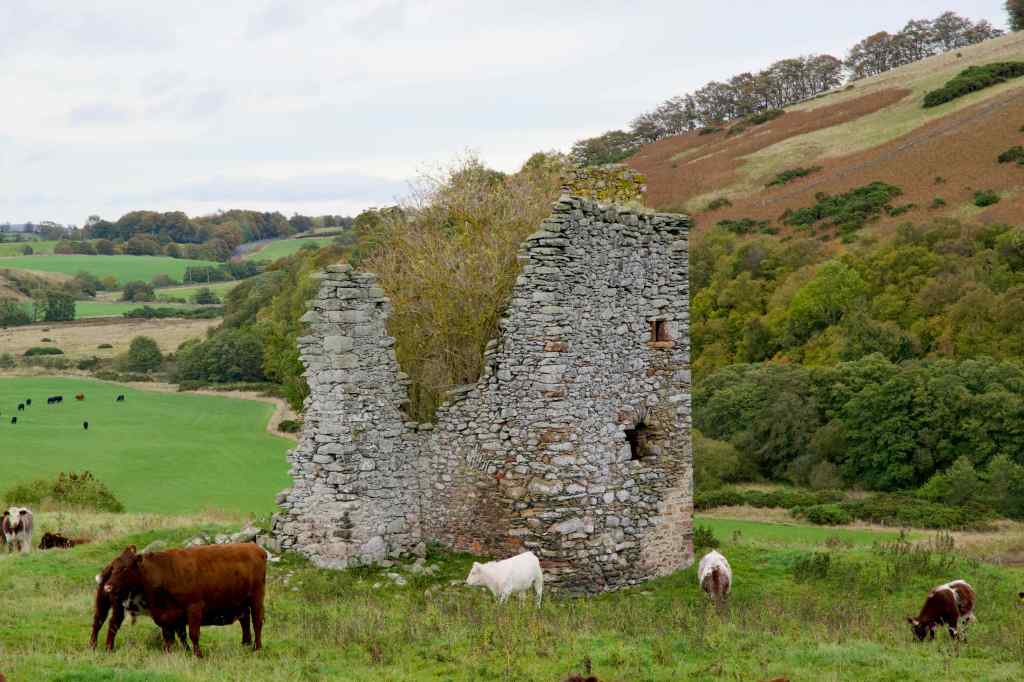
The ruin of Old Thirlestane Tower (or Castle as it is often called) is located about two miles (3.2 km) east of Lauder, and is visible from the A697 road in the Scottish Borders. It should not be confused with the much larger Thirlestane Castle in Lauder itself, which is still in use.
Historically, the site dates to the 13th century, when a Thomas De Thirlestane was associated with a castle here, likely to be a much earlier fortified residence. It would have defended the approach to Edinburgh from the south.
Around 1250, Sir Richard Maitland married Avicia, heiress of Thomas De Thirlestane, bringing the lands and the fortress into the Maitland family’s possession. This marriage was a defining moment in the site’s history, linking it to one of Scotland’s most influential political families.
But Old Thirlestane Tower came later. The current ruin resembles the Border Tower Houses built in the 15th and 16th centuries, making it unlikely that any part of the 13th-century fortress remains.
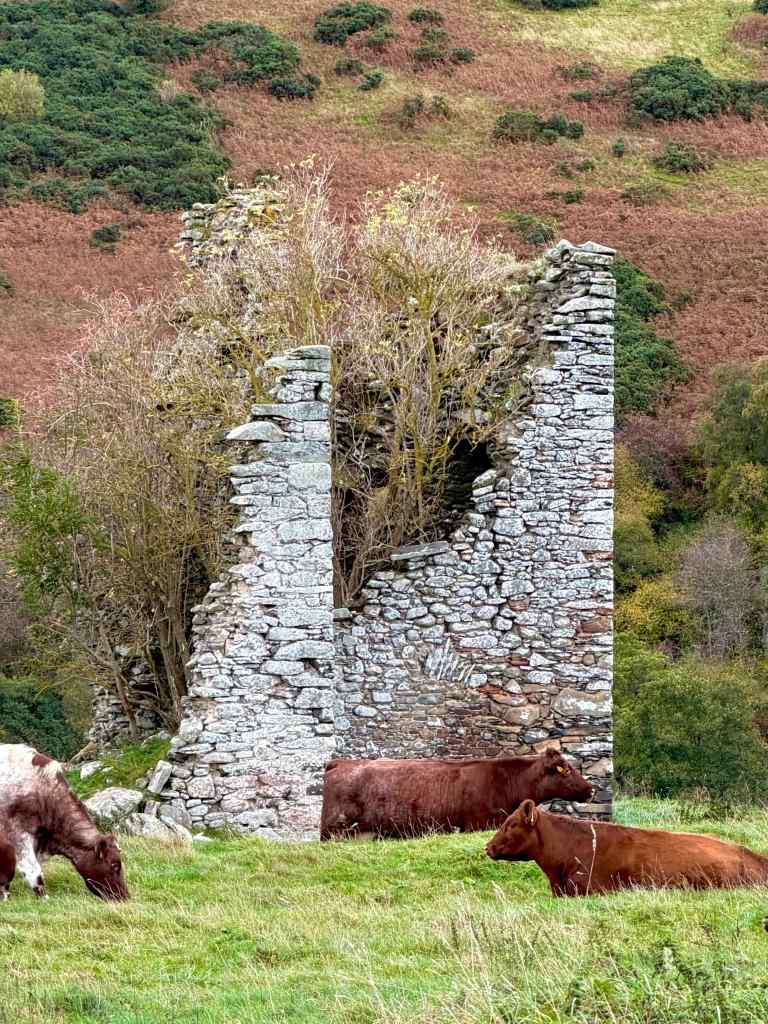
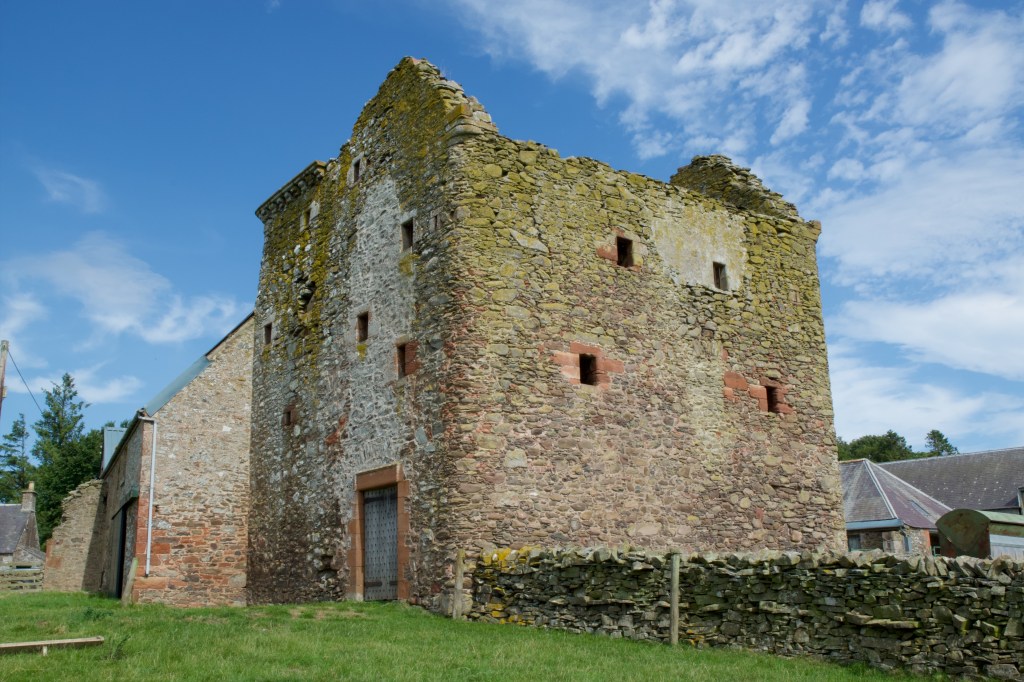
In its day, the tower was a rectangular structure, 10 by 7.3 metres, three to five storeys high, typical of the period. It would have had stone walls of more than one metre thick, narrow windows for defence, and possibly battlements on top. It was built of local sandstone rubble with dressings of a darker red sandstone. The wing, which was added later, measured 3.5 by 4.4 metres, projected westwards, and contained the staircase. The lower part of the tower was vaulted.
Today, only fragmentary remains, sections of walls and a possible corner tower, are visible at the site. The entire north side and most of the east and west gable walls collapsed long ago. The ruins feature some dressed stonework and the outline of its original defensive layout. There were some outbuildings and a barmkin, but we didn’t get close enough on our visit to see the evidence of this.
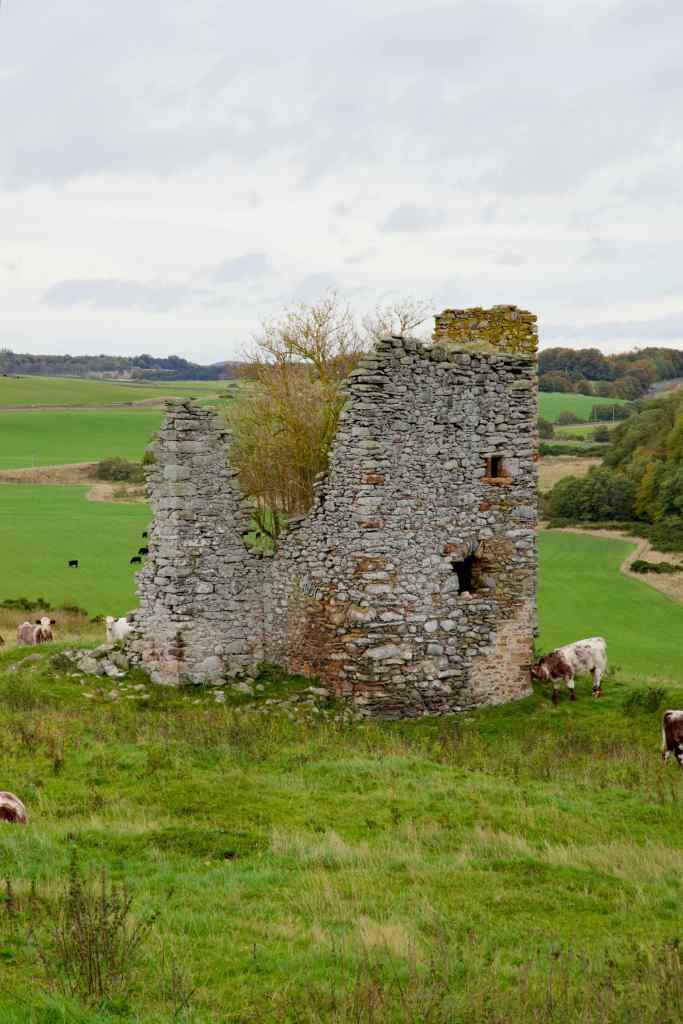
The tower was built to command views of the surrounding valley and control the main south-north route through the Borders. It capitalised on natural defensive terrain.
While records don’t link the tower directly to specific events, its significance lies in its frontier role: It stood in Lauderdale, a key corridor between England and Edinburgh.
Perhaps of more historical significance is the tower’s link to a political dynasty. The tower was the original seat of the Maitlands, whose members became royal advisers and Lords of Session. John Maitland, the 1st Lord of Thirlestane, became Lord Chancellor of Scotland under James VI in 1590.
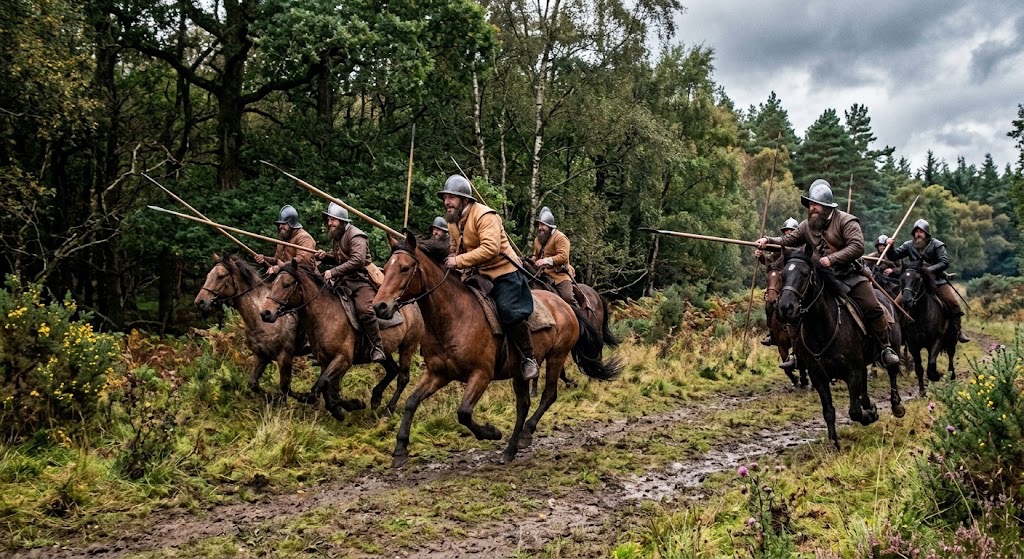
As we know, the borders in the 16th century were somewhat lawless. Riding families, known as Border Reivers, engaged in cattle theft, hostage taking, blackmail and feuding.
The Maitlands of Thirlestane lived in this world and were certainly affected by it. Old Thirlestane Tower was close to major routes used by raiding parties and within reach of powerful families like the Homes and Kerrs. Indeed, the very design of the tower highlights the need to withstand raids, and protect people, goods and livestock. It is therefore quite possible that the Maitlands would have responded to theft with counter-raids of their own.
During the Wars of the Rough Wooing (1542 – 1551), the English built a fort nearby at the site of the current Thirlestane Castle. The Maitlands, while already an established Borders family, were not yet at their later political height. However, the presence of an English garrison so nearby would have caused alarm.
Their survival through this period suggests they successfully navigated shifting allegiances. This may have involved giving “assurance” to the English on pragmatic grounds to protect their land from destruction. Certainly, some members of the broader Maitland family became Assured Scots, especially those connected to the Lethington branch (near Haddington).
Whatever the reality of the time, the family’s real success lay in emerging from the 1540s, politically viable and upwardly mobile.
By the time of the Marian Civil War (1568 – 1573), the Maitland family was very influential. But this was a period of shifting loyalties. William Maitland of Lethington grew up at Old Thirlestane. He rose to become Secretary of State to Mary, Queen of Scots. But he is reported to have played both sides during the events leading to this crisis.
He supported the murder of Mary’s secretary, David Riccio, and he also opposed Mary’s marriage to James Hepburn, 4th Earl of Bothwell. But when Mary fled to England in 1568, he returned to Mary’s side in the conflict, and joined her supporters, with his brother John, holed up in Edinburgh Castle. When the castle fell to the King’s party, he was arrested and died in prison.
His brother John Maitland was also imprisoned, but returned to royal favour, rising to new political heights under James VI, despite backing Mary, Queen of Scots.
Of course, changing political allegiance may have left the family politically exposed and Old Thirlestane Tower a potential target. So it is quite possible that the burning of Old Thirlestane Tower in the 1570s was no coincidence. We don’t know the exact cause of the fire, but retaliation and punishment were features of the Civil War. And Border Reivers would have exploited the political instability to pursue their own raiding and feuding.
The damage caused likely influenced the decision to rebuild elsewhere. In the 1590s, John Maitland built the grand castle that stands today at Lauder (Thirlestane Castle). Despite this, Old Thirlestane Tower remained the family’s property and residence until about 1595, after which it was abandoned.
Visiting the ruins of Old Thirlestane Tower is possible if you don’t mind a walk over potentially rough terrain. It is only a short walk from the A697, but given the fast nature of this stretch of road, finding somewhere safe to park might prove difficult.
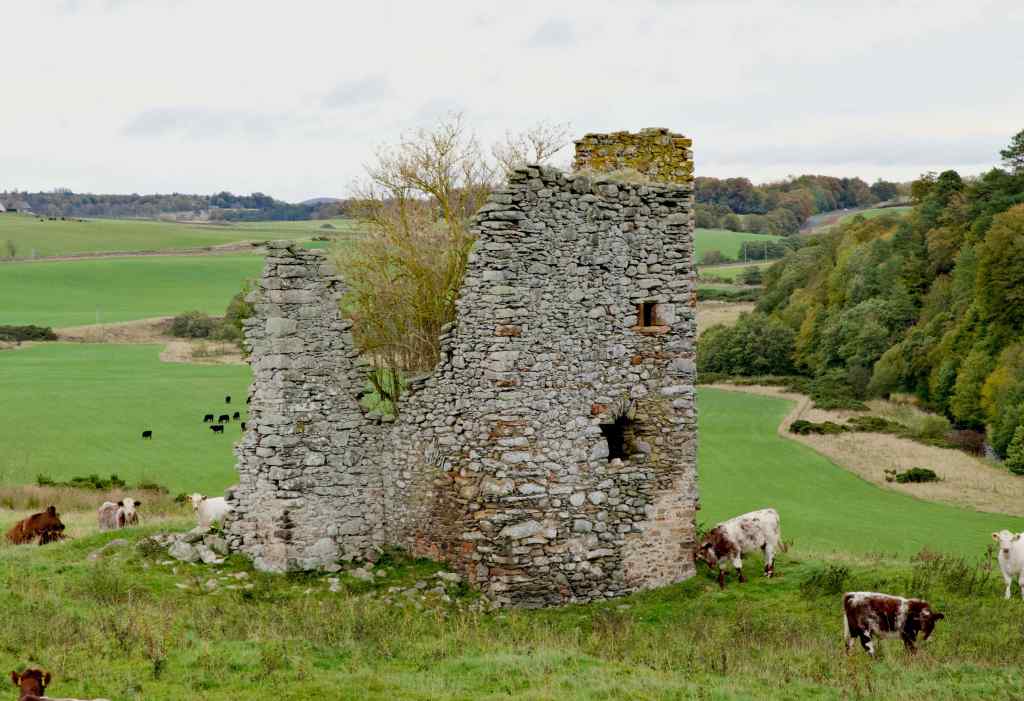
On our visit, we parked off-road near some trees, walked down a track towards East Mains and then crossed two fields. There were cows near the ruin itself, so we stayed in the adjacent field to take some photographs. We took a more direct route out of the field but this involved avoiding a gorge cut by a burn (stream) and then walking along the main road.
Old Thirlestane Tower: OS National Grid Reference NT 56493 47382
Further reading
Alistair Maxwell-Irving, 2014, The Border Towers of Scotland 2 (Maxwell-Irving)


 Thistle & Time
Leave a comment