
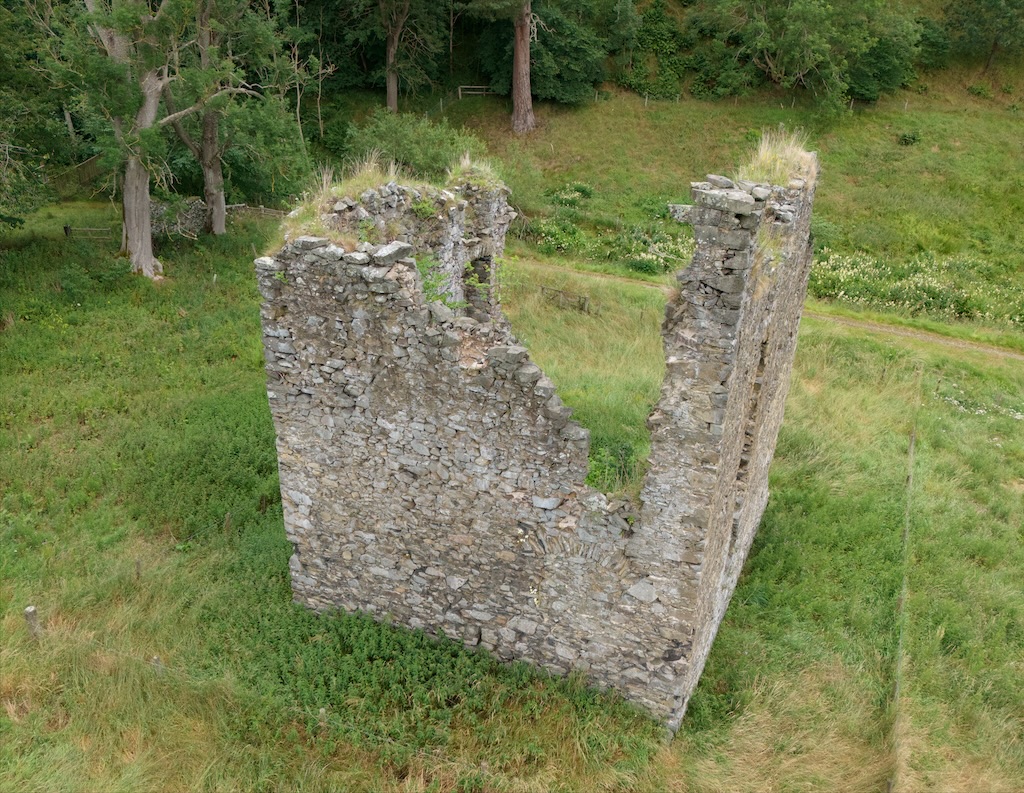
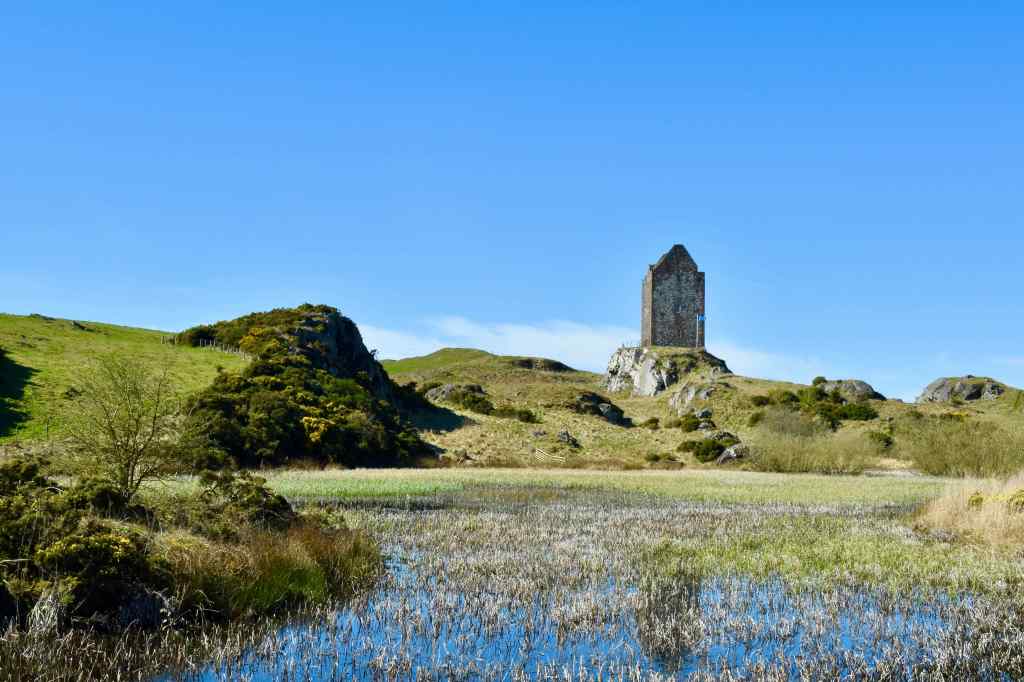
Nether Horsburgh Tower, near Innerleithen in the Scottish Borders, is a ruined 16th-century tower house. It is historically linked to the Horsburgh family and later to the Stewarts of Shillingshaws after its sale due to family debts. The tower occupies a position near the River Tweed, overlooking Hope Burn. It should not be confused with the nearby Horsburgh Castle.
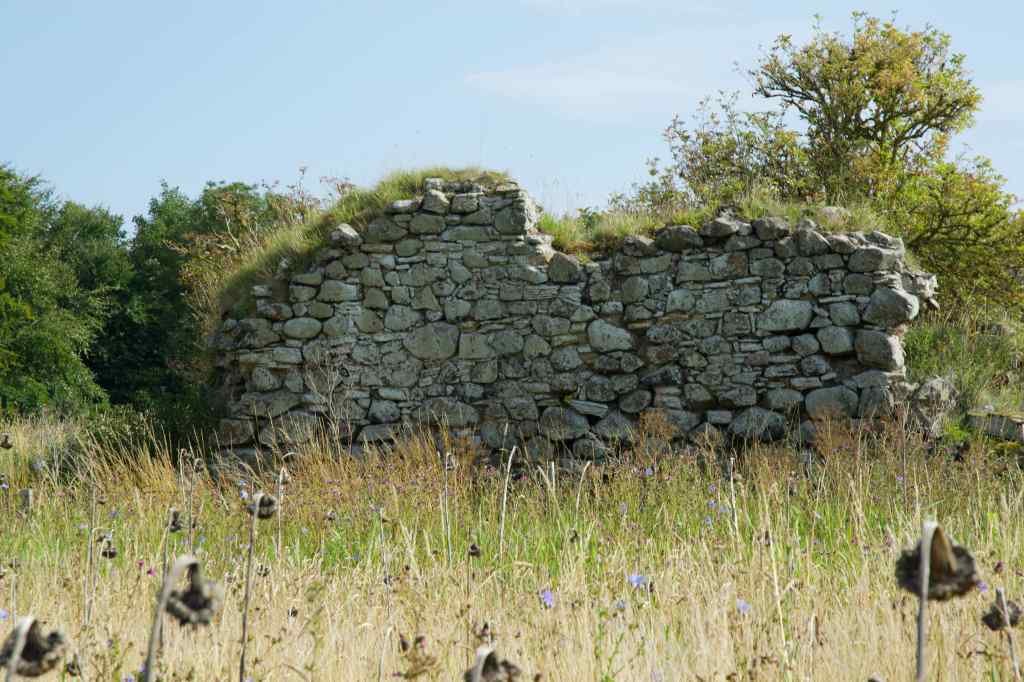
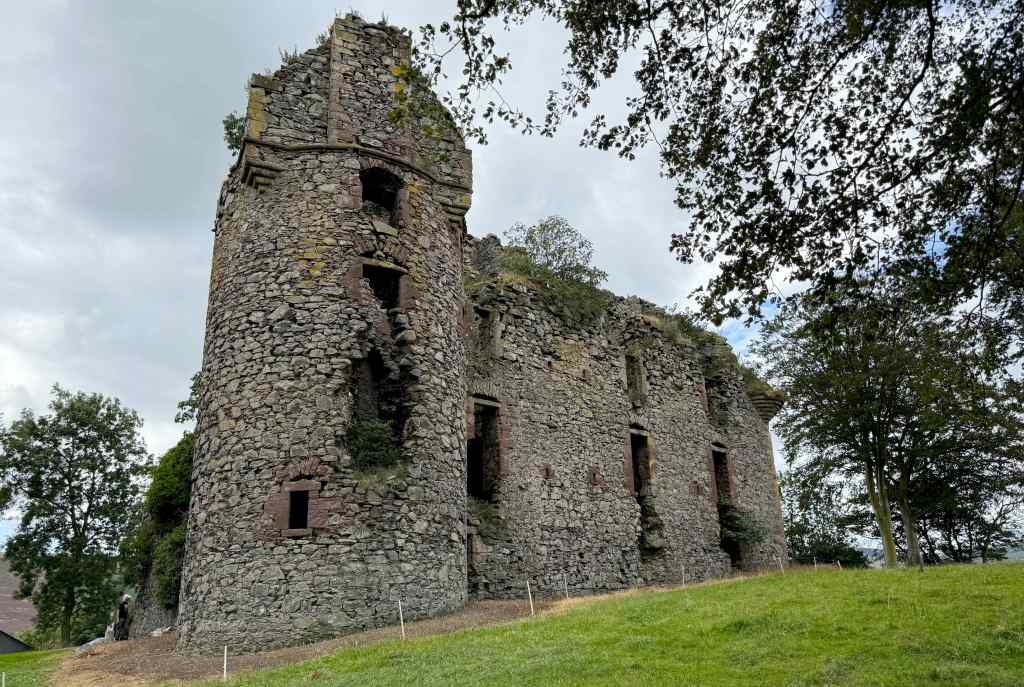
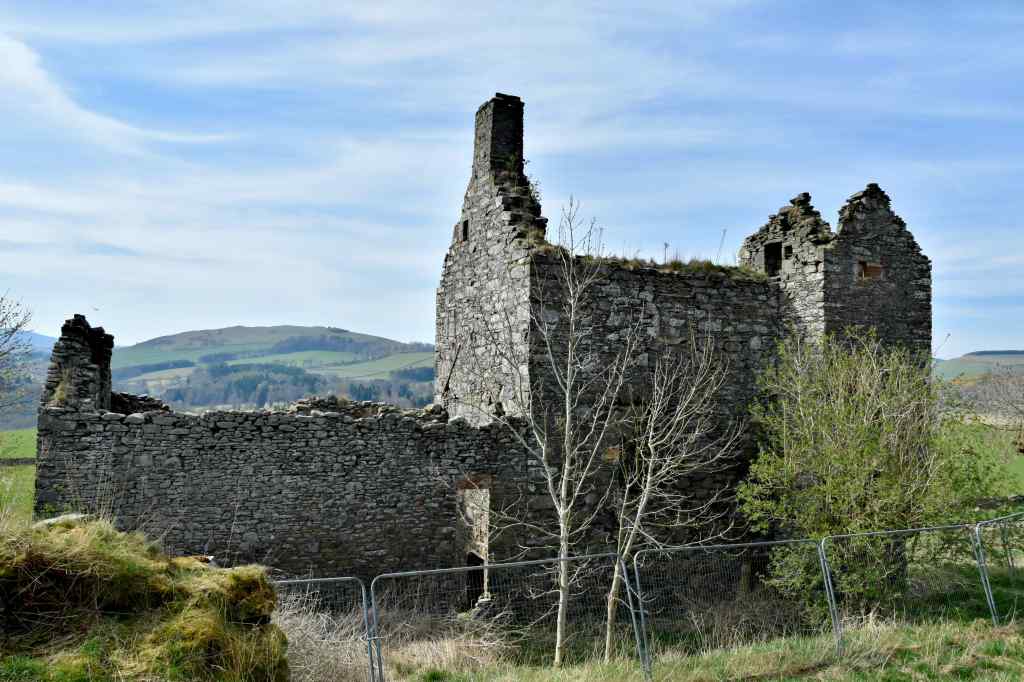
The tower dates from the mid to late 16th century and is believed to have been built by John Horsburgh. Rectangular in shape, it is in poor condition. Three walls stand to a height of about 12 metres, but the east end of the tower has been demolished. The walls are 1.2 metres thick, built of whinstone rubble masonry, and originally rose to a height of four storeys.
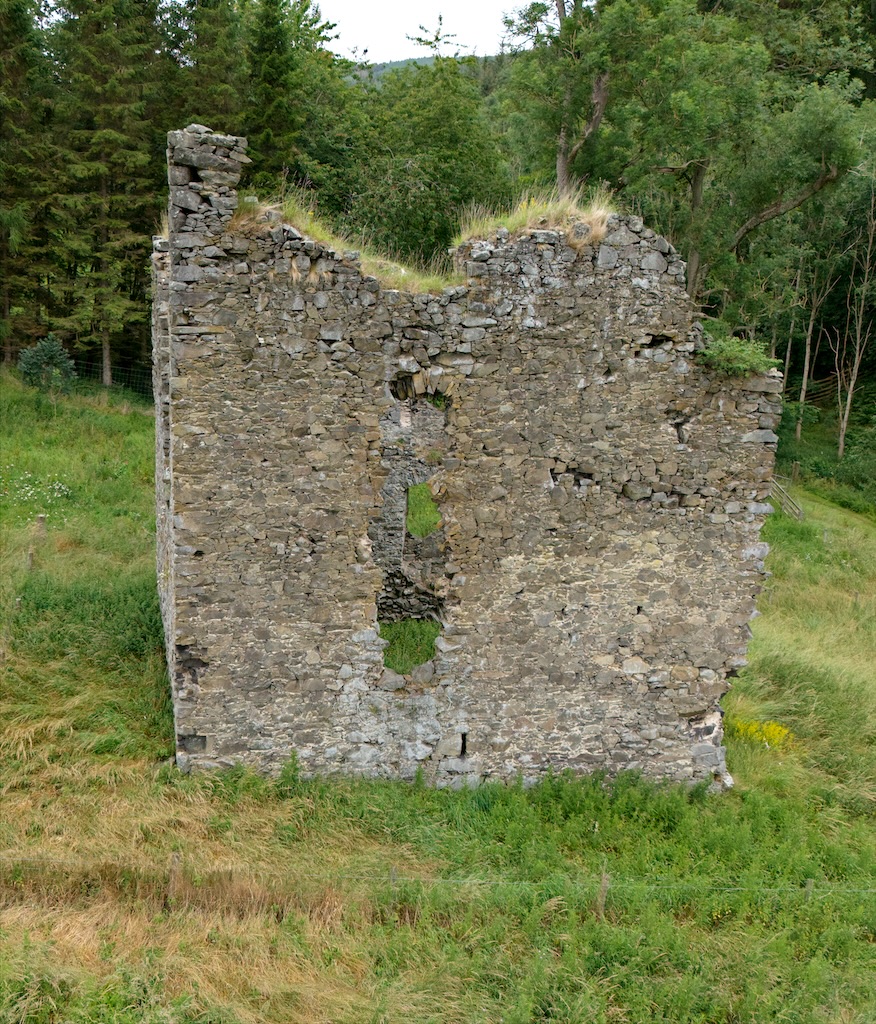
The entrance at ground level led to a vaulted basement. It looks as if the first-floor access was by way of a straight stair. This stair ascended in the thickness of the east gable wall. A turnpike (spiral) stair gave access to the other floors. Small fragments of other buildings extend east and north of the tower.
Nether Horsburgh Tower was part of an early warning network in the Tweed valley. At the first sign of trouble, neighbouring towers would be alerted by lighting a beacon basket on top of the tower, smoke by day and flames by night.
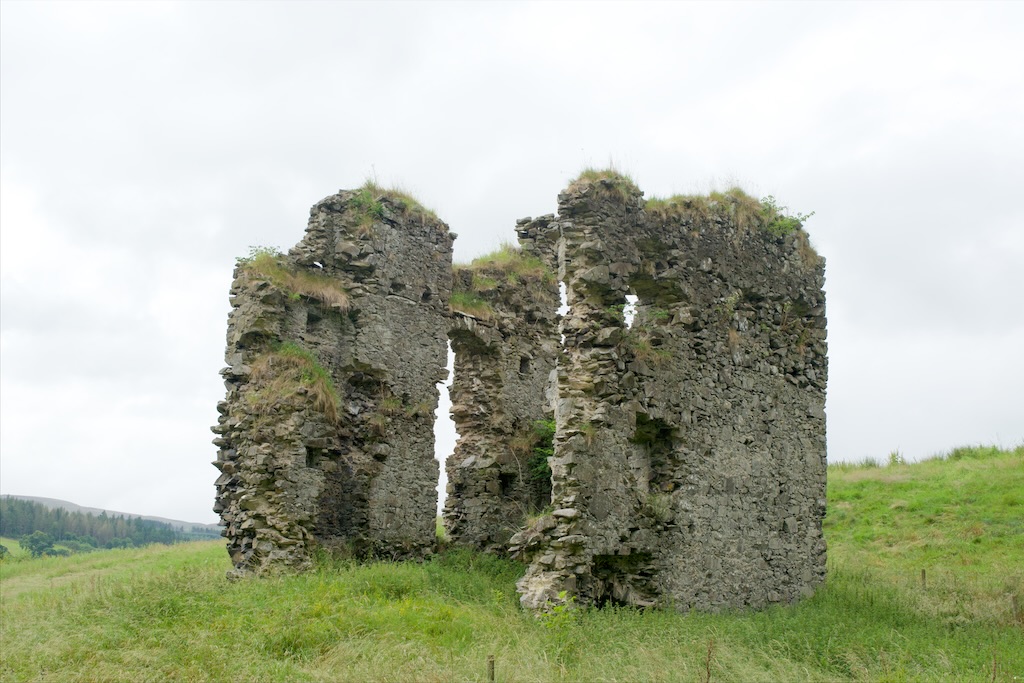
At this time in the borders, raiding was a constant threat. There are no records of any attacks on the tower. However, its role as a defensive structure must be seen in the context of the Border Reivers era.
The tower remained in Horsburgh’s hands until 1623, when it was sold to Sir Robert Stewart of Shillinglaw due to mounting financial pressures. This is likely a result of the legal disputes within the Horsburgh family. Once in Stewart’s hands, the tower may have been known as Shillinglaw Tower.
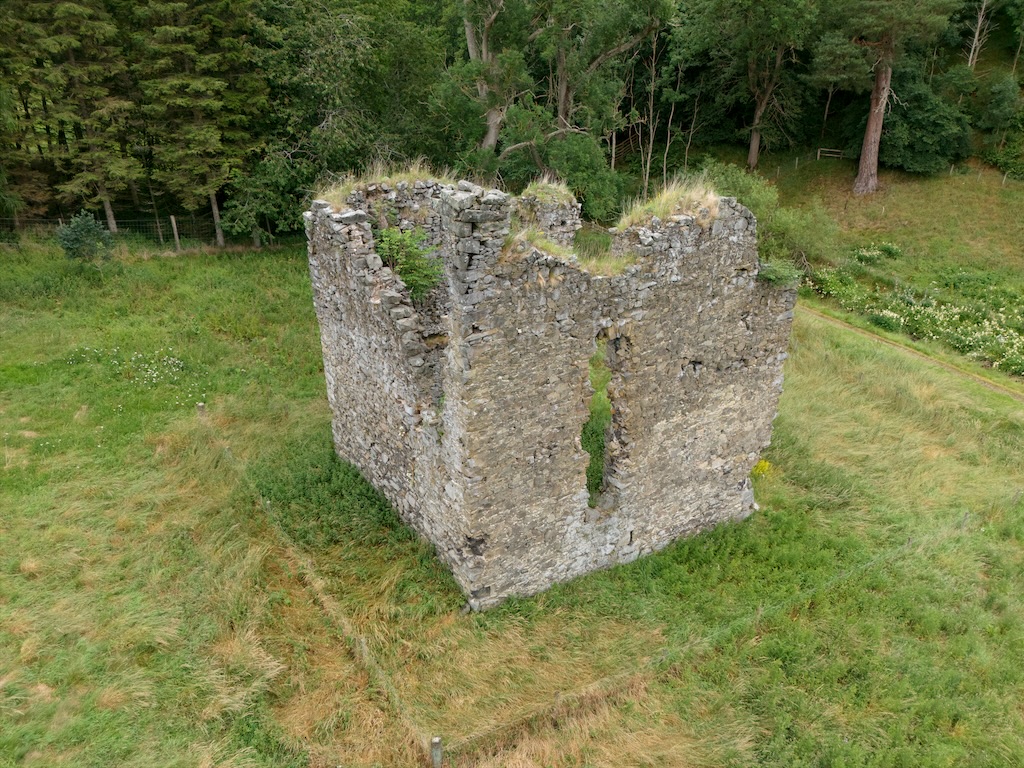
The tower passed to the Douglas Earls of March sometime before 1780. It later passed to the Bells and then to the Ballantynes of Holylee. It is not known when the tower was finally abandoned.
Nether Horsburgh Tower is located behind a farm not far from the A72 trunk road in the Scottish Borders. For our visit, we relied on the Scottish Outdoor Access Code. We walked around a large field to the west of the farm. Then, we followed a path behind the sheds that took us to the burn. The tower was directly ahead. The ground was rough, and the area around the ruin was heavily overgrown. It is also possible to go through the farm, but you should explain your intentions and seek permission.
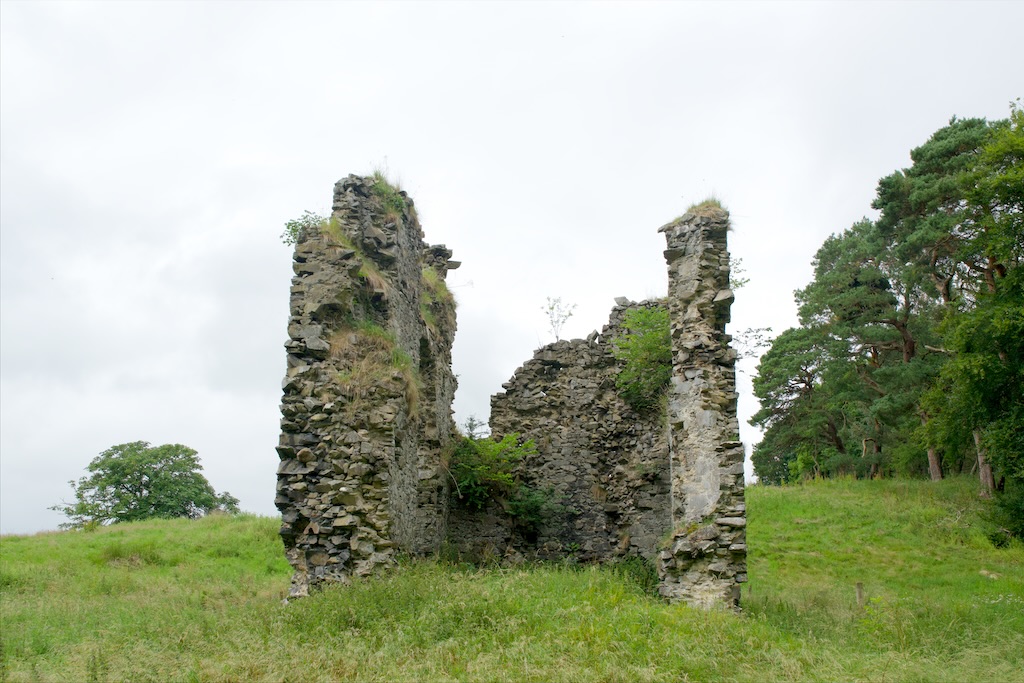
Nether Horsburgh Tower: OS National Grid Ref. NT 30431 39682
Further reading
Martin Coventry, 2025, The Castles of Scotland (sixth edition), Goblinshead
Reivers Beacons, Bells and Watchers


 Thistle & Time
Leave a comment