
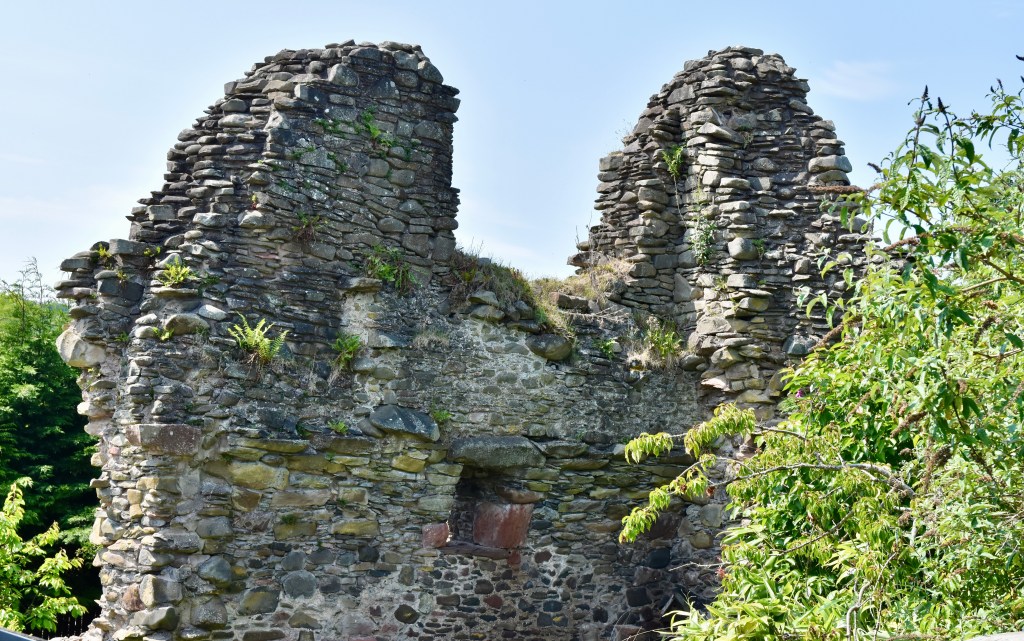
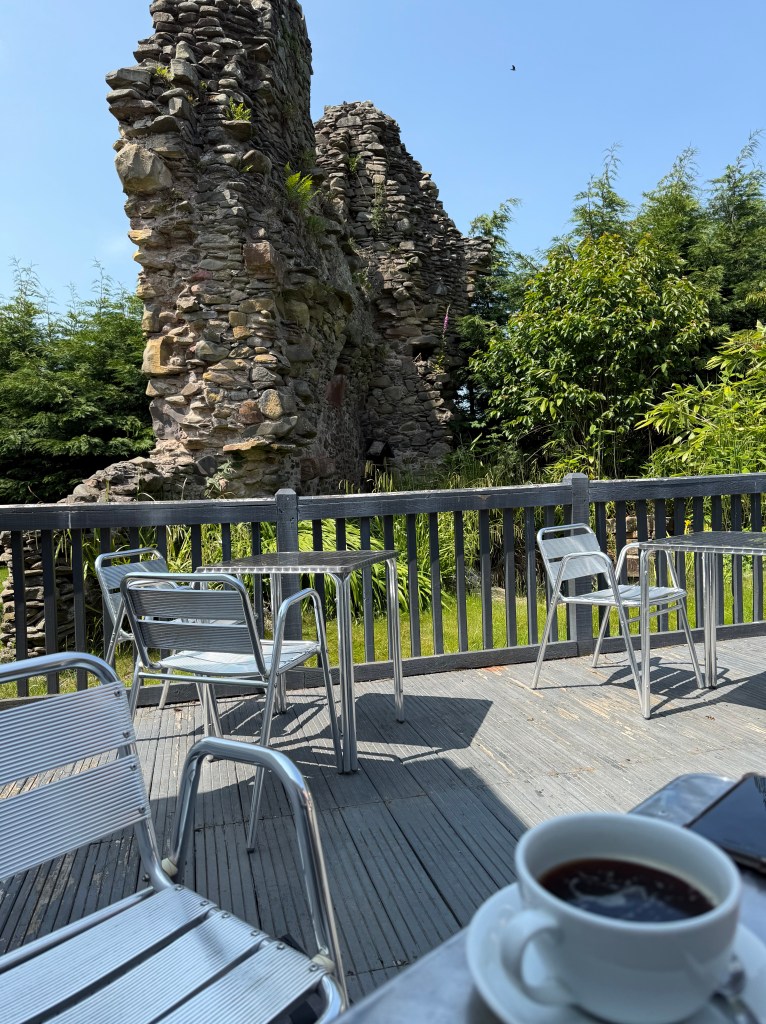
Rhymer’s Tower is the ruin of a 16th-century Border peel tower situated in the village of Earlston. It is tucked behind the aptly named Rhymer’s Tower Café, next to a petrol station on the A68. Not much remains today, but it does bring together recorded history and local folklore.
The tower was originally rectangular in plan with a frontage of 23 feet (7 metres) and walls 4 feet thick (1.2 metres). Today, only the south-western wall, reaching a height of about 20 feet (6 metres), and part of the west wall of this small keep, are standing. It was built of whinstone with sandstone dressings and was once harled (a type of lime render used commonly on buildings of the period). The tower’s lower chamber was vaulted and had small slit windows..
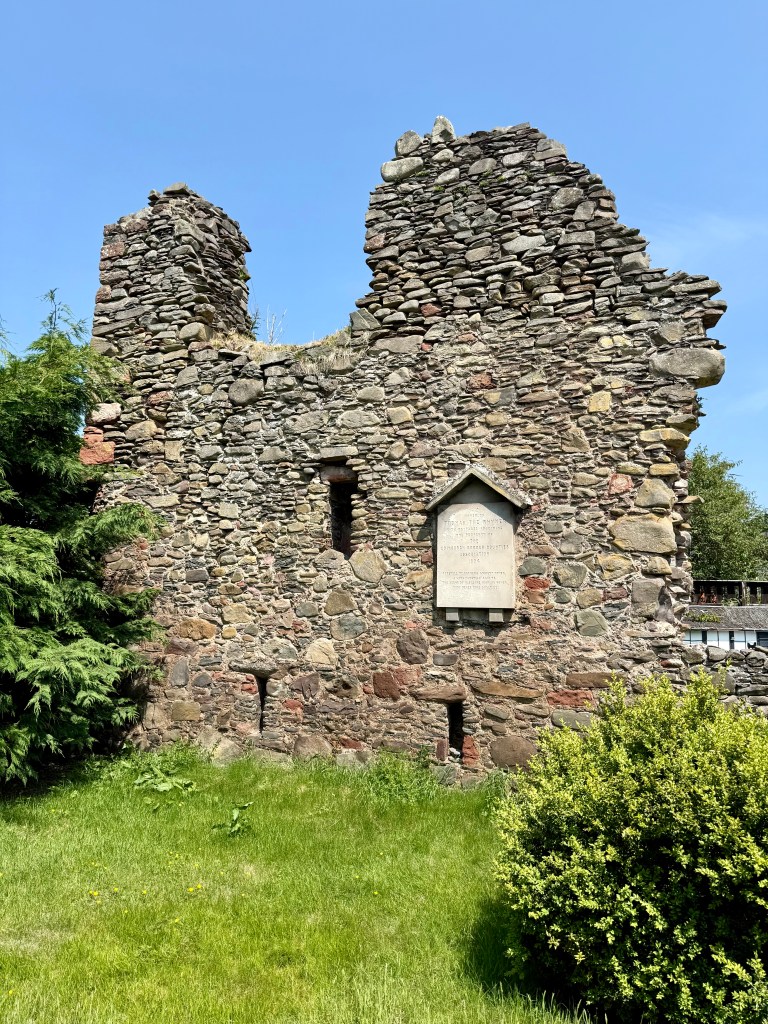
Rhymers Tower is traditionally said to have been the residence of Thomas the Rhymer, also known as Thomas of Ercildoune, an early Scottish poet who flourished in the 13th century. He was a reputed seer whose encounter with the Queen of the Fairies beneath the Eildon Tree near Melrose (now marked by Rhymer’s Stone) inspired one of Scotland’s most enduring folk tales. However, the existing structure postdates Thomas by several centuries.
Whether Thomas ever lived at the site or not, the name stuck. But this kind of confusion is common in places where myth and reality share a postcode.
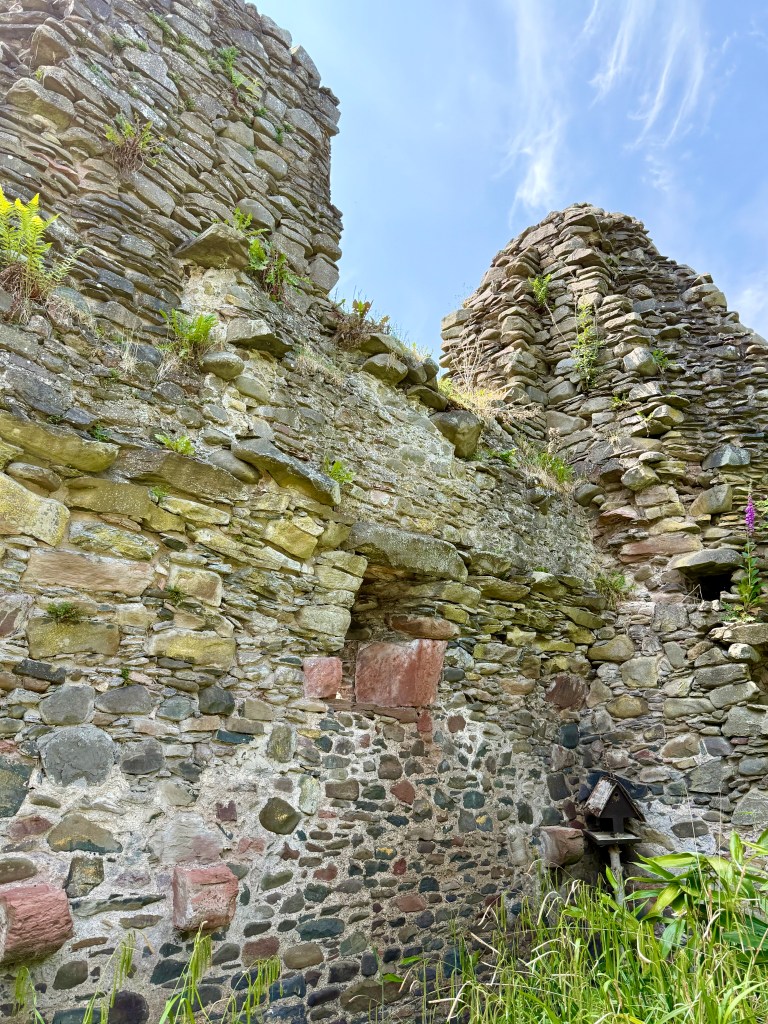
In fact, Rhymer’s Tower, also known as Earlston Castle, dates to the late 16th century. Built during the violent ebb of Border reiving, Rhymer’s Tower fits the architectural mould of the peel towers scattered across the Scottish Borders, squat, stone keeps designed less for grandeur and more for defence.
The land in which the tower stands was once part of the barony of Earlston, held by the Lindsay family in the 12th century, and later passed to the Dunbars in the 13th. In the 14th century, Earlston was the property of the Purves family, and in 1547, Saunders Purves became an Assured Scot and supported the English during the Wars of the Rough Wooing. By 1592, the Leamonths were the local lairds, but the Purves family still held the tower at the end of the 17th century.
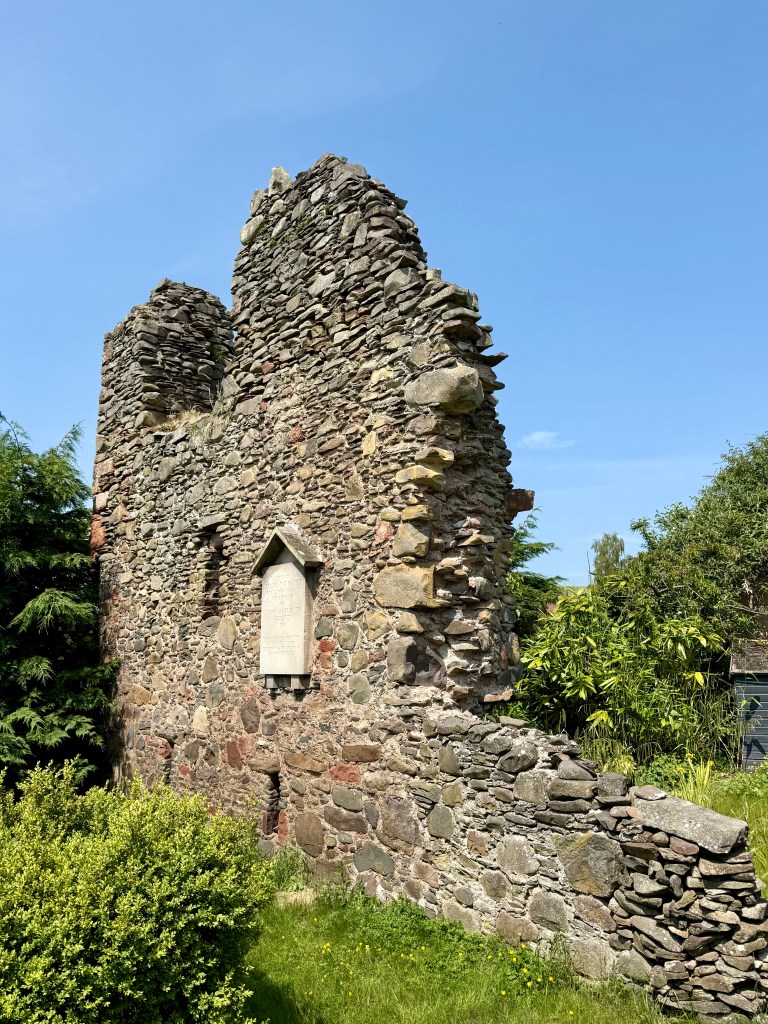
In 1894 Rhymer’s Tower was acquired by the Edinburgh Border Counties Association (who have mounted a plaque on the wall).
Getting to the site doesn’t require hiking gear or historical expertise. Simply visit the café and enjoy the tower view from their rear terrace. We arrived on a warm sunny day in June and enjoyed lunch outside just a few metres from this fascinating ancient structure.
Scotland has no shortage of castles and towers. But Rhymer’s Tower is different. It’s not a ruin of political struggle and sieges, but of rhymes and riddles. It reminds us that history, sometimes, can be shaped by storytellers.
Update added on 23 October 2025: Rhymers Tower Cafe has closed and been replaced by a Greggs takeaway shop. However, it has kept the seating area and terrace so it is still possible to view the tower in comfort while drinking coffee and eating your savoury or sweet pastry item.
Rhymer’s Tower: OS National Grid Reference NT 57206 38251
Further reading
Martin Coventry, 2025, The Castles of Scotland (sixth edition), Goblinshead
The Scottish Castles Association


 Thistle & Time
Leave a comment