
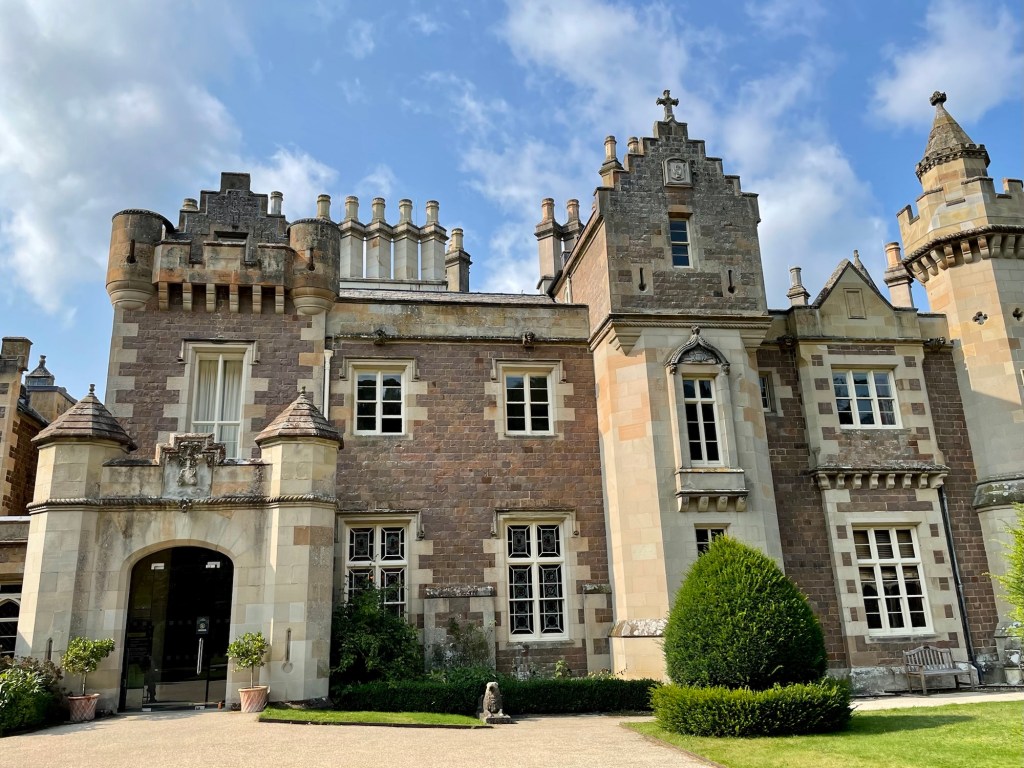
We are lucky to have such rich history in the Scottish Borders. Abbotsford House is no exception; and a visit will take you back to the life and times of famous author, Sir Walter Scott. He wrote, among many other titles, Ivanhoe (1819), Rob Roy (1817), The Waverley novels (1814), The Lady of the Lake (1810) and Marmion (1808). To see how he lived, take the road between Melrose and the larger town of Galashiels, and simply follow the signs to Abbotsford.
Sir Walter Scott was born in Edinburgh in 1771. He grew up during a time of major political and social changes in Scotland and across Europe. The son of a solicitor, Scott was drawn to literature and history from an early age. His passion for Scotland’s past, its landscapes, and its people led him to write some of the most enduring works of Scottish literature.

Of course he was also very fond of the Scottish Borders; probably because as a child, he lived for some time near Smailholm Tower, situated between St. Boswells and Kelso. At the height of his fame, he bought a modest farmhouse along the River Tweed with a vision to transform it into something that would celebrate Scotland’s heritage. In memory of the monks from Melrose abbey who once used a nearby river crossing, he called his house “Abbotsford”.
Scott spared no detail or expense in creating his vision, a unique blend of baronial, Gothic, and medieval styles. He expanded the property from a small farmhouse into a grand estate. The outside included battlements, turrets and stained-glass windows. The inside was filled with antiquities from Scottish history—suits of armour, ancient weapons, and relics linked to historical figures. Abbotsford House became a reflection of the landscapes, characters and times that he created in his writing.

Entering the building you are immediately surrounded by the antiquities that Scott collected. Absorbing it all takes some time. But continue through the entrance hall and you come to Scott’s study. This is a smaller, more intimate space where he worked almost every day, often rising early to write.
But the story gets better as you move further into the building. Next to the study is perhaps the most impressive room of all, Scott’s library. He collected some 9000 books in his lifetime and many are on display in this beautifully ornate (the ceiling is a good example of this), but tasteful and spacious room. It overlooks the garden and the river. If I were Walter Scott, I’d do my writing in this room.

Next to the library is a lounge that leads to a large, rather splendid dinning room. Scott collected a significant array of weapons during his life and these are displayed on the walls of the armoury, next to the dining room.


In the latter years of his life, Scott faced significant financial troubles, but he refused to part with Abbotsford. Instead, he worked tirelessly, often sacrificing his health, to pay off his debts, driven by a desire to ensure that Abbotsford would remain intact as a monument to his life’s work. He passed away in 1832, and from the time of his death, Abbotsford became a site of pilgrimage for admirers worldwide.

Walter Scott’s legacy is more than the sum of his novels and poems. Indeed, he lived in a time when the union with England was still new; and Scotland was officially known as north Britain. What’s more, following the unsuccessful 1745 Jacobite rebellion, the British government was keen to stamp out what it considered as symbols of rebellion. Wearing of highland dress by men for example, was banned. But Scott wrote with great passion about the people and lands of Scotland. So he, perhaps more than any other person, enabled icons of Scottish culture such as the kilt to live on. Ironically, the kilt would become a popular choice of dress for future Hanoverian monarchs of Britain .
And one more thing… Scott is also credited with helping to rediscover the Honours of Scotland (Crown Jewels) after they had been hidden away for over a 100 years, originally to stop them falling into the hands of Oliver Cromwell.

Today Abbotsford is a popular attraction. So wanting to avoid the queues, we chose the end of last month for our visit. It was both enjoyable and fascinating, and a useful audio guide enhanced the experience. The house and grounds are managed by the Abbotsford Trust and entry fees apply. There is plenty of car parking; and also a very welcoming and dog-friendly visitor centre and cafe.
If you like old houses, literature or history, or if you just wish to walk in Walter Scott’s footsteps, then visit Abbotsford House.


Additional Sources
Britain Express, Passionate About British Heritage


 Thistle & Time
Leave a reply to Smailholm Tower: A Glimpse into Medieval Border Life – Thistle & Time Cancel reply