
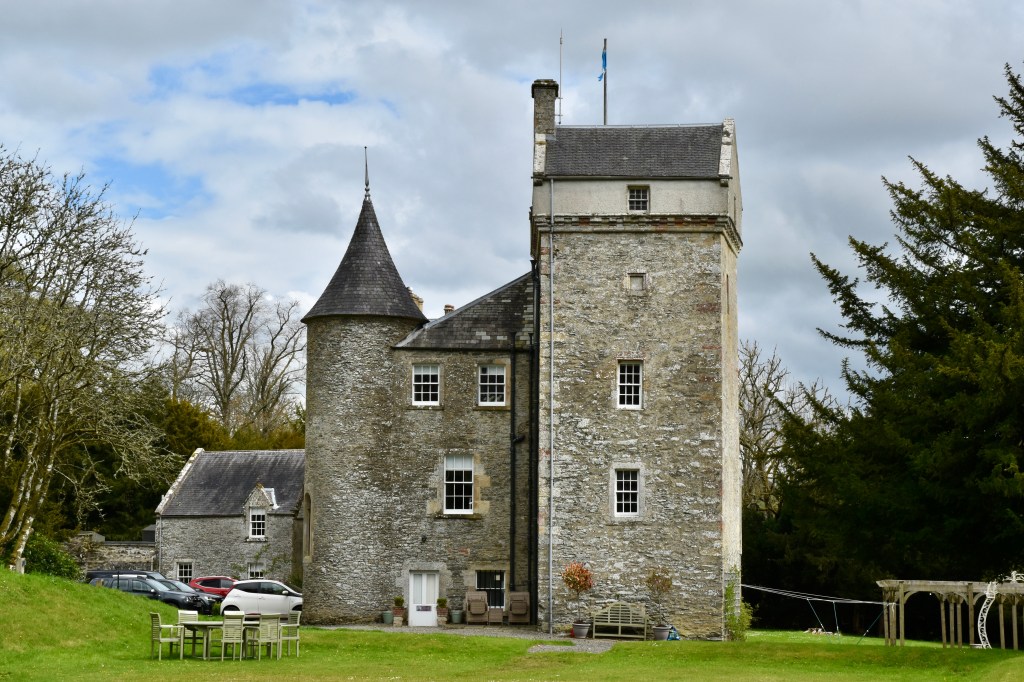
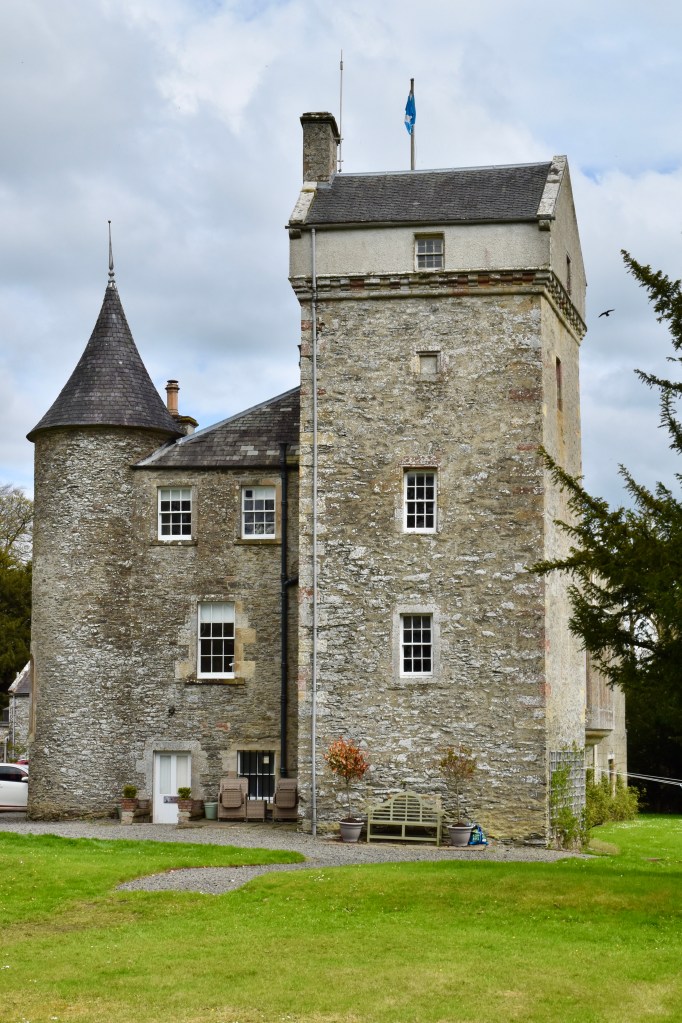
Hidden by trees from the A7 main road that runs through Teviotdale, and just a few miles south-west of Hawick, Branxholme Castle is easily overlooked. It comprises an altered five-storey 16th-century tower house, incorporated into a mansion built in 1790 and later modified.
Today, it is a venue for holiday cottages and events such as weddings, but for centuries, this was one of the most formidable power centres in the Scottish Borders. A place where law and lawlessness overlapped, and where one family rose from frontier violence to the highest ranks of the Scottish nobility.
Branxholme was not merely a castle. It was a statement.
By the early 16th century, the Scotts of Branxholme (later known as the Scotts of Buccleuch) were among the most influential families in the Borders. They were infamous Border Reivers, but they also served as royal officers, often appointed as Wardens or Keepers of the Marches.
This apparent contradiction lay at the heart of Border society. The Scottish crown lacked the means to impose order directly, so it relied on those lairds with direct experience of the Borders culture.
The Scotts of Branxholme were a natural choice because they
- Controlled key routes through Teviotdale and Liddesdale
- Could raise large numbers of mounted fighting men at short notice
- Understood Border customs, feuds, and March law intimately
This made them indispensable, even when they were violent and troublesome.
Figures such as Sir Walter Scott, known as “Wicked Wat,” embodied this turbulent world. Feuding with rivals like the Kers of Cessford, leading raids into England, and commanding large followings of armed horsemen, the Scotts exercised real authority long before they held lofty titles.
Bite-sized podcasts, available to listen on all main platforms
The lands of Branxholme were acquired by the Scott family in the early 1400s, and the castle likely started life in the mid to late 1400s. Indeed, the earliest castle at Branxholme had grown by the mid-15th century into a strong tower house, typical of Scottish Border strongholds, designed for defence and living.
But Branxholme Castle was to suffer from the repeated conflict between Scotland and England.
The first major crisis took place in 1532 when the English Earl of Northumberland, aiming to weaken Scottish influence in the Borders, set fire to the original castle. It was a punitive action directed personally at Sir Walter Scott of Branxholme and Buccleuch (“Wicked Wat”), motivated by his aggressive cross-border activities and the broader decline in Anglo-Scottish relations.
Despite the devastation, Scott retaliated. After the burning, he led what was described as a “formidable raid” into England, taking around 3,000 lances. The scale of his response reflected the importance of the attack on Branxholme.
The attack on Branxholme Castle highlighted its vulnerability to cross-border invasions and the Scott’s unstable position as guardians of the Middle March. The destruction compelled Walter Scott to undertake rebuilding efforts, probably strengthening the structure to better resist future assaults.
This episode set a pattern for the following decades: Branxholme became a prominent location in Anglo‑Scottish frontier warfare, repeatedly targeted precisely because its owner had demonstrated a willingness to oppose English policy with large‑scale force.
The next big raid on Branxholme was during the Wars of the Rough Wooing (1543 – 1551). This was Henry VIII of England’s violent attempt to force a marriage alliance between his heir and the infant Mary, Queen of Scots.
The Scotts, under Wicked Wat, were among the most active Scottish opponents of Henry VIII, serving as key Border commanders, raiders, and later royal officers during and after the conflict.
Branxholme Castle was an obvious target for the English, and so it was attacked but held by its defenders in 1544. However, the barmkin was burnt, and over 600 oxen and other animals were stolen.
Then in 1547, English forces under the Duke of Somerset launched a further, more brutal campaign into Scotland, targeting key Border strongholds. Branxholme again withstood the assault, with English observers noting that capturing the castle would require artillery, a testament to its enhanced fortifications. The Scotts’ successful defence bolstered their status as regional powerbrokers, but the war’s devastation left the surrounding lands scarred, and the family’s resources strained.
In 1552, the Scott’s long-running feud with the Kerrs of Cessford climaxed with the murder of Wicked Wat in an Edinburgh Street.
For the next 10 years or so, it was reiving business as usual for the Scott family. By the time Mary, Queen of Scots returned to Scotland in 1561, the Scotts of Buccleuch were established Border magnates whose primary importance to the Crown lay in their ability to raise horse and control (or unleash) reivers as required.
When Mary was forced to abdicate in 1567, the Scotts were associated with the pro-Mary faction during the Marian wars. However, they never really took a proactive role. After Mary’s defeat and flight into England, the reality changed, and the Scotts adjusted their position to cooperate with the Regent government.
But in 1569, a rebellion broke out in northern England, aiming to restore Catholicism and replace Elizabeth I with Mary, Queen of Scots. It had fallen apart by early 1570, but Elizabeth’s response was severe. Thomas Radcliffe, Earl of Sussex, gathered a large force to punish not only English rebels but also Scottish allies and sympathisers of Mary.
Branxholme Castle, as the main seat of the Scotts of Buccleuch, staunch opponents of English interference and long associated with the Marian, pro‑French party, was an obvious target.
In anticipation, the Scotts “slighted” Branxholme themselves in 1570, deliberately damaging and partially dismantling the castle so it could not be held or easily repaired by an occupying force. When Sussex’s forces reached Branxholme, they found it already ruined; they then completed the work by blowing apart the remaining structure with gunpowder, “blowing one half from the other” and laying waste to the associated gardens and orchards.
The castle’s phoenix-like revival began in 1571 under Sir Walter Scott of Buccleuch, son of Wicked Wat. He started reconstruction despite the political instability of the period. After his death, his widow, Margaret Douglas, supervised the project’s completion in 1576. This phase marked a shift from purely military architecture to a mix of fortress and noble residence, reflecting the family’s desire to combine martial strength with cultural sophistication.
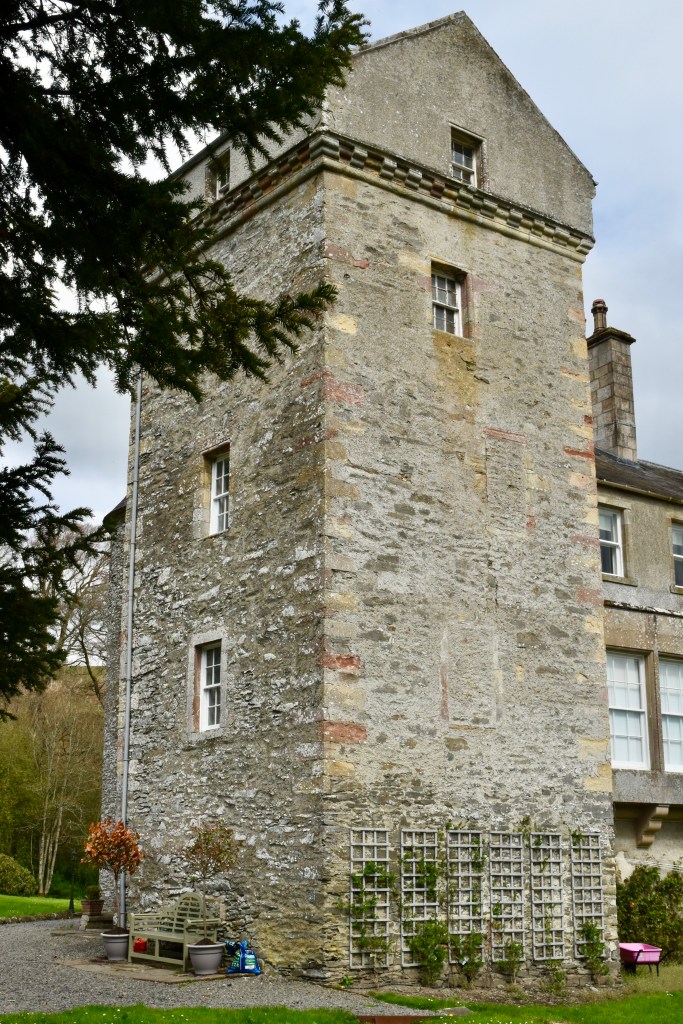
The new castle, most likely built over the foundations of the previous tower, occupied a strategic position. Set on a steep bank between the River Teviot to the south, and a ravine to the north and east, the site was naturally strong. It comprised a barmkin and buildings in the shape of a parallelogram. There was a defensive tower at the north-east corner and at the south-west corner a five-story tower with vaulted chambers and a spiral staircase.
The new structure kept its defensive core but added Renaissance-inspired features that showed the Scotts’ increasing sophistication. The entire enclosure measured 24 metres by 18 metres.
In 1574, the “Bold Buccleuch”, also called Walter Scott, became laird, and the rebuilt castle became his main border stronghold through the late 16th century. As Keeper of Liddesdale, he had the authority to impose March law. But this role created useful ambiguity, and Buccleuch could punish rivals while shielding allies, and in the guise of perhaps official enforcement, he could conduct raids more or less as he pleased.
Indeed, Buccleuch’s reiving activities, along with those of his family predecessors, were not isolated criminal acts but part of the wider Border culture and power structures. Their actions, though violent, also upheld a form of alternative social order in the Borders, dealing with betrayal, revenge, and alliances in the absence of a strong central authority.
But the Bold Buccleuch’s most notable act was the daring rescue of Kinmont Willie Armstrong from Carlisle jail in 1596. Taken on a truce day in breach of March law, Kinmont Willie, a notorious Reiver, was freed during a bold night raid. Bold Buccleuch’s actions sparked a diplomatic row, and the entire event gained legendary status.
After the Union of the Crowns in 1603, James VI and I set out to pacify the borders. Known reivers were pursued relentlessly; many were executed, imprisoned, or transported to Ireland or the Low Countries, while entire surnames were declared “broken clans”, stripped of legal protection. But some, such as the Scotts, proved useful to the crown, just as they had done in times of war. This was not a tale of reivers becoming respectable overnight. It was a story of the crown recognising reality and choosing to harness it.
Buccleuch realised early that the Union of the Crowns had ended the old Border game. The Scotts had long been violent and formidable, but they were also crucial: their kin network was extensive, their authority over Teviotdale and Liddesdale unmatched, and their loyalty, once secured, was more valuable to James than their destruction. Buccleuch offered unequivocal submission, helped in the suppression of reivers (including his own name), and accepted royal justice where earlier lairds would have resisted. In return, the chief line was preserved, later rewarded with offices, pensions, and advancement, culminating in the creation of the Earl of Buccleuch in 1619. James effectively co-opted the family’s head to police the very society he had once dominated.
After the creation of the earldom in 1619 and especially once the family elevated to ducal rank in 1663, their focus increasingly shifted to larger, more comfortable estates such as Dalkeith and later Bowhill. Branxholme Castle became one residence among several rather than the main home.
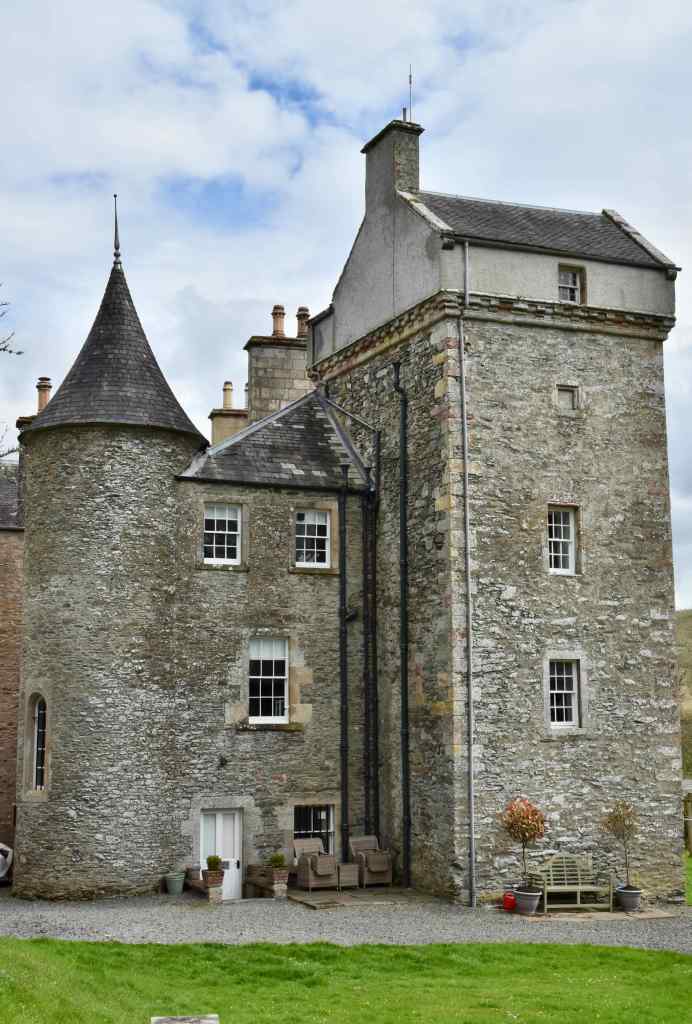
In 1765, prior to it becoming the residence of the Duke of Buccleuch’s chamberlain, extensive alterations were made to the Castle. The barmkin walls on the north and west side were demolished, as was the whole of the north range. Further alterations were carried out in 1790 and 1837, including the addition of a new wing at the north-east corner.
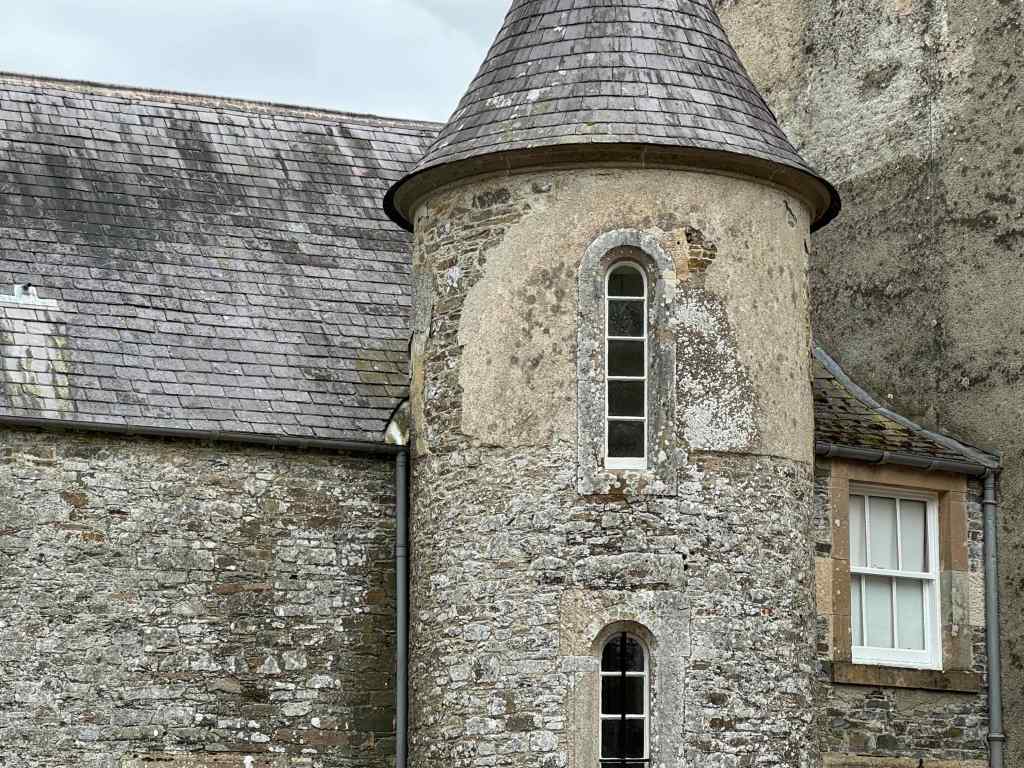
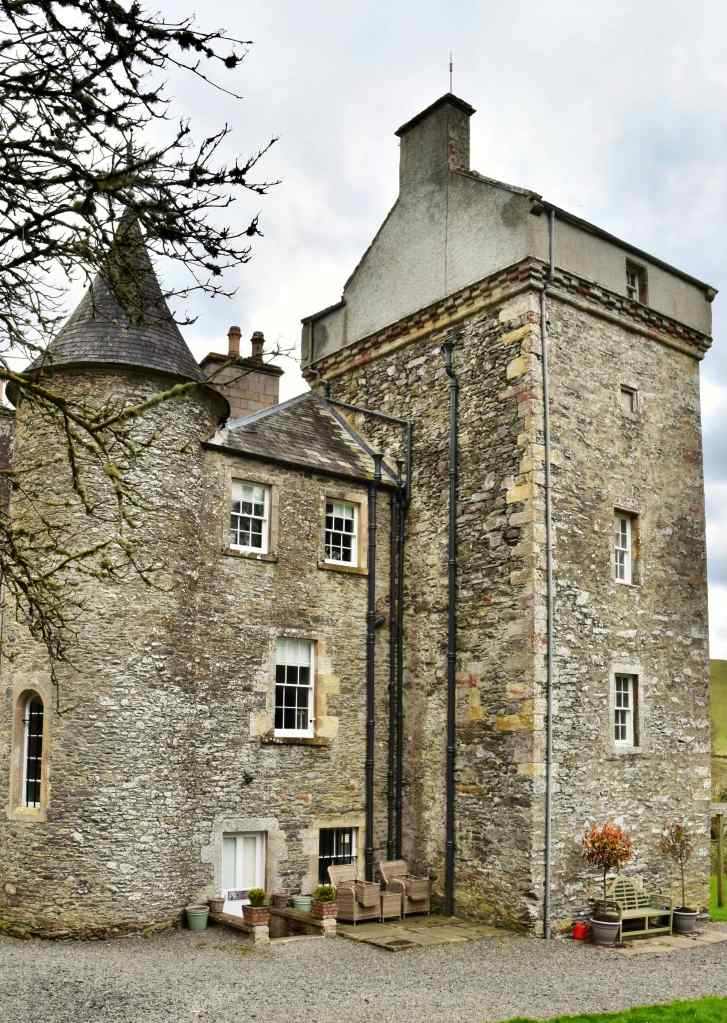
Today, the most complete and largely original part of the 16th-century castle is the south-west tower, known as Nesbie Tower. It comprises four storeys plus a cap house and was designed to extend beyond the barmkin wall so its gunloops could cover the wall itself. Constructed from whinstone rubble, it measures approximately 5.5 metres square with walls 1.5 metres thick. The basement was vaulted with splayed, rectangular gun-loops on all four sides. These were complete in 1892 but have since been filled in.
The north-east tower, now obscured by additions and appearing to have been considerably rebuilt, contains the main staircase. The stair, although not itself earlier than the 18th century, replaces an original one which occupied this same position.
Two amorial panels, built into the 1790 north wing of the castle, commemorate the original start and completion of the 1571-76 rebuilding by Sir Walter Scott and Dame Margaret Douglas.
Internally, the main building of Branxholme has been entirely modernised.
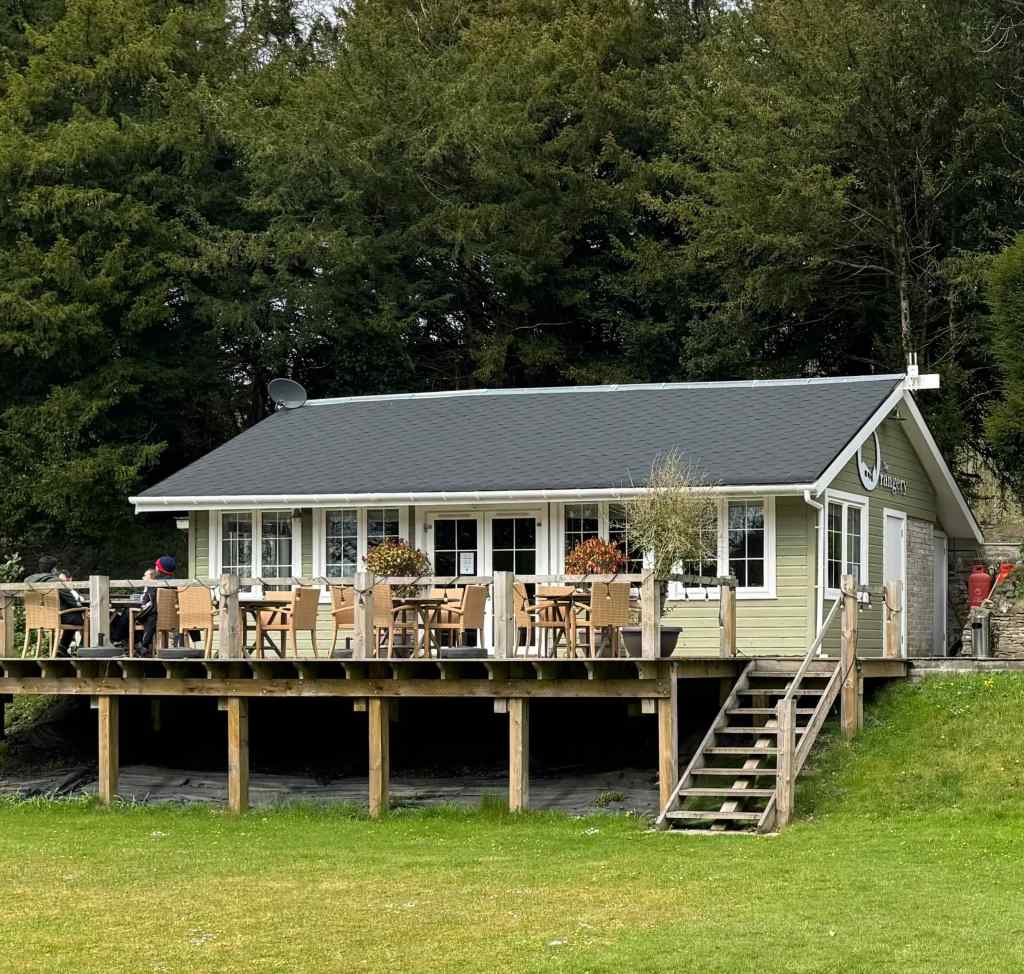
For those who wish to see the outside of the castle, a trip to the Orangery, in the castle grounds, is recommended. This is a delightful venue open from Thursday to Saturday each week for coffee, light lunches, cakes, and afternoon tea (afternoon teas must be pre-booked). On a fine day, you can admire the castle from the Orangery’s decking area while enjoying your tea or coffee. (For more information about the venue, please see the website branxholmecastle.co.uk )
Branxholme Castle is important because it marks a key moment in Scottish history. It shows how violence, loyalty, and landownership shaped power in the medieval Borders, and how that same power was incorporated into the early modern state.
From burning raids and blood feuds to lordships and earldoms, Branxholme stands as a reminder that Scotland’s nobility was shaped not only in royal courts but also in places where law was negotiated at sword point, and authority had to be defended nightly against the darkness.
Branxholme Castle: OS National Grid Reference NT 46443 11667
Further reading
Alistair Maxwell Irving, 2014, The Border Towers of Scotland 2 (Maxwell-Irving)
Martin Coventry, 2025, The Castles of Scotland (Goblinshead)
Wikipedia: Walter Scott of Branxholme and Buccleuch


 Thistle & Time
Leave a comment