
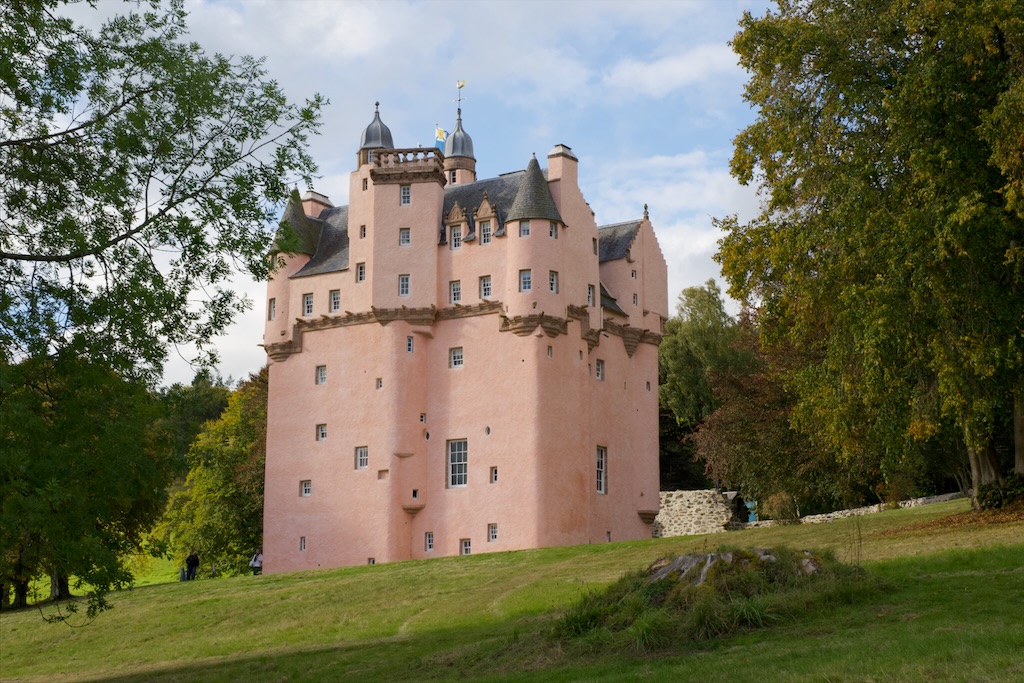
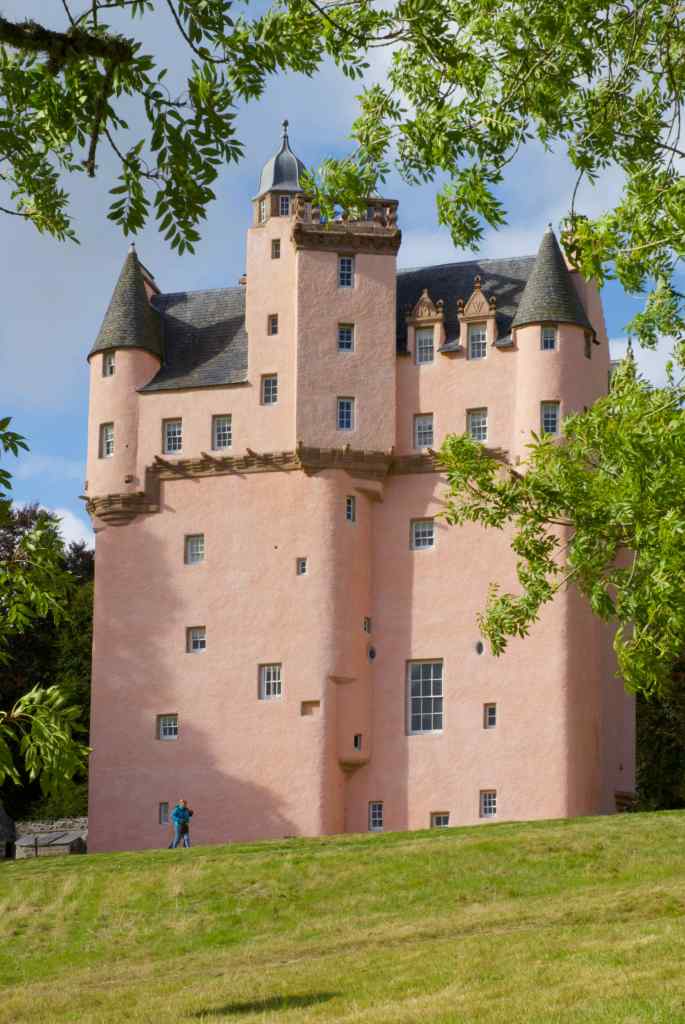
There are very few castles with such an evocative, fairytale-like appearance as Craigievar Castle. Located amidst the rolling foothills of the Grampian Mountains in Aberdeenshire, the castle is widely regarded as Scotland’s best-preserved and most cherished tower house. With its distinctive warm pink harling, proud turrets, and corbelled battlements, the castle certainly looks as if it belongs in the pages of a storybook. However, beneath its romantic exterior lies a history rooted in commerce and architectural development.
The lands of Craigievar were held by the Mortimer family from the mid-15th century. In the late 16th century (around the 1570s), they began building a tower house — a more modest four-storey structure designed for practicality and defence.
At this time, Scotland was undergoing a period of religious change. 1560 marked the year that the Scottish parliament formally broke ties with the authority of the Pope. So for Catholics, this was a particularly difficult and even dangerous time.

According to the castle’s guidebook, the Mortimers added a small chapel balcony at the east end of the Great Hall, designed so that the family could worship discreetly within the castle itself.
This architectural feature indicates that the Mortimers continued Catholic practices after the Scottish Reformation of 1560 and wished to sustain traditional forms of worship quietly within their household. In the years following the Reformation, open Catholic worship was increasingly discouraged and, in some instances, penalised. Consequently, discreet domestic worship became a common approach among families unwilling or unable to abandon the old faith entirely.
The Mortimers’ apparent religious conservatism may help explain their later decline. Unlike families who embraced Protestantism early and benefited from the redistribution of former church lands or royal favour, the Mortimers left little trace in post-Reformation political or ecclesiastical records. By the late 16th century, they were struggling financially, leaving their tower house unfinished and ultimately selling the estate around 1610.
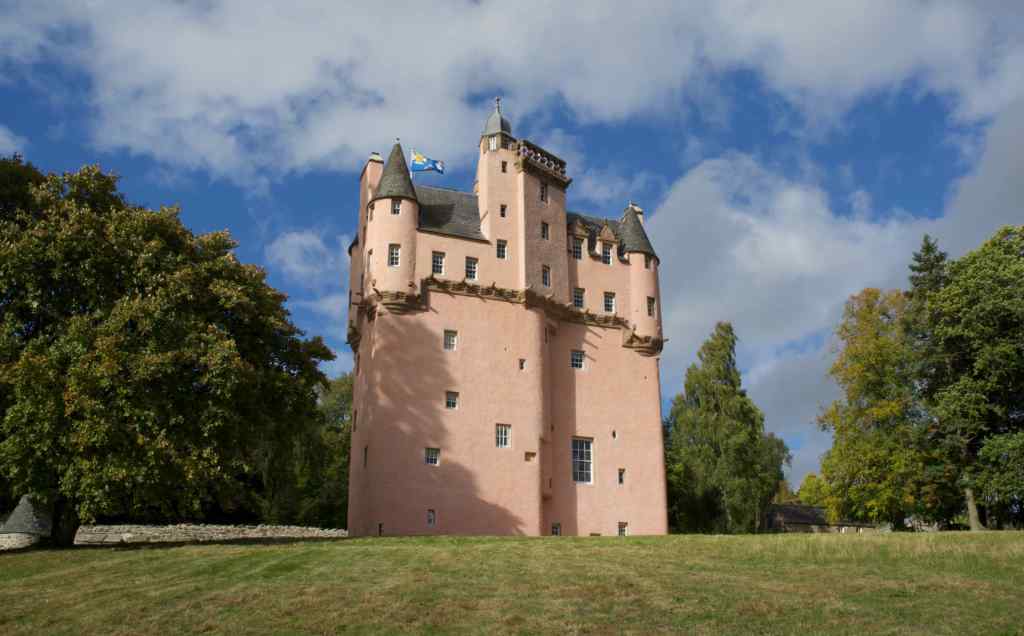
When William Forbes of Menie, a wealthy and openly Protestant merchant, acquired Craigievar, the castle passed decisively into the hands of a family whose religious loyalties aligned with the emerging Presbyterian establishment. A younger son of a well-established Aberdonian family, Forbes had made a considerable fortune trading timber and other goods in the Baltic region — particularly in Danzig (modern Gdańsk) — earning him the nickname “Danzig Willie”.
Being well-travelled, Forbes was familiar with contemporary architecture on the continent as well as in Edinburgh. Using his wealth, he undertook a dramatic transformation of the castle. He removed the uppermost parts of the castle, adding extra storeys and the ornate decorated turrets visible today. The result was a traditional Scottish towerhouse fused with Renaissance architecture. And while many of the newer features were inspired by the concept of defence, the heraldic beasts and richly carved gargoyles, the balusters and turrets, make a very significant visual statement.
Forbes died in 1627, shortly before the castle was completed. His son, also called William, was made a Baronet of Nova Scotia in 1630 (a scheme aimed at financially supporting colonists). He was also a strong supporter of the Covenanter movement and fought during the Wars of the Three Kingdoms.
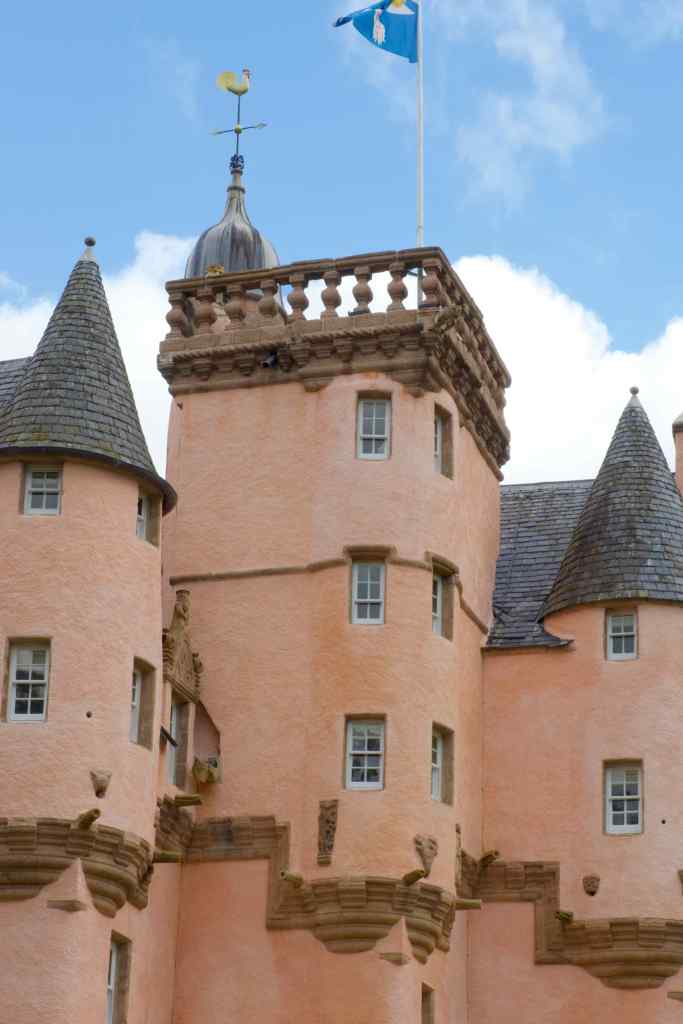
In 1648 he was succeeded by his son, “Red” Sir John Forbes (so-called on account of his complexion). Red’s motto, “Doe not vaken sleiping dogs” was carved on an oak roundel now hanging in the hall.
Over the years, some baroque-style improvements were made to the interior of the castle, and in 1776, some windows were blocked, likely to reduce the bill for “window tax”.
In all, the Forbes family remained at Craigievar for over 300 years across eight generations, presiding over the estate through periods of prosperity and challenge.
By the early 19th century, financial difficulties had left the castle in serious disrepair, and Sir John Forbes (then laird) considered demolition. Instead, in 1824 he consulted John Smith, Aberdeen’s city architect, who argued passionately for restoration, describing the castle as “one of the finest specimens in the country of the age and style in which it was built.” One dramatic change was to the castle’s exterior colour.
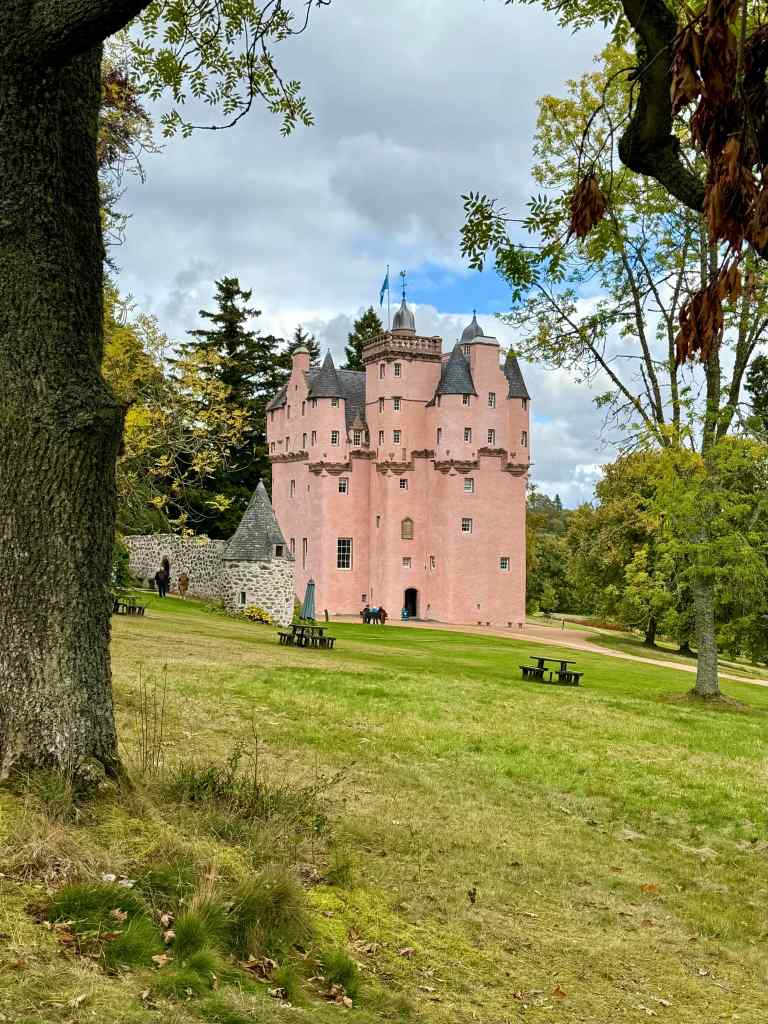
Like many such buildings in Scotland, Craigievar Castle had been lime harled (an early form of render), which gave the building a creamy-white appearance. To a 17th-century visitor, Craigievar’s lime-harled walls would not have looked eccentric or romantic. They would have seemed normal, suggesting a modern approach to good maintenance.
But Smith wanted the harling to match the colour of the granite mouldings. So local sands and aggregates were added to the new harling mix, and the result was a pale pink colour.
In 2009, it was necessary to renew the traditional lime harling (although traces of both the earlier cream and pink harls remain underneath). The choice of pigments and the resulting hue were based on historical research and on the need to match the colour introduced in the 19th century, while also respecting the stonework and harling texture. This approach ensured that the finish was both visually authentic and compatible with the building’s long-term conservation needs.
Sir John’s son William, 15th Lord Sempill, took a keen interest in Craigievar. His involvement began in 1855 after a ceiling collapsed, and he initiated the castle’s transformation from an occasional family summer residence to a tourist attraction. Two visits from Queen Victoria emphasised its importance in this role.
But the 20th century brought social and financial pressures. The Forbes family also maintained a substantial residence at Fintray House near Inverurie, which during the Second World War served as a hospital for wounded Belgian soldiers.
In 1963, burdened by upkeep costs, the family transferred Craigievar Castle and its surrounding lands to the National Trust for Scotland. Since then, the Trust has conserved the property and opened it to the public, preserving its interiors and original collections for future generations.
Craigievar Castle is 6 miles (9.5 km) south of Alford, 15 miles (24 km) north-west of Banchory and 26 miles (42 km) west of Aberdeen. The entrance and main drive are signposted off the A980 (Alford to Banchory road).
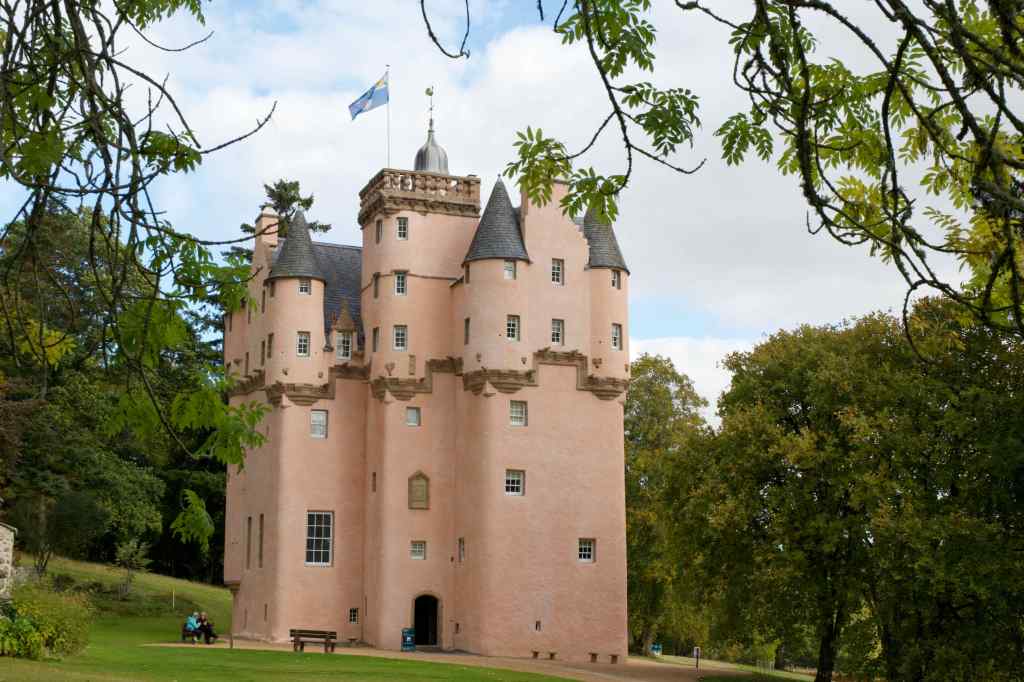
It is open for guided tours from early April until late October, and admission fees apply (it’s free for Trust members). Tours are allocated on a first-come, first-served basis. Advance booking is not possible. Access to the grounds only is free, although non-members will have to pay a parking fee.
The tour, which lasts around 45 minutes, takes you up a flight of granite steps and on into the main hall. This was always the main living room of the castle, although it has been altered from time to time to suit changing tastes. The east wall’s strange configuration is due to the removal of the Mortimers’ high-level chapel in the early 1600s.
From this room, the tour takes you up and around the building, visiting all the main rooms in the castle, including the Ladies’ Drawing Room, the Tartan Bedroom, Lady Semphill’s room, Lord Semphill’s room, the Queen’s room and the Nursery. On the top floor is the Long Room, where guests once were entertained, and next to that is the Maids’ Room. There are a pair of small, very austere beds in this room which were considered suitable for servants in the 1820s.
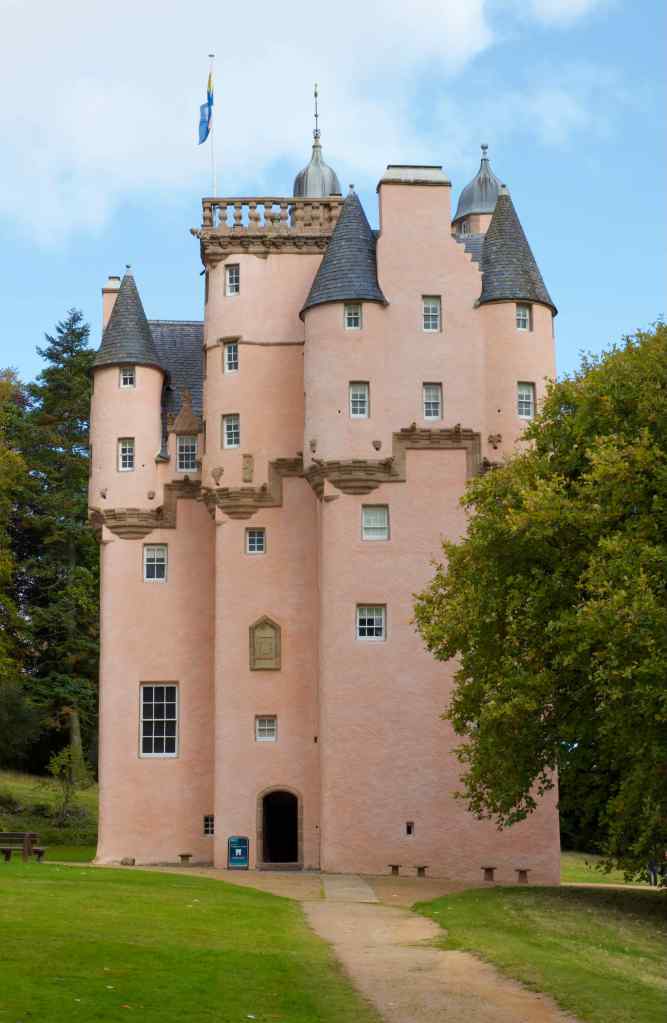
Overall, the tour combines history with explanations of the building’s architecture and the story behind its furnishings. It is certainly recommended.
Please note: Many of the furnishings and objects in the castle belong to the family. As such, photographs inside the castle are not permitted.
Craigievar Castle: OS National Grid Reference NJ 56678 09486
Further reading
National Trust For Scotland, Craigievar Castle (Official Guidebook)
National Trust for Scotland website
Aberdeen and Aberdeenshire Press and Journal




 Thistle & Time
Leave a comment