
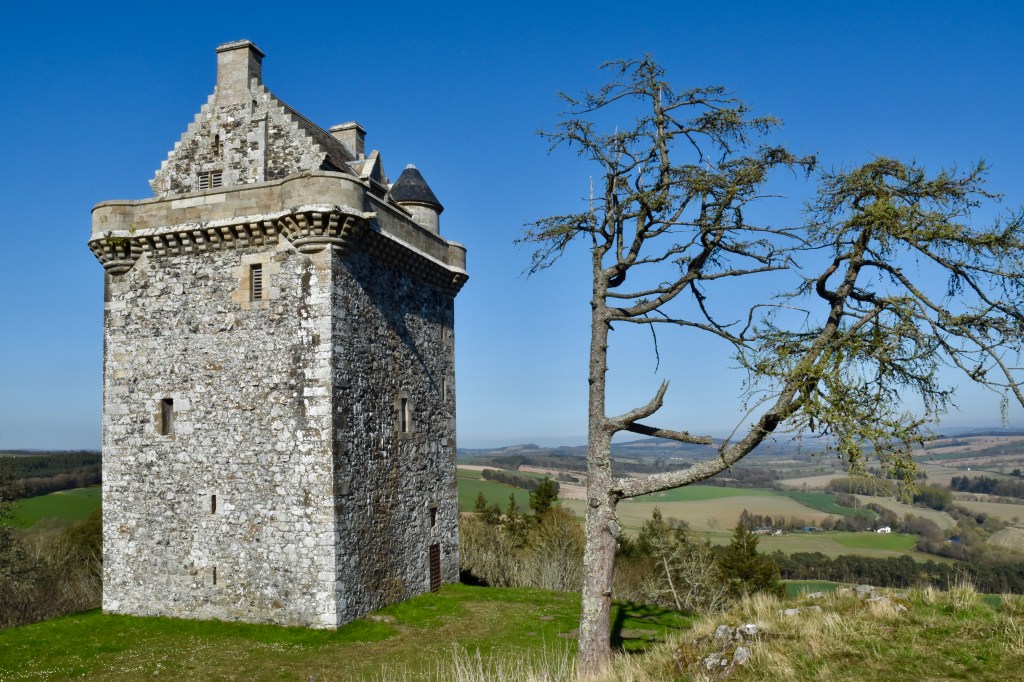
This restored, historic 16th-century tower house looks out over Teviotdale and beyond from its lofty position atop Minto Crags. With commanding views and an unusual name, it has survived centuries of border conflicts, multiple owners, periods of neglect, and two major renovations.
Its elevated position served an important defensive purpose during the turbulent era of the Border Reivers and regular conflict with England. Designed primarily for protection rather than comfort, it is an example of a border tower house.

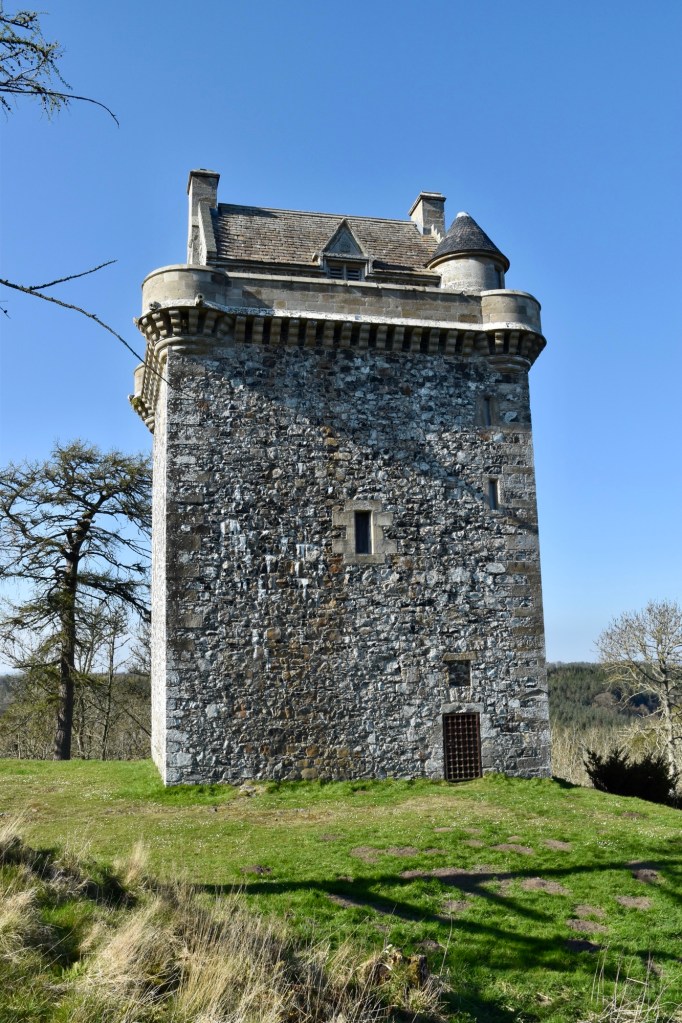
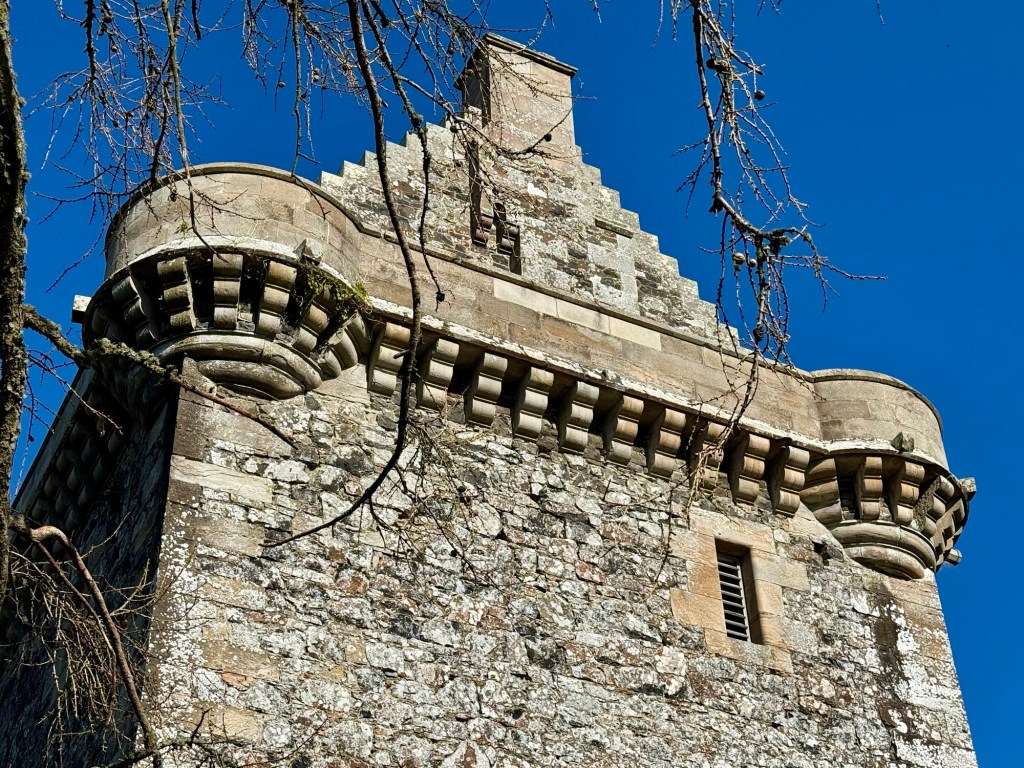
At 17 metres tall, Fatlips Castle makes an impression. It comprises four storeys plus an attic level, which is surrounded today, by a 19th-century parapet walk. It measures over 8 metres from north to south and nearly 10 metres from east to west. The basement s vaulted.
The entrance is in the south wall and is fitted with a modern iron gate, using the jambs and lintel of the old doorway. It used to be possible to borrow a key to view inside, but this is no longer possible.
While the original structure dates to the 16th century, some visible architectural elements are from extensive renovations during the 19th century. The interior spaces, though relatively simple in their original form, were substantially enhanced during the 1897-98 renovation by the renowned Scottish architect Sir Robert Lorimer. He adapted the spaces to serve as both a shooting lodge and a private museum for the Earl of Minto. However, in the latter part of the 1900s, the building was neglected and became derelict. Fortunately, further exterior repairs took place between 2011 and 2013.
Fatlips Castle was constructed by the Turnbull family of Barnhills in the 1500s. However, they had acquired the land as early as 1375, when John Turnbull received the barony of Minto from King David II. A structure likely existed on the site around that time, serving as a lookout point.
As for the Turnbull family, they were notorious Border reivers who engaged in cattle rustling and raiding across the Anglo-Scottish border. The family’s unruly reputation led to conflict with the Scottish Crown. It is said that King James IV took action against them in 1510, reportedly hanging several members of the family in an effort to assert royal authority in the borderlands.
In 1545, during the Wars of the Rough Wooing, the Earl of Hertford (Edward Seymour) burned Fatlips Castle (or Mantoncrake Castle as it was known then). The damage sustained during this period was substantial enough to be recorded in historical accounts, though the extent of destruction is not precisely documented.
Following the Turnbull era, the castle passed to the Stewart family, though little information survives about their period of ownership. The property was eventually acquired by Sir Gilbert Elliot in 1705, marking the beginning of a long association with the Elliot family, who later became the Earls of Minto. It was under Elliot ownership that the castle underwent significant restorations during the 1800s.
But where did the castle get its unusual name? One theory suggests it stems from a tradition of greeting ladies with a kiss upon entering the castle. Another mentions a local goat nicknamed “Fatlips” that warned of approaching danger. Yet another theory is that the name came from a legend of a spirit called Fatlips at nearby Dryburgh Abbey. But it could also be due to the Turnballs themselves, whose facial features were said to have included full lips. Or maybe it was their activities as reivers, returning with “fat lips” after a successful raid, stealing cattle. I doubt we will ever know for sure.
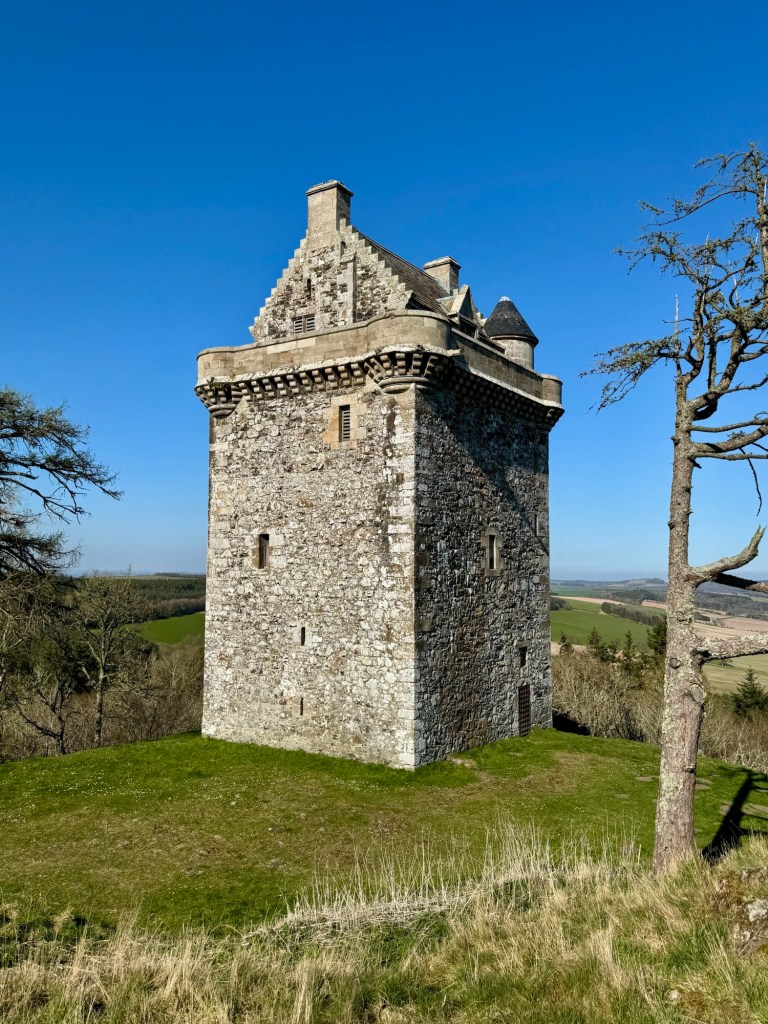
There is no doubt that Fatlips Castle is an impressive historic monument. But it’s not the easiest of castles to reach.
Take the northeast exit from the square in the Scottish Borders town of Denholm, onto Leydens Road. Then turn left onto Minto Road (B6405). Continue on the B6405 a short distance, and turn right onto the first public road after the river, towards Ancrum. Continue until you find the gravel track that leads up to Fatlips. Park at the bottom of this track. You then have an uphill walk that some may find challenging, particularly if it is wet underfoot. Appropriate footwear is advised, and take some water if it is a warm day.
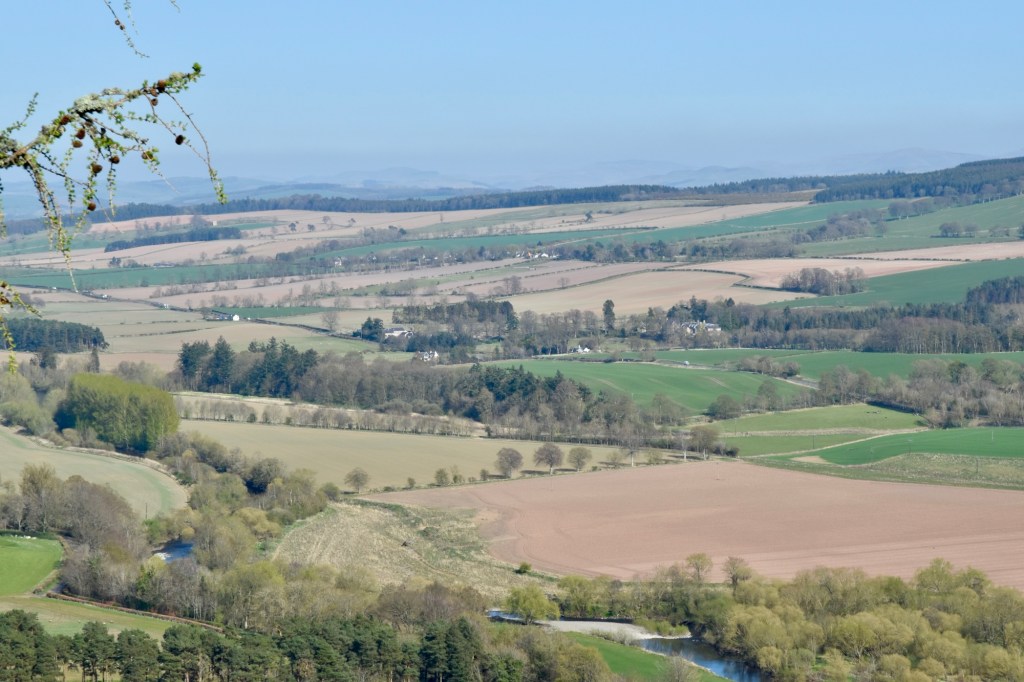
The walk up the path will take 20 to 40 minutes, depending on your fitness and the conditions. Fatlips Castle is at an elevation of 220 metres, but the view from the top of Minto Crags is an added bonus. You won’t be disappointed.
Fatlips Castle: OS Map Grid Reference NT 582 208
Further reading
Adrian Pettifer, 2024, Scottish Castles (The Boydell Press)
BBC News: Fatlips Castle set for Major restoration




 Thistle & Time
Leave a comment