
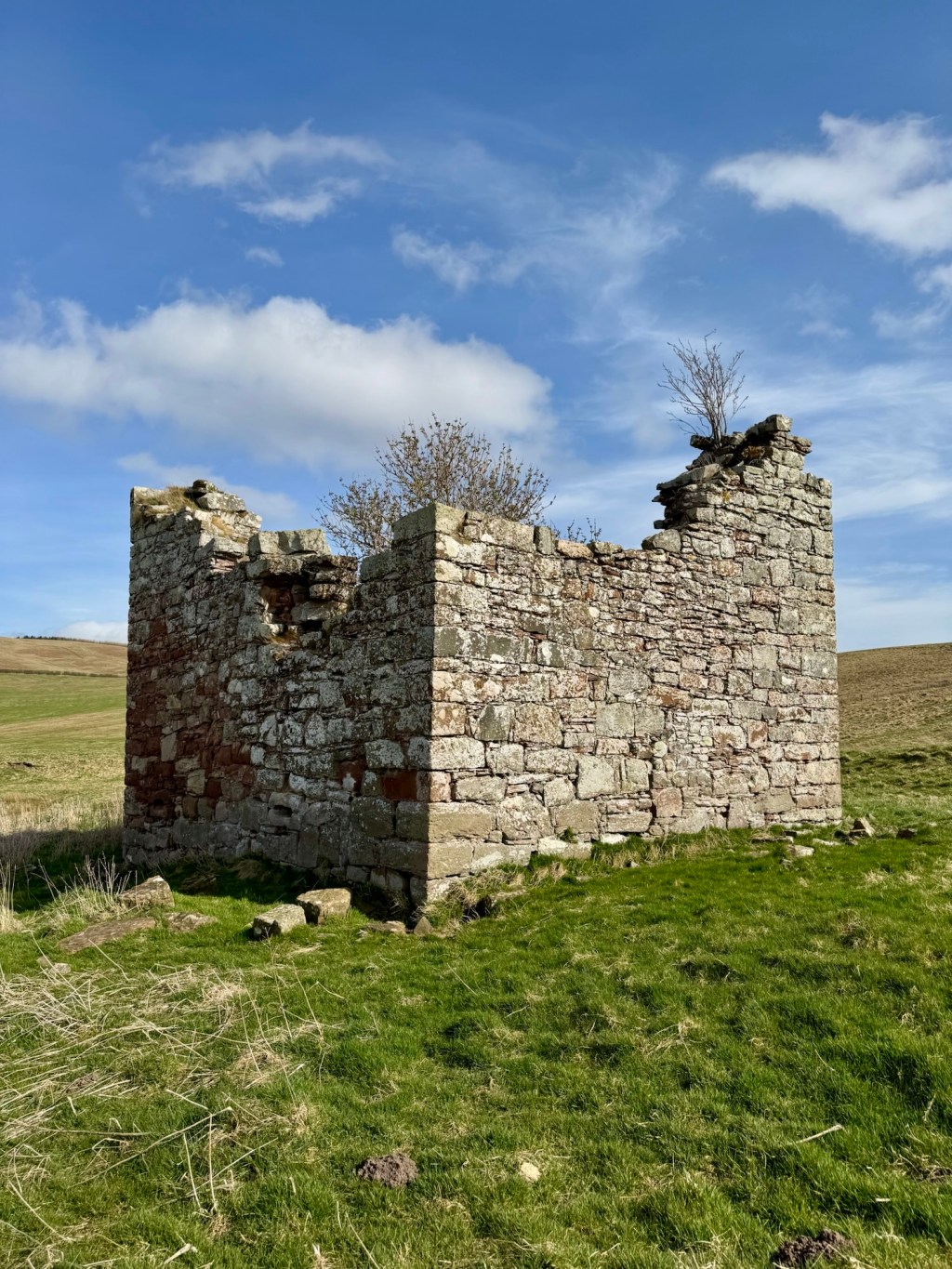
Fulton Tower occupies a strategic position in the Rule Water valley, situated approximately 4.5 miles (7 km) southwest of Jedburgh and 2 miles (3 km) south of Bedrule in the Scottish Borders. The ruin is in a field, about 100 metres from the eastern side of the road that flanks Rule Water, just south of Fulton Farm.
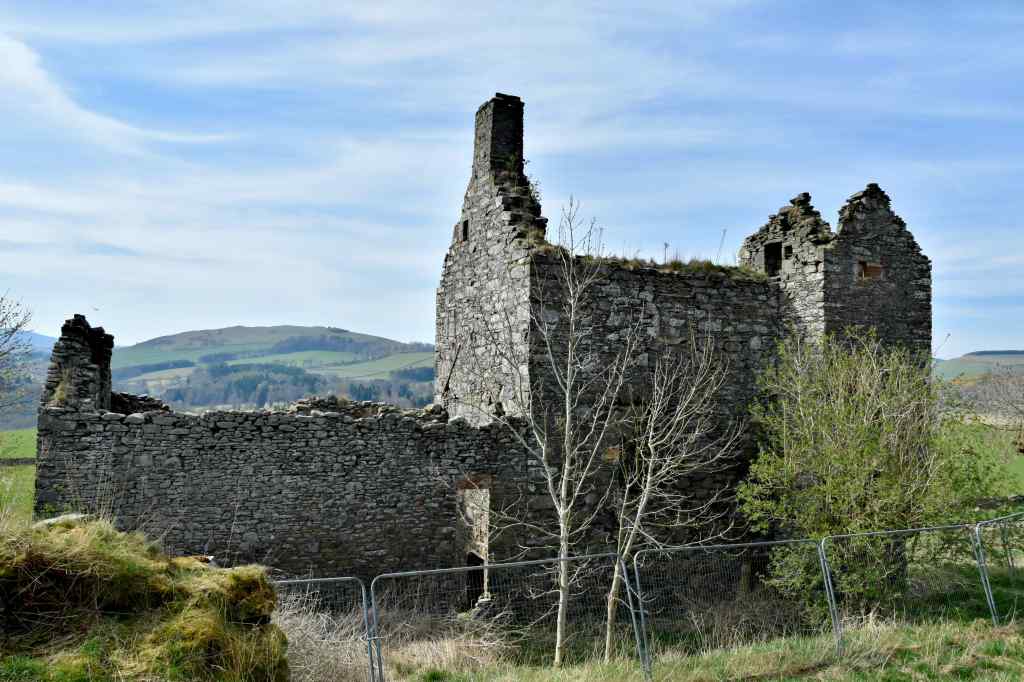
The tower was built from roughly coursed harled rubble, and the remaining walls stand to an average height of 5.5 metres. These are two incomplete storeys of what was once a three-storey building. The southeastern wall, along with most of the circular stair-tower, has been lost, leaving the internal structure partially exposed.

The basement was not vaulted, the first floor being supported by joists built into the side walls. The ground floor contains two oval gun-loops facing northwest, indicating the defensive nature of the structure. A fireplace survives in the southwest gable, while the upper floor retains the remains of a window facing northeast with a fireplace opposite.
But its date of construction is not clear. The ruin we see today was most likely built in the late 1500s, after an earlier tower on the site was destroyed by fire in the brutal War of the Rough Wooing. Back in 1545, English forces led by the Earl of Hertford (who later became the Duke of Somerset), lay waste to locations along the Rule Water, including, according to records, “Fotton” (Fulton). Archaeological evidence from additional buildings found around the tower suggests they were badly burnt.

In the 16th century, ownership of the tower passed from the Hume family to the Turnbulls, both powerful Border families. Margaret Hume of Cowdenknowes held a life rent in the lands of Fulton in 1570. Then, through marriage, the land was transferred to William Turnbull of Bedrule. It is the latter who probably rebuilt Fulton Tower following its destruction in 1545. Before Hume ownership, the original structure may have been built for the Fulton family in the 1400s.
It is said that the last person who inhabited Fulton Tower was a Turnbull engaged in a deadly feud with the Kerrs of Ferniehirst. The story says that the Kerrs rushed the tower while Turnbull was playing with his infant child. He jumped up and grabbed his sword, ready to fight, but his wife begged him not to risk the life of the child. As a result, he surrendered, but what became of him after that isn’t known.

Following the Union of the Crowns in 1603, the changing political and social conditions reduced the need for fortified residences in the Borders. At some point after this, Fulton Tower was abandoned and gradually fell into ruin.
Getting to Fulton Tower by road is straightforward. From the A68 main road south of Jedburgh, take the B6357. The tower is accessed from a minor road (to the northeast) off the B6357. It is visible across the field from the roadside. The field itself slopes down towards the tower, and may be grazed by livestock.
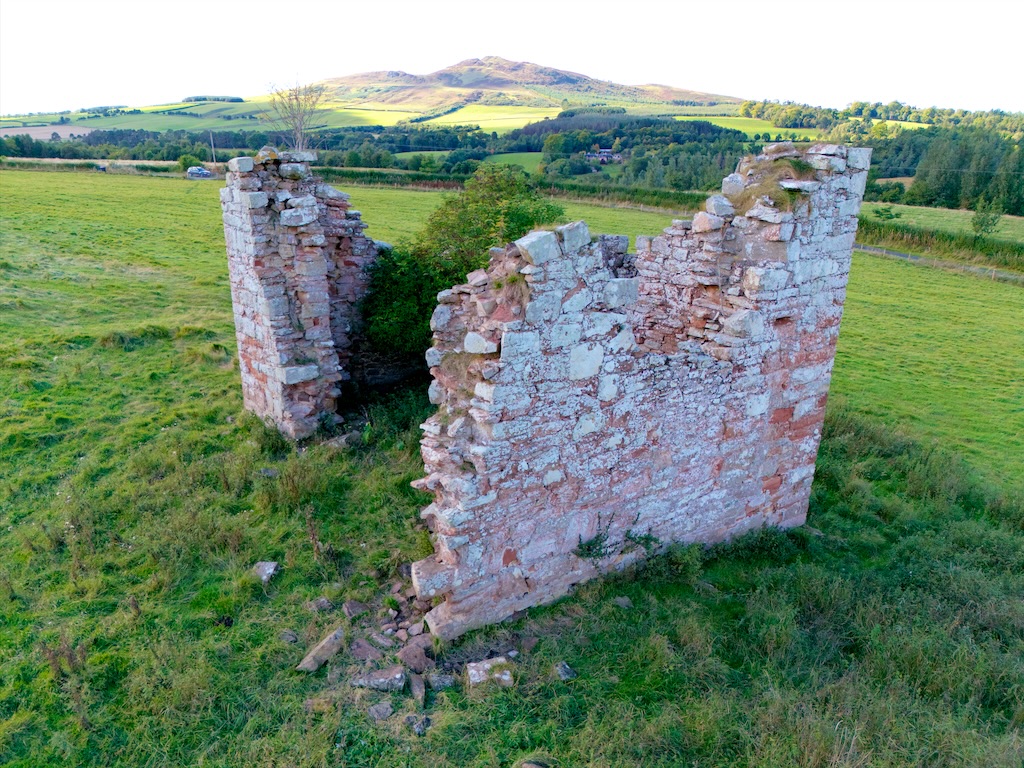
Fulton Tower: OS Map Grid Reference NT 605 158
Further Reading:
Alistair M.T. Maxwell-Irving, 2014 The Border Towers of Scotland 2 (Published by Alisatir Maxwell-Irving)
Historic Environment Scotland portal
Bedrule (village website)


 Thistle & Time
Leave a comment