
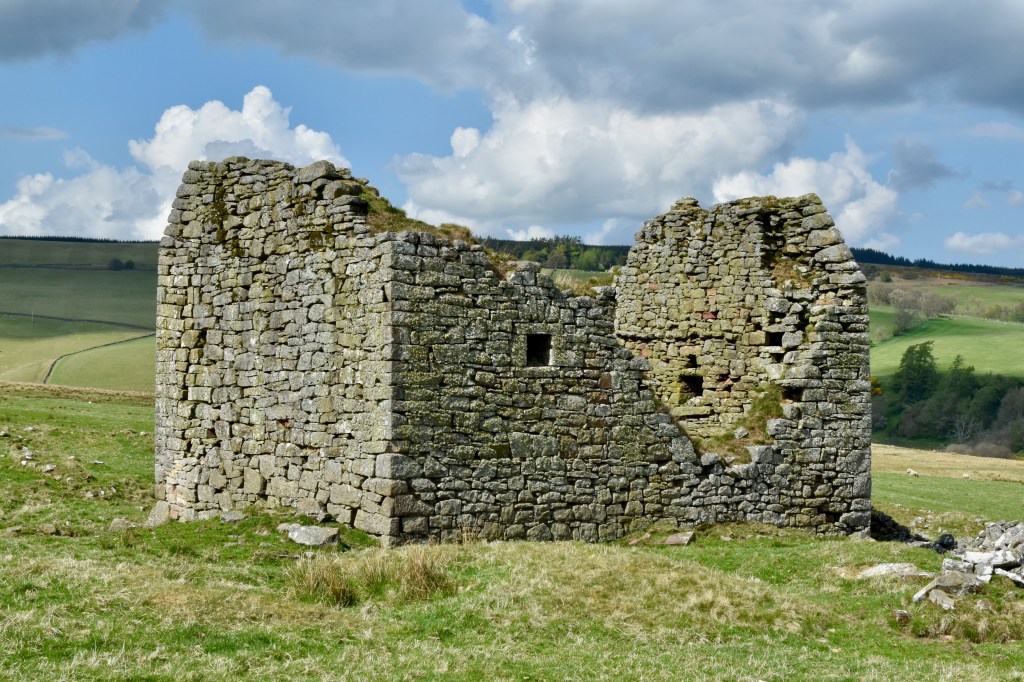
Slack’s Tower is a remote, ruined, 16th-century peel tower, south east of Chesters on the eastern bank of Jed Water. This fortified structure would have been built for protection and as a status symbol during the turbulent times of the Border Reivers.
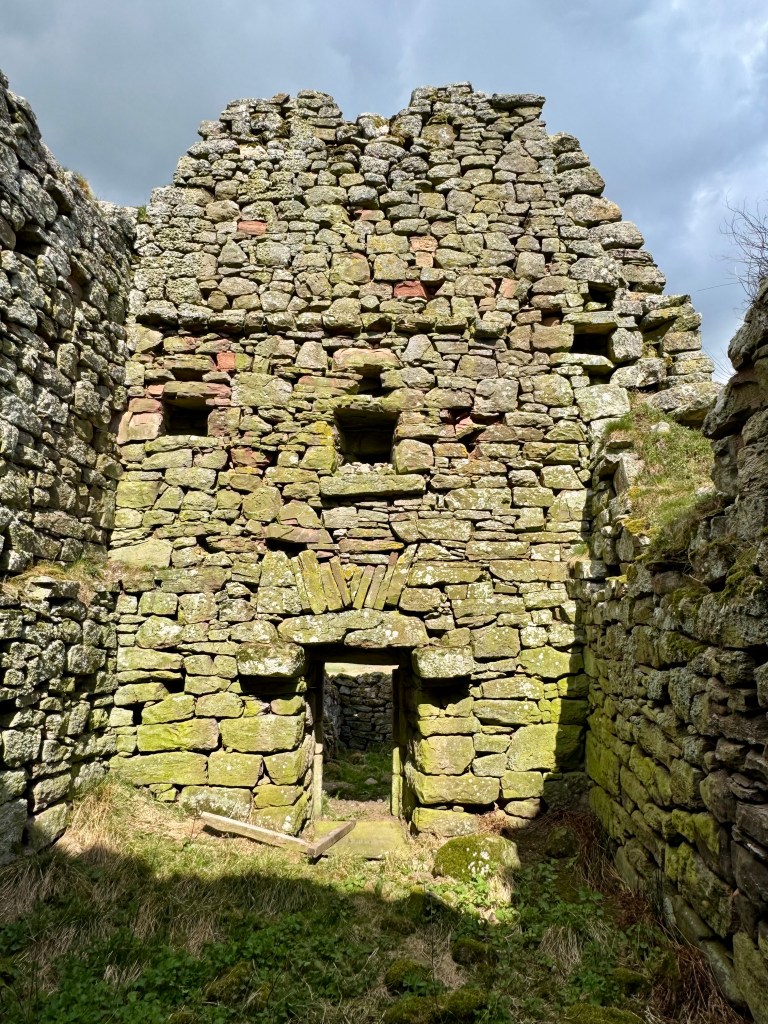
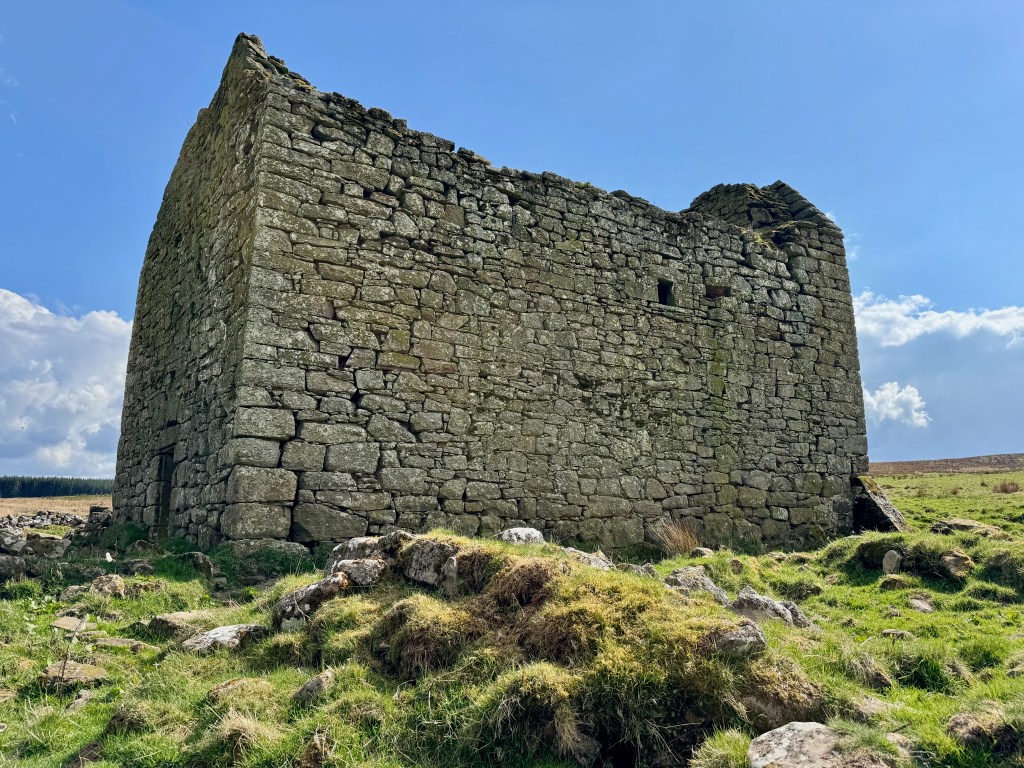
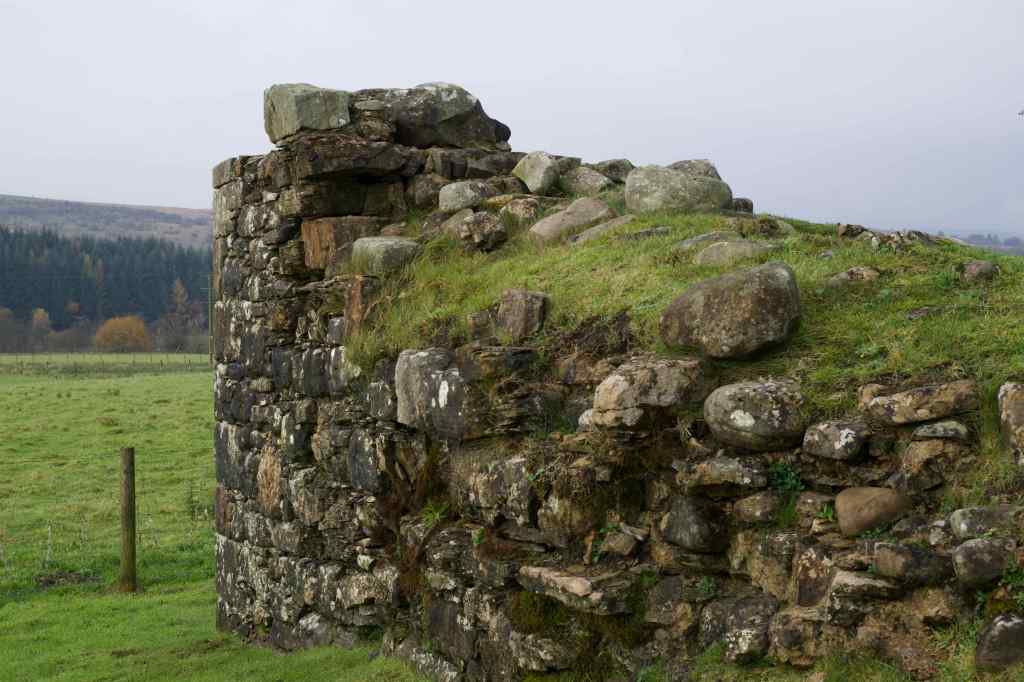
The oblong-shaped building originally rose to three storeys, none of which were vaulted. Today, both gables are almost complete, but one of the side walls is badly fractured with a substantial piece missing. A lintelled doorway gives admission to the ground floor while the first floor once had a separate entrance, reached from an external stairway (which was probably situated on the part of the SE wall that is no longer complete). This first floor entrance would have given access to the main hall or living room. Interestingly, it has a number of aumbries or recesses for storing important items.
A characteristic of border towers is the thick walls. At Slack’s they reach a thickness of 1.5 metres. The masonry is rubble, roughly coursed and clay-built. Interestingly, the tower stands in the scant remains of associated enclosures and buildings.
The Olivers, a prominent Border reiving family, were central to the history of Slacks Tower. They were tenants and vassals of the Douglases and operated in the extensive lands of Jedforest, south of Jedburgh.
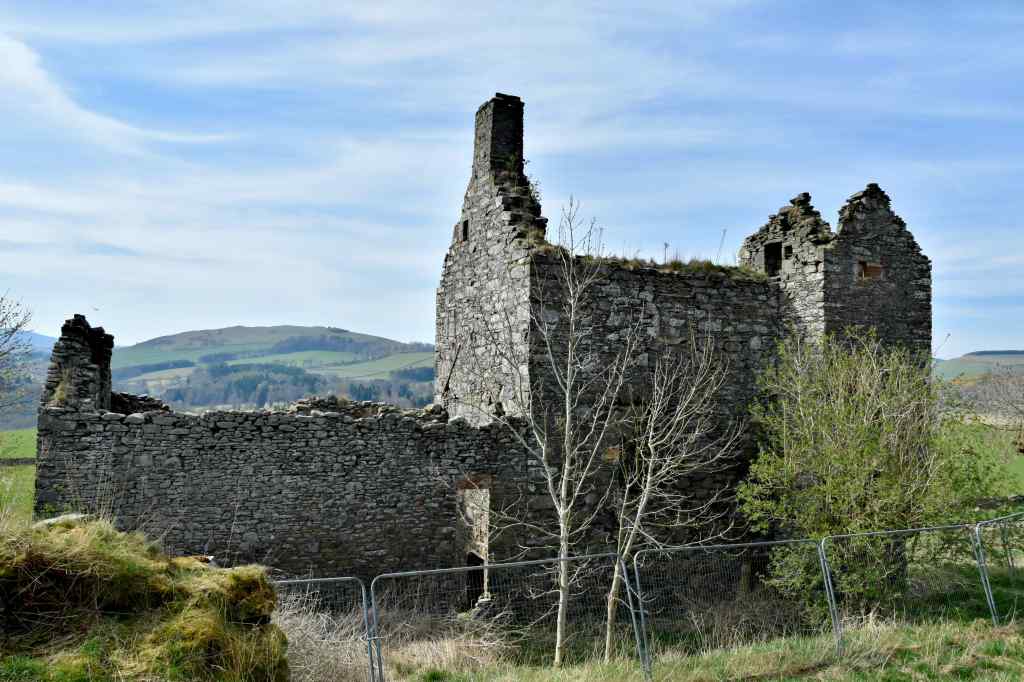
They used the tower as a key residence, and a symbol of their status in the troubled 16th century. But it wasn’t just a passive residence. It was also part of a network of Border strongholds in the area likely to be used by the Oliver family or their associates. These other towers were Mervinslaw, Dykeraw (of which almost nothing remains), Northbank (only fragments remain), and Kilnsike.
It is safe to assume that reiving activities were organised from Slack’s Tower, but there are no records of it being attacked by other reiving families. However, given the lawlessness that prevailed in the Borders, it could well have faced external threats. What’s more, as their vassals, it is likely they would have been involved in any feuds or reiving activities of the Douglas family.

It also isn’t clear whether or not the tower was attacked during the wars of the “rough wooing”. The Jed Water valley and its network of towers—including Slacks—were in an area affected by the conflict, which involved widespread English attacks and devastation.
But the Olivers were known to be among the “Assured Scots”, men who had pledged to support the English cause (usually because of coercion and/or profit). Indeed, Sir Ralph Eure, warden of the English Middle March, counted among his troops members of the Oliver and some other Scottish families. They helped to devastate towns like Jedburgh and Kelso, destroying the homes of their fellow Scots. With such active support for the English cause, an attack on Slack’s Tower may have been avoided.

Getting to Slack’s Tower is not easy. It involves a demanding lengthy walk over a hill and across fields from the A6088 road. The last 300 metres take you over a marsh, which, after a period of dry weather, is rutted and uneven. However, following rain or during the winter, it could well be soft or waterlogged. Also, the fields in the area may be grazed by livestock, so if this is the case, please keep dogs on a lead. Good footwear and a map are recommended.
Despite the effort needed to get there, Slack’s Tower is a lonely but fascinating ruin. It remains historically significant, and there is still much to see, providing a window into the Borders’ turbulent past.
Slack’s Tower: OS National Grid Reference NT 64403 09893
Further reading
George MacDonald Fraser, 1989, The Steel Bonnets (Collins Harvill)
Mike Salter, 1994, The Castles of Lothian and the Borders (Folly)



 Thistle & Time
Leave a comment