
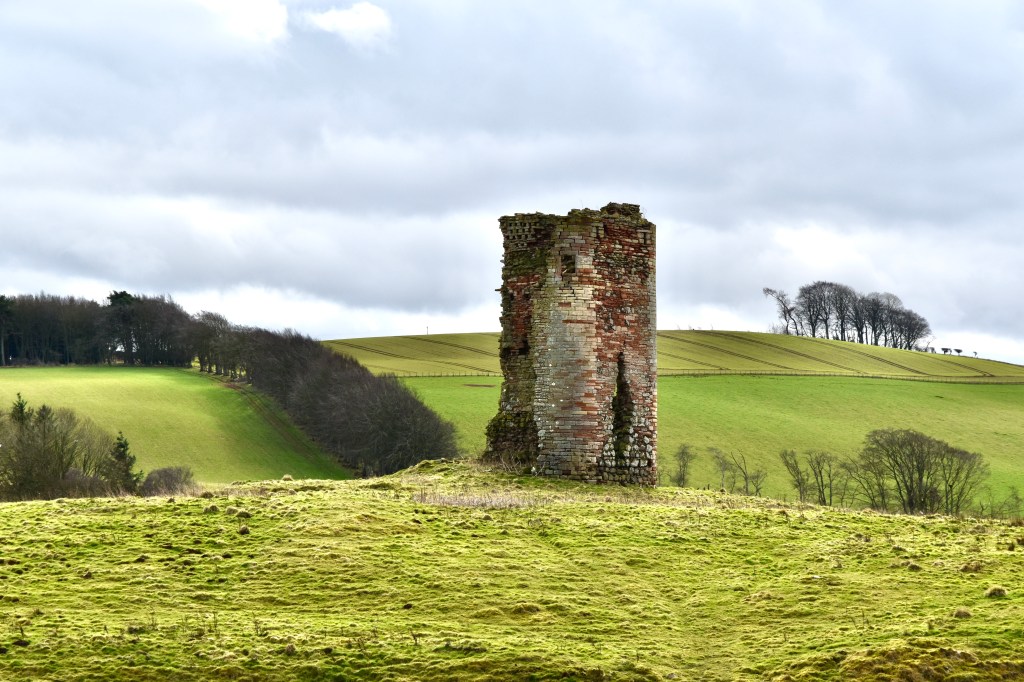
Corsbie Tower is a ruined 16th-century fortification located in the Scottish Borders. Its broken walls provide a window into the lawless nature of southern Scotland in the 1500s. Indeed, the tower house, situated on elevated ground surrounded by boggy terrain, demonstrates the defensive considerations that dominated castle construction during this period.
It was built by the Cranstouns (also spelt Cranston or Cranstin) of Oxenford, a prominent family with land across Midlothian and the old counties of Roxburghshire and Berwickshire. The political standing of the family allowed them to exercise considerable influence over local affairs and law enforcement, with some becoming Wardens of the March (The Marches were the areas, historically divided into East, Middle, and West sections on both sides of the Anglo Scottish border).
The family’s rise to prominence was during the height of the border reiving era, a system of raiding and counter-raiding by border clans. From the 13th to the early 17th century, reiving was seen as a normal means of resource acquisition and territorial dominance.
So were the Cranstouns from Corsbie involved in reiving? Quite possibly. No explicit records tie them to specific raids, but…
Firstly, the surname Cranston (an alternative spelling of Cranstoun) appears in various compilations of Reiver names for the East March in Scotland.
Secondly, the Cranstouns are repeatedly present in the documentary record of the Borders in the 16th century: as signatories of peace bonds (Kelso 1569), as cautioners/defenders in Privy Council and State Paper business (mid-1500s), and in later violent incidents. That mix of patronage, bond-taking and repeated legal trouble is a classic profile for a Border laird family that was very probably engaged in reiving activity (either directly or through their followers).
Also, Corsbie Tower’s location, 4 kilometres (2.5 miles) west of Gordon and near the Eden Water, placed it at the crossroads of major drove roads and conflict zones during this period.
This will have provided opportunities to profit from reiving without direct participation. As de facto local authorities, they could levy “protection” fees on smaller landowners or clans in exchange for safeguarding livestock—a common practice in the Borders.
And as supposed enforcers of the law, the Cranstouns could have used counter-reiving operations to intercept cattle thieves and secure plunder for themselves. So with what we know of the borders culture, it seems likely that the Cranstoun family would have been involved in the broader reiving economy. Perhaps this is why, in 1530, Jasper Cranstoun was one of the Berwickshire barons accused of “failing to keep good rule within their respective bounds”.
Of course it wasn’t just reivers that were a problem in the borders. Corsbie Tower would have witnessed the the brutal war of the Rough Wooing in the mid 1500s. This was when Henry VIII of England sent his army into Scotland to try and force a marriage agreement between his heir and the young Mary Queen of Scots.
There appears to be no record of the tower ever being attacked at this time. But given the widespread devastation caused to the Scottish side of the border by English forces, this may be unlikely. Either that or Corsbie Tower was very lucky to avoid being burnt or besieged.
Another reason why Corsbie Tower might have been spared during the Rough Wooing is the existence of Assured Scots. These were Scottish Lairds who collaborated with the English, pledging allegiance usually because they were given little choice. It was a case of straightforward survival to avoid being plundered or worse. Others saw profit in pledging their allegiance, receiving payment from the English and being encouraged to raid rival clans who had not assured. But there were also a some, usually zealous converts to Protestantism, who supported the English on ideological grounds.
Records show that some Cranstouns had to give security or caution for “treasonable assistance to England” in 1548, suggesting they were suspected of cross-border loyalties or of collaborating with English forces. However, I can find no direct record of the Cranstoun family of Corsbie being Assured Scots, but nor can this possibility be ruled out with any certainty.
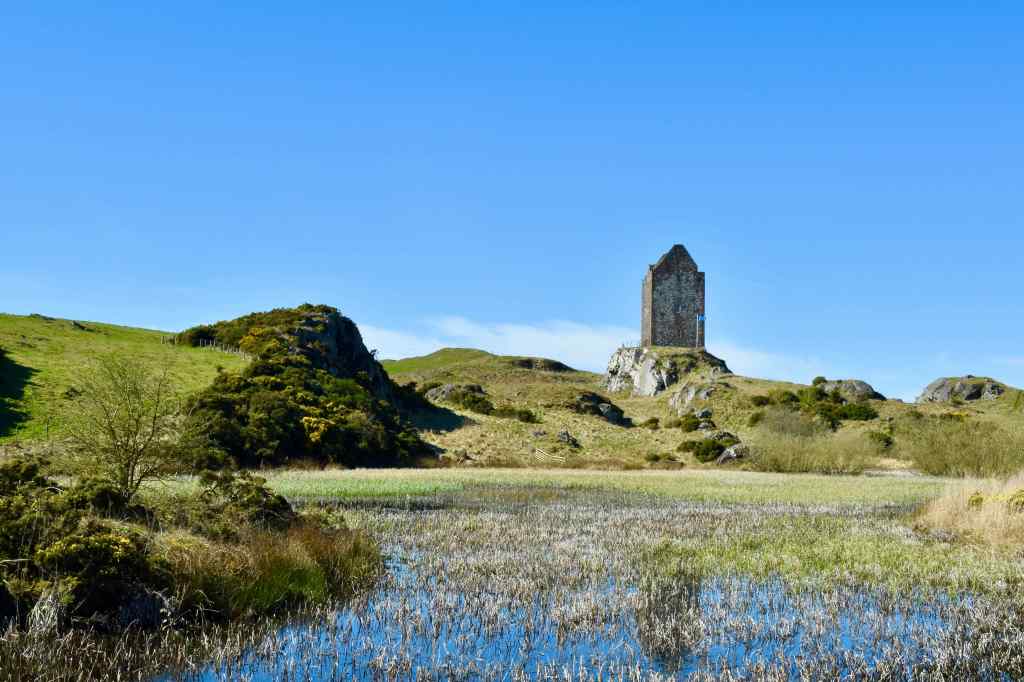
Yet whether or not the tower was attacked, it was certainly built to be defended. It was strategically positioned on a prominent mound surrounded by boggy ground, creating a natural defensive barrier that would have made approach difficult for potential attackers. This clever use of the natural landscape limited access points to a single, easily defensible approach. Access to the tower was solely via a causeway from the north, crossing the marshy terrain and leading up to the elevated position of the building.
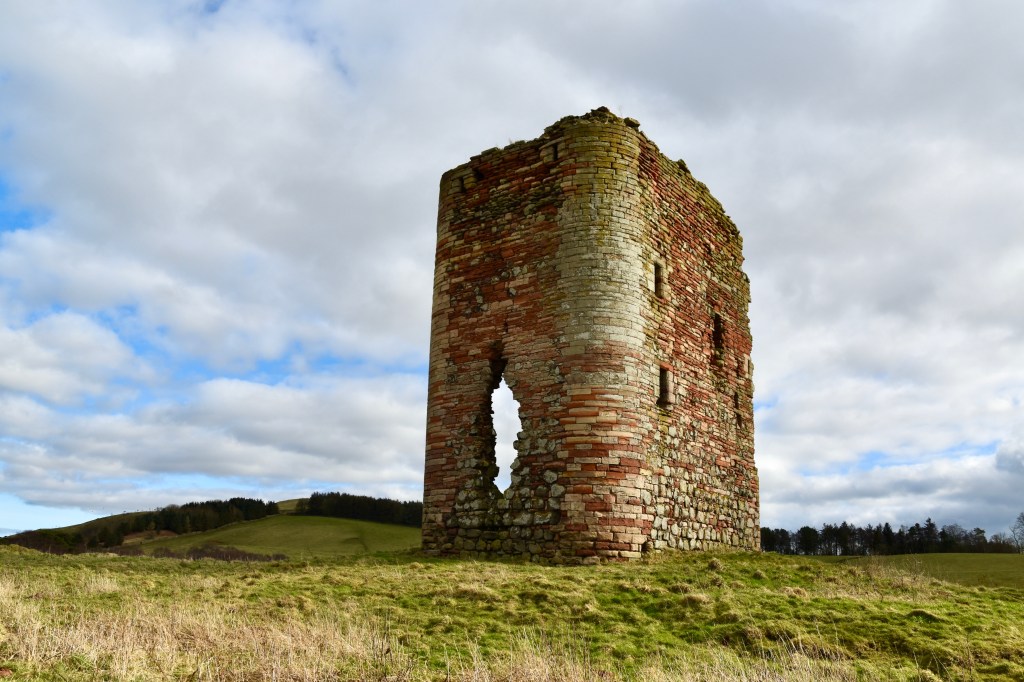
So what did it look like?
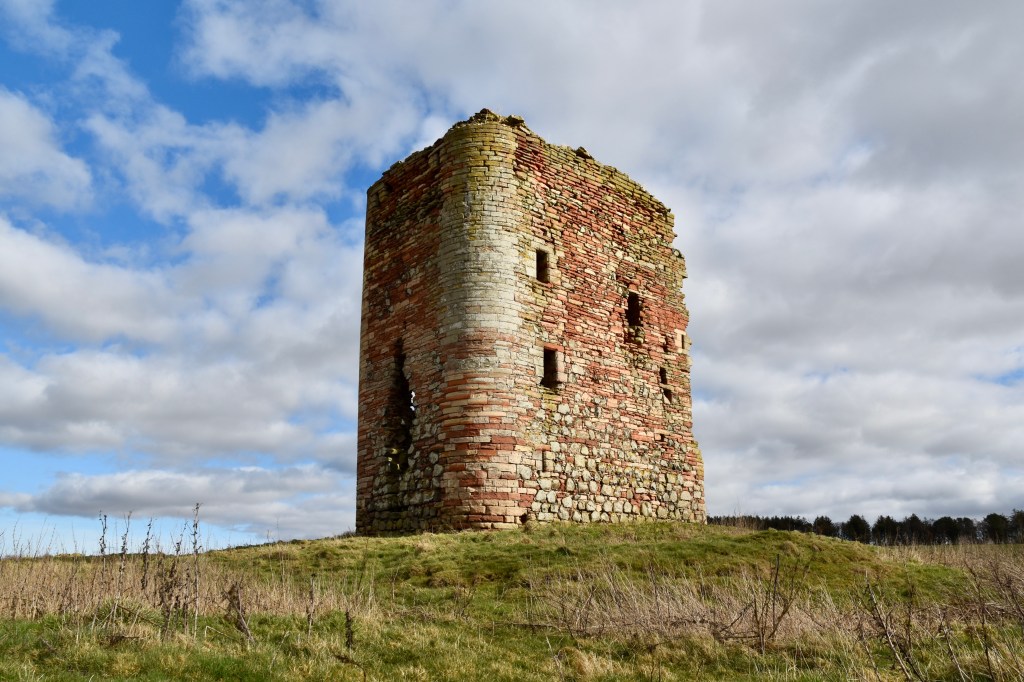
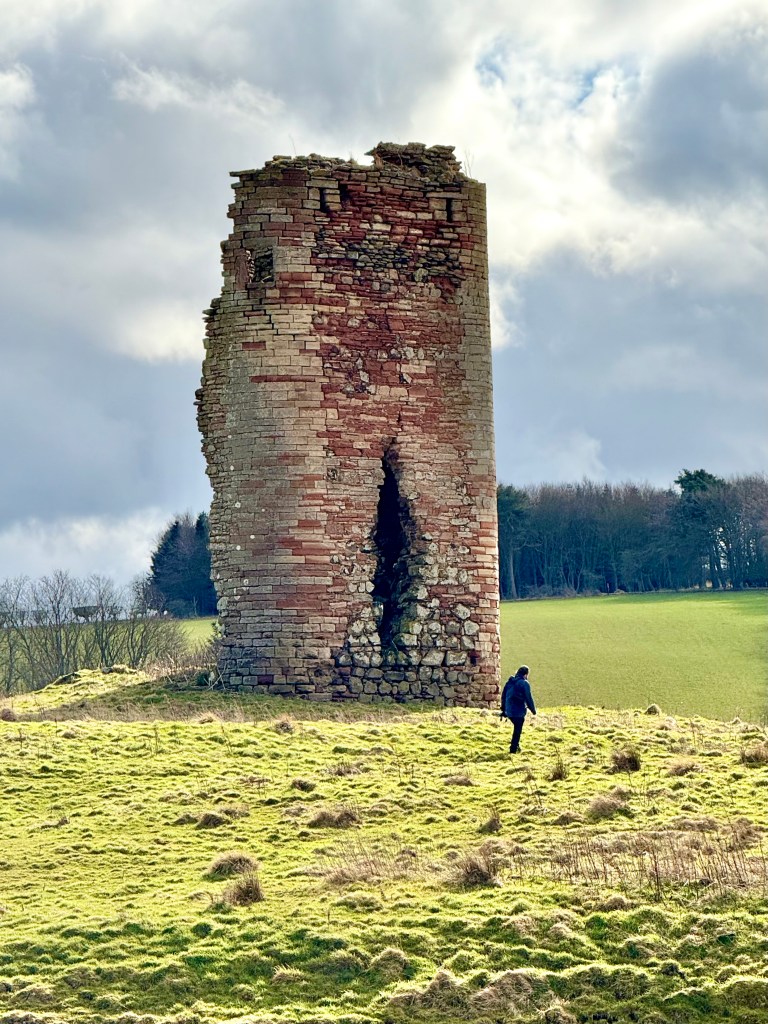
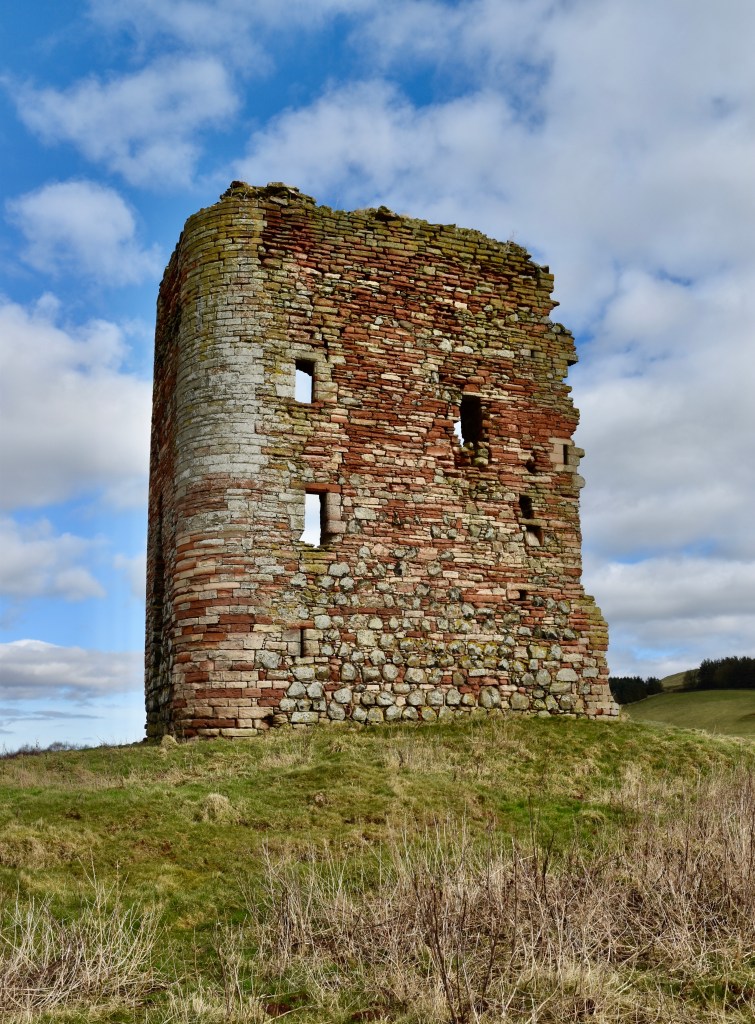
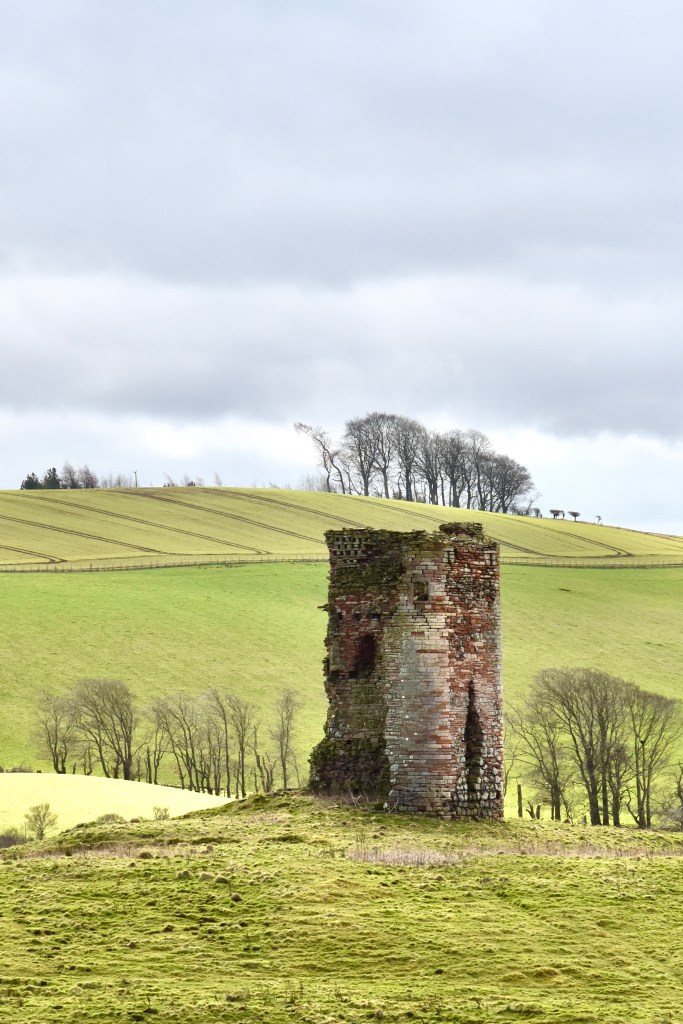
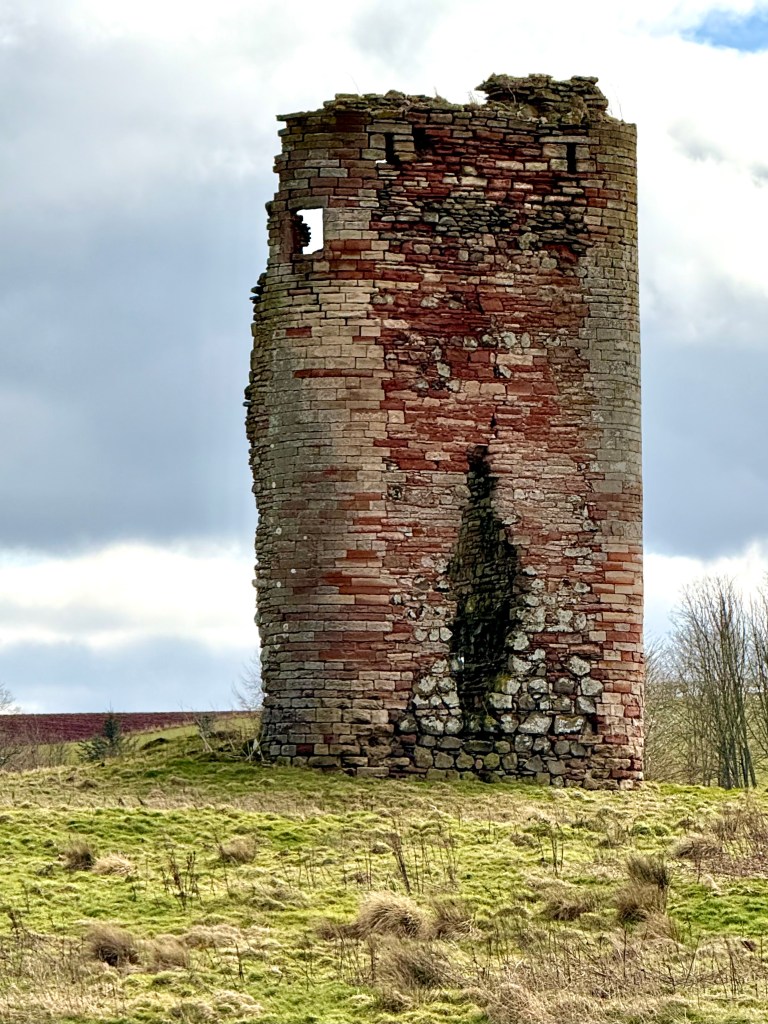
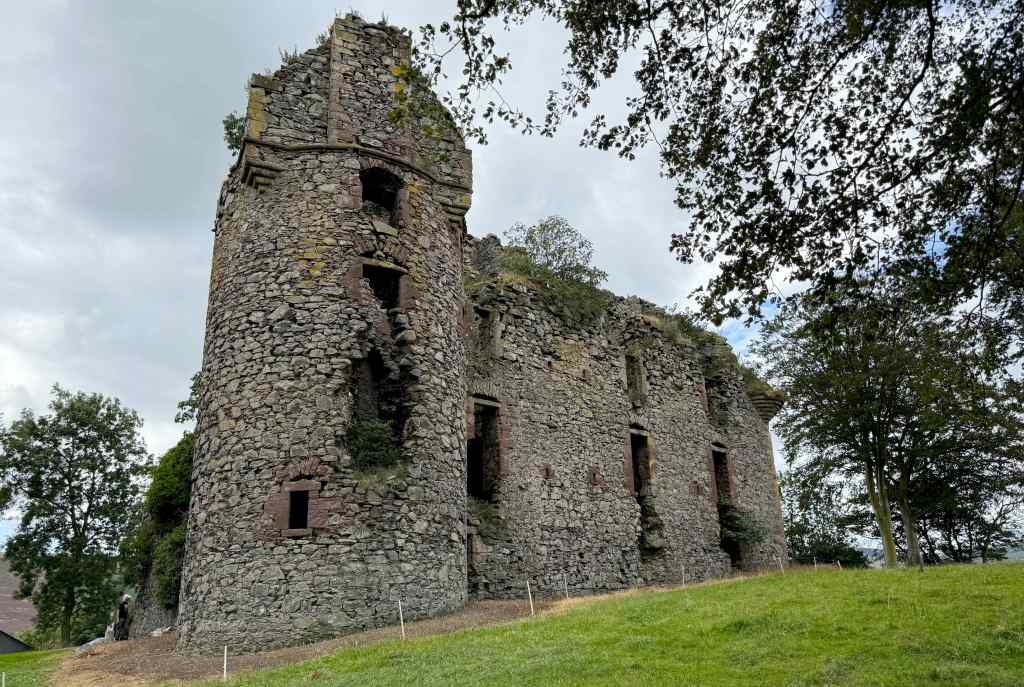
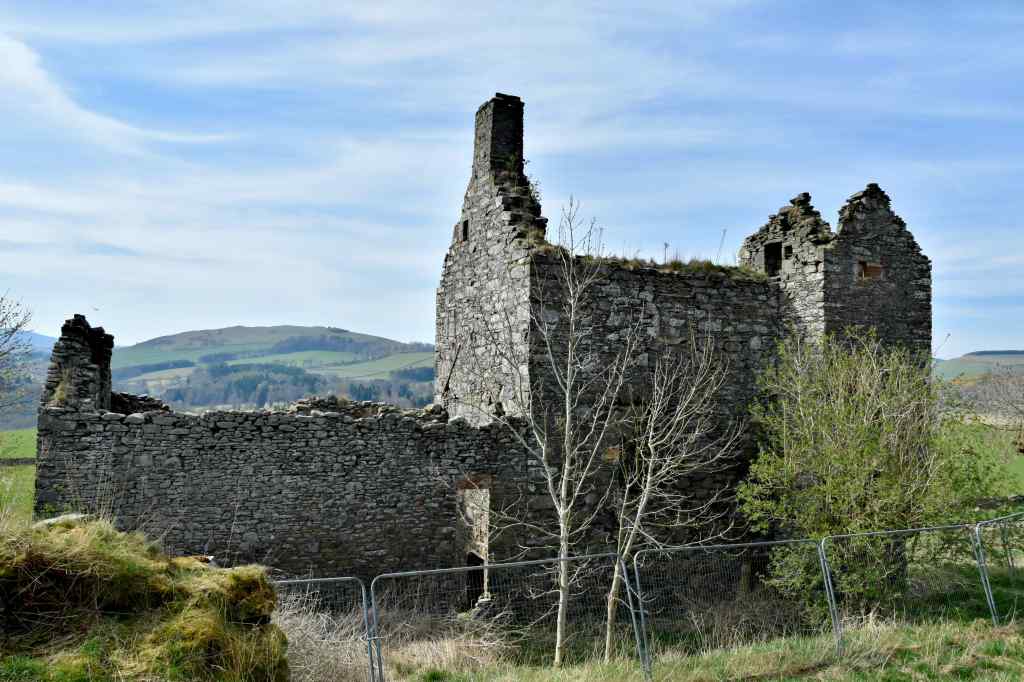
Corsbie Tower was constructed as an oblong structure, measuring approximately 12 metres by 8.3 metres. The walls were remarkably thick, averaging about 1.8 metres, demonstrating the defensive nature of the building. Originally, the tower stood five storeys high, though today only the south and west walls remain, rising to a height of just over 15 metres.
The tower featured a distinctive architectural element in its rounded corners, which were constructed of dressed ashlar stone, while the rest of the structure was built of coursed rubble. These rounded corners are noted as being relatively uncommon in Scottish tower houses of this period, making Corsbie architecturally significant among its contemporaries
The interior of Corsbie Tower was carefully designed with both functionality and defence in mind. Both the ground floor and the top floor were vaulted, providing structural stability and some protection against fire. The main hall was located on the second floor, where the remains of a fireplace can be seen in the surviving wall. This layout follows the typical pattern of Scottish tower houses, with service areas at the lower levels and the principal living spaces positioned above.
The Cranstoun family’s hold on Corsbie Tower weakened during the 17th century. This likely occurred due to a number of reasons, including
- the clampdown of reiving activities following the union of the crowns (when Scotland’s James VI also became James I of England)
- financial pressures
- a reduced need to prioritise defence
Although not attributed to the Corsbie branch, the family name also took some blows in the 1600s. A Thomas Cranstoun was executed in 1600 for his involvement in the Gowrie conspiracy. The Reverend William Cranstoun of Kettle, a Presbyterian minister, opposed the King’s religious reforms and was forcibly removed from his role in 1620. And the third Lord Cranstoun who fought as a Royalist during the English Civil War was captured at the Battle of Worcester in 1651. Imprisoned in the Tower of London, he suffered forfeiture of family lands.
Whatever the exact cause, Corsbie Tower had passed out of Cranstoun hands by the mid 17th century.
Finding Corsbie Tower requires more effort than simply following instructions on a sat nav. The nearest place with facilities is Gordon, but the tower itself is quite isolated. Corsbie is a small place. There are no signposts from the road, so look for a gate into one of the fields near the tower. If it has been raining recently, you will have to negotiate a considerable amount of mud and then enter the adjacent field. The tower will be visible the other side of a fenced-off area, with an entrance to this through another gate.
The fields you enter may contain livestock so please keep dogs on leads and close all gates securely. Good walking footwear is essential.
Although the Scottish Outdoor Access Code should allow you to walk up to the structure, the gate was wired shut when we visited. There were no warnings or explanation as to why, so I had to climb over to take these photographs. Given that two entire walls are missing, I wouldn’t recommend getting too close as there may be a risk of falling stonework. But it is possible to walk around the mound and view the tower from a safe distance.
To sum up, Corsbie Tower is an interesting border ruin. Its fragmented walls witnessed a tumultuous period of history, and were home to a family that helped shape the Scottish Marches. There may not be much of the tower left, but it still has its place in the story of the Scottish Borders.
For more information:
Scotclans Cranstoun Clan History
Electric Scotland The Scottish Nation: Cranston
Electric Scotland Border Reiver Names
Phouka.com blog Castles in Scotland: Corsbie Tower
Wikipedia Corsbie Tower
You Tube The History of Corsbie Tower in Bonnie Scotland (Droneman Scotland)
MH Merriman The Assured Scots: Scottish Collaborators with England during the Rough Wooing The Scottish Historical Review, Vol. 47, No. 143, Part 1 (Apr., 1968)


 Thistle & Time
Leave a comment