

Down an unassuming street in the centre of Dumfries is a modest sandstone house. Today it is a museum and monument to one of Scotland’s greatest literary figures. But in 1793 it became home to Robert Burns and his family.
Robert Burns doesn’t need much introduction. He is a celebrated Scottish icon. Born on 25 January 1759 in Alloway, Ayrshire, he began writing in his teens. His first collection, Poems, Chiefly in the Scottish Dialect, published in 1786, brought him immediate fame.
Burns’ use of Scots language and imagery helped to preserve and promote the cultural heritage of Scotland at a time when it was under threat from outside influences. His work also challenged social norms and championed the rights of the common people, making him a hero to many.
Nowadays he is celebrated every January on the anniversary of his birth (Burns Night); and one of his most famous songs Auld Lang Syne, is sung worldwide at New Year.

Burns rented the house from Captain John Hamilton (who had also been the landlord for their previous home in Bank Street). It offered the room they needed for their growing family, a parlour where they could entertain guests, and even a small study where Burns could write. The rent per year was £8, about 10% of Burns’ annual income.
The street in those days was called Mill-Hole Brae. It was an industrial setting with a mill at one end, and with a tannery opposite.
Sadly, Robert Burns spent just the three years at the house before he died. His death left a widow, Jean Armour, and six children. These were her own five boys and her adopted daughter Elizabeth, a child of Robert’s and Anna Park. Jean and Robert’s last son, Maxwell, was born on the day Burns died.

Jean Armour continued to live at the house for another 38 years until her own death in 1834. During this time the house became a site of pilgrimage for his many admirers including other poets and writers such as William Wordsworth, Samuel Coleridge and John Keats. The street was renamed Burns Street.

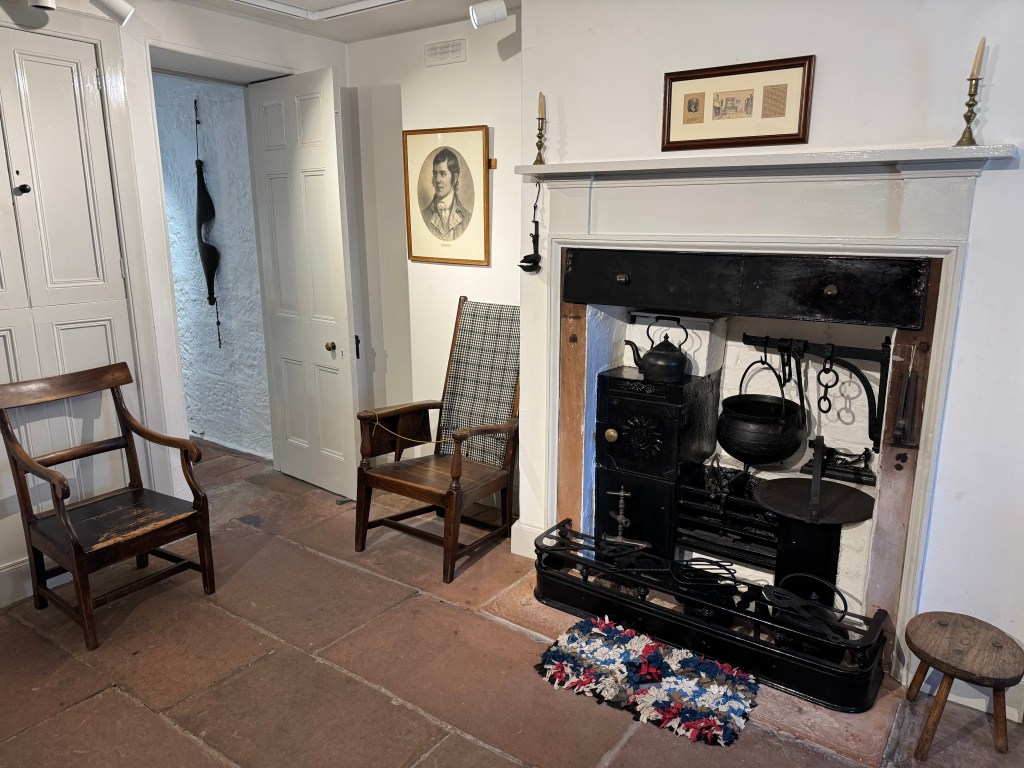
The house became a museum in the 20th century. Despite its small size, there is still plenty to see inside. Visitors can explore the kitchen, parlour, bedrooms, and a small study where Burns wrote. The house contains many artefacts related to Burns, including his desk and chair, original manuscripts, and personal belongings including a gold ring owned by his wife, Jean.

Admission to the house is free, although cash donations are gratefully received. Inside one of the downstairs rooms, Burns related souvenirs are available to buy. Being an old house, there is no wheelchair access. Also, there are no toilets on site but these are available nearby.
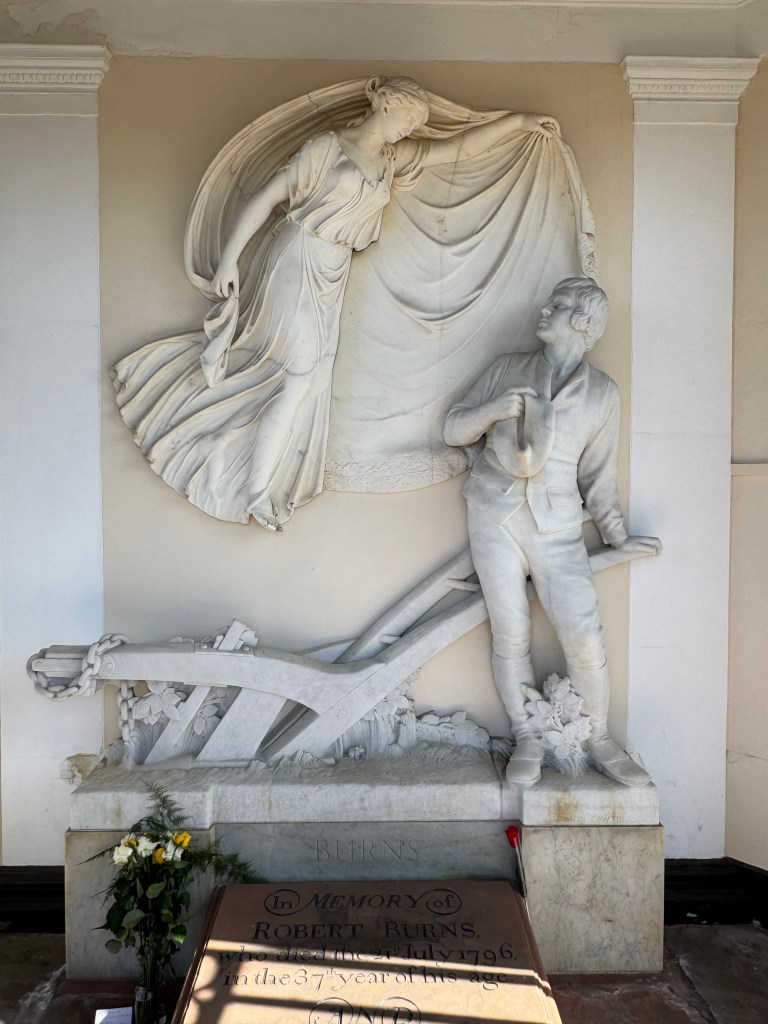
Close to the house on the corner with the main road is a statue of Jean Armour. Across the road from here is St. Michael’s Kirkyard where you can find the Burns Mausoleum. He was originally buried in a modest grave in the corner of the kirkyard. But his friends and admirers wanted something more fitting. So he was reburied in 1815 in a new mausoleum featuring a sculpture of the man and his muse. Jean and their children are also at rest in the mausoleum.
Robert Burns House is well signposted in Dumfries, and there is a car park just along the street. As well as glimpsing into his life here, there are other Burns sites across Dumfries. These include the Globe Inn where he spent many an evening. Helpfully, the sites are all included in the Burns Town Centre Trail.
Robert Burns is remembered not only as Scotland’s national poet but as a voice for social justice and working-class dignity. His poems and songs often reflected his political views and have since inspired generations to question authority, challenge social norms, and fight for equality. His reach extends well beyond Dumfries and Scotland. So for anyone with a passing or serious interest in his work, a visit is recommended.

More information about Burns can be found on these websites:



 Thistle & Time
Leave a comment