
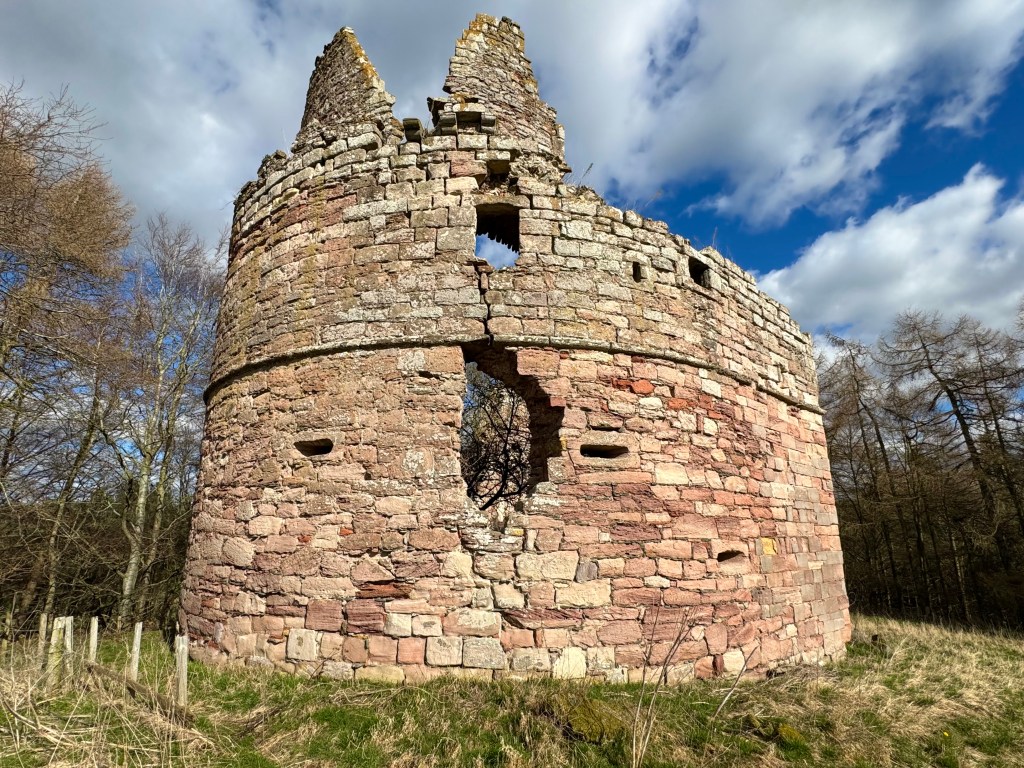
A fascinating ruin stands in the corner of a field near the village of Maxton. It is partly surrounded by trees and perched on a steep bank above the River Tweed. Besides its colourful history, it hides strange tales of a ghostly horseman, a restless spirit and hidden treasure.
Littledean Tower, was built in the 16th century by the prominent Ker family (also spelt Kerr). They wielded considerable power, and as a branch of the notorious Cessford Kers, they were probably involved in reiving activities. Indeed, with the tower located near a ford in the river, they may have used its position to leverage influence over those crossing the river.
Of course, midway through the 16th century Scotland was invaded once again by English forces. This time, it was the period known as the rough wooing. Henry VIII of England was trying to force a marriage alliance between the infant Mary Queen of Scots and his heir, Edward. He also hoped to undermine the Auld Alliance between Scotland and France. The term “wooing” is a euphemism as the 8 or 9 years of war was actually quite brutal.

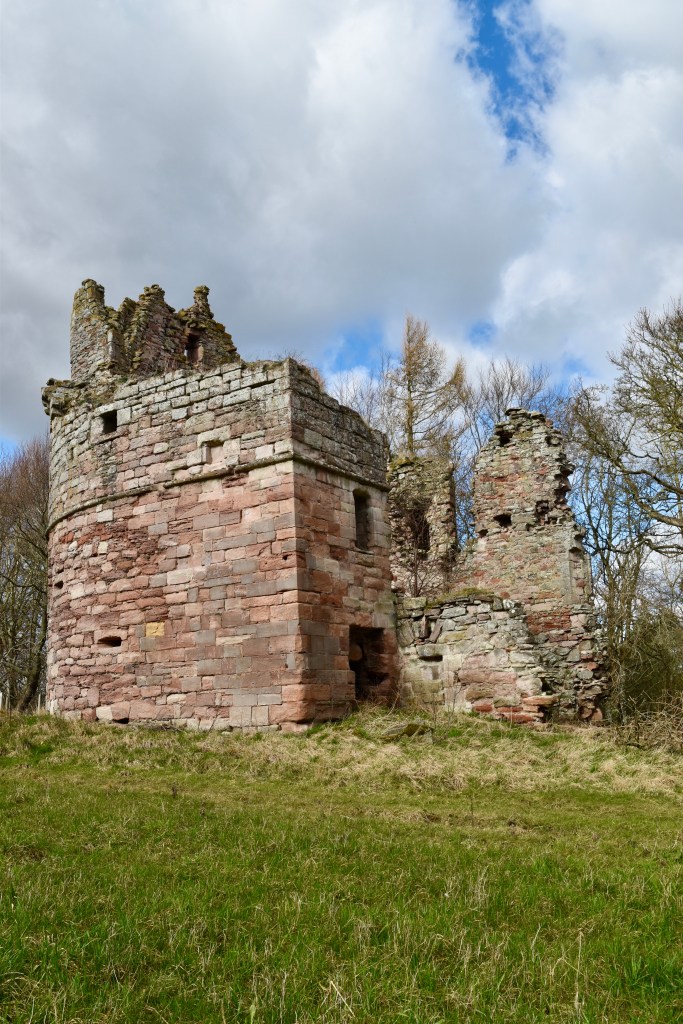
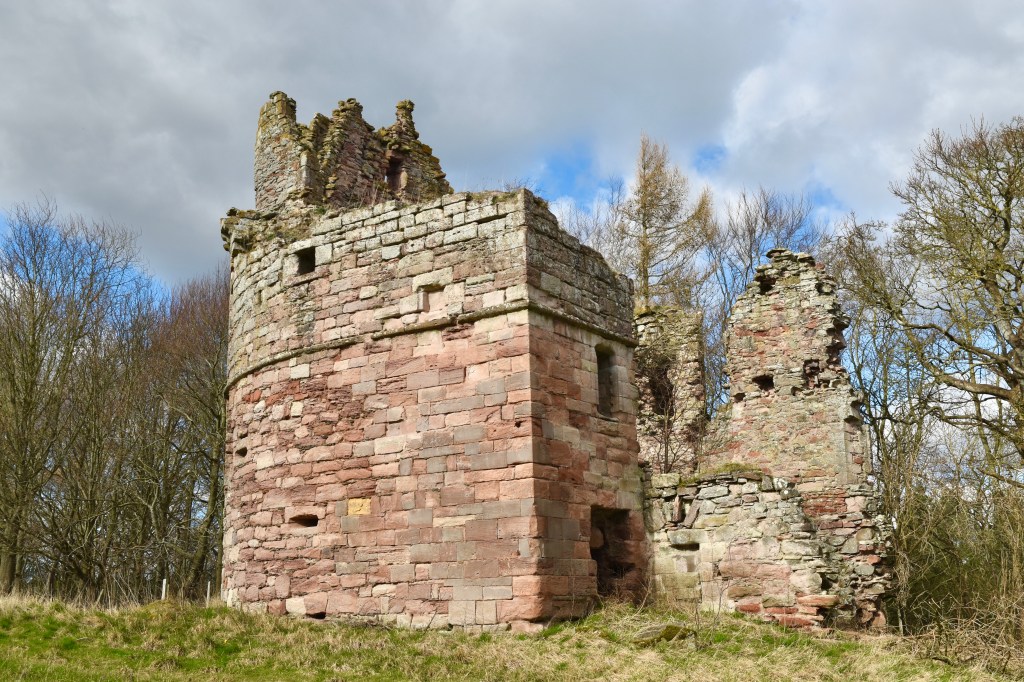
In 1544, during this conflict, Littledean Tower was attacked. The English army breached the barmkin (the curtain wall) but couldn’t burn the main tower. This was likely the result of the tower being fireproofed with a coating of clay or turf. As a result, the Kers upgraded the tower, adding a D-shaped military tower to the western end. By 1550, the tower featured six oval gunloops at ground level, and slots for timber gun carriages which can still be seen today.
The Kers, as barons of Maxton, would have wielded considerable power in the surrounding area. If they were anything like their kin at Cessford and Ferniehirst, they would have been involved in border politics too. Littledean Tower would certainly have been their administrative centre and a seat of authority. Indeed, the Kers would have been responsible for justice and overseeing local disputes within their territory.
Littledean Tower remained with the Ker family until the 18th century. At this point they moved to the nearby Nenthorn House and the tower was abandoned.
But what of the restless spirit and hidden treasure? The story comes from the 1879 Notes on the Folklore of the Northern Counties of England and the Borders by William Henderson. It says the tower had been haunted for some time by a former mistress of the house who had amassed a large hoard of treasure through thrift and extortion. The Kers living in the tower at the time were not troubled by this apparition. But a maid saw the spirit and was directed to the treasure hidden beneath the stairs. Wanting to be free, the restless spirit asked the maid to share the treasure between the laird, Maxton’s poor, and herself. The maid obliged, and once done, the tower was never again troubled by such a spirit.
If this story seems a little tall, then the tale of a ghostly horseman may be more to your liking. One of the Ker lairds is said to be seen sometimes near the tower. A cruel man, he is reputed to have become involved with a witch whose severed arm strangled him in his bed.
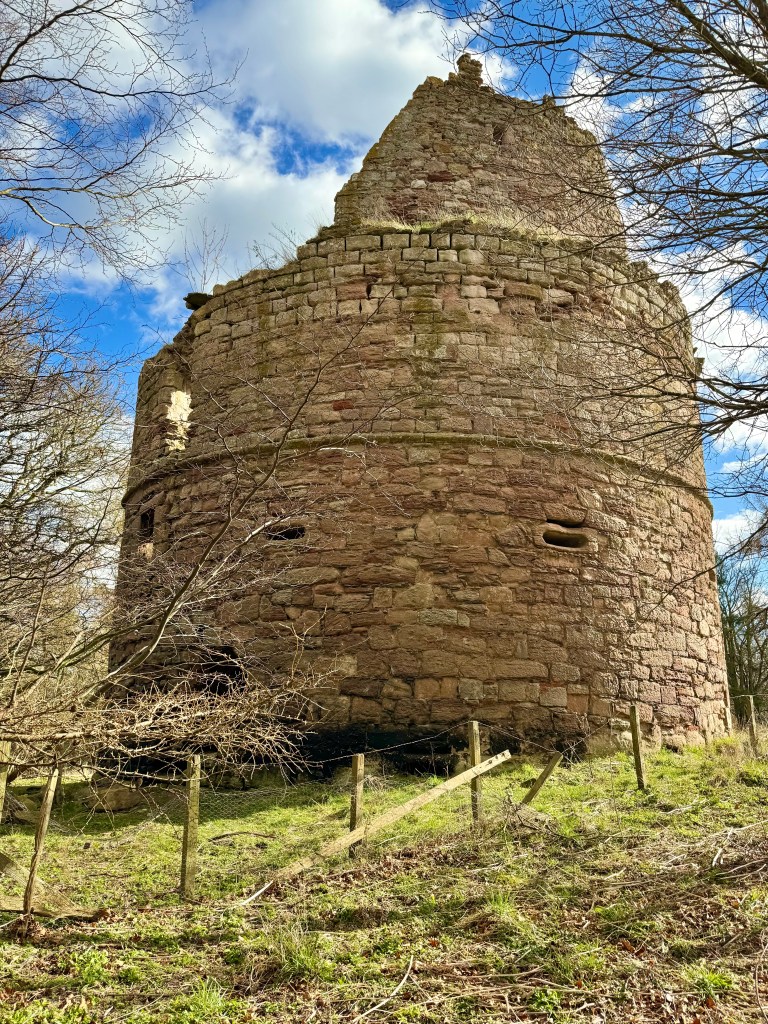
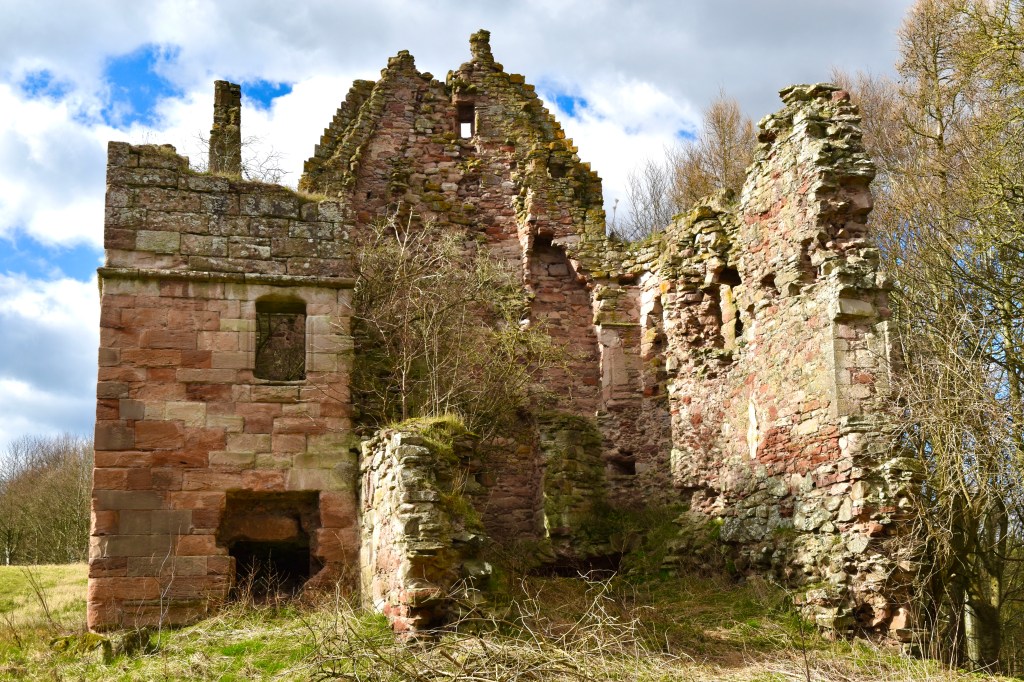
Today Littledean Tower is badly damaged, with the main block crumbling and the eastern wall all but gone. Originally, the main block was of four storeys and an attic, and there was a spiral staircase leading to the main hall on the first floor. In contrast, the wall of the western D-shaped military tower is fairly well preserved.

The tower is on farmland but is accessible under the Scottish Outdoor Access Code. To visit, go through Ploughlands farm (on the A699 east of Maxton) and head towards the river. At the end, follow the track eastwards alongside a line of trees. Continue into the field and the tower is in the northeastern corner. The walk from the track will take about 5 to 15 minutes, depending how far down the track you go in your car. It can be uneven under foot so suitable footwear is advised. Also, beware of the steep drop behind the tower down to the river.
There are no facilities, so for public toilets and refreshments, I recommend visiting nearby St. Boswells.
(Note: This blog post was updated on 22 October 2025)
Find out more:
Martin Coventry, 2025, The Castles of Scotland 6th edition (Goblinshead)


 Thistle & Time
Leave a comment