

Just a few miles southeast of Edinburgh city centre lies what I consider a hidden historical gem. Indeed, Craigmillar Castle is somewhat overshadowed by its famous neighbour, Edinburgh Castle, and as such, is nowhere near as well known. In use for some 300 years, the castle was never actually part of Edinburgh. But in more recent times, the modern city has now expanded beyond the castle walls.

Our visit coincided with a warm sunny day in Scotland’s capital. The satnav took us straight to the small car park, through a residential area. As you approach, the houses suddenly end, and fields appear on your right. On the hill above these fields stands the magnificent castle.
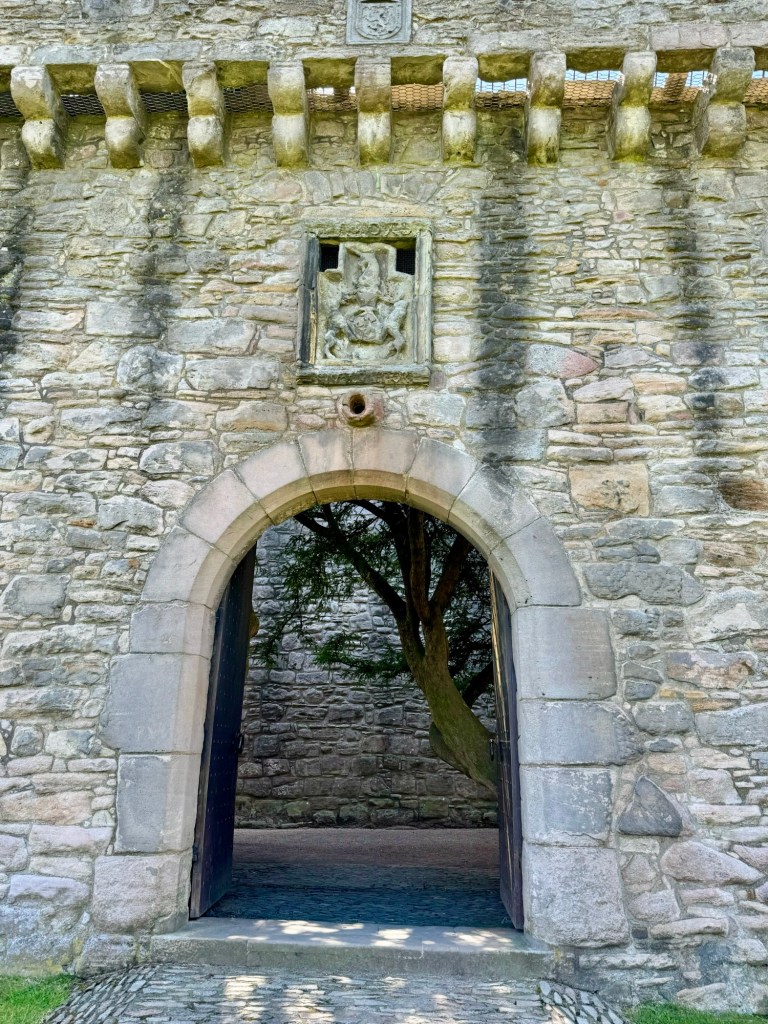
Entering through the elegant arched doorway, you come into the inner courtyard. From here it is possible to explore the east range and the tower. The latter stands over 17 metres high to the battlements and would have housed the laird and his family.

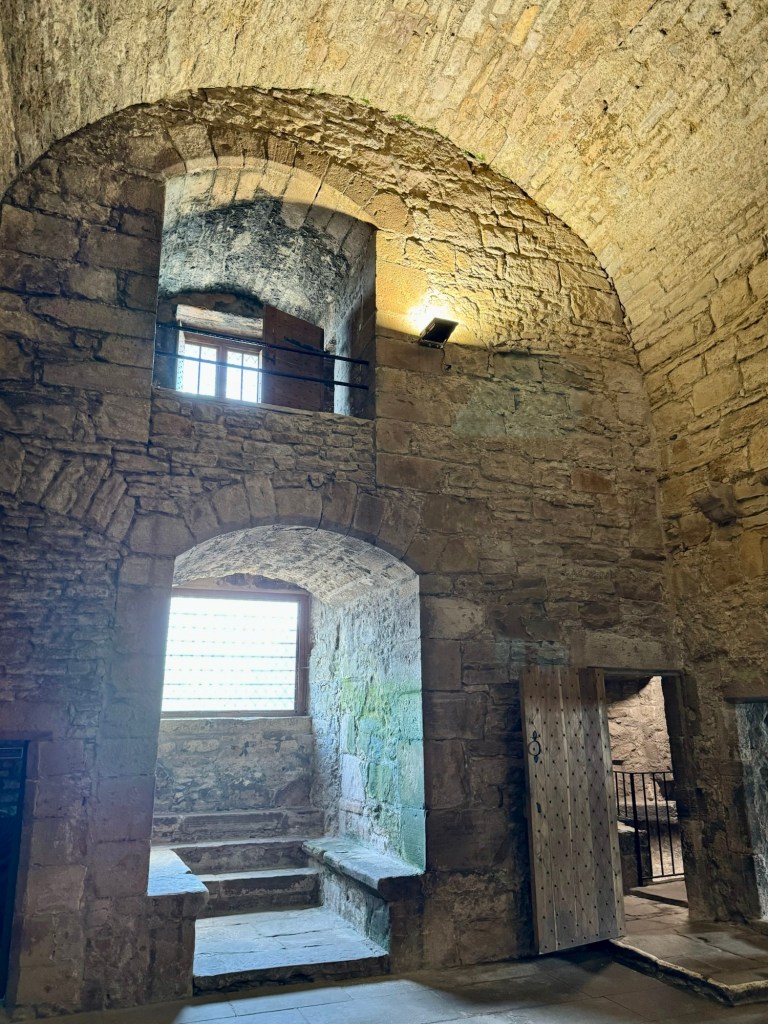
On the first floor is the great hall which once would have had a painted ceiling. Stone corbels protrude from the walls where this would have been. A high table would have stood in front of the larger fireplace.

Also on the first floor is a smaller room. In the 18th century it was believed this was where Mary Queen of Scots may have stayed (she visited many times), but this is now thought unlikely as grander rooms can be found in the east range of the castle.

A curtain wall encloses the courtyard and tower. Cylindrical towers flank its corners, and the north east tower has keyhole gunport. Climbing the stairwells and moving through the various rooms, you soon appreciate the castle’s size, and its complex layout. If you had this to yourself as a child, it would be an amazing place to play hide and seek.
Craigmillar Castle’s origins date back to the 1300s. In 1342 King David II granted John Preston the estate of Gorton, which included Craigmillar. Initially built as a tower house, the castle expanded over the centuries, transforming into a more complex and fortified residence.

The Preston family was active in the political life of Edinburgh and in 1479, Sir Simon Preston was implicated in the murder of King James III’s younger brother, the Earl of Mar. This was because Simon Preston had been holding the the young Earl at Craigmillar as a prisoner with the consent of James III who resented his siblings. However, the murder is believed to have taken place in Canongate (also now part of Edinburgh) but there are no records to show exactly what happened.
In the mid-1500s Craigmillar Castle and the Prestons were involved in further events affecting the Scottish crown. The castle was besieged in 1544 by English King Henry VIII during what became known as the “rough wooing”. This was Henry’s attempt to force a marriage agreement between his son and the one year-old Mary Queen of Scots. After the attack Simon Preston became one of Mary’s strongest supporters.
Mary was to visit the castle a number of times, including in 1563 when she was touring southern Scotland to consolidate support. She then fled to Craigmillar early in 1566 after the murder of her private secretary, David Rizzio. Later in 1566, during another visit to the castle, her advisors are said to have hatched a plot (the “Craigmillar bond”) to murder Mary’s husband, Lord Darnley, who had by then become a political embarrassment. Whether it was a result of this plot or some other, Darnley was killed in an explosion in 1567 and after that, Mary’s reign and life started to fall apart.
Craigmillar remained with the Prestons until 1660 when, because of unpaid debts, it was passed to Sir John Gilmour, the Lord President of the Court of Session. He carried out extensive work on Craigmillar, making it a grand residence. The Gilmours remained in residence until well in to the 1700s.
In recent times, Craigmillar has been used as a film location, most notably in Outlaw King, the story of Robert the Bruce.

Today Craigmillar Castle is managed by Historic Environment Scotland (HES). It is open throughout the year and entry fees apply. For information about ticket prices, facilities and public transport links, please see the HES website. On the day of our visit, some areas were closed to the public for safety and restoration work.
Overall. we were very impressed by the condition of the castle which was remarkably well preserved. If you are interested in Scottish history, or just like viewing old castles, then a visit is recommended.

Sources:
Historic Environment Scotland Official Souvenir Guide
Adrian Pettifer Scottish Castles 2024 The Boydell Press




 Thistle & Time
Leave a comment