
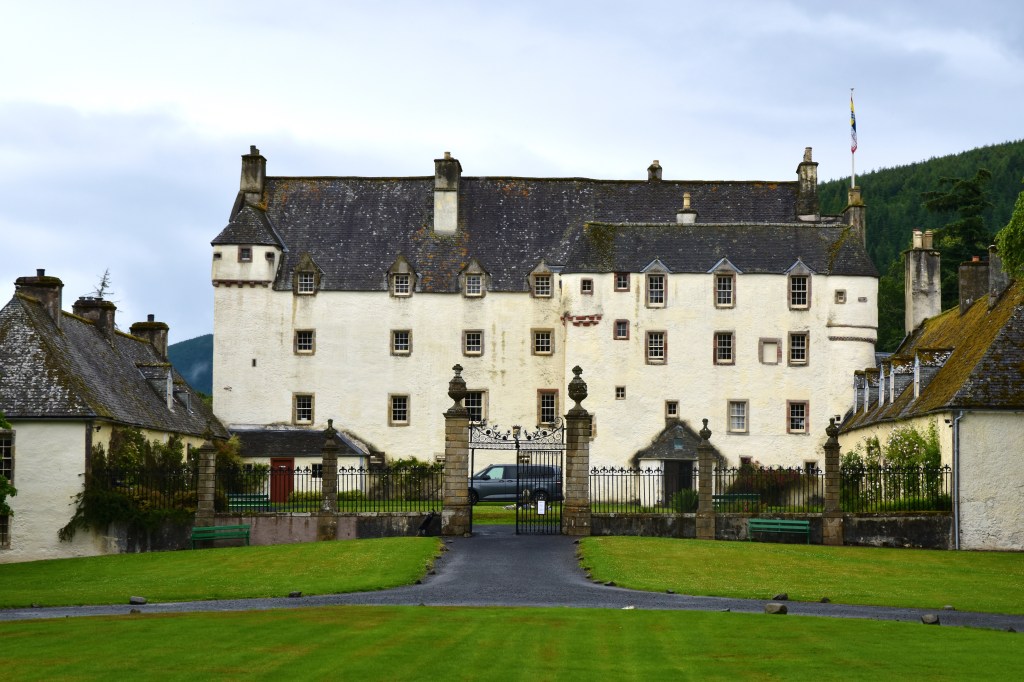
Traquair House, near Innerleithen, exudes history. Which isn’t surprising, given that it has been continuously occupied for some 900 years. It started life as a royal hunting lodge, later becoming a centre for administering justice, a fortified tower house, and then a grand country residence.
During this long life, it has hosted 27 kings and queens, survived the Wars of Independence, the Rough Wooing, the border reivers era, the Bishops’ Wars, and Oliver Cromwell. And later it became a local centre for Catholics and Jacobites under the Traquair Stuarts.
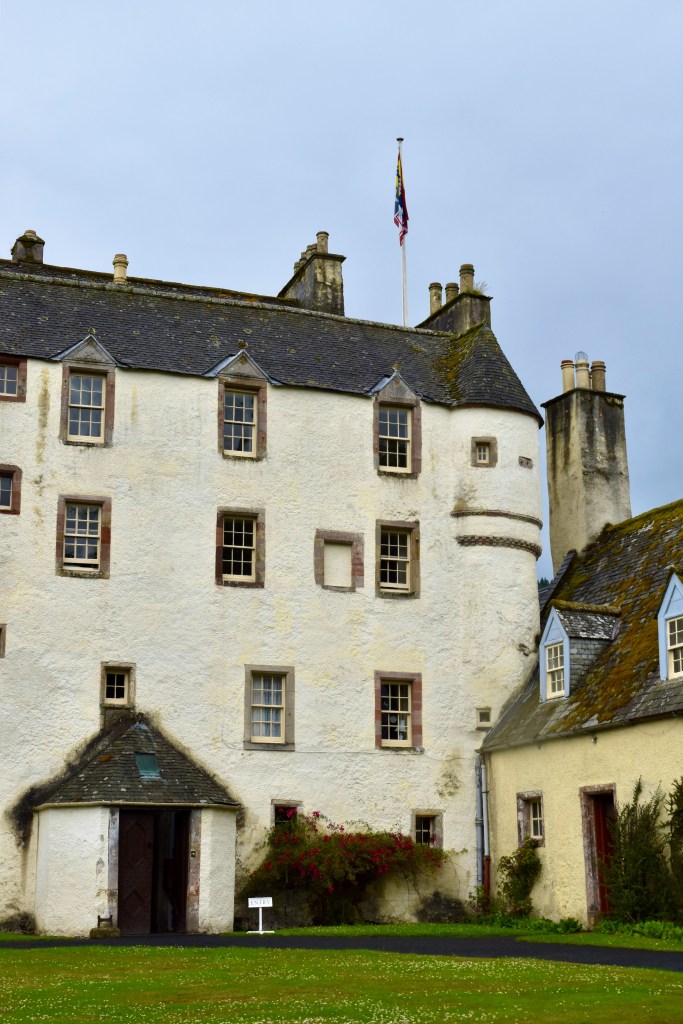
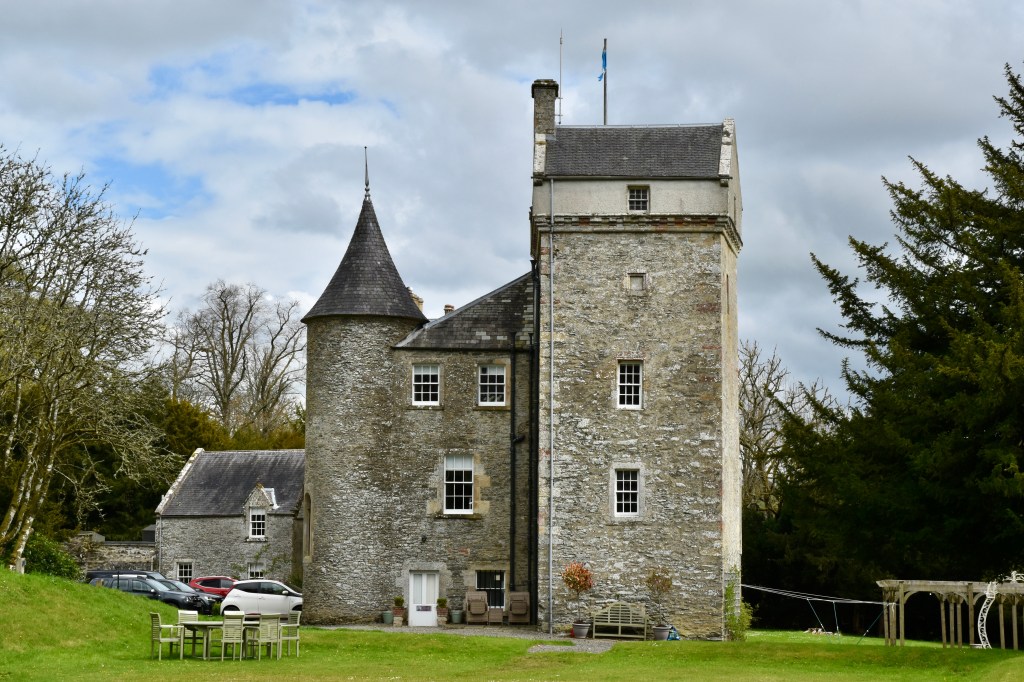
Traquair House sits near a bend in the River Tweed, about 1 mile (1.6 km) south of Innerleithen. Although its history dates back to the 12th century, the oldest part of the present structure is a late 15th‑century tower house at the north corner. It reaches three storeys in height, and an attic, probably incorporating earlier fabric and containing what is known as the King’s Room on the first floor.
Back in the 16th century, this tower was expanded to the southeast, transforming from a simple, compact peel into a more impressive lairdly house, about 21 metres by 9.6 metres, still with three storeys and an attic. Later on, additional extensions and angle turrets were added, with most of the new wing reaching four storeys high. By the mid-17th century, the tower itself was raised to match this height, and a new angle turret was added to the northwest corner, adding to its character.
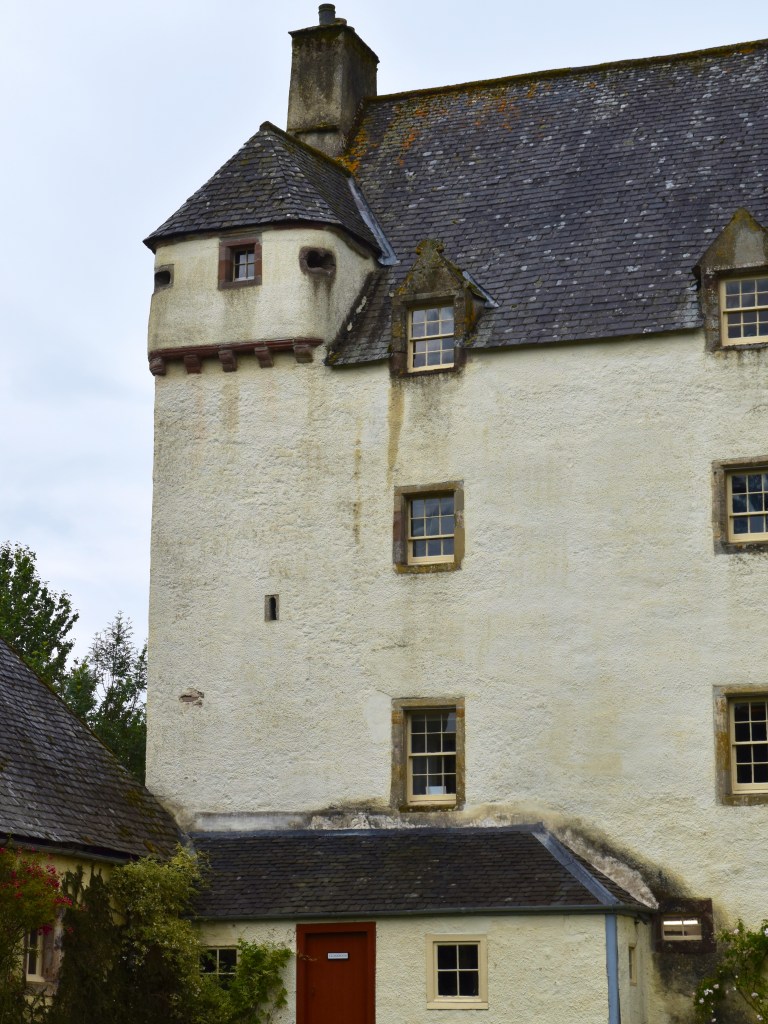
Later, a formal forecourt was built, along with the two service wings which were remodelled in the late 18th and early 19th century. Beyond its structural elements, the building features many remarkable details and showcases beautiful antiquities.
To properly appreciate these, a visit to Traquair is recommended (see below). But highlights include the wrought-iron door furniture with the knocker plate from 1795 adorning the main entrance. The entrance hall still has the original servants’ bells, and below them is an oak armorial of the Royal Arms of Scotland, presented by Mary, Queen of Scots, who visited the house in 1566.
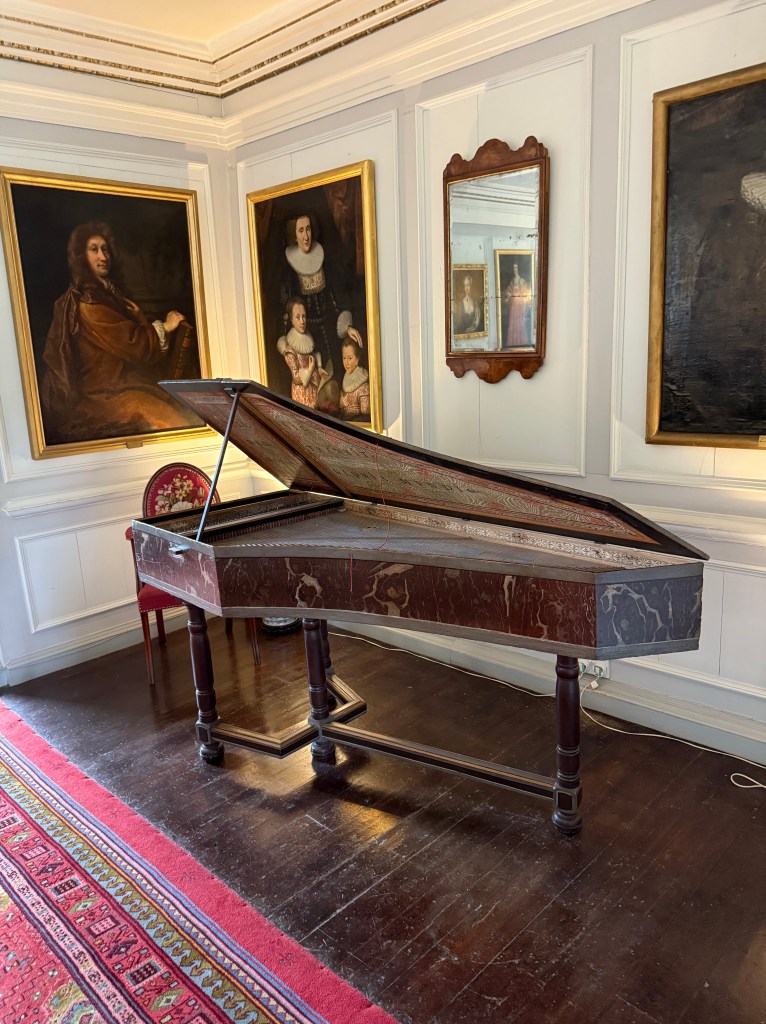
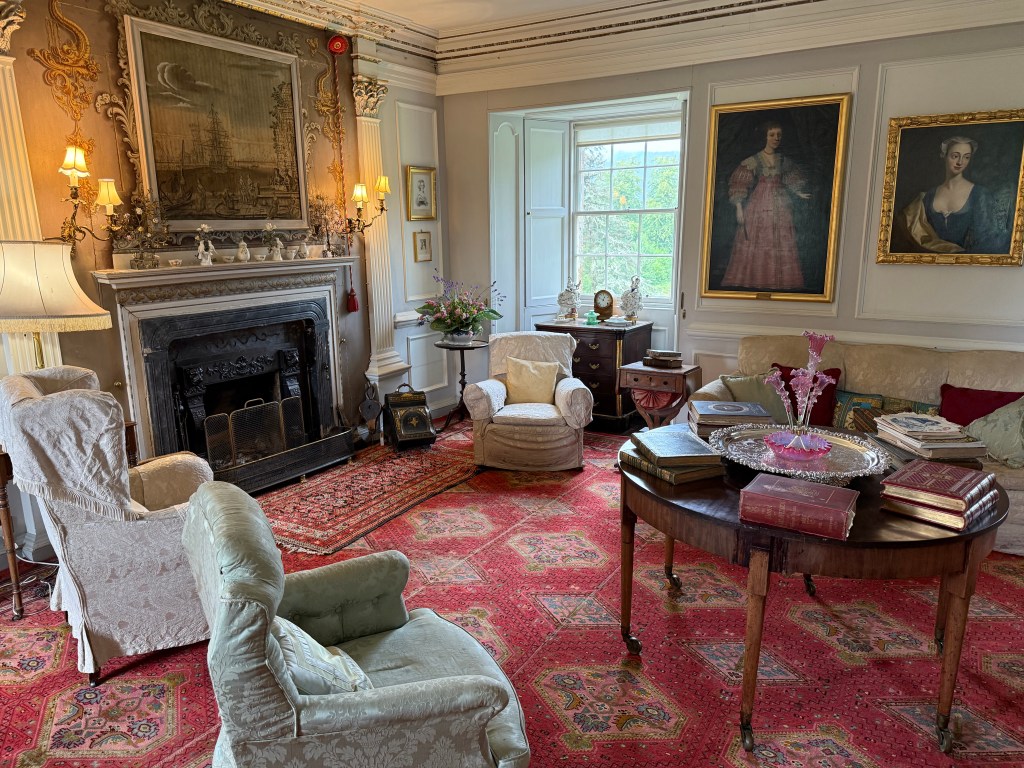
The splendid High Drawing Room reaches across the full width of the house. It has 17th-century panelling and sections of a beautifully preserved late 16th to early 17th-century painted ceiling. The room contains a harpsichord made by Andreas Ruckers of Antwerp, dated 1651, and possibly the only one in the country with its original design.
In the Museum Room is a mural painting dated 1530, which was discovered under wallpaper in 1900. There are also various items of historical interest, including a rosary and crucifix belonging to Mary Queen of Scots, Jacobite glasses, and early books from the Traquair library.
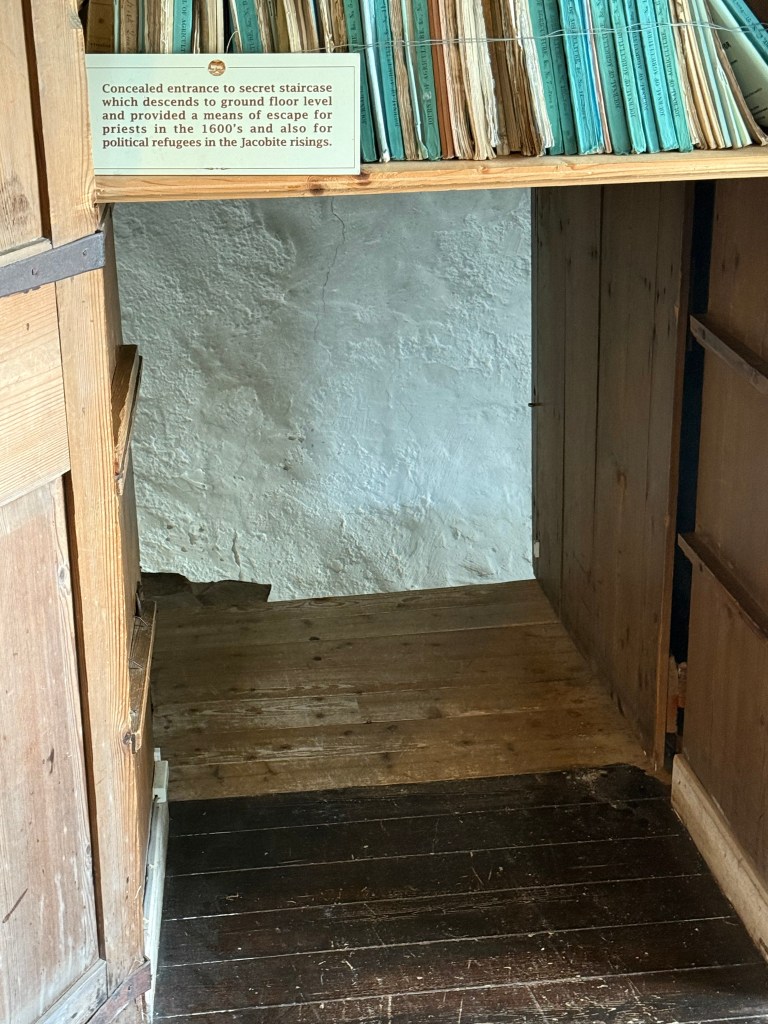
Until the Catholic Emancipation Act was passed in 1829, the resident Chaplain lived in hiding in what is called the Priest’s Room. This also has a shelved cupboard with a false back that opens to access the old stairway. This would have been used by the priest or Jacobite refugees to escape the building when it was being searched by soldiers.
In the chapel, created in 1829, there are some early to mid-16th-century Flemish-style carved oak panels that came from the Chapel of Mary of Guise at Leith.
These details highlight the rich history and craftsmanship woven into the building’s character.
The earliest mention of Traquair is in 1107, when Alexander I stayed here and signed a royal charter. Another royal visitor was Malcolm IV (1153 – 1165), whose illegitimate son is reported to have drowned in the River Tweed near the current bridge between Innerleithen and Traquair. At the time, it was used as a royal hunting lodge, and later served as a base where justice was administered and laws were issued. One of the charters signed in 1175 at Traquair, authorised William the Lion to create a Bishop’s Burgh, a hamlet that would later become the City of Glasgow.
In 1296, when Edward I invaded Scotland, Traquair fell to the English. However, by the time Robert the Bruce was crowned King of Scots at Scone in 1306, Traquair was back in Scottish hands. During the Wars of Independence, Traquair became part of a chain of fortified towers that could signal to one another warning of English invaders.
Traquair remained a crown possession until 1460, when James III (1460 – 1488) gave it to his favourite court musician, William Rogers (after he’d previously given it to an unappreciative Robert Lord Boyd). Rogers held on to Traquair for 9 years before selling it at a knockdown price to The Earl of Buchan. In 1491, he gifted it to his son, James Stuart, who became the 1st Laird of Traquair. James was killed at the Battle of Flodden in 1513.
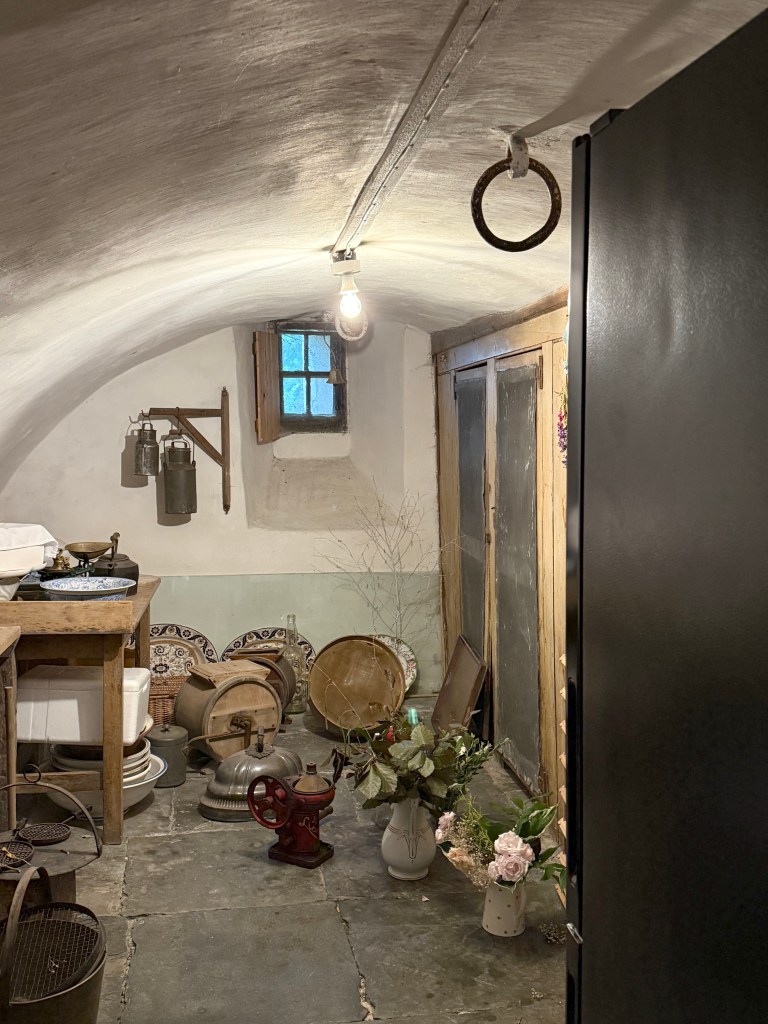
At the height of the Border Reivers era, Traquair House was much more than a purely defensive structure. The core of the structure was still the 15th-century tower house, but its 16th-century extension had turned it into a lordly residence rather than a refuge from raiders. That said, the vaulted cellars in the tower were used for guarding cattle when reivers approached.
During this period (1500s) the lairds of Traquair played important roles in public life. Their status and royal service meant that, despite the turbulent times, they were able to withstand the raiding and feuding activities associated with many of the family names in the borders.
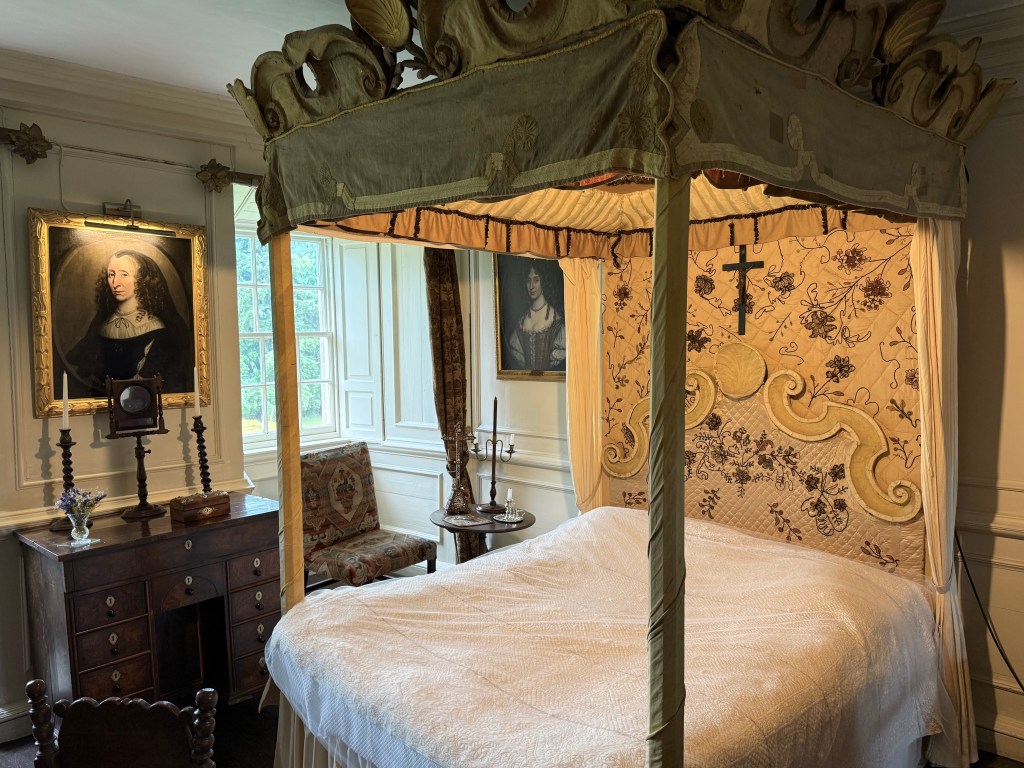
John Stuart, the 4th Laird of Traquair, became the Captain of the Queen’s bodyguard to Mary Queen of Scots. He hosted the Queen when she visited Traquair with her husband and baby son James in 1566. The cradle where she rocked her baby, her bed and some other possessions can still be seen in the house.
The visit took place in August 1566, only a few months after the murder of David Rizzio in March, and after Mary’s subsequent flight from Holyrood to Dunbar. The laird of Traquair had formed part of the small party that escorted her to safety. Despite his loyalties to Mary, John Stuart appeared not to have suffered when Mary was overthrown, and he made a successful transition into the service of James VI.
In the early 1600s, after the union of the crowns, the seventh Laird, also called John, added the top storey, realigned the windows and changed the course of the River Tweed so it ran further away from the house. He became the most influential member of the family, holding the post of Lord High Chancellor of Scotland, and in 1682 was made an Earl.
But the Earl of Traquair was to suffer from his support of Charles I. His association with the king, who was attempting to impose Episcopacy and an English prayer book on the Scottish Kirk (church), led to his downfall. It appears he played an ambiguous and complex role: on the one hand, he supported the Covenanters, while on the other, he sought to moderate the king’s religious policy while still supporting his authority. As such, he was distrusted by both sides.
He was dismissed from his post and suffered heavy parliamentary fines. It has been said that his ambiguous position continued during the Wars of the Three Kingdoms. He sent his son, Lord Linton, with a troop of horses to join the Royalist forces of the Marquis of Montrose at Philiphaugh near Selkirk in 1645. However, he was accused of treachery when they were withdrawn on the eve of the battle.
After his defeat at Philiphaugh, Montrose sought shelter at Traquair, but fearing destruction of the house, the Earl refused him entry. Both the earl and his son were taken prisoner in 1648 at the Battle of Preston by Parliamentarian Forces, including Cromwell’s New Model Army. They were imprisoned in Warwick Castle before returning to live considerably poorer lives at Traquair.
The Catholic faith became very important to the Stuart family, and they continued to worship secretly, in defiance of the law. Later, their support for the Royal House of Stuart and their heirs would mark them as Jacobites by the Hanoverian government of Britain.
Charles, the 4th Earl, was imprisoned for a short period in Edinburgh for his Jacobite activities in 1692, following the 1689-92 Jacobite rising in Scotland. Further imprisonment came in 1708, during the French-backed attempt to invade Britain and restore the Stuart line with the young James VIII and III. However, the British government, acting on received intelligence, deployed the Royal Navy and stopped their progress at the entrance to the Firth of Forth.
By now, of course, Scotland had become part of Great Britain, and its parliament had been dissolved. Queen Anne died in 1714 and George I became the king. But by mid 1715, there was growing resentment in Scotland to the new Hanoverian monarchy and to the union with England.
It was John Esrkine, the Earl of Mar, who raised the Stuart standard in September at Braemar in Aberdeenshire, starting the 1715 Jacobite rising. Wishing to avoid another spell in prison, Charles (4th Earl of Traquair) chose not to take up arms, instead providing whatever support he could through the network of Jacobite supporters in the borders.
However, his wife’s brother, William, the 5th Earl of Nithsdale did join Mar, and was with the Jacobite troops who pushed south into England. However, at Preston in November 1715, the Jacobites were forced to surrender to the Hanoverians and the 5th Earl of Nithsdale was captured.
He was taken to the Tower of London, found guilty of treason and sentenced to death. But what followed next was remarkable. His wife, Winifred, having failed in her appeal to King George for William’s release, set in motion a plan for his escape. On the eve of his execution, with the help of two companions, she was able to visit William in his cell and disguise him as another of her companions. She then walked him out of the cell, passing by the guards, and then out through the gates. The whole plan had relied upon the guards not noticing that more women came out of William’s cell than went in.
Once free, William fled to France and was later joined by Winifred, in exile at the Stuarts’ court in Rome.
The Jacobite tradition was continued by the 5th Earl of Traquair, another Charles. He installed the Bear Gates at the top of the avenue in 1738. However, they were only in use for six years. This is because, according to legend, they were closed in 1745, following the visit of Bonnie Prince Charlie, leader of the ’45 rising (and James VII’s grandson). The Earl of Traquair vowed the gates would never be opened until the Stuart monarchy was restored. To this day, the gates have remained closed, and family and visitors to the house have used the “temporary” access created nearby.
Charles was imprisoned for his support of the Jacobite cause after the 1745 rising. His new wife, Theresa Conyers, volunteered to join him. On his release, he was “confined to his estates”, but he was responsible for much of the remodelling of the interior of the house. The High Drawing Room and the Library are stunning examples of the European influence on Scottish country houses at that time.
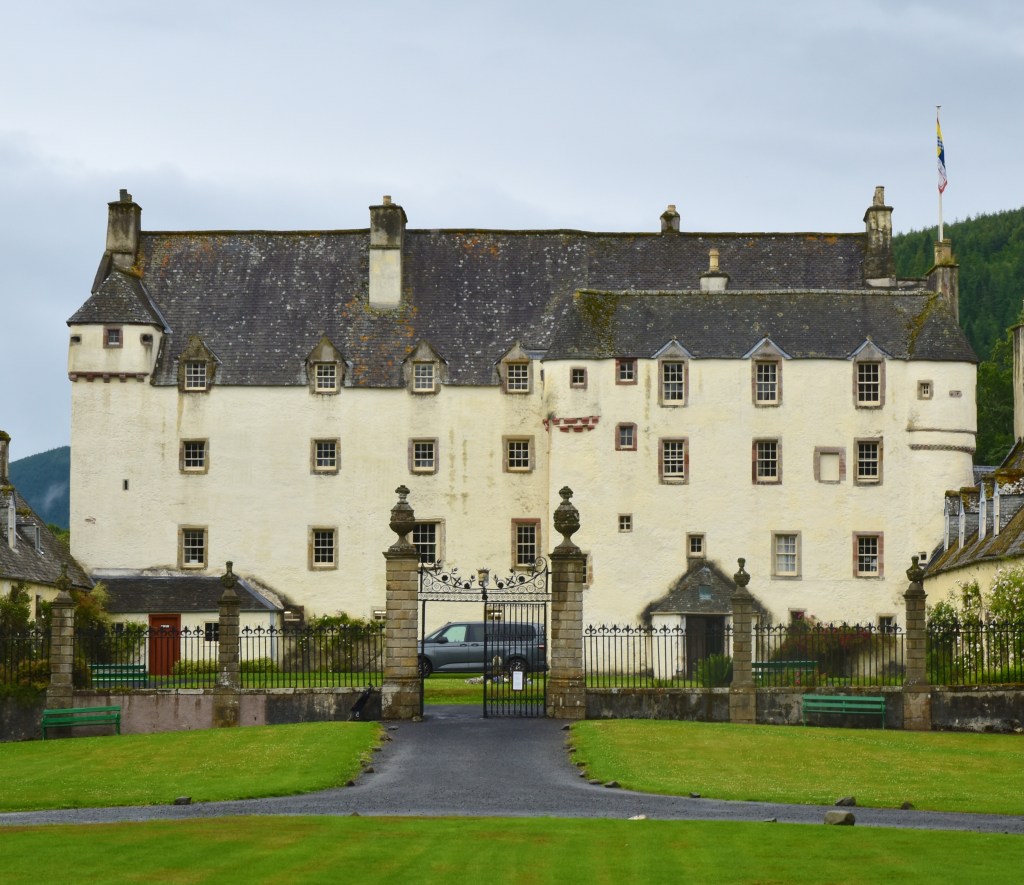
The Stuarts lived at Traquair until 1875, when Lady Louisa Stuart died unmarried. The earldom was eventually lost, and the house was inherited by her cousin Henry Constable Maxwell. He took the name Maxwell Stuart, and today, Catherine Maxwell Stuart, the 21st Lady of Traquair, lives in the house with her family.
Traquair House is a piece of living history. Visiting the house today, you can feel the centuries beneath your feet. Inside, its rooms have been preserved to show life through the centuries, with many important artefacts, paintings and items of furniture on display.
The house is open to the public daily from April until August, with more limited opening until the end of November. Entrance fees apply, and details can be found on the official website. As a bonus, there are woodland walks, a maze and even a brewery on site. A visit is highly recommended.
Traquair House has hosted kings and queens, while some of Scotland’s most significant political and religious events have impacted its residents. It remains an important part of our turbulent heritage.
Traquair House OS National Grid Reference: NT 33074 35480
Further reading
Official Guidebook, Traquair, Scotland’s Oldest Inhabited House
Catherine Maxweel-Stuart & Margaret Fox, 2017, All For Our Rightful King, Traquair’s Jacobite Story 1688-1842 (Traquair House Publishing)
Maxwell Stuart, 1995, Lady Nithsdale and the Jacobites (Traquair House Publishing)
Traquair’s Mary Queen of Scots Connection
Tweed Valley Blogger, Traquair’s Royal Connections, Part 1
Undiscovered Scotland Traquair House
Undiscovered Scotland Lady Winifred Maxwell


 Thistle & Time
Leave a comment