
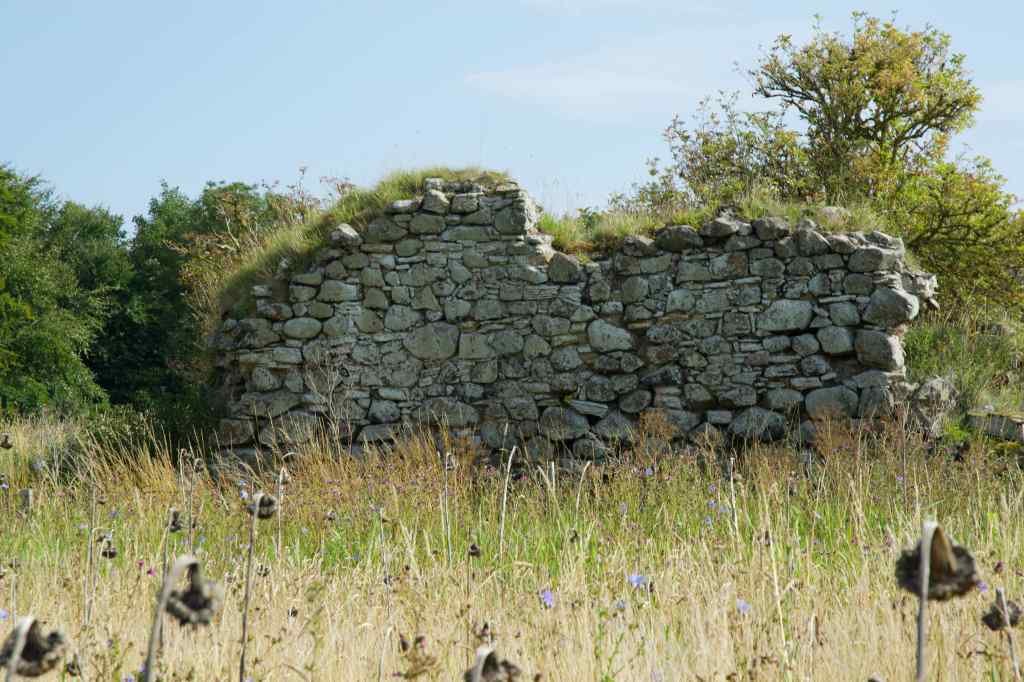
Situated south of Gordon and just a short distance from Mellerstain House, only a few remnants of Whiteside Tower remain. Back in the mid-fifteenth century, King James II probably granted the lands of Whiteside and Mellerstain to Patrick Haliburton, son of Lord Haliburton. Later, the Haitlie family took ownership, and they most likely built this structure in the sixteenth century.
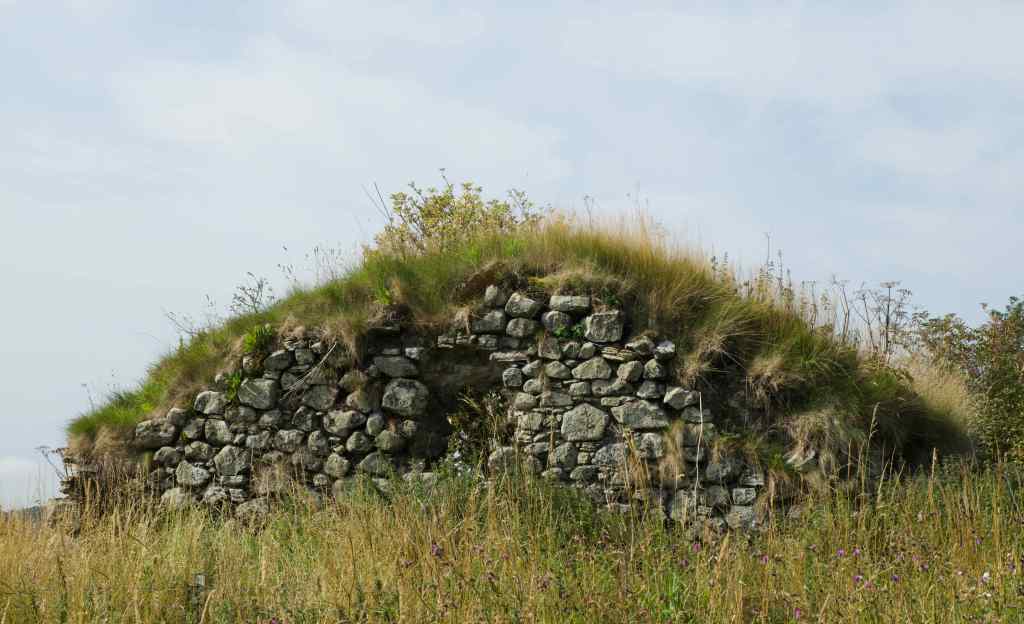
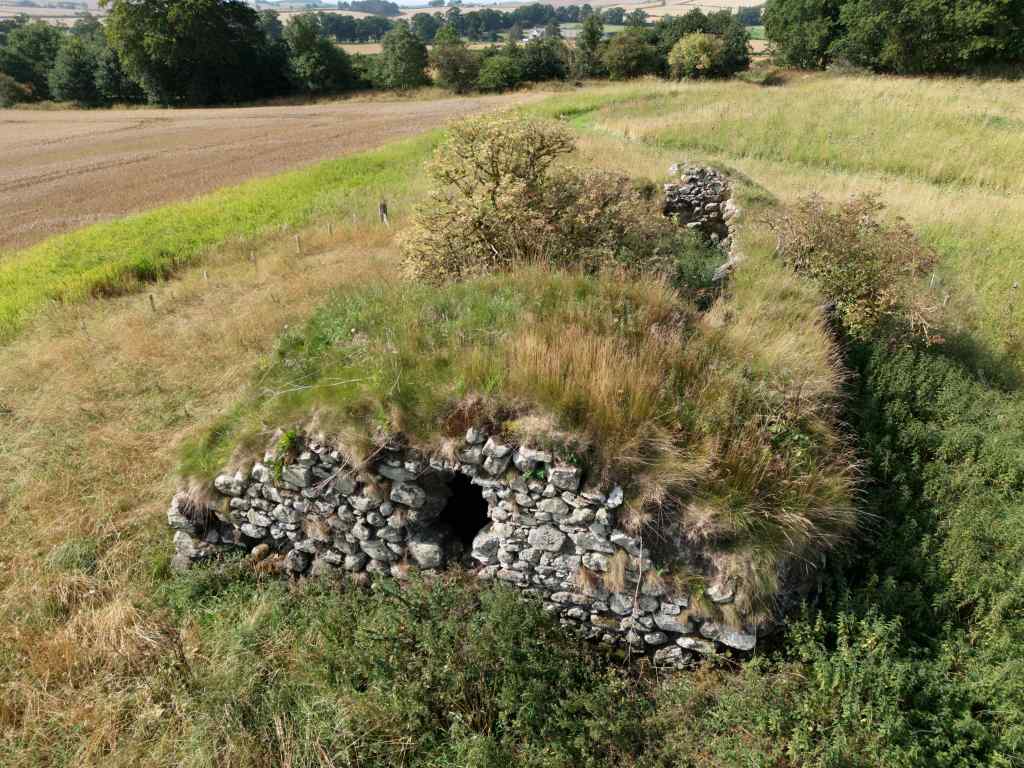
Constructed from sandstone rubble, its been described as a Peel Tower and also a Bastle. Either way, all that can be seen today is part of the basement walls and a large section of the barrel vault itself. It measures 16.15 metres by 7.75 metres, with walls over a metre thick. The surviving remains suggest there were one or two upper storeys above the basement.
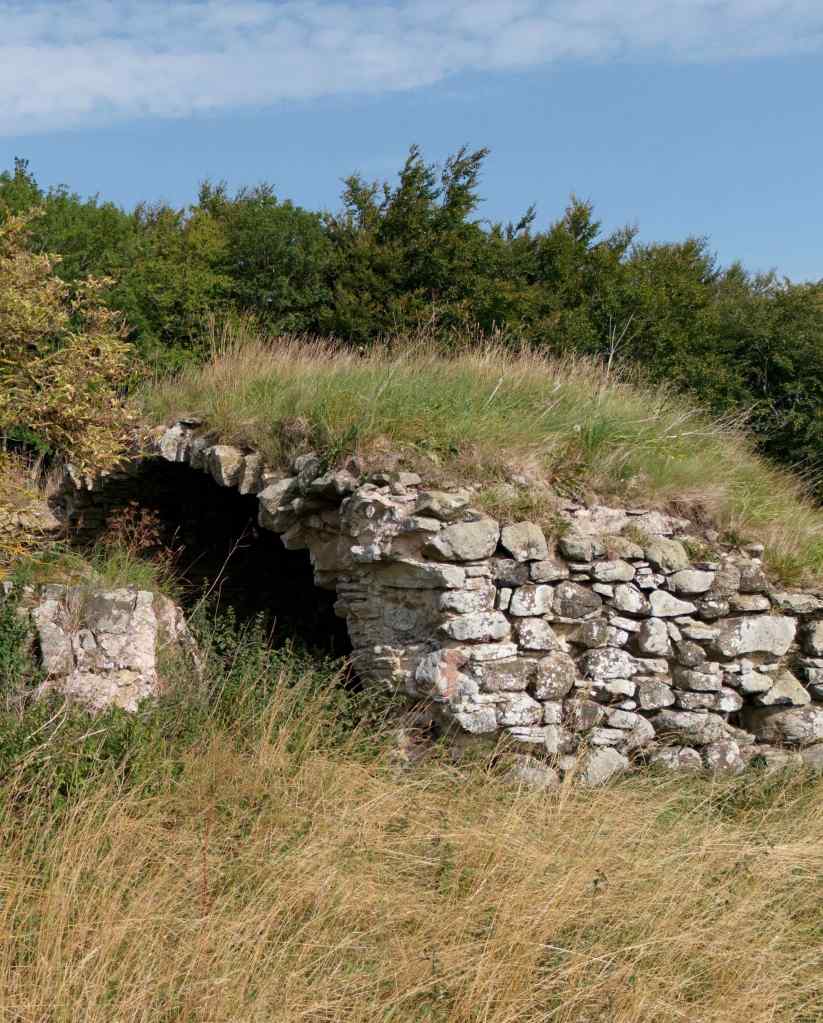
Its design, incorporating thick stone walls, limited access, and a defensible form, places it firmly within the defensive landscape of the Anglo-Scottish frontier. It was not a great castle, but a minor laird’s stronghold: built for protection against sudden raids rather than siege warfare.
From roughly the late 14th century until at least 1603, the Borders were characterised by wars, raids and weak central authority. Border Reivers, riding families on both sides of the Anglo-Scottish border, engaged in raiding, theft of cattle and horses, hostage taking (often known locally as blackmail), feuding, and retaliation.
Whiteside Tower lay within the old East March of Scotland, an area often targeted by reivers. Lairds within the March, like the Haitlies, were also liable for military service when called upon, and drawn into retaliatory rides (known as the “Hot Trod”) when English forces burned or lifted cattle in the Merse (the lowland area south of the Lammermuir Hills).
That would not necessarily make them independent reivers, but it would certainly place them within the mounted, armed society of the Borders. Indeed, the Haitlies, as minor lairds, would have understood the local economy, making connection to reiving difficult to avoid.
During the campaigns of Henry VIII and later under Edward VI (the Wars of the Rough Wooing), English armies devastated much of the eastern Borders. The Merse, including the lands around Mellerstain, was repeatedly threatened. In such circumstances, some Scottish lairds became Assured Scots, cooperating with England, shifting position either for payment or more pragmatically, to protect their estates.
However, there is no documentary proof that the Haitlies were Assured Scots, nor that they rode in English pay. How they were affected by the rough wooing remains unknown.
Where the Haitlies do appear more clearly is in inter-family conflict, particularly their violent dispute with the Homes (known at the time for their association with reiving). This killing arose from long-running tensions involving land and a broken marriage contract, culminating many years later in the killing of John Haitlie in 1603. This demonstrates that the Haitlies of Whiteside were fully embedded in the feuding and honour-basedculture typical of Border riding families.
In 1627, after some 140 years of Haitlie ownership, John Edmonstone of Ednam acquired the estate of Mellerstain, including Whiteside Tower. But just 15 years later, he sold Mellerstain to George Baillie of Jerviswood.
George Baillie died in 1646, so the estate passed to his heir, Robert. A staunch Presbyterian, Robert Baillie became an active Covenanter. But the next 30 years would prove increasingly difficult for Covenanters as Charles II became increasingly more repressive.
In 1676, Robert Baillie was caught up in events as he rescued his brother‑in‑law, the Presbyterian minister James Kirkton, from the government agent Carstairs. For this act, he was fined and imprisoned for 4 months, an incident often treated as an early flashpoint in his open conflict with the Restoration regime of Charles II.
By 1683, Baillie was in contact with the Duke of Monmouth, discussing armed resistance and constitutional change. He was then implicated (probably unjustly) in the Rye House Plot to replace Charles II as King. Arrested, heavily fined and harshly confined, he was finally tried for treason and executed at Edinburgh in December 1684. He is remembered as a martyr for religious liberty.
There is no evidence that, during this period, Whiteside Tower was used as a specific stage for Covenanter or clandestine activity. It is reasonable to infer that, as a peel tower on a Covenanter‑owned estate, Whiteside may have functioned as a minor strongpoint, refuge and symbol of Baillie authority during a politically turbulent period, but that role remains generic rather than documented.
After Baillie’s execution, the Crown forfeited his estates, including Jerviswood and Mellerstain. Robert’s son George Baillie fled to the Netherlands and lived there in exile through the late 1680s. Following the Revolution of 1688–89, George returned to Britain with William III; his father’s lands, including Mellerstain, were restored to him in 1689, and he went on to a substantial political career as a Whig MP and office‑holder.
We don’t know the actual fate of Whitesdie Tower during the Baillie period of estate ownership. At some point in the 17th or early 18th century, it must have fallen into disuse.
There is also some debate among scholars as to whether Whiteside Tower was the primary residence of the family before the current mansion, Mellerstain House, was built (its foundations were laid in 1725). Some records suggest the Baillies lived in another tower near the site of the present mansion, while others say they lived at Whiteside.
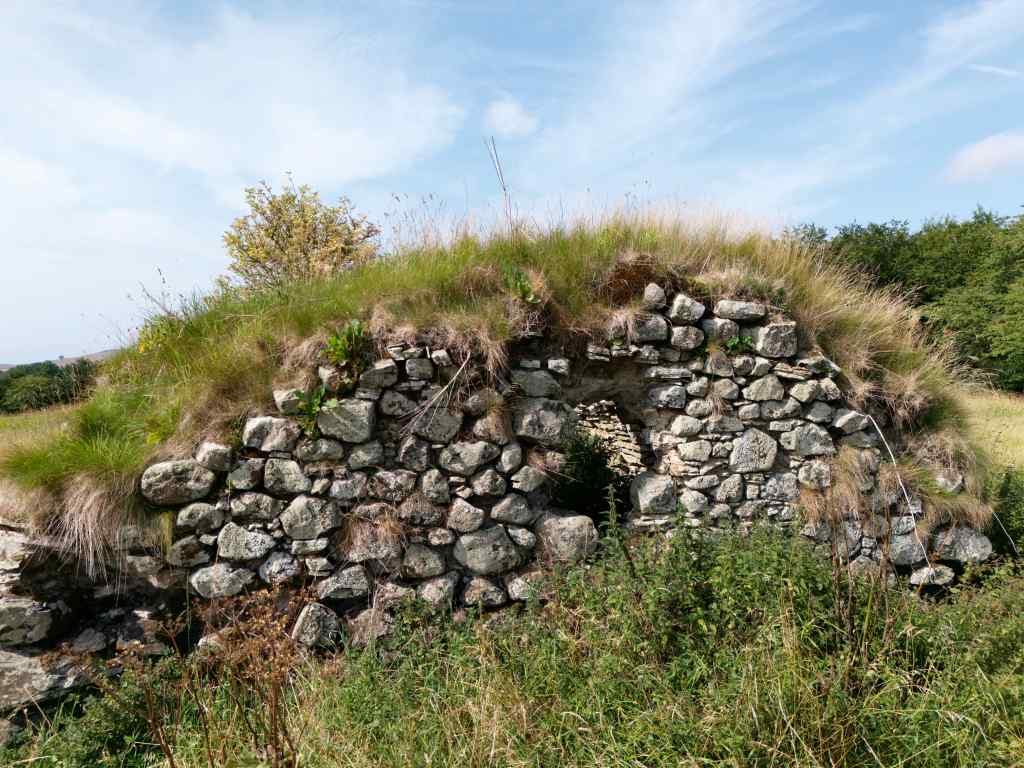
To view the fragmented remains of Whiteside Tower, travel from either Gordon or Kelso on the A6089 and take the minor road, south west towards Mellerstain House (it is signposted). About 650 to 700 metres past the entrance to Mellerstain is an unmade road on your left. The tower is located in a field just a 5 to 10-minute walk along this track from the road, on your left-hand side.
Please take care not to damage any crops that might be growing. When I visited, a pathway had been cut through the field, enabling me to get close to the ruin. The ruin is heavily overgrown, but it was possible to see into the vault and view sections of the badly damaged basement wall.
Whiteside Tower: OS National Grid Reference: NT 64362 38375
Further Reading
Martin Coventry, 2025, The Castles of Scotland (Goblinshead)
Alistair Maxwell Irving, 2014, The Border Towers of Scotland Vol. 2 (Maxwell-Irving)
Mellerstain House and Gardens Official Guidebook (Mellerstain Trust)
Wikipedia: Baillie of Jerviswood


 Thistle & Time
Leave a comment