
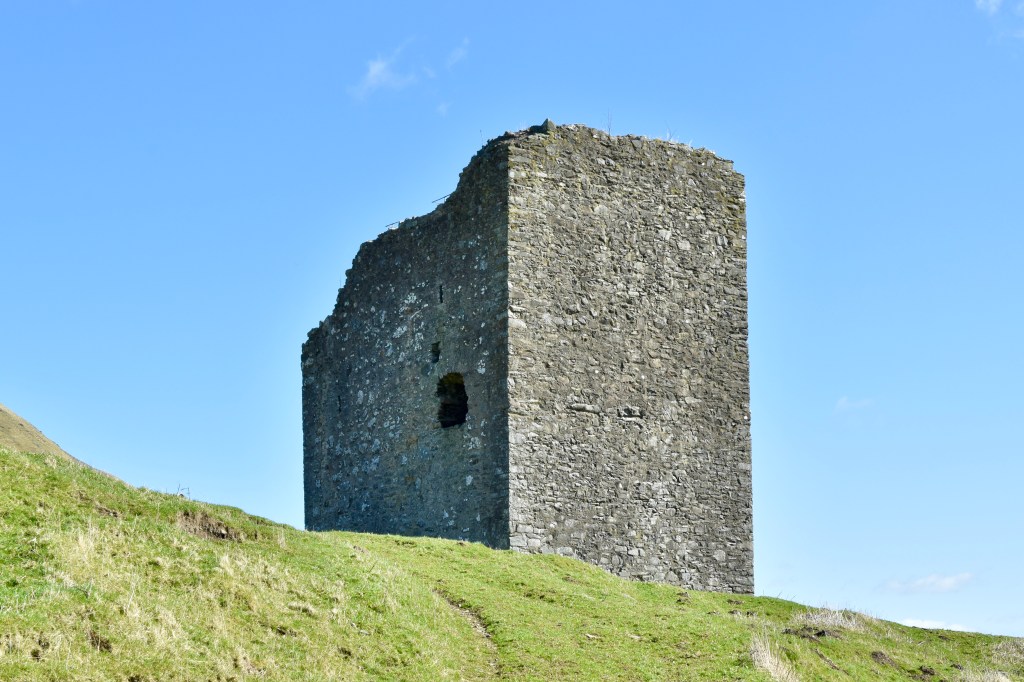
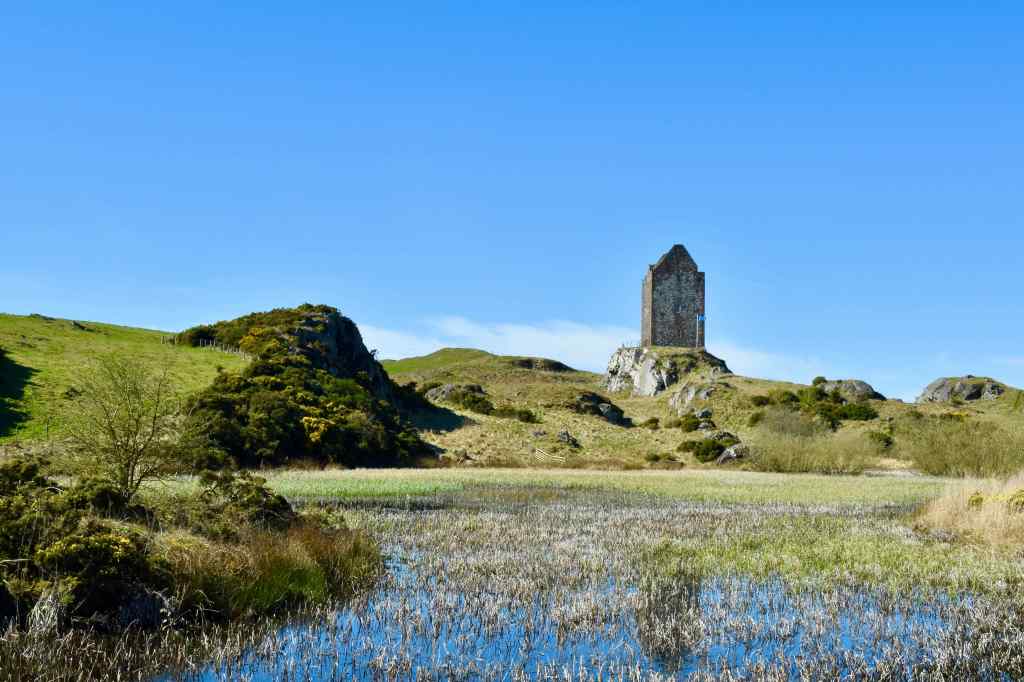
Dryhope Tower is a significant ruined peel or tower house located in the valley of the Yarrow Water near St Mary’s Loch in the Scottish Borders. Historically serving as a defensive structure, this sturdy-looking tower stands on a shelf of land above the steep gully of Dryhope Burn.
To the casual visitor, it is a picturesque ruin, but look a little deeper, and Dryhope Tower hides a turbulent border history and some romantic folklore. It owes this to its two most famous inhabitants, Mary Scott, the Maid of Yarrow and the notorious Border Reiver, Walter Scott (Auld Wat).
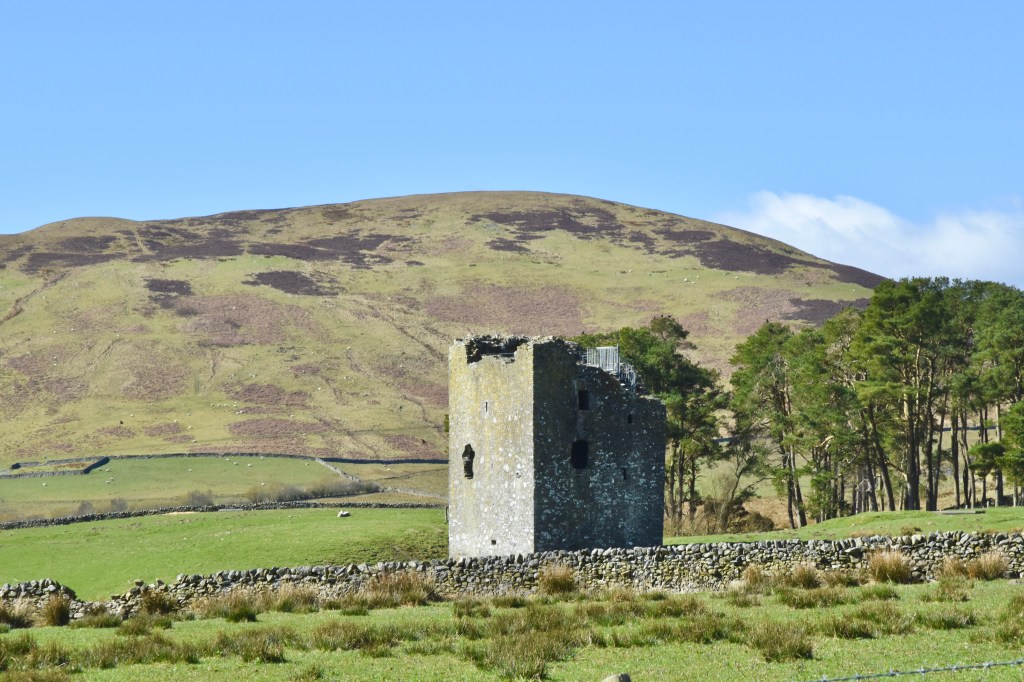
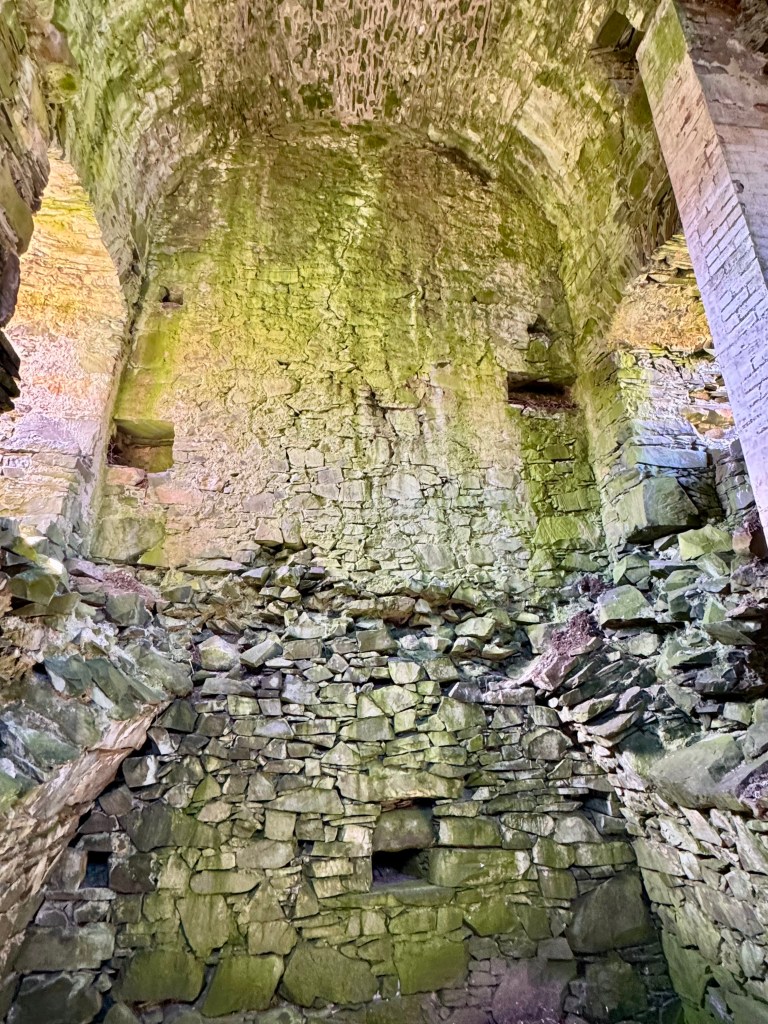
Today, Dryhope Tower still stands to a height of three storeys from an original four. Rectangular in plan, it measures 6.8 by 10.1 metres, with walls reaching 1.5 metres in thickness. The basement and first floor were originally stone-vaulted, but only the upper vault survives intact today, a feature notable for its rarity.
The basement had no windows, only defensive gun loops. On the first floor, which housed the main hall, was a fireplace and two windows with flared openings (embrasures). A steep turnpike (spiral) stair was built into the northeast corner, linking all floors. However, during recent restoration, a modern metal spiral stair was installed in the original shaft, finishing above the height of the ruin.
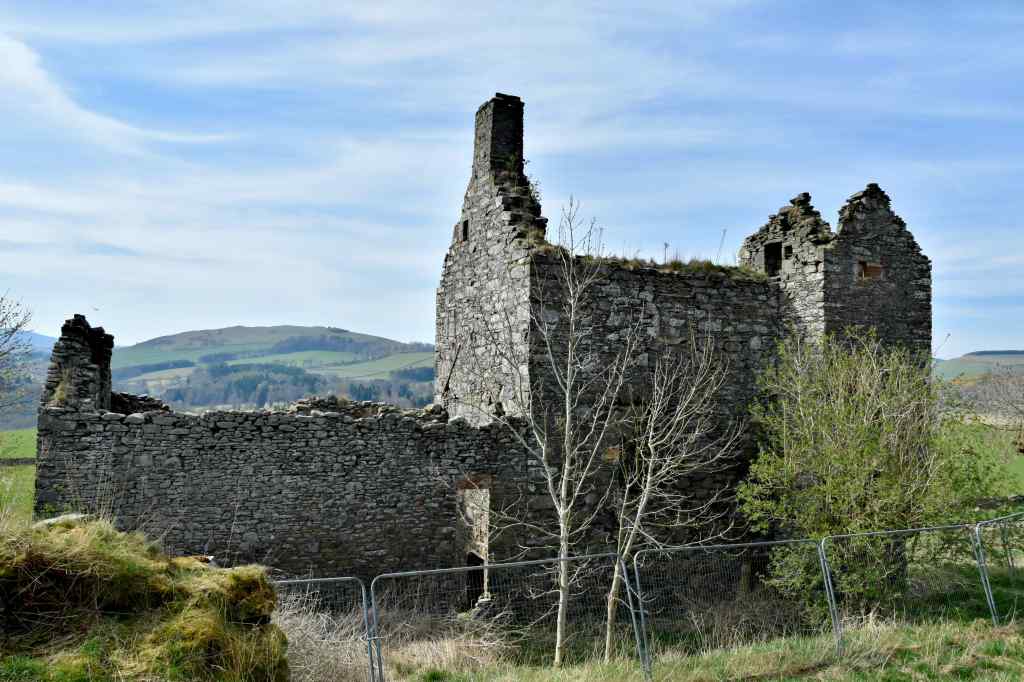
There is some evidence that the tower was once enclosed by a barmkin (courtyard wall), and that within the enclosure, there were outbuildings on either side of the entrance. Remains of enclosures or possible livestock pens can be discerned on the surrounding land.
It is believed that Dryhope Tower was built in the mid-1500s. There is some speculation as to whether its builders were the Douglas family (they certainly had landholdings in the general area). However, there is no actual evidence supporting this, and records confirm that the Scotts came into possession of Dryhope around the same time.
Though often overshadowed by the senior Buccleuch line, the Dryhope branch of the Scott family played its part in the web of loyalty, feud, and ambition that characterised the Borders. Their prominence is marked not only by their tower but by their role in the marriage of Mary Scott to Walter Scott of Harden in 1576, an alliance with ripple effects across border history. (And one such ripple was the birth in 1771 of famous Scottish author Sir Walter Scott, a direct descendant of our two lead characters).

Mary, known locally and in song as the “Flower of Yarrow”, was admired for her beauty, spirit, and her place in folk tradition. She is also said to have inspired the ballad, The Dowie Dens of Yarrow.
Walter Scott (Auld Wat) became famous for his reiving activities. He led raids into England and was involved in feuds with the Kerrs and others. His marriage to Mary expanded Scott influence in the borders, linking the interests of the Dryhope, Harden and eventually Buccleuch lines. Folklore says that when food was running low, Mary would place a pair of spurs on a dinner platter as a silent exhortation for Auld Wat to “ride out and replenish the larder”.
In 1592, Auld Wat was implicated in the raid on Falkland Palace, led by Francis Stuart, the 5th Earl of Bothwell, in a failed attempt to overthrow King James VI. Furious at what happened, James ordered those involved to be punished, and an order was made for Harden and Dryhope Towers to be slighted (deliberately destroyed).

But in 1613 Dryhope Tower was rebuilt. Meanwhile the pacification of the border was underway following the union of crowns when James VI also became James I of England. As such, the fortunes of the Scotts changed; the era of open raiding waned, and tower houses became more symbols of status than active fortresses. In the later 17th century, as Dryhope passed to the senior Buccleuch branch (by then dukes), it faded as a residential stronghold, falling into ruin as changing times and changing tastes rendered such isolated towers obsolete.
By the late twentieth century, Dryhope was at risk of collapse: roofless, overgrown, and victim to stone-robbing (removal of dressed stone for use elsewhere). Recognising both its architectural and cultural value, the Philiphaugh Estate Trust, with support from heritage organisations and the National Lottery, undertook significant restoration in 2005.

To visit Dryhope Tower, start at the small parking area on the A708, and then on foot, head north on the Southern Upland Way footpath (signposted) for some 800 metres. The route wasn’t obvious when we took to the path, but we headed for the corner gate each time we entered a new field. The going was muddy in places, slightly uphill, and it involved climbing over stiles. There were also sheep in most fields. Eventually, we came to a track with an information board about the tower.
From here, it was a simple case of following the track over the bridge and climbing up the short hill to the tower. There is an alternative route from the A708 through the farm near the tower, but the yard was quite busy on the day of our visit, and a number of the tracks were gated. Dryhope Tower is free to visit all year round, but there are no facilities.
Dryhope Tower is now a roofless ruin, but it makes a big statement. The turbulent history of its era shaped its design. Today it offers us an important glimpse into how the border lairds lived during those challenging times.
Dryhope Tower: OS National Grid Reference NT 26734 24727
Further reading
Martin Coventry, 2025, The Castles of Scotland (sixth edition), Goblinshead



 Thistle & Time
Leave a comment