
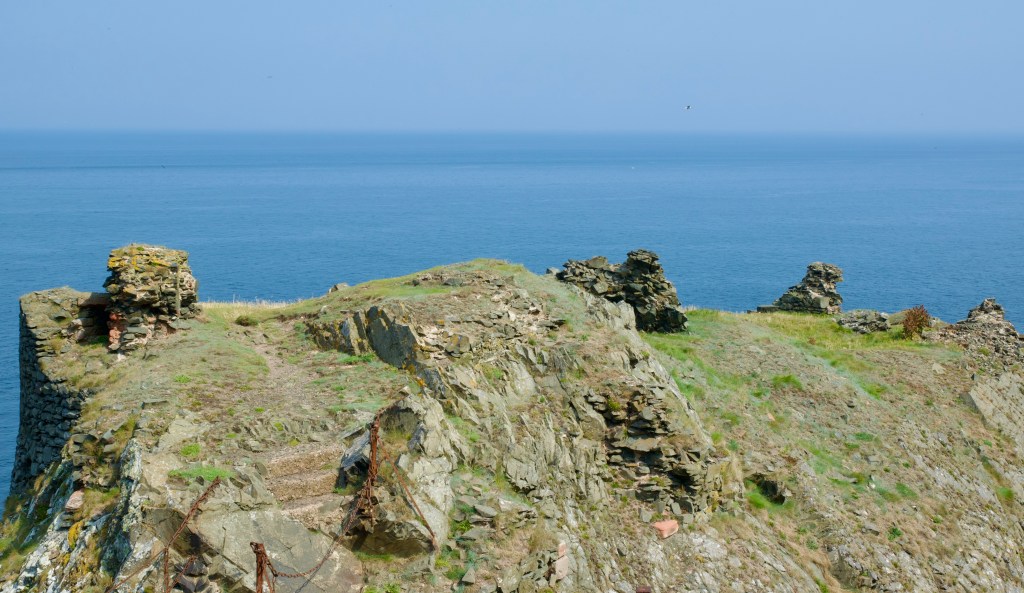
When it comes to dramatic locations, Fast Castle takes some beating. There may not be much remaining today, but getting there, and experiencing its extreme position, will take your breath away.
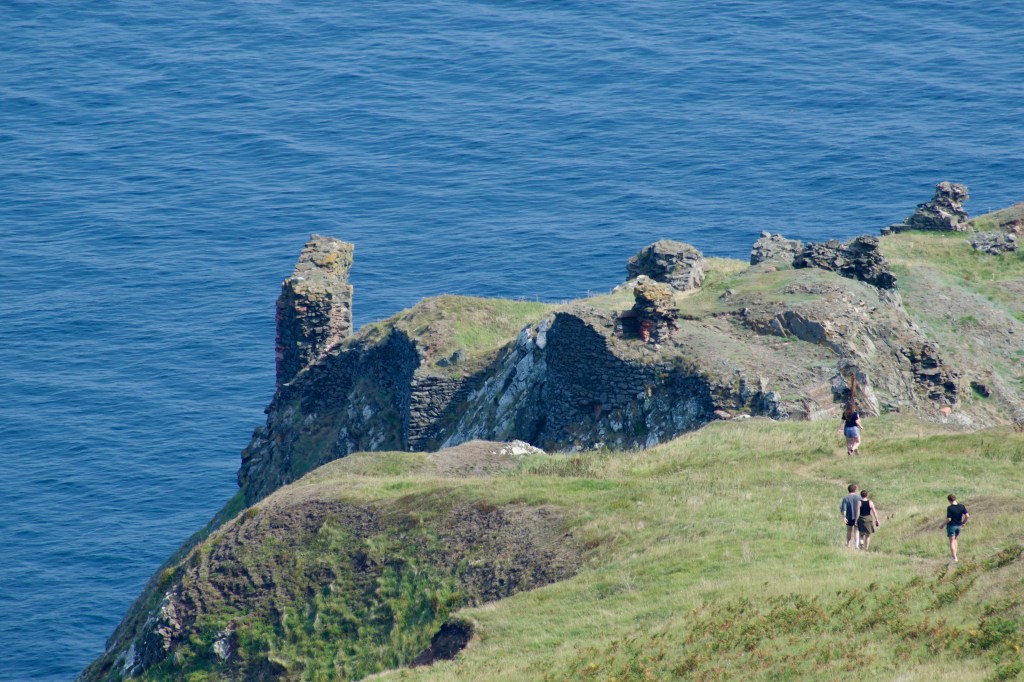
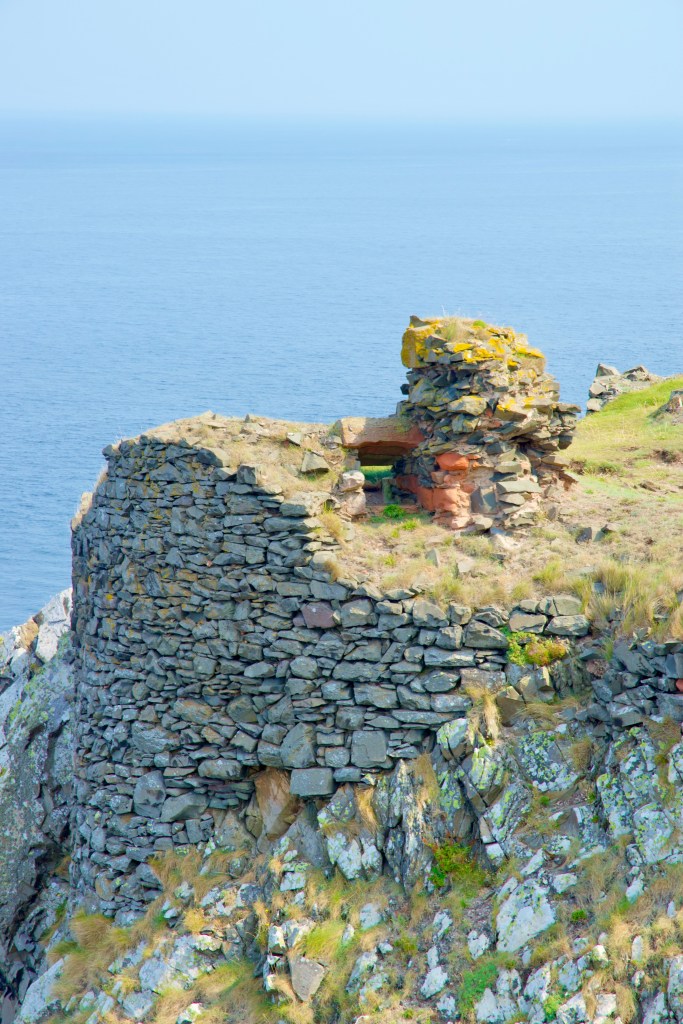
Located near Coldingham in the Scottish Borders, Fast Castle is perched on a narrow, rocky promontory some 45 metres above the North Sea. From this position, the fortress once commanded the Berwickshire coastline.
History: The first recorded mention of Fast Castle is said to be in 1333, though it’s likely that some form of fortification existed here much earlier. What we know for sure is that by the 14th century, this was already a fortress worthy of attention. In 1346, it was occupied by the English following the Battle of Neville’s Cross.
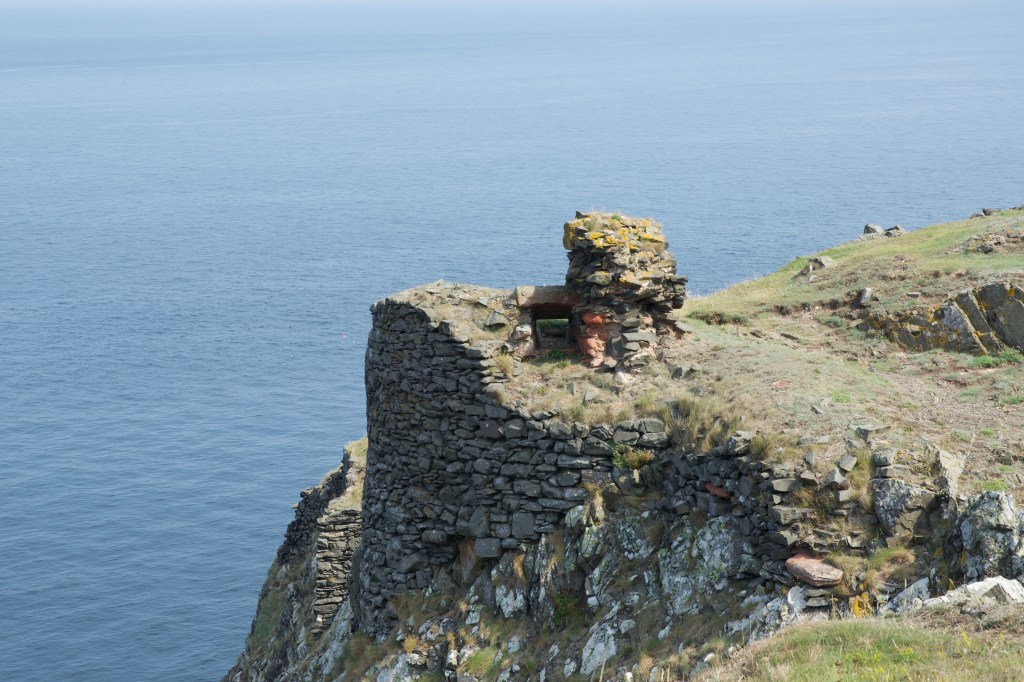
Then in 1410, Patrick Dunbar led a Scottish force to retake the castle, imprisoning the English governor. Given its location, this was quite an achievement, as the approach above from the cliff looks far too steep for a ground assault, while an attack from sea would have to overcome a 45-metre-high cliff face. Yet the castle’s strategic importance meant it changed hands a few times between the Scots and English over the centuries.
By the late 15th century, ownership of Fast Castle passed to the powerful Home family (pronounced “Hume”). As supporters of King James IV, their power and wealth increased, with Alexander Home becoming the first Lord Home and the Great Chamberlain of Scotland. He died in 1491.
The Homes hosted Margaret Tudor, daughter of Henry VII of England, at the castle in 1503 as she travelled north to marry James IV of Scotland. This royal visit highlighted the castle’s importance as both a fortress and a residence suitable for nobility.
However, the family’s fortunes took a dramatic turn following the devastating Battle of Flodden in 1513. James IV and numerous Home family members were killed in the battle, leading to a power struggle that engulfed the Scottish Borders. In the chaos that followed, Fast Castle was destroyed in 1515 by the Duke of Albany, Regent of Scotland. The 3rd Lord Home (also Alexander) was executed the following year, with his lands forfeited to the crown, for conspiring with the English.
But the castle had been rebuilt by 1522 when the Home estates were restored to Alexander’s brother, George Home (the 4th Lord Home). But peace was short-lived. During Henry VIII’s “Rough Wooing” of Scotland in the 1540s, when the English king attempted to force a marriage between his son Edward and the infant Mary, Queen of Scots, Fast Castle was once again captured by English forces in 1547.
However, in 1549, Alexander, the 5th Lord Home, regained the castle with a cunning ruse, disguising attackers as suppliers to infiltrate the English garrison. But this recapture is also attributed to the efforts of Madge Gordon, a determined widow from nearby Coldingham who is said to have orchestrated the fortress’s liberation. According to MacKay Wilson’s Tales of the Borders, it was Madge who organised the attackers to be dressed as suppliers with concealed weapons.
Mary, Queen of Scots, visited Fast Castle in 1566, and a year later, the English ambassador Nicholas Throckmorton visited Fast Castle, leaving us with a vivid contemporary description. He noted that while he was treated well “according to the state of the place,” the castle was “fitter to lodge prisoners than folks at liberty,” although he did say the castle was “very strong”.
In 1570, the English took the fortress again when Queen Elizabeth I sent an army after English rebels who had taken sanctuary at Fast Castle. The castle’s ten defenders surrendered without a shot being fired.
Towards the end of the 16th century, Fast Castle passed, through marriage, to Sir Robert Logan. He was one of those embroiled in the infamous Gowrie Conspiracy, a plot to kidnap the young James VI.
In 1594, Logan made one of history’s more unusual business arrangements when he contracted with John Napier, the mathematician and inventor of logarithms (who was also rumoured to be a wizard), to search Fast Castle for hidden treasure. Sadly, there’s no record of any discoveries.
Logan died in 1606, but his troubles continued even beyond the grave. His estates were forfeited in 1609, and his corpse was actually exhumed and put on trial – a macabre testament to the depth of royal displeasure with his treasonous activities.
Although the castle had further owners, it was likely in ruins by 1771 or earlier.
The castle’s architecture: When built, a curtain wall fringed the castle keep, and a drawbridge spanned the narrow chasm separating the castle from the mainland. A hoist would have been used to lift supplies from boats below.
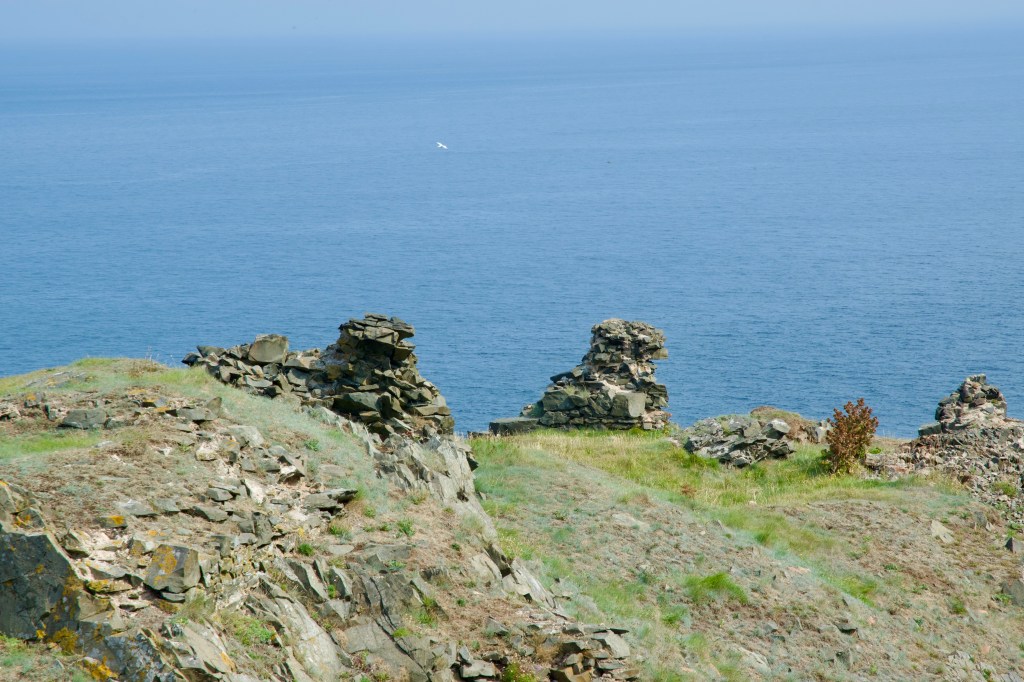
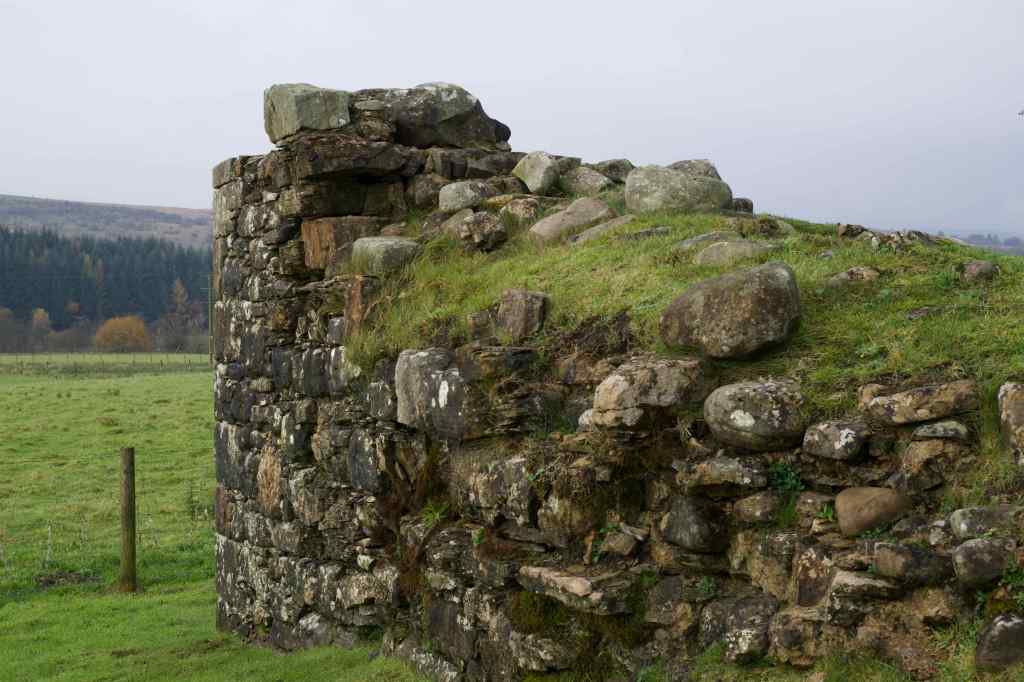
Today, very little remains. There are visible foundations outlining the layout of the former keep and courtyard. A section of the north-east wall and some remnants of the curtain wall can also be seen.
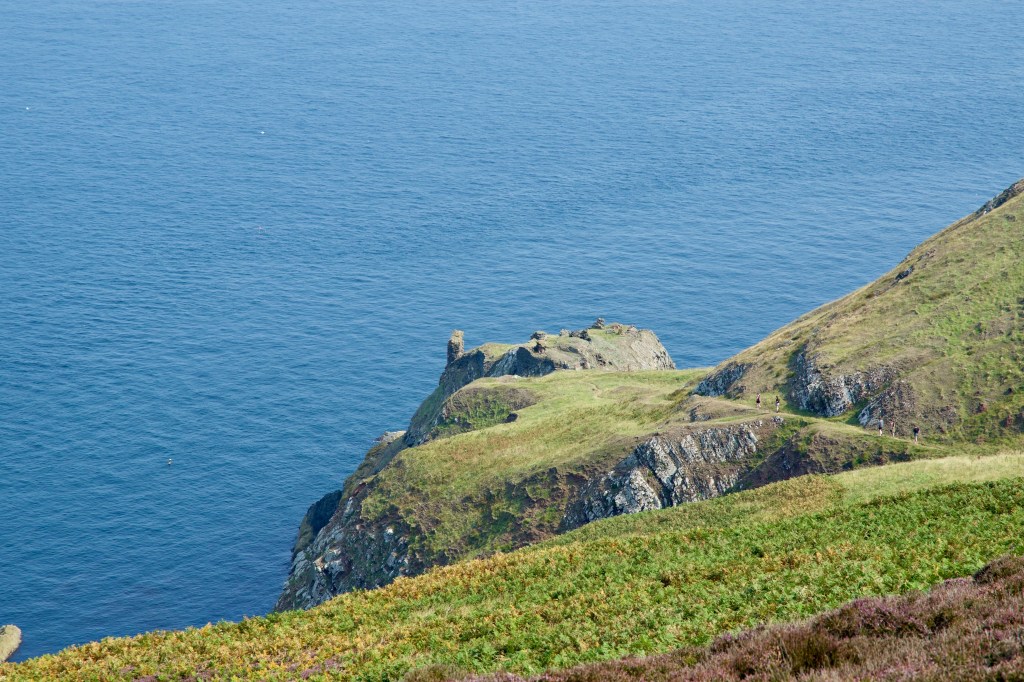
Getting there: Because of its location, getting to and from Fast Castle means negotiating some challenging terrain. Start by taking the single-track road off the A1107 to Dowlaw. At the end, just before the farm buildings and cottages, is a small gravel car park for castle visitors. It is then a case of continuing on foot for 3/4 mile (1.2 km).
The finger post sends you through a short wooded area, and then you come out on the cliff top. From here, the walk looks easy enough, but then you descend steeply as the rough, very-narrow path takes you through heather and then bracken. There are no handrails, loose stones underfoot, and one section is of steep, somewhat worn and weathered wood and gravel steps. As you near the castle, there is a short section (about 2.5 metres) where the path is only an arm’s length from the cliff face.
Once you reach the castle, you have the option of crossing onto the rock via a short concrete footbridge with rusty chain handrails. However, there is no support to climb up the other side, and we judged it too risky.
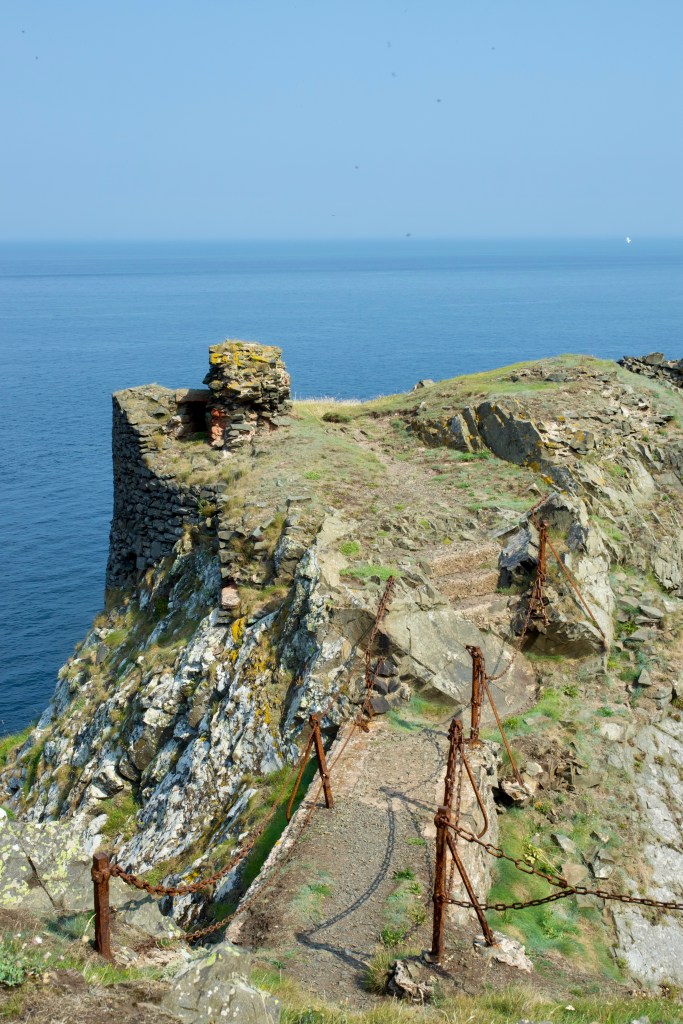
It took us about half an hour to make the downward journey, and even longer going back up. We were thankful for our decent walking boots. Any other type of footwear would have been unsuitable.
If planning a visit, do check the weather; wet ground or persistent winds would make this walk even more difficult and risky. Also, beware of the haar, a sea fog that can develop and cover the Berwickshire coastline, especially between April and September.
For those willing to make the effort to reach it, Fast Castle offers a uniquely Scottish experience – wild, beautiful, historically rich, and utterly unforgettable.
Fast Castle: OS Grid Reference NT 86101 71047
Further reading
Martin Coventry, 2025, The Castles of Scotland (sixth edition), Goblinshead
Adrian Pettifer, 2024, Scottish Castles, The Boydell Press
Mike Salter, 1994, The Castles of Lothian and the Borders, Folly Publications



 Thistle & Time
Leave a comment