
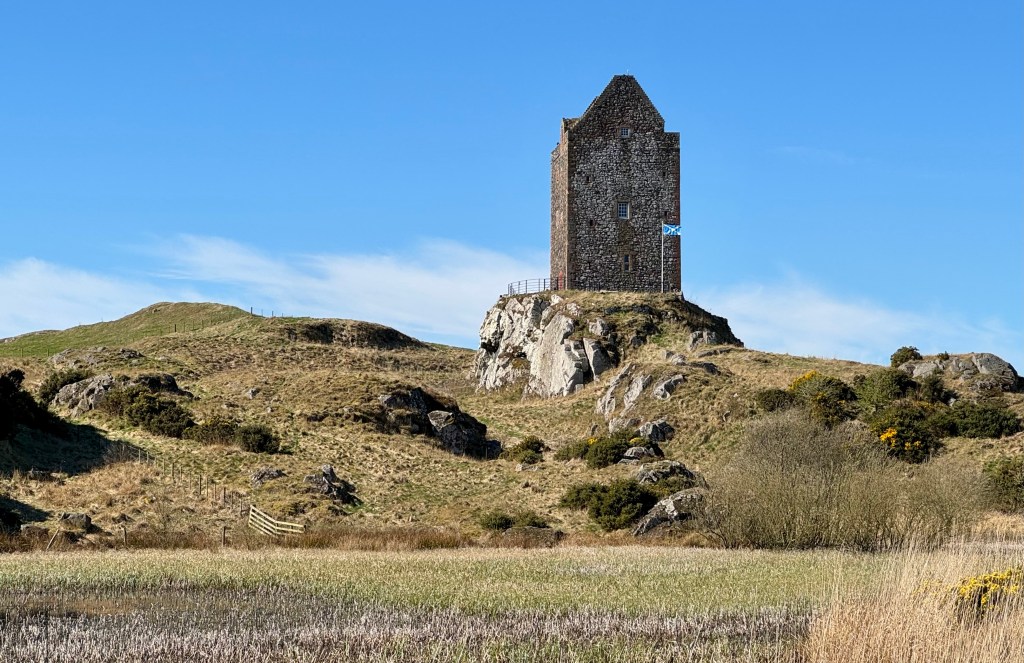
The beautifully preserved Smailholm Tower was built in the mid-15th century by the Pringle family (then known as Hoppringle). At the time, they were wardens of Ettrick Forest for the Black Douglases.
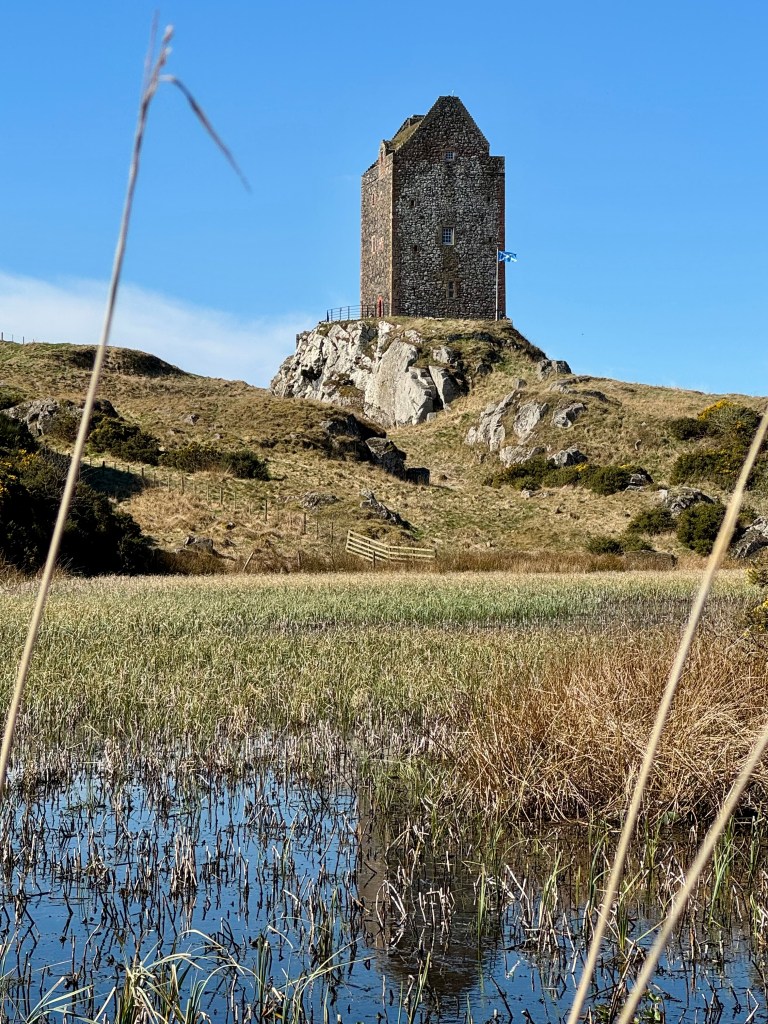
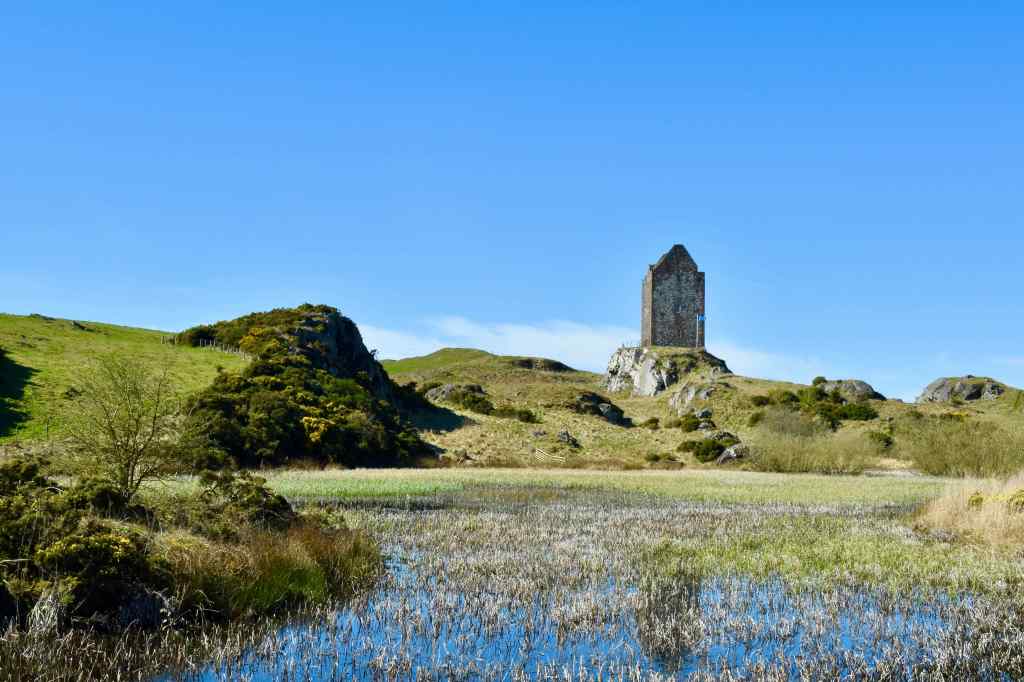
Often described as a silent sentinel, Smailholm Tower stands on a rocky outcrop 7 miles (11 km) west of Kelso in the Scottish Borders. Its outstanding views over the surrounding countryside gave it a much-needed defensive advantage at a time when border skirmishes and raiding were a frequent occurrence.
Smailholm is an excellent example of a border tower house, combining defensive necessity with residential living in a remarkably compact structure. The rectangular tower is roughly 12.1 metres by 9.4 metres, and rises to five storeys. The two-metre-thick defensive walls are made from black volcanic rock, dressed with red sandstone around doors, windows, and corners.
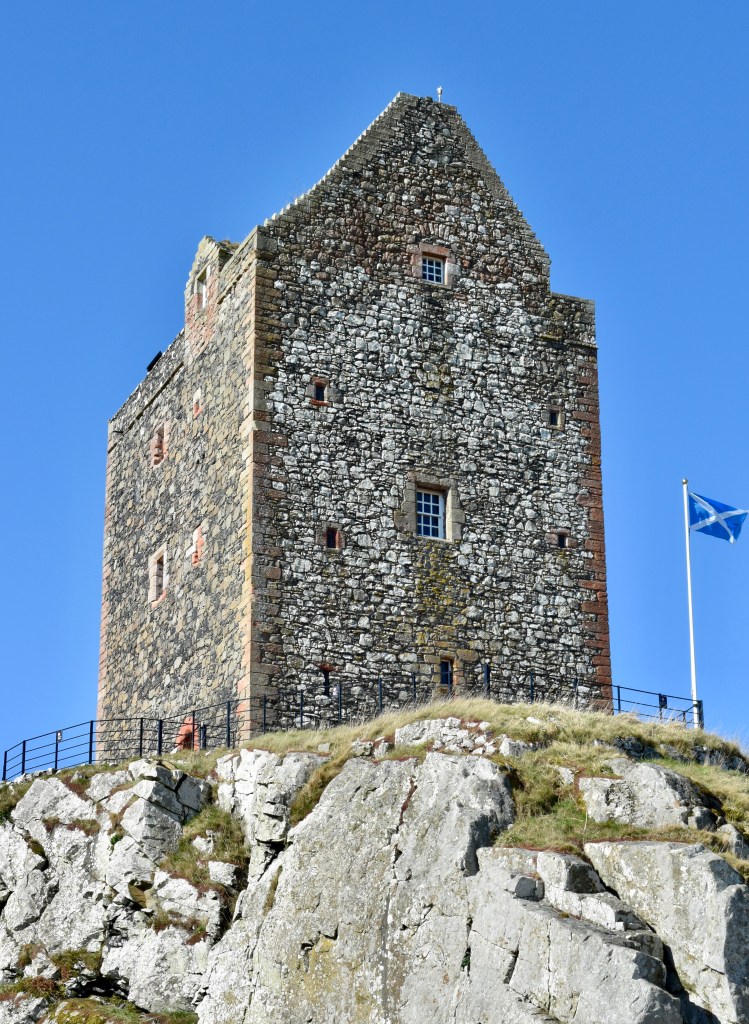
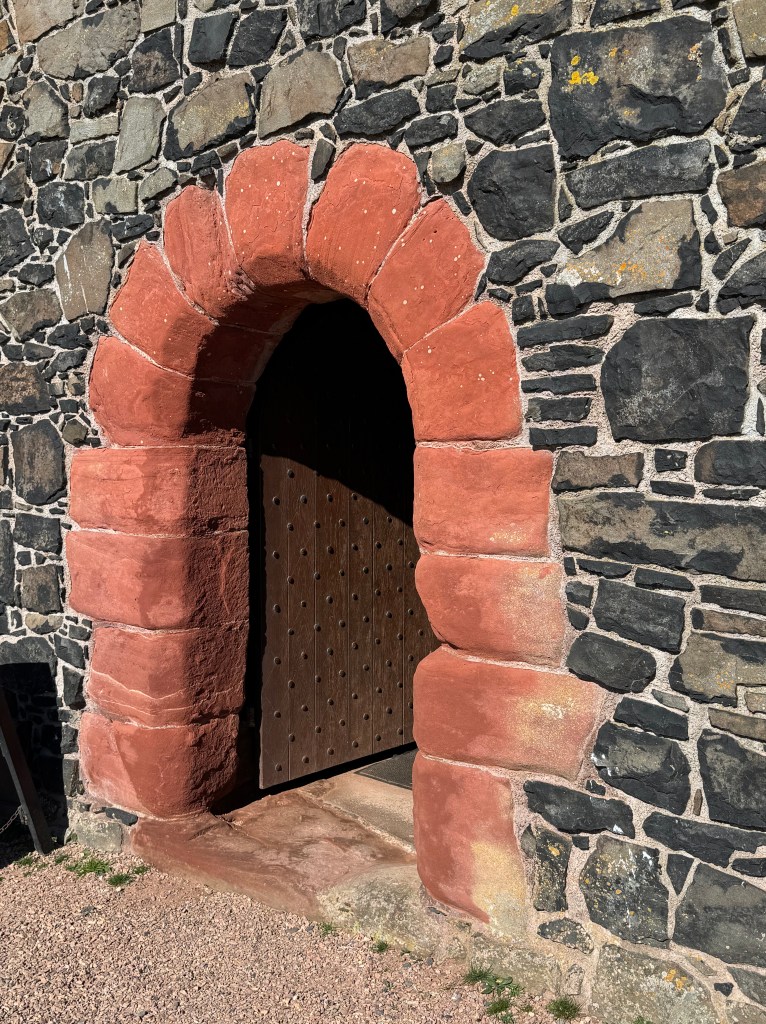
There is just the one entrance, at ground level through the south wall. This arched access was protected originally by an outer wooden door and an inner iron door or yett (which survives today). Defensively, two gun loops were added in the 1500s. The windows throughout are small, and most had iron grills for security. Also modified in the 1500s were the battlements, comprising two short stretches of parapet walk.
Views from the battlements are remarkable. Hume Castle, north east of Kelso, is visible from the north, while from the southern parapet walk, it is possible to see Bamburgh Castle, some 30 miles (53 km) away in Northumberland, England.
Inside, the lowest two floors were for storage (effectively one large vaulted basement that was divided into two levels), while the upper floors were the living quarters. The hall on the floor immediately above the vaulted basement was the family’s main living area, with bedrooms above. All the rooms would have been sparsely furnished, and the walls would have been plastered and draped with wall hangings. A turnpike staircase provided access to the upper floors.
To help protect against the Scottish weather, it is possible the exterior was harled with a lime render at some point during its life.
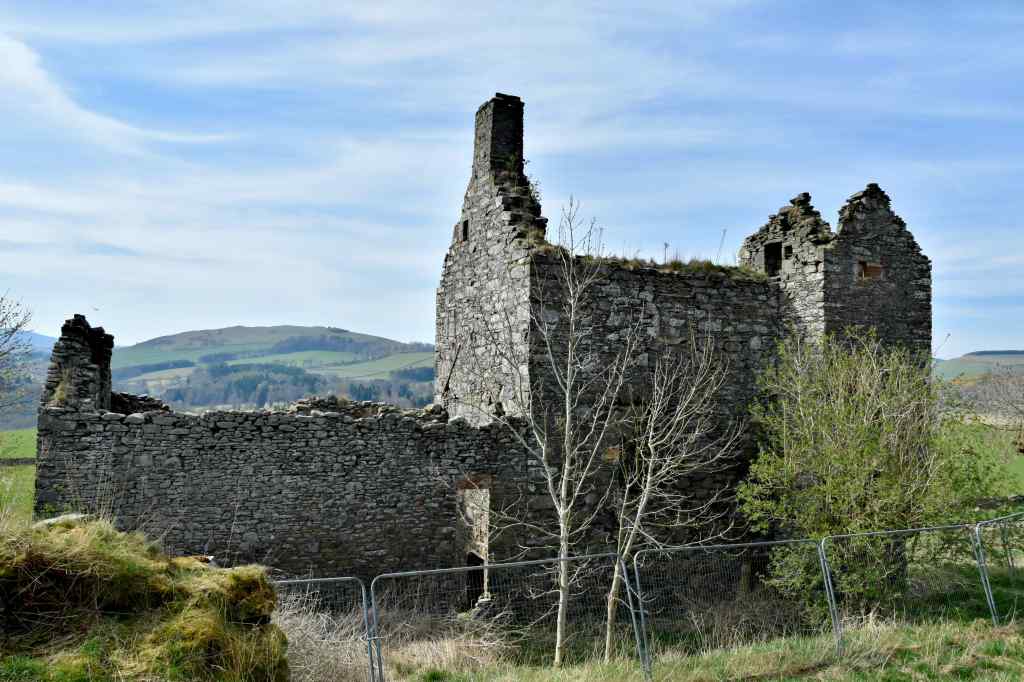
The tower house sits within a barmkin, a walled courtyard enclosure, part of which still stands to two metres. This fortified courtyard provided additional protection and space for livestock, servants’ quarters, and storage buildings. The barmkin was an essential feature of many border towers, creating a secure compound that could withstand extended sieges.

Out on Smailholm Craig, beyond the barmkin, are faint traces of other dwellings. There is also evidence of livestock enclosures and boundary walls.
The Pringles acquired Smailholm Craig ( the rock on which it stands) in the early 1400s and had built the tower by 1455. Inspiration likely came from Newark Tower, built by the Black Douglases, some 14 miles (20 km) west in the Ettrick Valley.
The Anglos-Scottish border during the 15th and 16th centuries was a dangerous place. It was the era of the Border Reivers. Riding families who raided across the border and also from each other, stealing livestock and other plunder, burning buildings, and even taking prisoners before disappearing into the night.
Theft, feuding and opportunistic violence became the culture, and the Pringles had to adapt accordingly. Leading a scrupulous life was not easy, and though not notorious like the Armstrongs or the Elliots for example, the family name of Pringle has been associated with reiving.
And like many living on the border, the Pringles were also caught up in the tension between England and Scotland.
The period known as the Rough Wooing (1543-1550) brought a new level of systematic destruction to the Scottish Borders. This conflict began when Henry VIII of England sought to force Scotland into agreeing to a marriage between his son Edward and the infant Mary, Queen of Scots. When diplomatic pressure failed, Henry unleashed a campaign of deliberate devastation designed to terrorise Scotland into submission. Reiver families on both sides of the border were involved, some fighting for their respective crown, but others exploiting border tension for their own advantage.

The first raid on Smailholm occurred in 1543, but it was the following year when it suffered particularly badly. One of the most significant recorded attacks on Smailholm came from “a party of reivers from Tynedale and Redesdale … with certain assured Scots. These were Scottish Lairds who had pledged allegiance to the English Crown, usually to avoid their own property being targeted, although sometimes they chose “assurance” in return for material gain.
The raiders achieved devastating success, managing to capture and sack both Smailholm village and Smailholm Craig. The scale of their victory was staggering: they carried away 100 prisoners, 600 cattle, 100 horses, and a considerable amount of household furnishings. This single raid represented not just a military defeat but an economic catastrophe for the Pringle family and the local community.
Also in 1544, John Carr, with his company from Wark Castle, attacked Smailholm and stole 123 cattle and 8 horses. There were no reported raids in 1545, but in 1546, the same Garrison from Wark took away 60 cattle and four prisoners.
The laird at this time was John Pringle, and because of the repeated raiding of his land, he did what others had been forced to do: become an Assured Scot. By promising the English that he would not attack Englishmen operating in Scotland, he avoided any further attack on Smailholm Tower. Even so, as a precaution, he strengthened the tower’s defences.
But Smailholm Tower wasn’t entirely out of the woods in terms of military matters.
Almost a century later, in July 1640, during the tumultuous era of the Wars of the Three Kingdoms (which includes the English Civil War), the tower was occupied by Sir Andrew Ker and a band of Covenanters.
The Covenanters at Smailholm Tower successfully defended themselves and the tower when it was assaulted by a detachment of musketeers from a Royalist regiment. This marked the tower as a centre of resistance against royal authority and a haven for those supporting the Presbyterian Covenant.
In 1645, the Scotts of Harden (ancestors of Sir Walter Scott) bought the tower following the Pringles’ move to Galashiels. During this period, the tower shifted from a primary residence to a leased property, and outbuildings were erected in the west courtyard. But it is the link to Walter Scott that provides the next phase in the story.

No other Border tower is as intimately connected with Scotland’s literary heritage as Smailholm Tower. Walter Scott was 18 months old when he came to the nearby Sandyknowe Farmhouse, the dwelling that by then had replaced Smailholm as the Scott family home. There, in the shadow of the tower, his grandmother and aunt told him tales and ballads about the border countryside.
In his old age, Scott described the powerful effect on his imagination of these border ballads and the sight of his ancestors’ ancient tower, “standing stark and upright like a warden”. No surprise then that Smailholm Tower was the scene of Scott’s Ballad, The Eve of St John.
In 1802, Scott published his much-acclaimed Minstrelsy of the Scottish Border. Years later he paid an emotional visit to Smailholm shortly before he died in 1832. The tower thus served as both inspiration and touchstone for the man who would become Scotland’s most celebrated historical novelist, helping to preserve border culture for future generations.
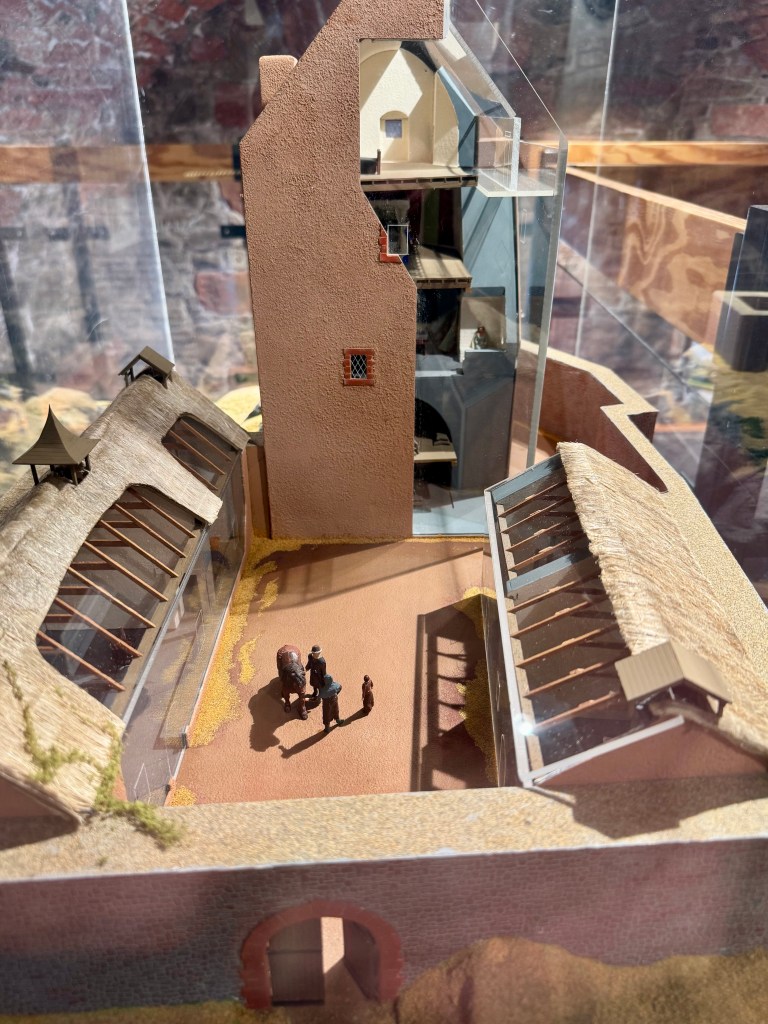
Now under the care of Historic Environment Scotland, Smailholm Tower continues to educate visitors about medieval border life and architecture. Inside the tower is a model of this Pringle residence, information about Sir Walter Scott, and a charming collection of figures that bring some well-known border ballads to life.
Put simply, Smailholm Tower remains one of the best-preserved examples of a border tower house. Because of this, visitors gain a good impression of what life was like for its inhabitants.
The tower is easy to reach by car or bicycle, following the signposts from the B6404 west of Kelso. Continue through a working farm before arrival at the small car park. It is open from April through to the end of September, and entrance fees apply.
Visitors to Smailholm Tower may also be interested in a visit to Abbotsford House (near Melrose), the home of Sir Walter Scott.
Smailholm Tower: OS National Grid Reference NT 63795 34679
Further reading:
Historic Environment Scotland (2022) Smailholm Tower Official Souvenir Guide
Historic Environment Scotland website
Historic Environment Scotland Border Ballads Brought to Life at Smailholm Tower
Pinned On Places: Smailholm Tower, Scotland



 Thistle & Time
Leave a comment