

Cardrona Tower sits in a small clearing among the dense trees of Cardona Forest, high above the River Tweed. Built in the late 1500s by the Govan lairds, this modest L-plan tower house once formed part of an early-warning chain stretching eastwards from Elibank Castle to Neidpath Castle. Most of the towers in the chain no longer exist, but each would signal its neighbour of impending danger to the border.
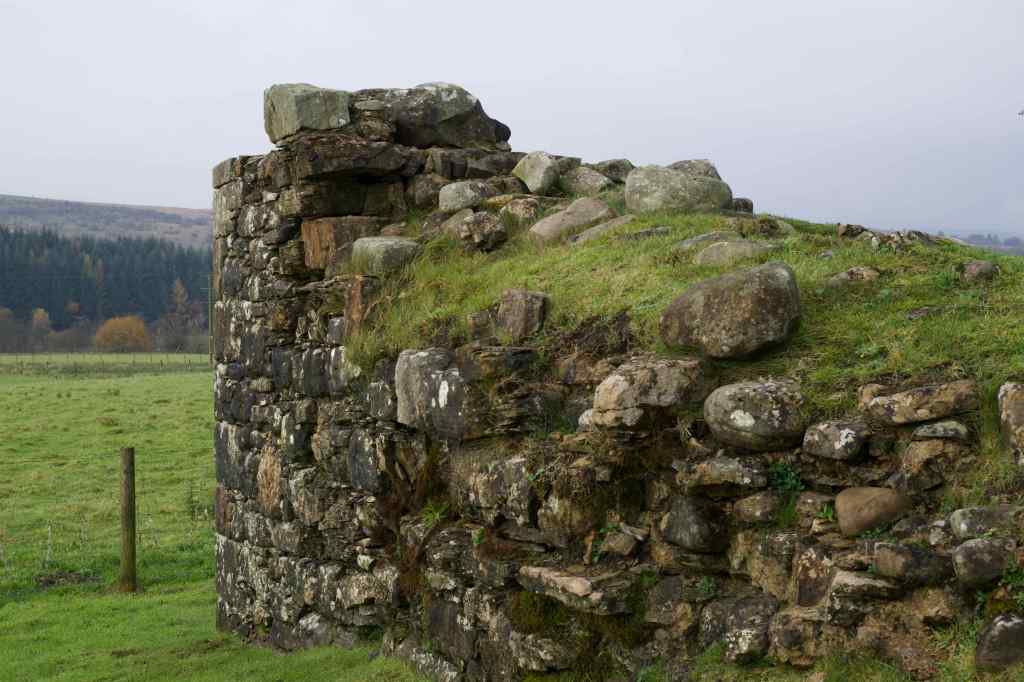
Today, its ruined gables and vaulted basement provide a tangible link to Border life in the 16th century.
The lands of Cardrona were held by the Govan family from the 14th century until the end of the 17th century. Laurence of Govan, a notable figure, served as Sheriff of Traquair in 1358. It is believed that the family first built here in the 14th century, and the existing L-shaped tower house was likely built later, during the mid-to-late 16th century.
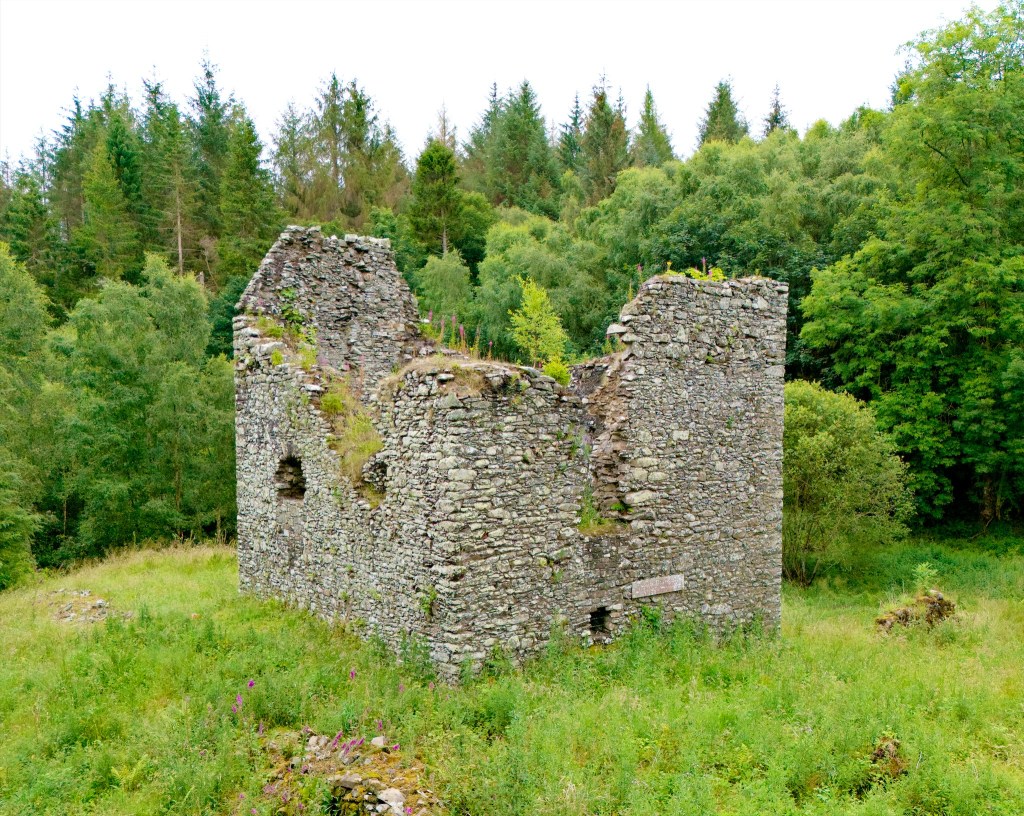
The tower would have offered both prestige and modest defence against Reivers or rival families. The main living areas would have been on the upper two floors, while the vaulted basement would have been a storage area and somewhere to secure livestock in the event of impending trouble.
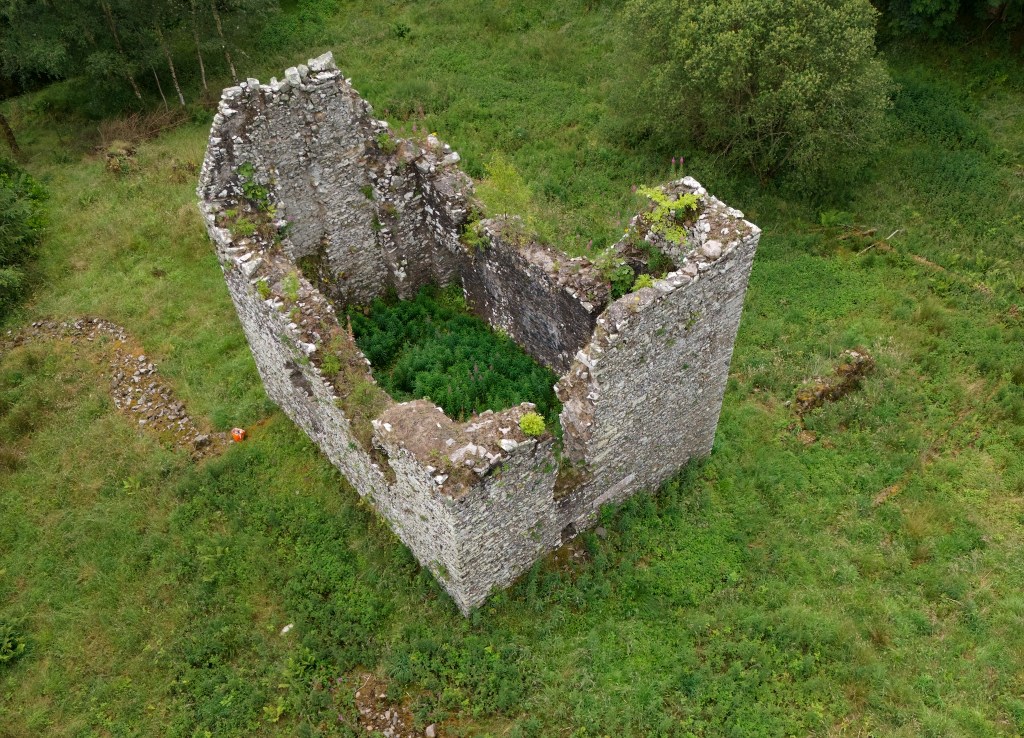
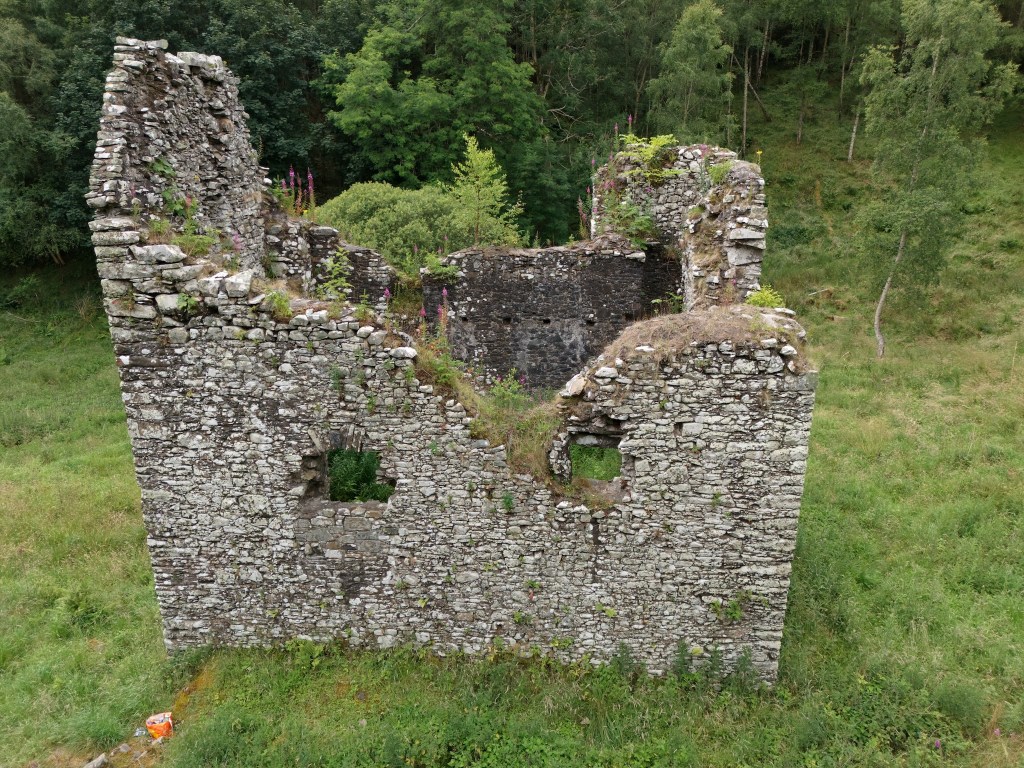
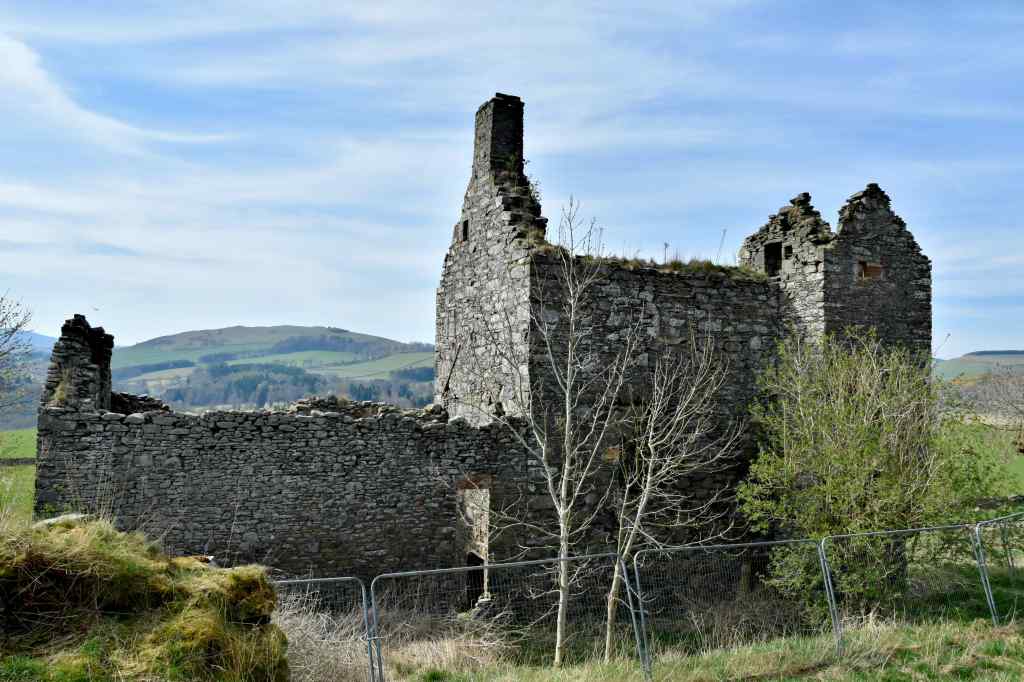
Today, the building is badly damaged, but some parts still stand to a height of about 30 feet (9 metres) and the southeastern gable is almost entire. There has been a parapet-walk on the southwestern wall of the main block, reached from the staircase, which consequently rises above the wall-heads. In the main block, there is a vaulted basement and two additional storeys, while a garret (lookout) was probably located in the roof space. There are the remains of fireplaces in the south-east gable wall of the two upper storeys.
A courtyard was situated on the south-west side of the tower, enclosed originally by a barmkin wall (a defensive wall surrounding the courtyard of a tower house).
The tower was occupied during a period when reiving was considered a normal means of survival and when cross-border raids were common. However, there are no specific historical records or detailed accounts confirming that Cardrona Tower was directly raided or attacked by Border Reivers or English forces.
For a Border tower in the late 1500s, this silence is unusual — and intriguing.
There are several reasons for it:
- Small raids were rarely recorded: Many reiving incidents were simple acts of theft or retaliation, dealt with privately or through informal arbitration.
- The Govans were not a major riding family: They held land, yes, but they were not among the notorious surnames who appear again and again in the government crackdowns.
- The tower’s location is slightly off the main raiding corridors: Most reiving roads followed valley floors. Cardrona stands high on the hill, away from the usual routes of fast-moving raiders.
And yet — even if not recorded — danger was always near. Border Reivers, both Scottish and English, regularly targeted settlements throughout the Tweed Valley, rustling cattle, burning homes, and sometimes attacking defensive structures. It is therefore highly plausible that Cardrona Tower’s residents would have faced threats and taken part in defensive action, even if specific written accounts do not survive.
But we do know that the Govans were not immune from violence. They feuded with the Stewarts of Traquair; and in 1601, James Govan of Cardrona was slain by one of the Scotts of Tushielaw. His killer was John Scott, brother of Walter Scott of Tushielaw. However, we don’t know why it happened. Perhaps it was a sudden clash, or perhaps a longstanding feud. The records – Privy Council notices and local judicial returns – don’t tell us.
By 1685, the Govans sold the estate to James Williamson. A year later, he built and then moved to the more comfortable Cardrona House at the hill’s foot, leaving the tower to slip gradually into ruin.
Today, the ruin of Cardrona Tower is free to visit (although you will have to pay for car parking), but you must be prepared for a lengthy uphill walk. Access is via Fergus’s Trail or the Pikes Knowe Trail in Cardrona Forest. Both walks consist of firm gravel with some loose stones. There are mostly moderate slopes, but some sections are shorter and steeper. Good footwear is essential.
It took us over 30 minutes to reach the tower, and with recent rain, the final section down to the clearing was also covered in a lot of mud. Then we had to contend with a rutted surface, covered by wet, thigh-high undergrowth which slowed progress and prevented a close inspection of the tower. There is a sign warning of the building’s instability, so entering inside is not advised.
Despite the climb to reach the tower, it was worth the effort to see the ruin in such a picturesque setting.
Cardrona Tower: OS National Grid Reference NT 30092 37867
Further reading
Martin Coventry, 2025, The Castles of Scotland (sixth edition), Goblinshead



 Thistle & Time
Leave a comment