

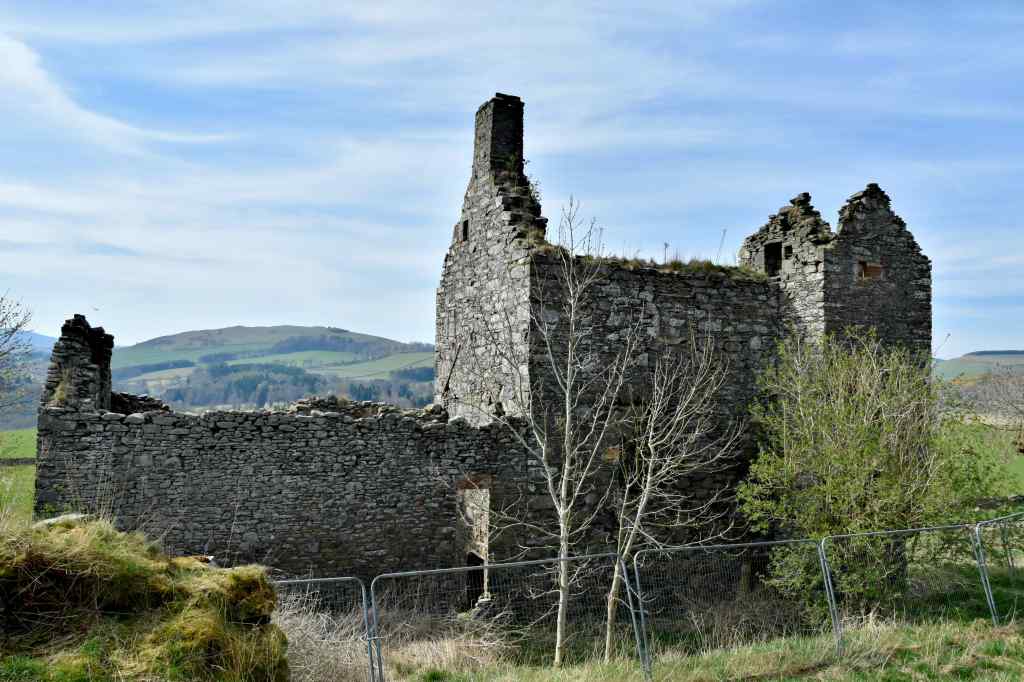
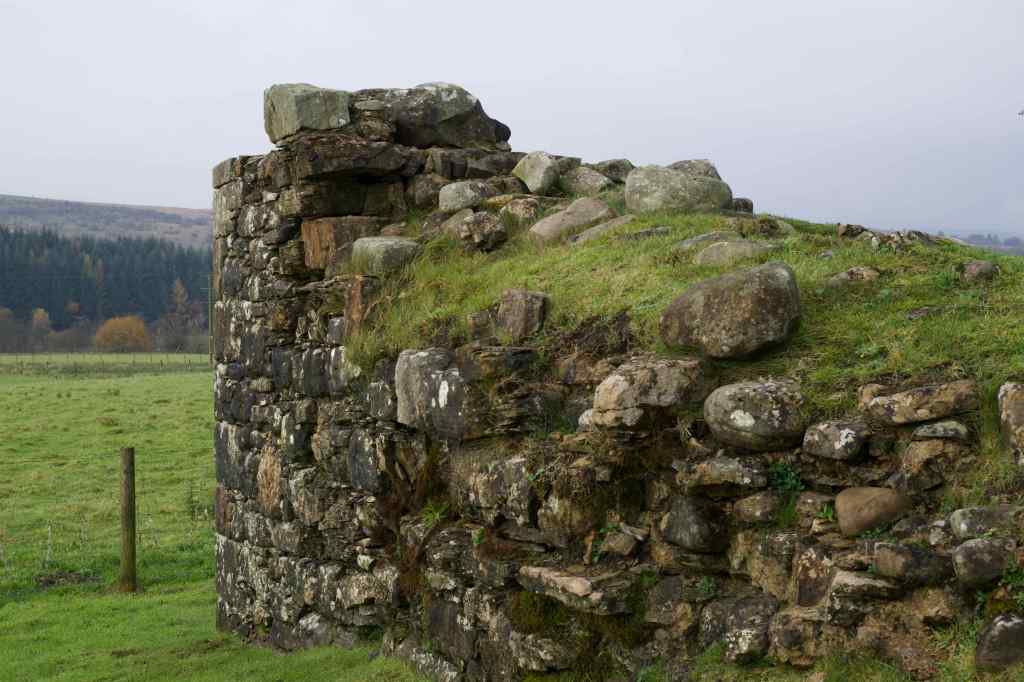
In the heart of picturesque Braemar village in the Scottish Highlands, next to Clunie Water, are the ruins of Kindrochit Castle. Though weathered by centuries, the remnants tell a story of medieval ambition and Highland resilience. If you’re visiting the Cairngorms and want a quick dive into Scotland’s deep past without the crowds, Kindrochit is worth the stop.
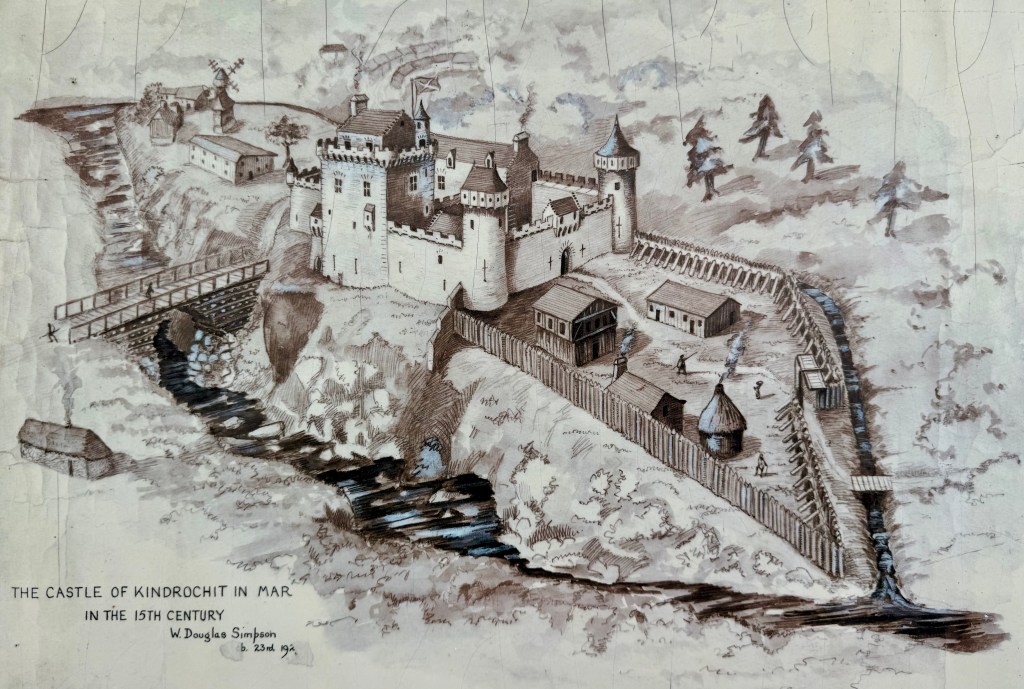
While the visible ruins mainly date to the late 14th century, tradition and archaeological finds suggest the site’s fortification dates back to the 11th century under Malcolm III (Malcolm Canmore), who likely built a wooden stronghold after the defeat of Macbeth in 1057. The Gaelic name “Ceann-drochit” means “bridge head,” alluding to a long-since replaced, adjacent bridge.
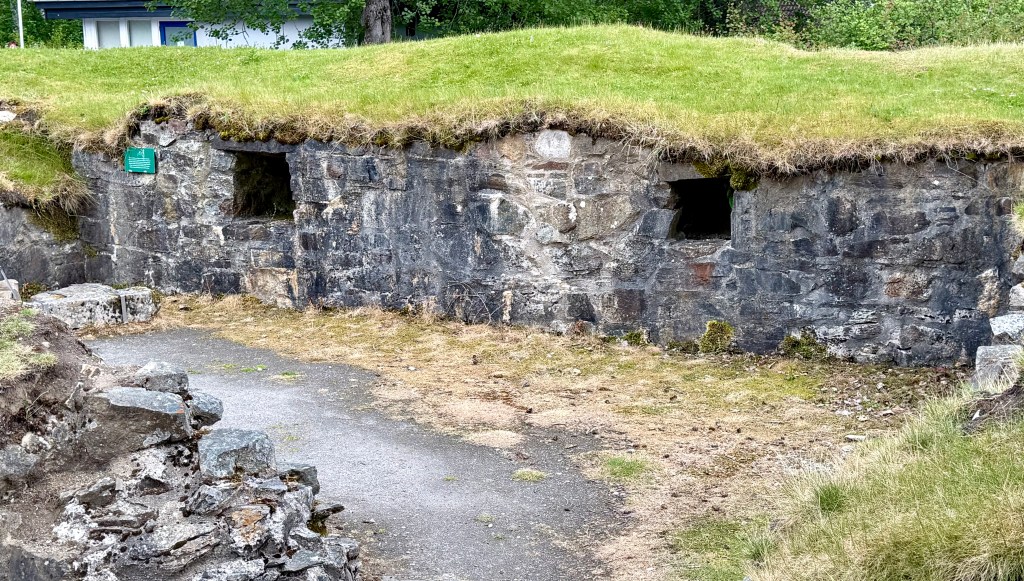
Malcolm’s choice wasn’t random. Braemar sat on a key military route through the Highlands, and establishing control here was crucial for asserting royal authority in the region. By the 14th century, the wooden structure had been replaced with a stone castle, likely at the orders of King Robert II. This was no pleasure palace; it was built for function, with thick defensive walls and internal buildings wrapped around a central courtyard.
But it also became a favourite royal hunting seat, and he visited the castle regularly. Given this, it is no surprise that King Robert II regularly issued charters from Kindrochit between 1371 and 1388.
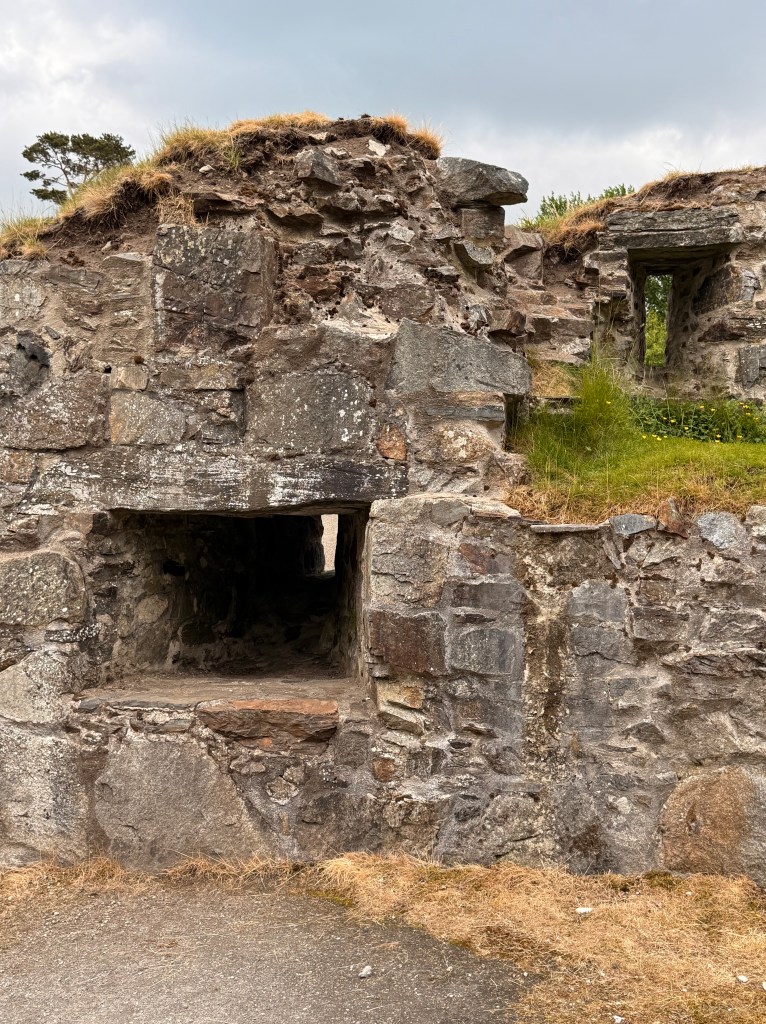
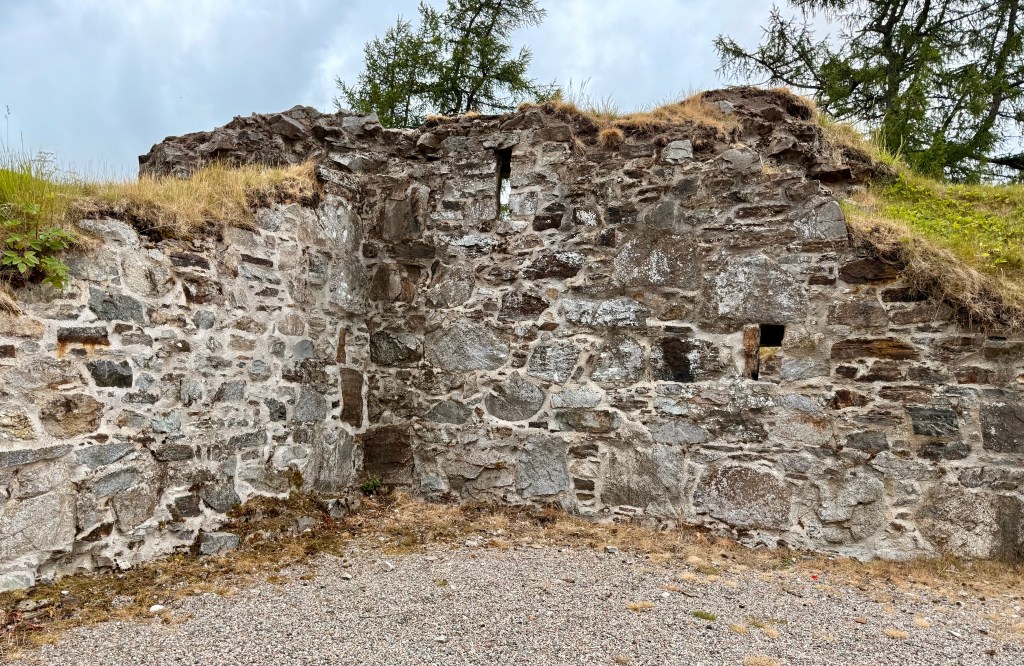
By the late 1300s, it ranked among the five largest castles in Scotland. In 1390, the brother-in-law of the king, Malcolm Drummond, was granted a license to build a new tower house on the grounds. The resulting structure included an oblong tower (approximately 19 by 13 metres) with 3-metre-thick walls, plus square towers at each corner.
Drummond was later kidnapped, possibly by Alexander Stewart, the infamous “Wolf of Badenoch”, and died in captivity around 1402. After Drummond’s death, Alexander Stewart forced Isabella, Countess of Mar, to marry him in 1404, acquiring both the Earldom of Mar and the Lordship of Garioch.
Stewart went on to complete construction of the Drummond Tower, it is said, using the forced labour of some Danzig mariners whom he had captured in a sea battle.
The castle remained with the powerful Earls of Mar until it fell into disuse in the first half of the 16th century. It was in a ruinous condition as early as 1618, but the exact reason for its eventual abandonment remains unknown.
A local legend says that to prevent the spread of the plague that had broken out in the castle, the local community blockaded the castle and destroyed it with cannon fire. Usually, an army would be needed to take such action, so was the castle’s fate really sealed by the villagers?
A subsequent story recounts the tale of a Hanoverian soldier who was lowered into one of the castle vaults in search of treasure. But he was pulled out very quickly when he reported a ghostly company seated around a table of skulls.
In 1925, excavation work on the site uncovered a silver gilt brooch, dating from the castle’s final years. It bears a Gothic French ribbon inscription ‘Ani io cne ab an hi’ which translates “Here am I in place of a friend”. The brooch is in the National Museum of Scotland in Edinburgh, and a commemorative stone at the castle marks where it was found.
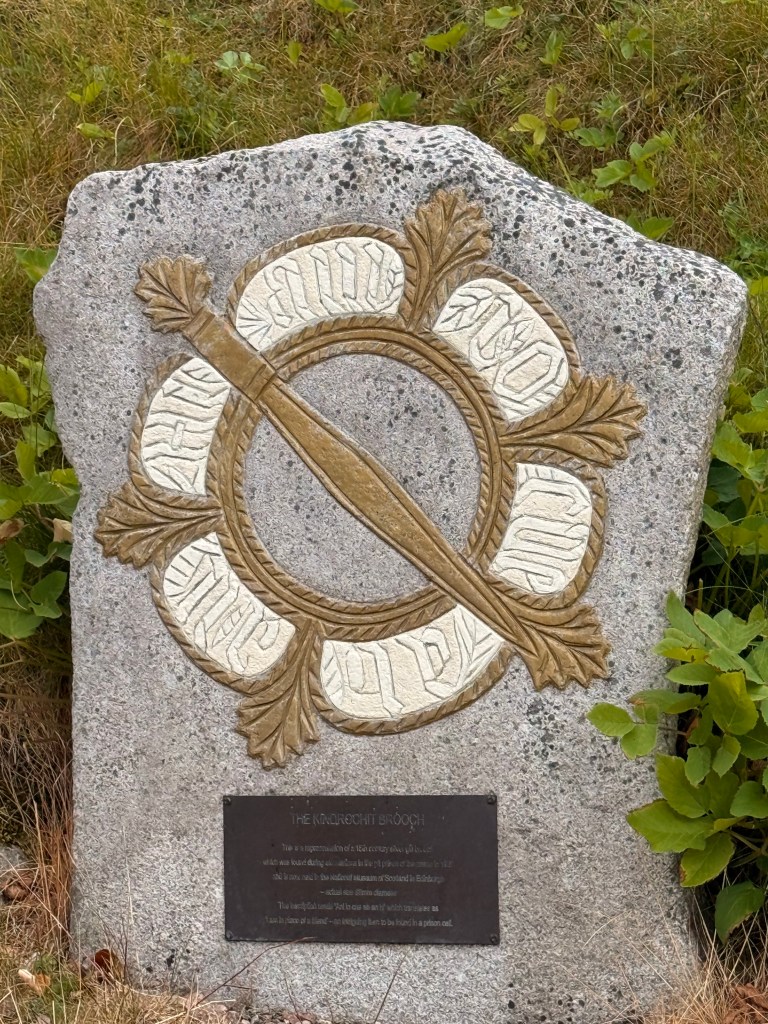
Following many years of neglect, a £210,000 project in 2013–2014 stabilised the ruins and added pathways and interpretation boards. The site reopened to the public in 2015.
The castle’s central location in Braemar makes it easily accessible. What’s more, there is parking and public toilets just over the road, and the village hosts a choice of local cafes should refreshments be needed. While free to visit, a collection box is available for voluntary donations to help with the site’s upkeep.
Further reading
Kindrochit Castle leaflet published by the Cairngorms National Park Authority
Martin Coventry, 2025, The Castles of Scotland (sixth edition), Goblinshead
North East Scotland Preservation Trust



 Thistle & Time
Leave a comment