
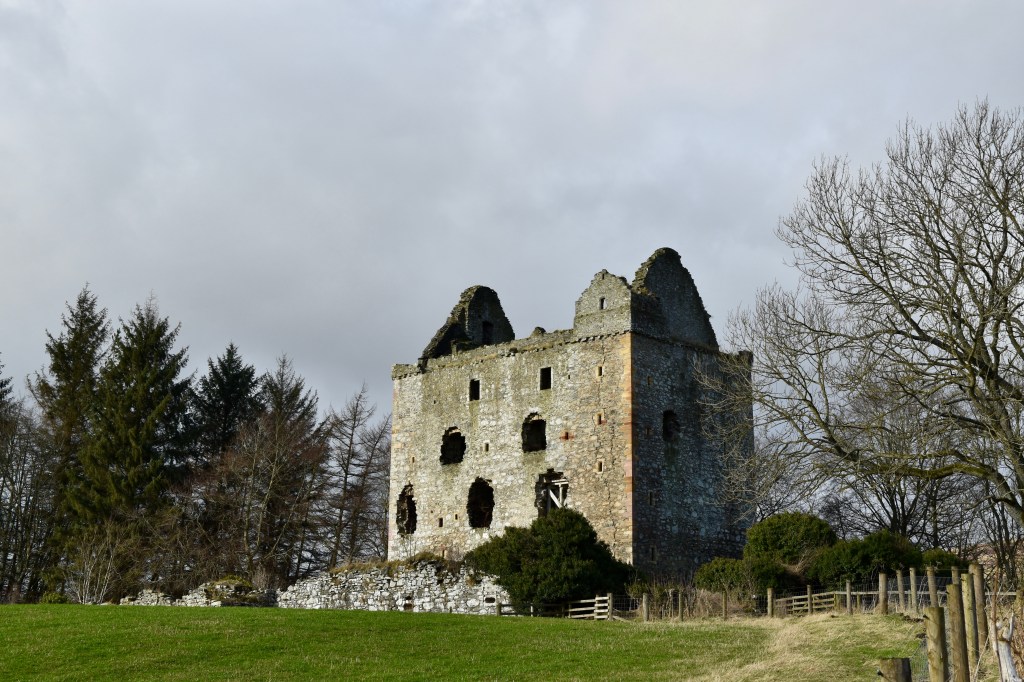
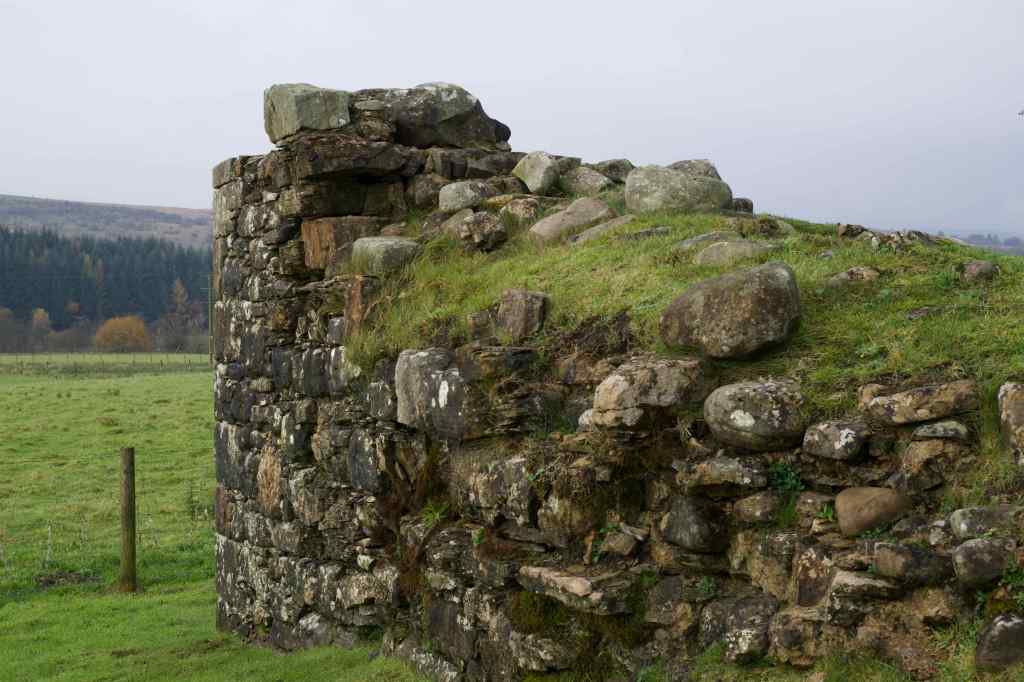
The ruins of Newark Tower (or Newark Castle as it is sometimes called) hide a violent history.
Originally granted to Archibald Douglas, Earl of Wigtown in about 1423, the tower wasn’t actually completed until around 1475. By then, after the fall of the Douglas family, Newark Tower was under royal control. It was given to Margaret Denmark, wife of James III in 1473, and then to Margaret Tudor, wife of James IV, in 1504.
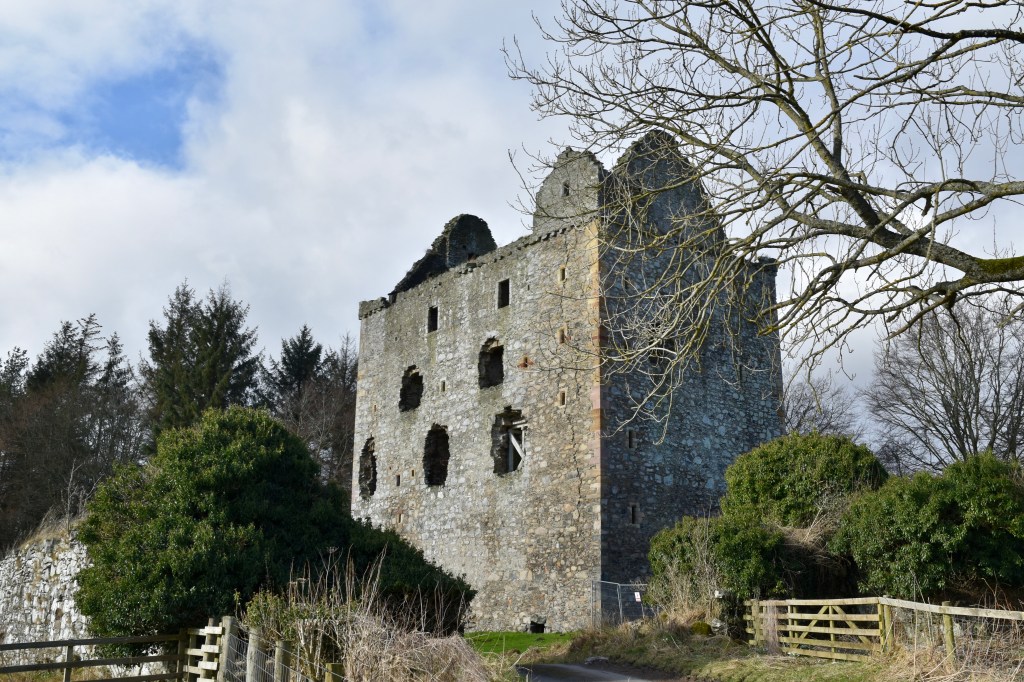
But by the middle of the 16th century, Newark Tower was embroiled in the brutal war known as the “rough wooing”. In 1547, Lord Grey of Wilton, a seasoned English commander, was tasked with subduing Scottish strongholds in the Borders. He targeted Newark Tower as part of a broader campaign to weaken Scottish resolve. Despite surrounding the tower and using artillery to try and breach its walls, the siege was repelled. It is believed that Newark Tower’s solid construction helped, together with its elevated position which enabled the defenders to rain projectiles onto the besiegers.
It was a lucky escape, given Grey’s ruthless reputation as shown by his earlier destruction of Barnhills Tower two years earlier.
But a year later the English returned, adopting a “scorched earth” approach to the Border region. Historical records show that this time Lord Grey set fire to the tower, rendering it unusable with only the stone shell surviving.
But this wasn’t the end for the Newark Tower. By the late 16th century, it was partially repaired, with Sir Walter Scott of Branxholme appointed as its keeper in 1573. Nor was it the end of the violence.
In 1645, Newark Tower was the scene of a notorious massacre following the Battle of Philiphaugh.
The battle took place on a medow next to Ettrick Water near Selkirk (although the precise location is disputed by historians). It was fought between the Royalists (supporters of King Charles I) led by the successful military commander James Graham, Marquis of Montrose, and the Covenanters (who supported the Presbyterian cause and, at the time, were allied with the English Parliamentarians) led by Major-General Sir David Leslie.
Montrose had previously won a spectacular string of victories against the Covenanters, culminating in the Battle of Kilsyth in August 1645, which briefly made him the master of Scotland.
On the misty morning of September 13th, Leslie’s cavalry, numbering around 4,000, fell upon the Royalist camp of about 2,000 men. Montrose was caught completely by surprise. Among the Royalist troops were a regiment of Irish infantry veterans. The battle was fierce but short, and while Montrose was able to flee with some of his cavalry, the Irish infantry were outnumbered and overwhelmed. They were originally offered quarter (mercy and protection as prisoners of war) but this, it has been said, was revoked by the Covenanter Committee of Estates.
Among those captured were perhaps as many as 300 camp followers, all non-combatants, mostly women and children. The Covenanter forces, urged on by the Presbyterian ministers who accompanied them, believed these women and children were equally guilty, or “cursed,” due to their association with the “malignant” Irish and the Catholic cause. So together with some 100 captured Irish soldiers, they were taken to Newark Tower and then to a field called “Slain Men’s Lea” on 13 September 1645, where they were brutally murdered.
It was said that the river by the field ran red with blood. In 1810, excavation work of the site uncovered quantities of human remains.
It isn’t known if Sir David Leslie, the Covenanter commander, ordered the massacre or whether he made no effort to prevent it. However, the event was a dark stain on his reputation. It also showed the severity of the War of the Three Kingdoms on Scottish soil.
Fifteen years later in 1650 Newark Tower fell to Cromwell’s New Model Army and was again badly damaged.
After the restoration of the monarchy, the Buccleuch Scotts, previous custodians of the tower, reasserted their control and oversaw further repairs. The estate on which the tower stood passed to Anna Scott who, upon her marriage to James, Duke of Monmouth (and illegitimate son of Charles II), became the new Duchess of Buccleuch. This placed her in a prominent position in the court of Charles II, and she spent much of her time in England.
However, in 1685, her husband rebelled against the catholic James VII (James II of England) and was subsequently defeated and beheaded. Anna Scott managed to navigate the political fallout and keep hold of the Scott estates. She remarried and moved back into the rebuilt tower, remaining there until she died in February 1732.

With such a violent past it is no surprise to learn that Newark Tower may be haunted. On the anniversary of the massacre it is said you can hear the cries of men, women and children who were slain.
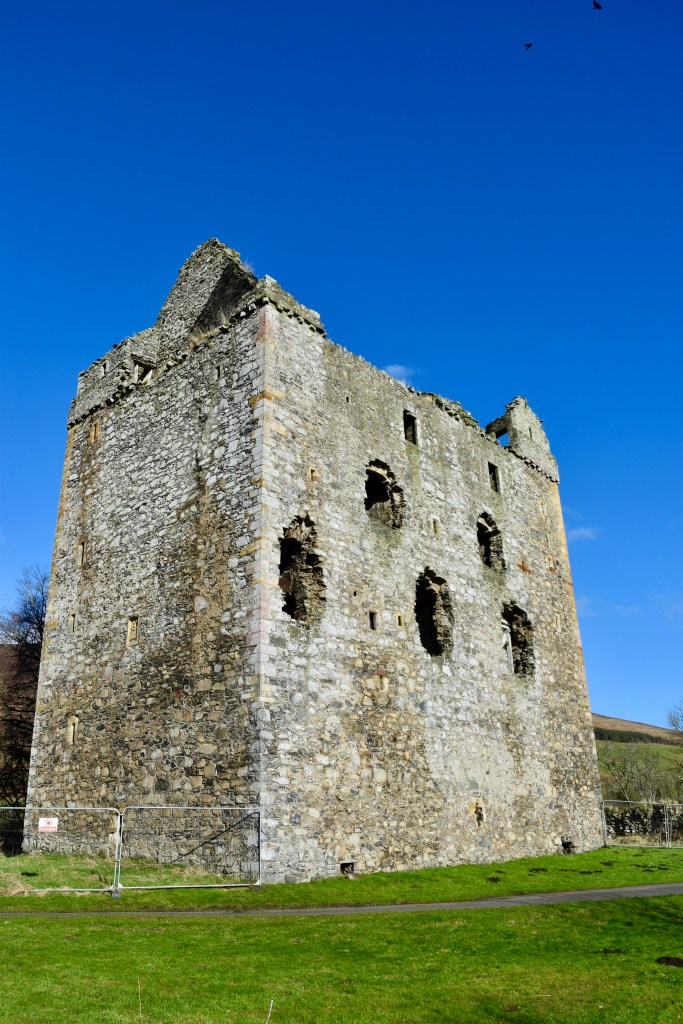
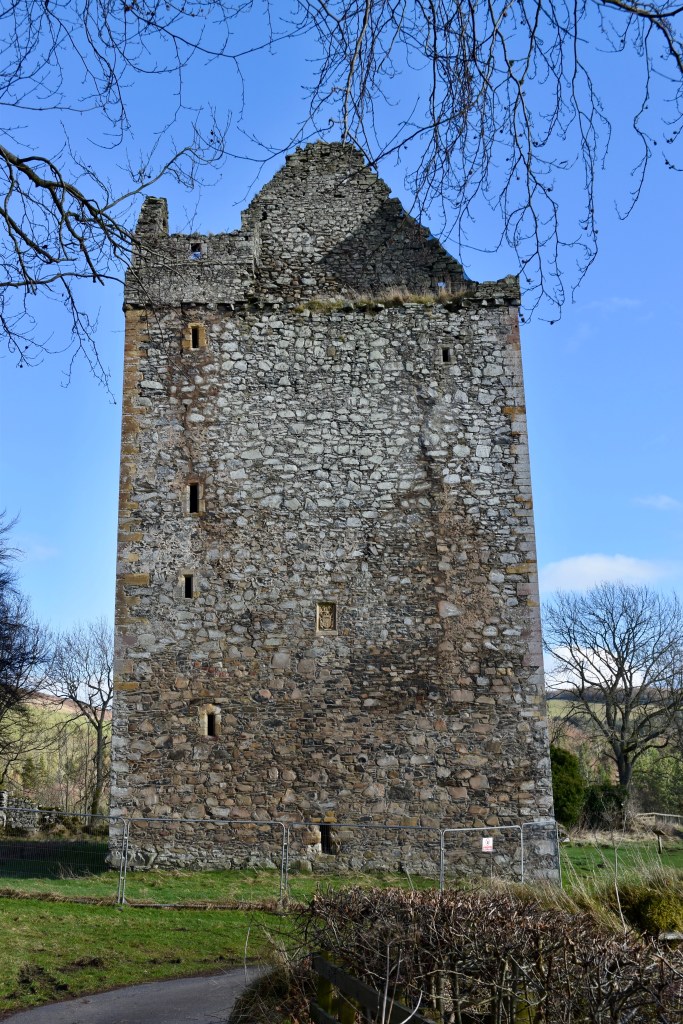
Structurally, Newark Tower is a massive oblong tower-house, standing within the remains of a barmkin. In its day, it stood four storeys high and had a vaulted basement.
Indeed, during its years of occupation, the borders were quite lawless. There was a need for defence not just from invading English armies, but also from Border Reivers (raiders). So the tower’s basement would have been used as a safe place to keep livestock, while the main living area, the hall, was found on the first floor. Rooms on the higher floors would have been bedrooms, with covered areas on the roof providing lookout spaces. The thick tower walls had gun loopholes for defence.
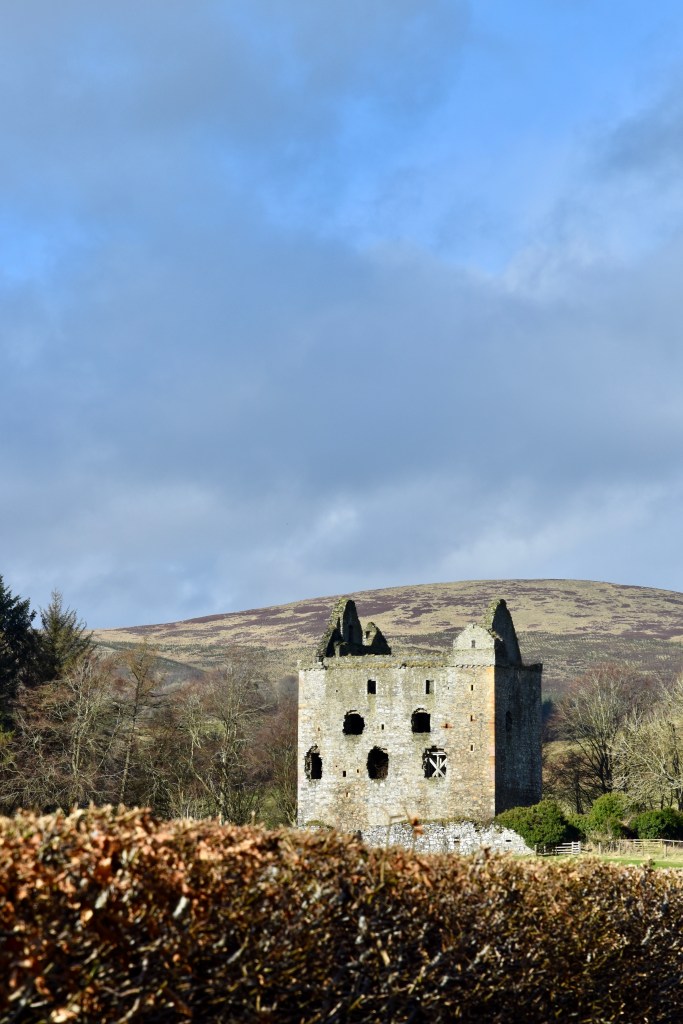
Today Newark Tower can be seen from the outside by taking a walk through the Bowhill House Estate. For safety reasons there is no access inside.
The estate itself is located about 3 miles (4.8 km) from Selkirk in the Scottish Borders region. There are four designated estate walks, one of which (Lady’s Walk) takes you right up to the tower. Access to the estate grounds is free throughout the year although there is a car park charge. (Note: To visit the house, adventure playground and cafe when open during the summer an admission charge applies).
There are no facilities at Newark Tower. Unless you pay to access the house the nearest refreshments and toilets are at a cafe one mile (1.6 km) along the main road towards Selkirk.
Note: This post was revised slightly on 17 November 2025 to provide more information on the Battle of Philiphaugh.
Newark Tower: OS National Grid Reference NT 42079 29395
Further information:



 Thistle & Time
Leave a comment