
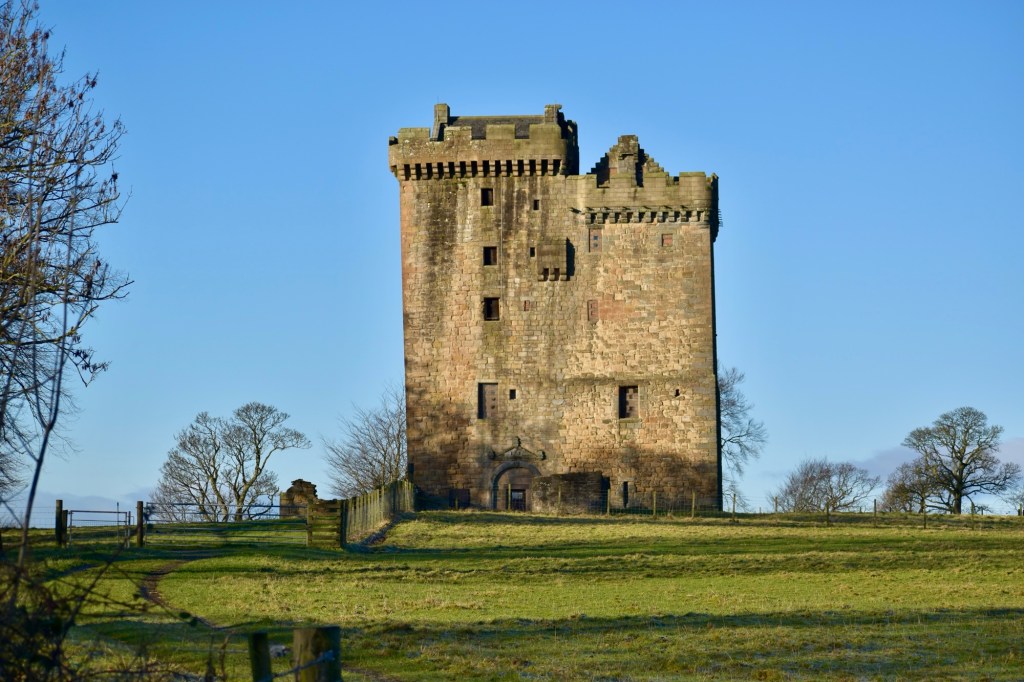
Clackmannan Tower sits on top of King’s Seat Hill, with spectacular views to the River Forth, the Ochils and surrounding countryside. It’s also the place where Scottish poet Robert Burns was knighted! Not really, but a mock knighthood did take place inside this impressive tower house.
Lady Catherine Bruce, the tower’s last inhabitant was renowned for her eccentric personality. Catherine transformed the tower into something of a social hub, hosting numerous visitors “of various rank, and various ages” during her residency. Among her most famous guests was the poet Robert Burns, who visited Clackmannan Tower on 26 August, 1787. During this visit, Catherine performed an impromptu ceremony in which she “knighted” Burns using the sword of her ancestor, the legendary Robert the Bruce.
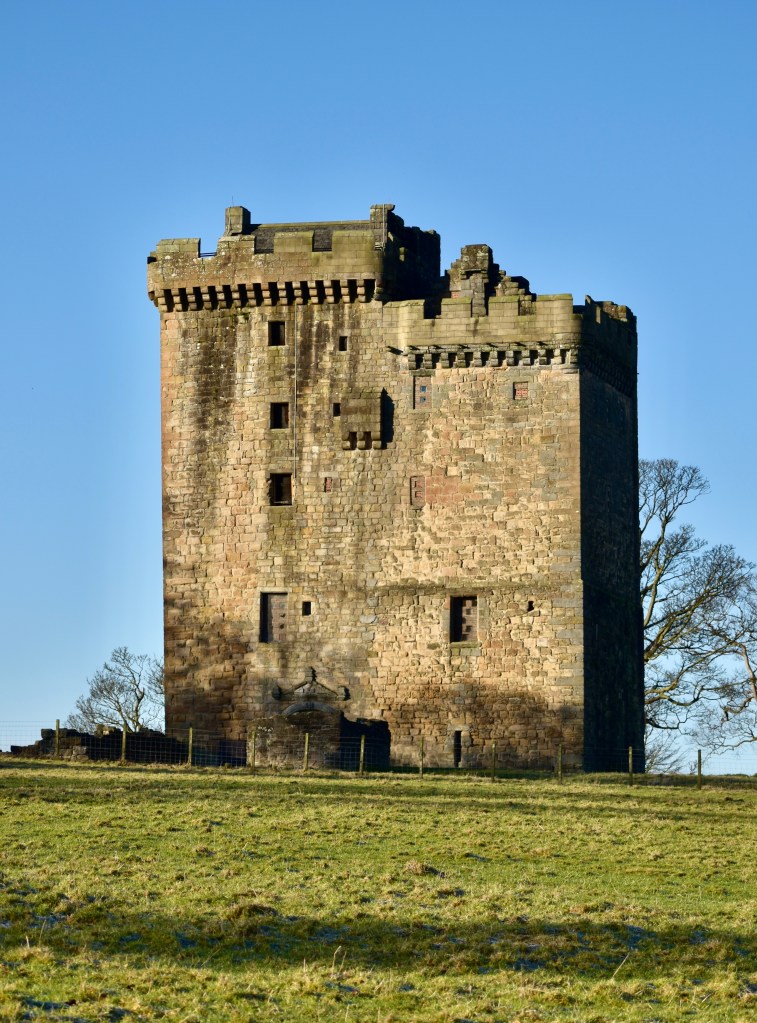
This is a great anecdote, although we don’t know for certain if it was really the Bruce’s sword that she used. Yet true or not, Clackmannan Tower is definitely linked to the famous King of Scots. The story starts a few hundred years earlier…
Although archeological evidence suggests the site might have links to Malcolm IV (King of Scots 1153 – 1165), the tower’s documented history began in the 14th century. It was built by David II, son of the aforementioned Robert the Bruce. He then granted it to his kinsman, Sir Robert Bruce, starting what became Clackmannan Tower’s centuries-long association with the Bruce name.
It started life as a modest two-storey structure but changing needs for defence, comfort and social status led to considerable development over the years. During the 15th century Clackmannan Tower was heightened to its current five-storey configuration , and a second tower was added to create an L-plan layout.
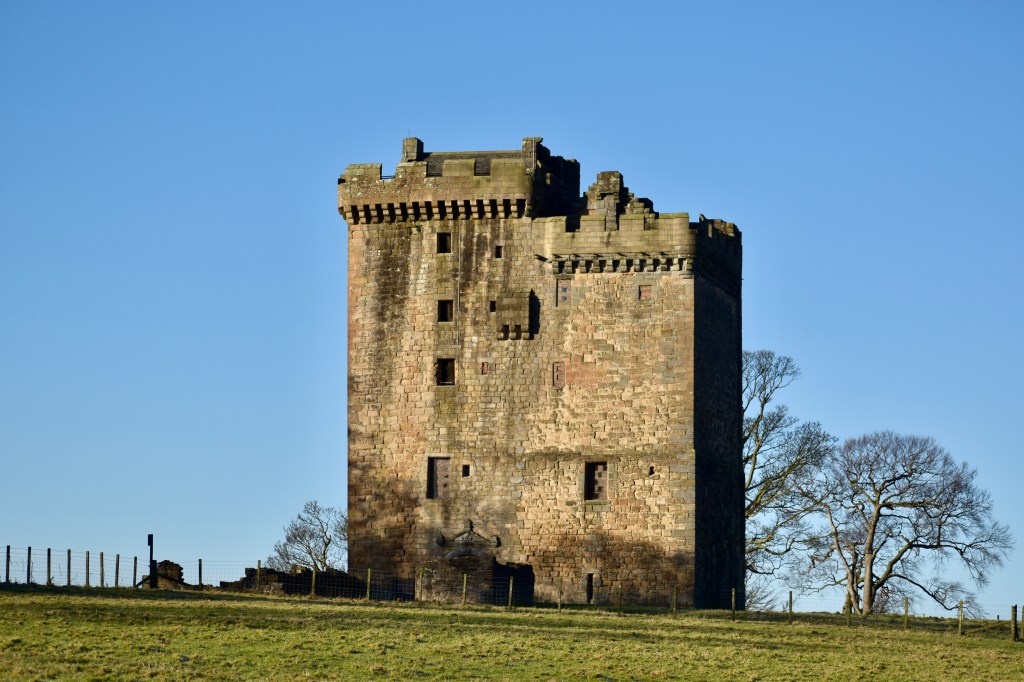
The extra height enhanced the tower’s defensive capabilities and also the family’s prestige. Meanwhile, the L-plan layout allowed defenders multiple fields of fire. The tower was also equipped with open corbels between which defenders could pour scalding liquids or drop projectiles upon attackers attempting to breach the walls.
In the late 16th or early 17th century, as Scotland moved into a period of relative stability, the Bruce family’s focus may have shifted from defence to comfort. They added a grand mansion block next to the tower with larger windows and more refined interiors.
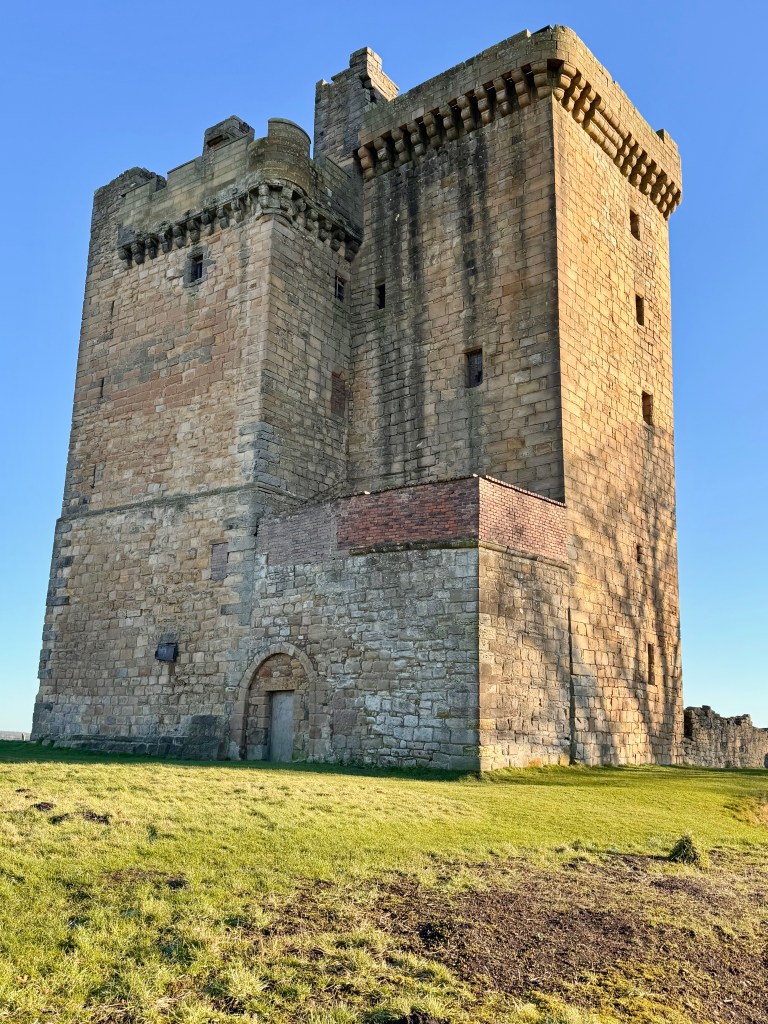
For nearly four centuries, Clackmannan Tower remained the seat of the Bruce family. However, the family’s bankruptcy in 1708 marked the beginning of a challenging period for the tower’s residents.
Henry Bruce’s participation in the Jacobite uprising of 1745 further complicated matters, undermining the family’s influence and fortunes. He was eventually caught by the Hanoverian government but avoided execution. He returned to the tower where he lived until his death in 1772.
Which brings us back to his widow, Lady Catherine Bruce. She continued to reside in the mansion until her death in 1791. As well as her eccentricity she became known for her hospitality and strong political convictions (she remained a staunch Jacobite). She welcomed many visitors including, as I have already mentioned, a certain Robert Burns.
Sadly, the death of Catherine marked the end of the Bruce family’s direct association with the tower. By the close of the 18th century, both the tower and adjacent mansion were abandoned, with the mansion eventually being demolished in the early 1800s. Today, only the tower itself remains, and a small section of the courtyard wall.
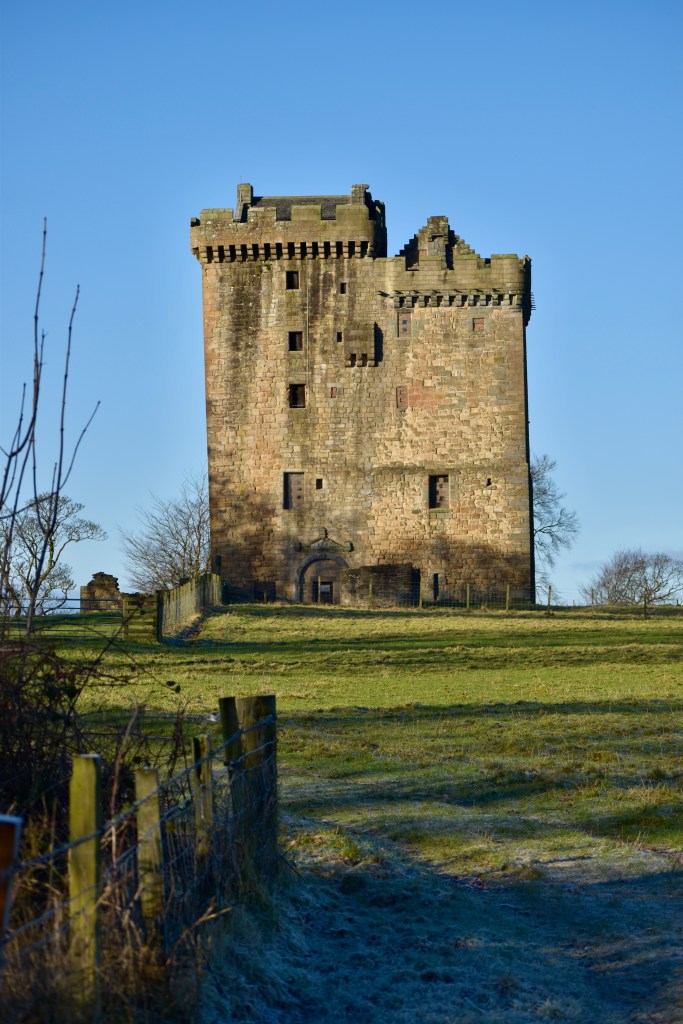
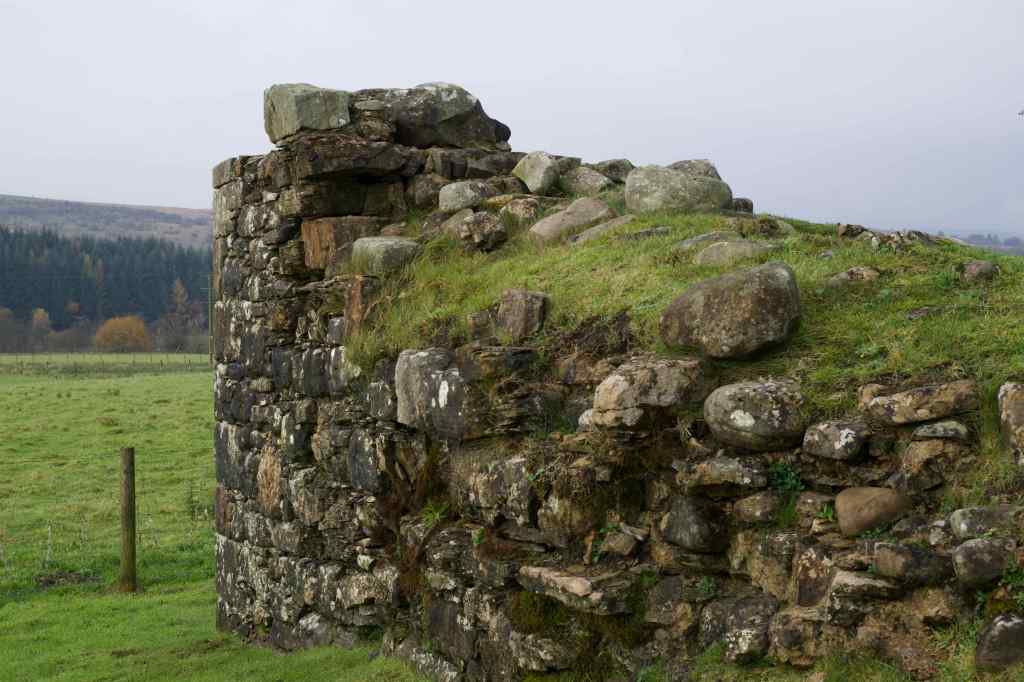
In modern times, preserving the tower has not been without challenge. Subsistence due to mine workings has been an ongoing problem. In 1948 a large section of the east wall collapsed, with further damage sustained more recently. Since then, Historic Environment Scotland have carried out significant repairs to restore the building’s integrity.
Today, the outside of the building is free to view but to see inside of the tower you must wait for one of the rare “open days”. Getting there requires a ten minute uphill walk from Clackmannan town centre. If arriving by car, avoid parking at the top end of High Street as this is residential with little or no room for non-residents’ vehicles.
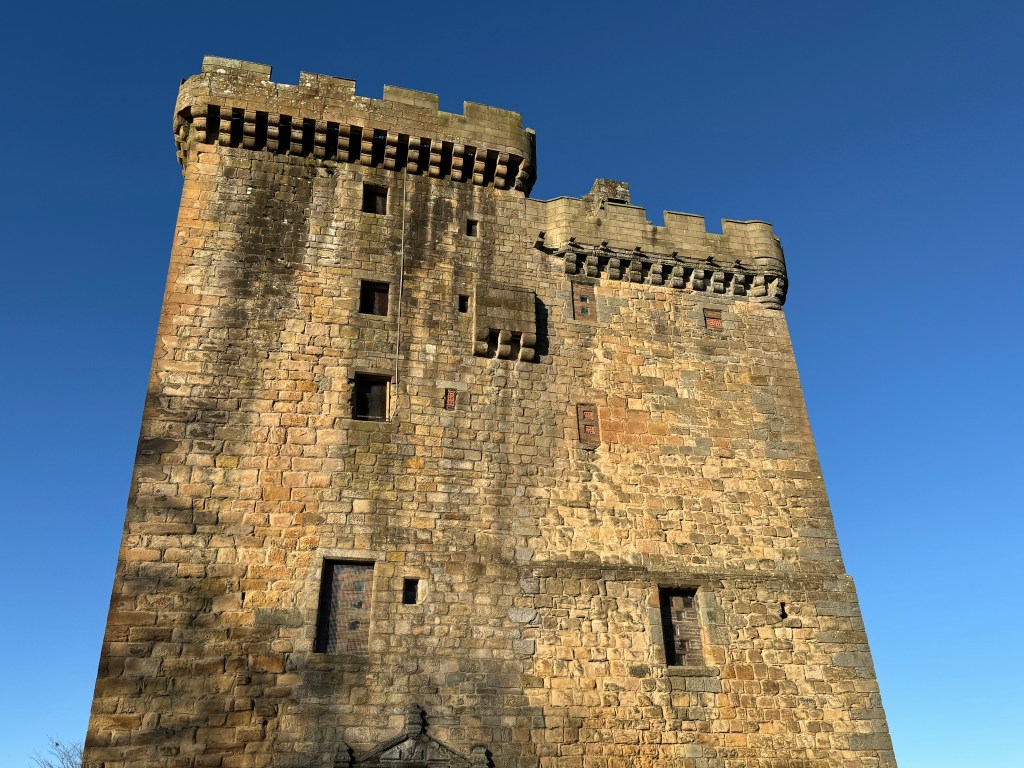
Clackmannan Tower is one of five tower houses in the area. To mark this there is a Clackmannanshire Tower trail that will take you to all of them. The others are Alloa Tower, Castle Campbell, Sauchie Tower and Menstrie Castle (which is privately owned). One day I will find time to follow this interesting trail.
Further reading
Historic Environment Scotland Overview
Historic Environment Scotland Designation and Statement of National Importance



 Thistle & Time
Leave a comment